Branded

Have we been missing the little things that remind us the kampung spirit is very much alive?
More than just coming together to play games at a community club or void deck.
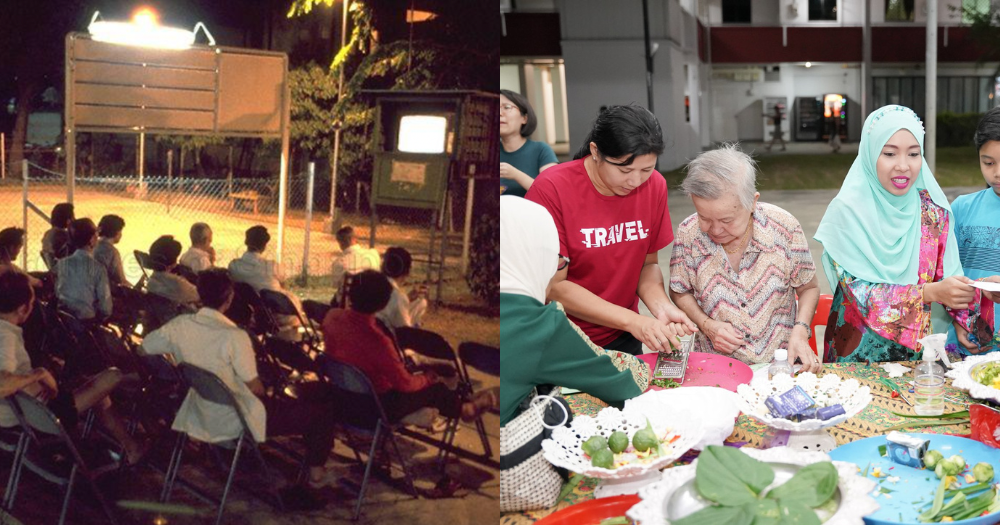
Top left image via former Ministry of Information and the Arts -- currently Ministry of Digital Development and Information, right image via Our Tampines Hub/Facebook.
These days, it’s easy to overlook how most of our public notices and announcements, such as those at the MRT stations, are done in four languages.
Many of us probably take it for granted, but it's a quiet reminder that everyone, regardless of language, has a place here. It's also a symbol of the choice to belong — one that has been made so consistently, and for so long, that many of us have forgotten it was ever a choice at all.
I was reminded of this during a visit to Our Community Gallery at PA's training campus in Buona Vista, where the recreation of a typical community centre (CC) in the kampung days still bears a simple welcome in all four official languages.
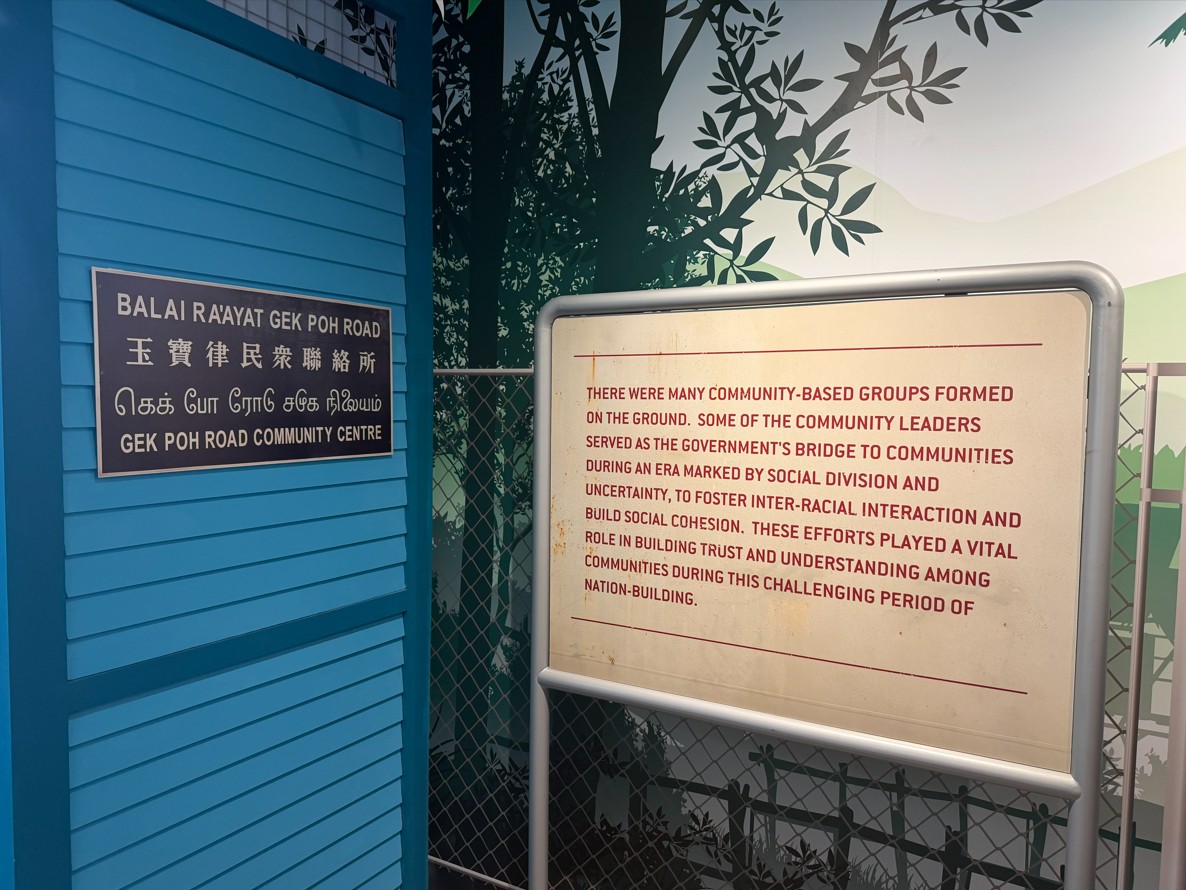 Community Centre (CC) signage in our four official languages, as featured at Our Community Gallery. Photo courtesy of NACLI
Standing there, it struck me that this was never just about signage — it was about making sure everyone felt that they were part of the community. And it made me think about how we define that belonging today.
For many, the kampung spirit has always been tied to a sense of community that looks out for its own.
But then there's my parents, who are fond of repeating that the kampung spirit has been lost to the rush of Singapore's development. For them, it was encapsulated in something as simple as gathering at the CC to watch television — the one place where neighbours would meet.
But what if, quite simply, we've been missing how the kampung spirit has always been there, and has evolved over time?
If the kampung spirit can persist during a racial riot, why not in times of peace?
It’s easy to forget, but once upon a time in the 50s and 60s, as depicted in Our Community Gallery, Singapore was a pretty rough place.
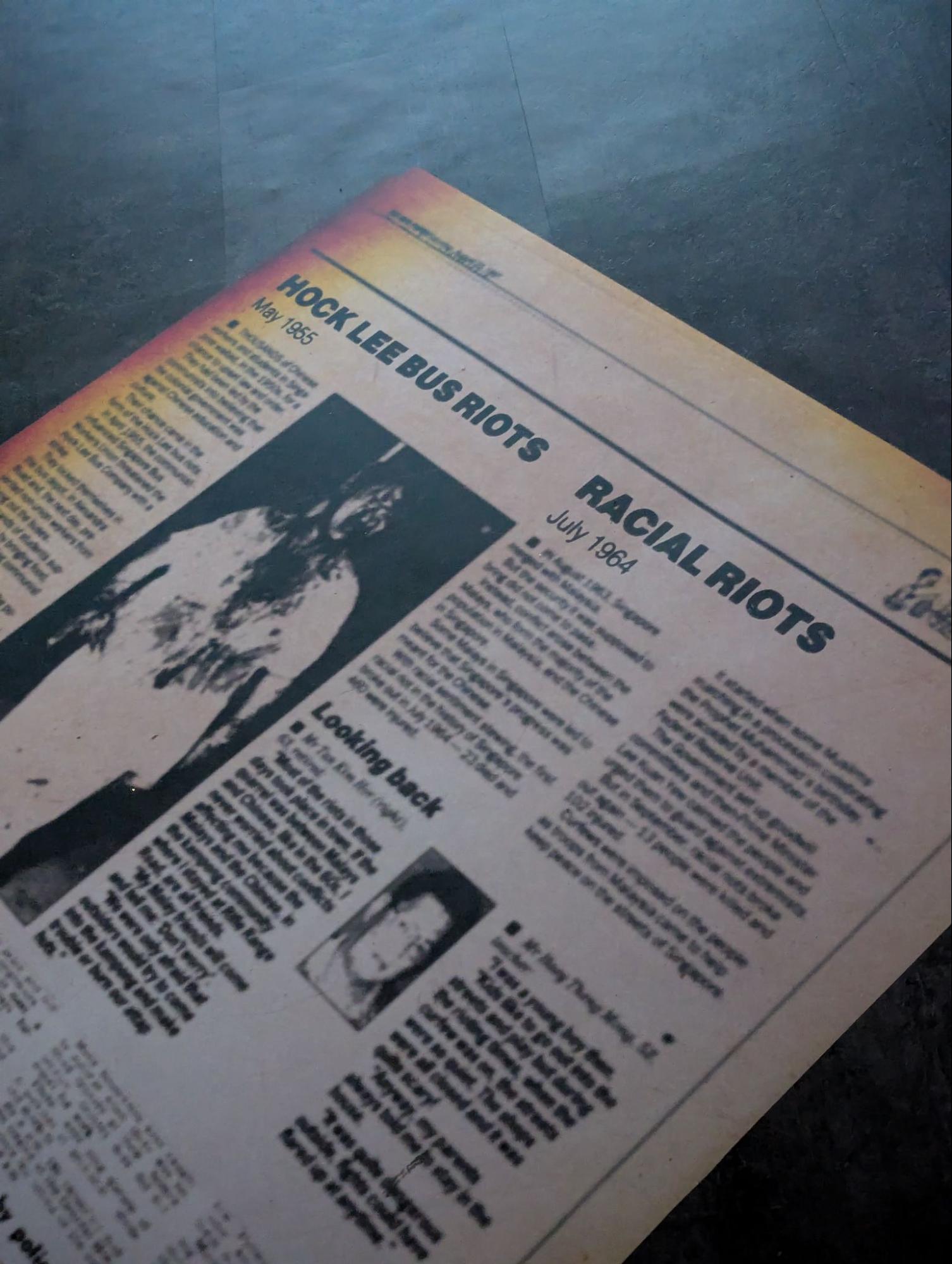 A different reality, when riots were a real and present danger. As featured at Our Community Gallery. Photo by Mothership.
One might question if Singapore could be said to even have a kampung spirit at all, especially during the racial riots of July 1964.
Yet, what struck me, as the gallery showed, was that throughout the riots, there were still accounts of people from different races coming to help each other, and that in the wake of the riots, there were tangible efforts by different communities to help diffuse tensions.
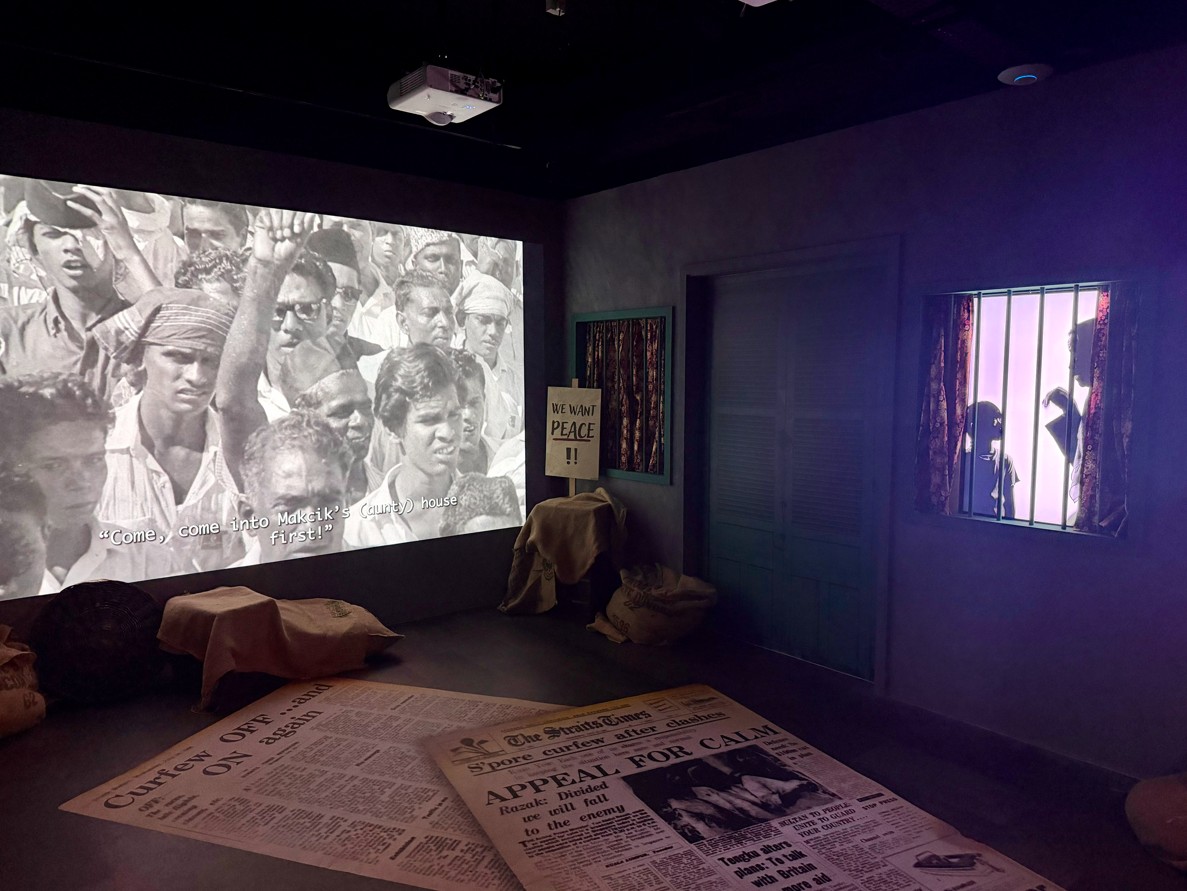 Zone 1: 'Singapore's Turbulent Beginnings' as featured in Our Community Gallery. Photo courtesy of NACLI.
In fact, I daresay that taking for granted how our MRT signages and announcements are now in four languages is a testament to just how successful these efforts in building social cohesion and strengthening the kampung spirit have been.
Perhaps the real question is: if the kampung spirit can survive in times of crises, how can it continue during peace time?
A case of nostalgia much?
Seeing the gallery's recreation of a CC in the kampung days made me realise that nostalgia plays a part in shaping perceptions.
And for my parents and their generation, it remains a powerful lens through which they see the kampung spirit.
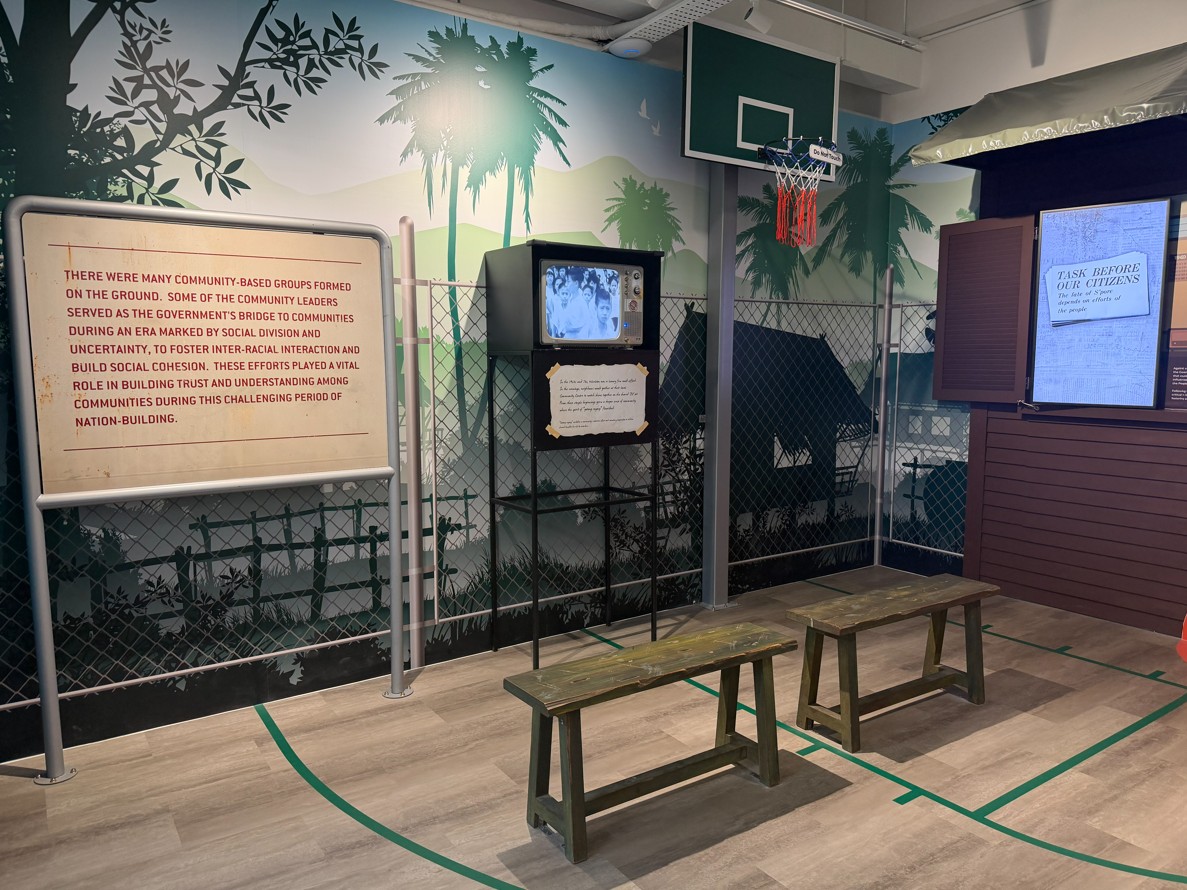
Recreation of what a typical Community Centre (CC) in the kampung days look like, as featured at Our Community Gallery. Photo courtesy of NACLI.
Going to the CC in the past as kids to watch television and socialise with neighbours carried a kind of special excitement that, for better or worse, has since been replaced by the convenience of smartphones.
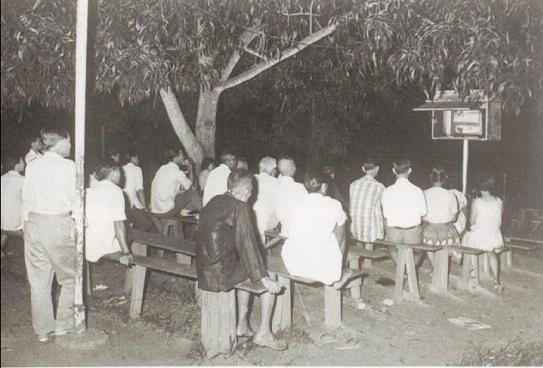 Watching TV at a community centre in the 1960s. Photo via NLB.
Granted, but what about the generations after? The Millennials, Gen Z and Gen A and more to come.
Acts of kindness and coming together, whether there’s a crisis or not
To many of us, CCs are places we can turn to during times of crises.
When I came across the gallery’s feature on the haze periods of 2013-2015 and the Covid-19 pandemic of 2020-2021, it brought back to my mind the sheer number of volunteers coming to help set up the vaccination facilities and mask distribution centres at the CCs and making sure everything ran smoothly, with everyone waiting patiently for their turn, instead of fighting like it’s the end of days.
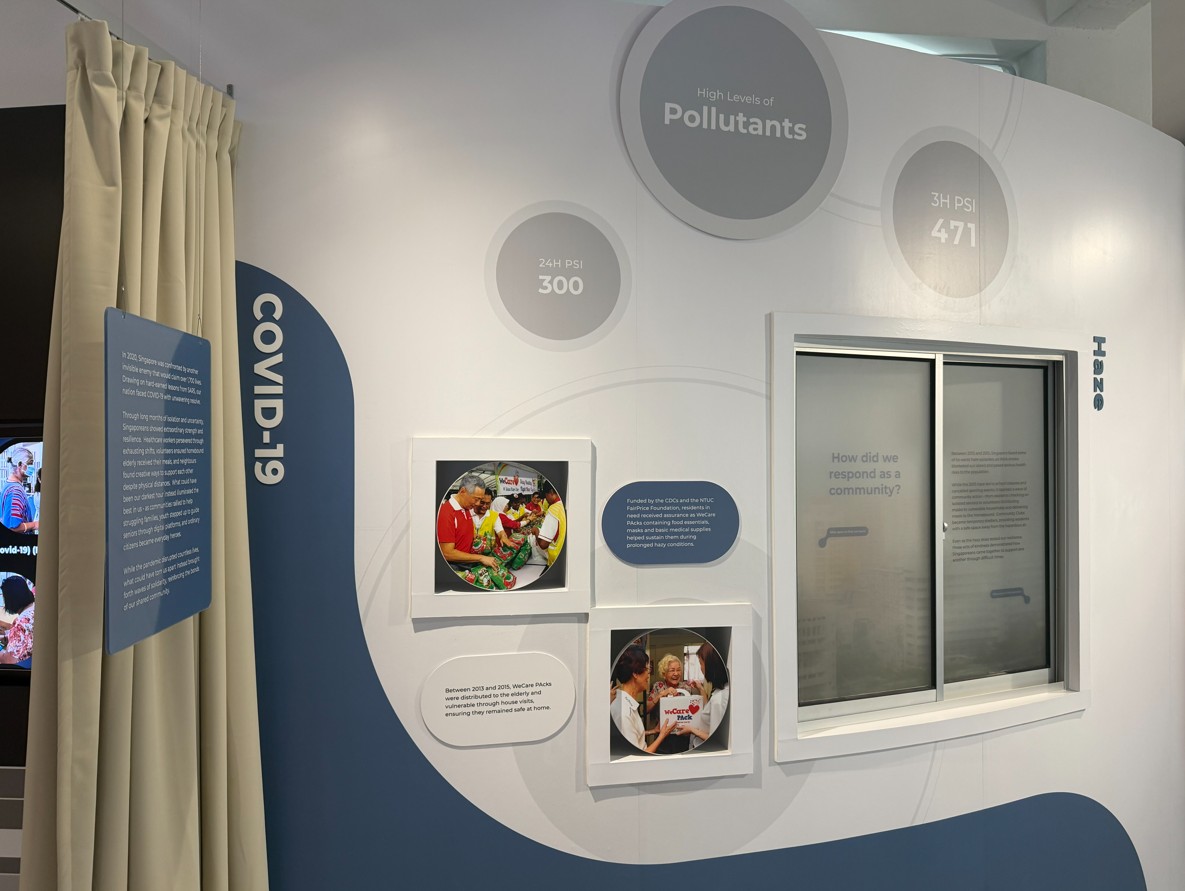 Zone 3: 'Weathering Crises as a Community' as featured in Our Community Gallery. Photo courtesy of NACLI.
The gallery is a reminder that these volunteers were pretty much ordinary people — your everyday coffee shop or supermarket regulars — who chose to come together in a crisis, rather than stocking up on masks and toilet paper.
Kampung spirit can sometimes be little acts of kindness that we overlook.
When I scanned the RFID tag that had been provided to me as part of the exhibition and discovered my unique community archetype, I realised that both my parents and I have been displaying the kampung spirit without even knowing it.
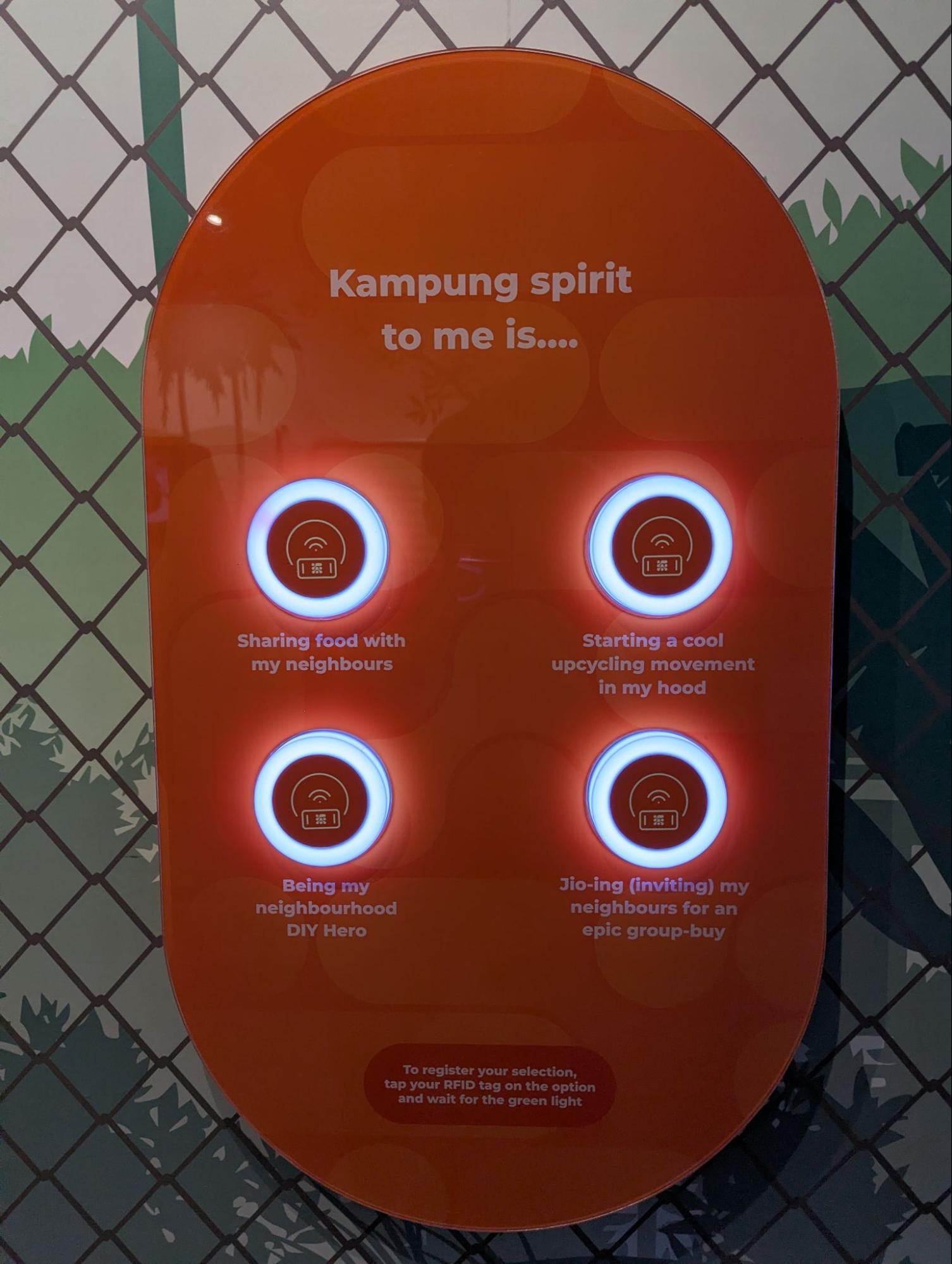 What is kampung spirit to you? As featured at Our Community Gallery. Photo by Mothership.
Neither of us had been engaging in any grand acts of volunteering – just sending food to friends who were quarantined throughout the pandemic, while my parents offered to help our elderly neighbours buy groceries whenever they headed out.
At the end of the day, perhaps this is what the kampung spirit is really about – offering help whenever we can, regardless when and where.
Free exhibition to spend your weekend with friends and family
Beyond the recreation of old kampung spaces, Our Community Gallery is filled with stories of everyday people who stepped up for their communities. Who knows, it might just inspire you to do the same.
Oh and the best part? Admission is free!
If you're looking for a meaningful way to spend a weekend with your loved ones, whether it's reminiscing about the past with your parents or inspiring the next generation, this gallery is for you.
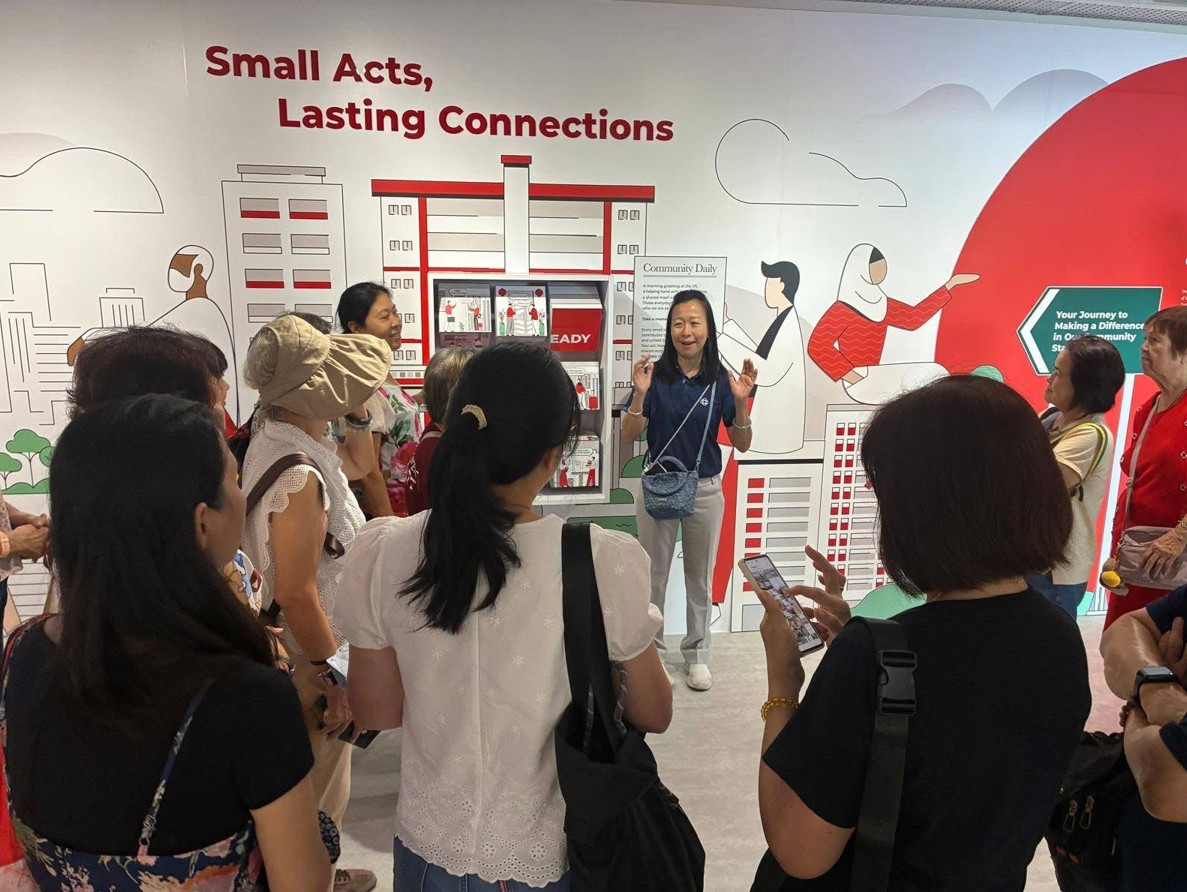 Photo via Eunos Zone 2 Residents’ Network Facebook.
Will it help my parents see past their nostalgia-tinted glasses about the lost kampung spirit?
Well, I’m optimistic.
In fact, if you and your friends wonder if the kampung spirit in Singapore still exists, hold your judgement and visit this gallery first.
Book your next visit here.
Our Community Gallery by the People’s Association
Location: National Community Leadership Institute (NACLI), 70 South Buona Vista Rd, Singapore 118176
Opening hours: 9am to 4pm, Monday, Wednesday, Friday and Saturday. (Closed on Tuesdays, Thursdays, Sundays*, eve of public holidays and public holidays)
Guided tours: Saturday, 10am and 12pm
*For two months only, Our Community Gallery will be open on Sundays from 9am to 4pm (Last entry at 3pm), exclusively for August and September 2026. Secure your visit before this limited run ends.
This sponsored article made the author a little more optimistic about Singapore’s future.