Abroad


Australia engineer, fired after delaying SIA flight by 17 minutes, gets S$36,000 in compensation
He argued that his actions were "normal procedure" and made for a safer flight.
August 04, 2026, 05:25 PM
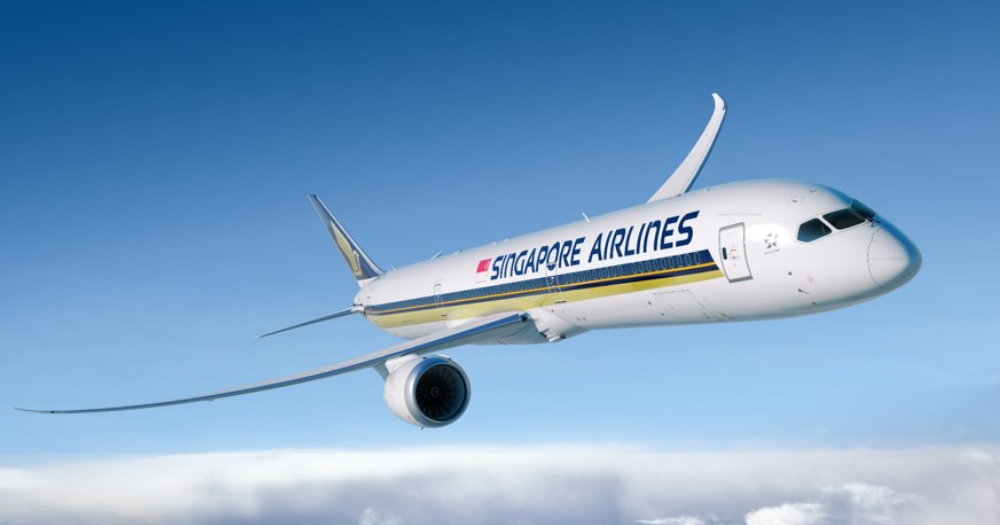
Photo from Singapore Airlines' website


An Australia aircraft engineer, who was dismissed after he caused a 17-minute flight delay to a Singapore Airlines (SIA) flight, has failed to win back his job after bringing the matter to the regulators.
He was nevertheless granted AU$40,000 (S$36,000) in compensation.
The man, a resident of Brisbane, was an aircraft maintenance worker who had over 25 years of experience in the industry.
He had powered down the plane in a bid to resolve safety errors, The Sydney Morning Herald reported.
Following the incident, the Singapore carrier withdrew his maintenance authority permit, citing "mishandling incidents".
The incident
The man was an employee of Heston MRO, a company that provides maintenance services to various international airlines, including SIA.
In the case of the flight delay, he had seen multiple "fault diagnostic messages" pop up ahead of an SIA flight.
He thus decided to reboot the aircraft, the Herald reported.
His actions did end up clearing those faults, but led to a 17-minute delay in take-off.
SIA subsequently sent a notice to his employer withdrawing his permit, arguing that it was unnecessary to power down the plane for this particular fault.
The carrier alleged that the man had acted on "experience and instinct" instead of protocol, causing "customer dissatisfaction" through the delay.
The engineer defended his actions, saying it was "normal procedure" and helped to reduce the pilots' workload, prevent further delays, and make for a safer flight.
He likened it to resetting a phone to clear errors, according to the Herald.
Report rejected and revised
After the complaint, Heston launched an investigation into the incident.
Its initial report found that the man's actions were "standard practice" and did not violate procedures.
But SIA rejected Heston's report and argued that the investigation was "not an objective one".
Following this, the company conducted a review of the initial report, led by a newly hired head of quality and safety.
In the second report, Heston found that the man's actions had been a "reckless violation".
He was subsequently dismissed.
The man, who had been employed at the company for over two years by then, was purportedly not told about the revised findings before he was let go in December 2025.
Also worked for competitors
Australia's Fair Work Commission, the national workplace relations tribunal, held a hearing into the engineer's dismissal.
At the hearing, Heston's CEO Asta Zirlyte acknowledged that the company's commercial operations would be affected if it lost its work with SIA.
Still, she rejected the suggestion that the company revised the initial report to maintain its relationship with the airline, according to the Herald.
While he was employed at Heston, the man was involved in four investigations, but was ultimately cleared of wrongdoing each time without formal disciplinary action.
A major argument Heston brought up was that the man had been working casual shifts for Virgin Airlines, a competitor, without permission.
This, the company said, breached its rules and compliance requirements to monitor its staff fatigue levels.
The man claimed these shifts never clashed with his full-time job, and that he always took a break of at least 10 hours before and after each shift.
The commission's conclusion
At the end of the hearing, Australia's Fair Work commissioner said he did not find that Heston's decision to dismiss the engineer was because of pressure from SIA.
"However, the evidence is clear that Singapore Airlines was displeased with [the initial] report," he added.
"It was following communication of this to [Heston MRO] that the review of the report produced a different result... not supported by the evidence in this hearing."
Regarding the man's moonlighting, he said Heston could have considered taking disciplinary action, but the shifts with Virgin Airlines were not a valid reason for dismissal.
At the same time, he noted that it constituted a breach of contract, and had caused "damage to the level of trust and confidence in the [employment] relationship".
The commission thus did not order Heston to reinstate the man, but ordered it to pay him more than AU$40,000 (S$36,000) in compensation.
Heston was "deeply disappointed and surprised" by the decision, and said it intended to lodge an appeal, according to the Herald.
The firm added: "The aviation sector depends on rigorous standards to protect passengers, crew, employees, and the broader community."