Abroad


Asean energy resilience not a new issue, but Strait of Hormuz conflict has elevated its urgency: Vivian Balakrishnan
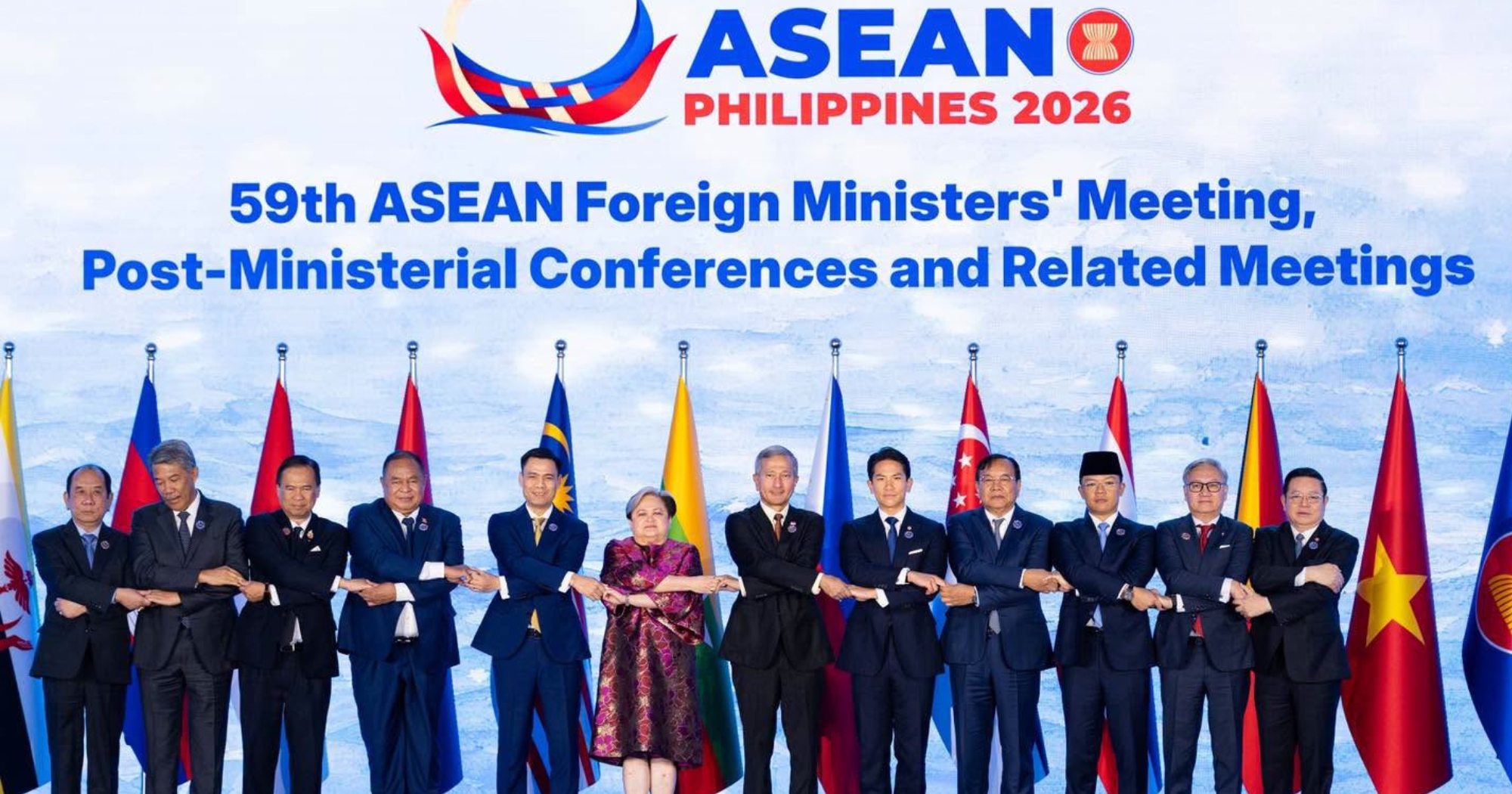
Singapore's Minister for Foreign Affairs was in Manila, the Philippines, from Jul. 20 to Jul. 24 to attend the 59th Asean Foreign Ministers’ Meeting (AMM) and other related meetings.
July 24, 2026, 12:22 AM
Image via Vivian Balakrishnan/Facebook


The issue of energy resilience for Asean is not new, said Minister for Foreign Affairs Vivian Balakrishnan, but the war in the Middle East has elevated its sense of urgency and importance.
While "no one is seriously arguing against it" at this stage, the current challenge is one of execution.
Potential energy capacity
Vivian was in Manila, the Philippines, from Jul. 20 to Jul. 24 to attend the 59th Asean Foreign Ministers' Meeting (AMM) and other related meetings.
Addressing the media in a wrap-up interview on Jul. 23, he responded to a question from Mothership about the importance of renewable energy in Asean, given the flare-up of the conflict in the Middle East.
Vivian pointed out that Asean does not have a say in the resolution of the conflict in the Middle East. "We really cannot even say when and how a resolution will come about," he said,
He added: "But the larger point is this: if you actually do a catalogue of Asean's potential energy capacity, not just in fossil fuels, oil and gas, which Asean does have," it has great potential in renewable energy.
While Asean does have access to geothermal, solar and wind as sources of energy, they require investment as well as capital and technology in order to bring it to fruition.
Vivian pointed out that achieving this will create a situation where Asean is not only more energy resilient, but also more dependent on renewable energy, and "therefore also doing our part for a lower carbon future".
Challenge is execution
Noting that "the opportunity, the need for it has always been there", he said "what recent events have done is to raise the sense of urgency, and we are trying to do that".
He added that projects like the Asean power grid goes beyond just the laying of cables.
It goes beyond the arguments about fees, technical aspects of the equipment needed, "to actually create a sense that look, we are all better off if we can engage in collective investments, in raising our capacity, it makes us more resilient".
Pointing out that "the challenge is execution", Vivian said "it makes us more competitive, and it better prepares us for the future".
Preserving Asean's neutrality and centrality
Vivian also spoke about preserving Asean's neutrality and centrality as Singapore navigates relationships with countries such as the U.S. and China.
Addressing the issue of "the U.S. and China contestation", Vivian said, "To their credit, both of them are trying to approach this in a careful, deliberate, and constructive way."
He added: "In particular, I would say I'm glad that at least at this point in time, neither of them are forcing us to choose sides, they know Asean's priorities, which is still to develop our economies, to integrate and gain access to the latest technologies, and that we are still interested in free trade, in giving more opportunities to our people."
Vivian said this is a time to work together, and for the middle powers and Asean to affirm international law, cooperation and not to resort to "unilateral or coercive measures."
Robust, candid discussions
Vivian shared that he had "good robust, candid discussions" in his meetings, and "both dealing with immediate problems and looking forward to the future".
He said issues discussed included the situation in the Strait of Hormuz, as well as the recent escalation, including acts on Saudi tankers in the Red Sea that highlight the fragility of global supply chains.
This has impact on Asean in terms of energy, fertiliser, and food.
To that, he highlighted the impact on international law, "in particular the United Nations Convention on the Law of the Sea, the right transit passage through straits used for international navigation".
He said: "I'm glad to report that amongst all the speeches made by a very wide range of foreign ministers, everyone doubled down on the need to comply with international law to maintain the primacy of armed cloths and freedom of navigation and overflight."
Vivian also said the issues discussed touched on whether countries other than the superpowers could get access to technologies of the future.
59th Asean Foreign Ministers' Meeting
According to a Jul. 20 press statement by the Ministry of Foreign Affairs (MFA), the AMM was to reaffirm the Ministers' commitment to Asean unity and Centrality, as well as discuss ways to advance Asean integration and community-building initiatives under the Philippines' Chairmanship theme of "Navigating Our Future, Together".
A Jul. 21 MFA press statement noted that Vivian had a wide-ranging discussion with his Asean counterparts on deepening regional integration, strengthening Asean's capacity to respond to developments in emerging areas such as artificial intelligence and supply chain resilience, as well as harnessing the potential of the digital and green economies.