Features


Dutch woman, 42, becomes Taoist priest in S'pore after 14 years of practicing Taoism
East meets West. But how?
July 23, 2026, 04:59 PM
Photos via Mothership, San Carrière.


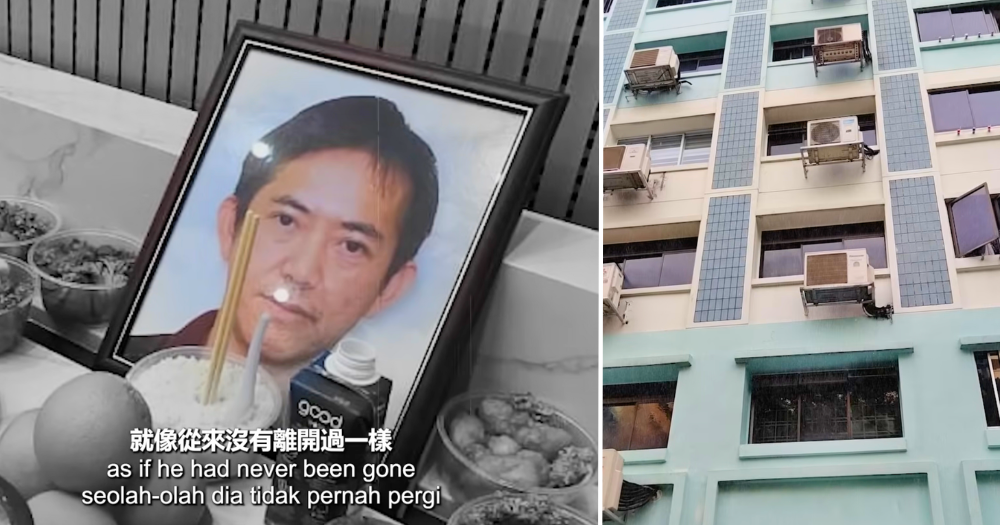
Balestier Point is an antiquated, mixed-use development in Singapore, with tenants that do not quite fit together.
A fitness gym filled with exercise-goers on the ground floor holds the most signs of life. Posters advertise children's TCM massages, car rentals, Martell.
At an unassuming corner sits the Quan Zhen Cultural Society, a Taoist practice community.
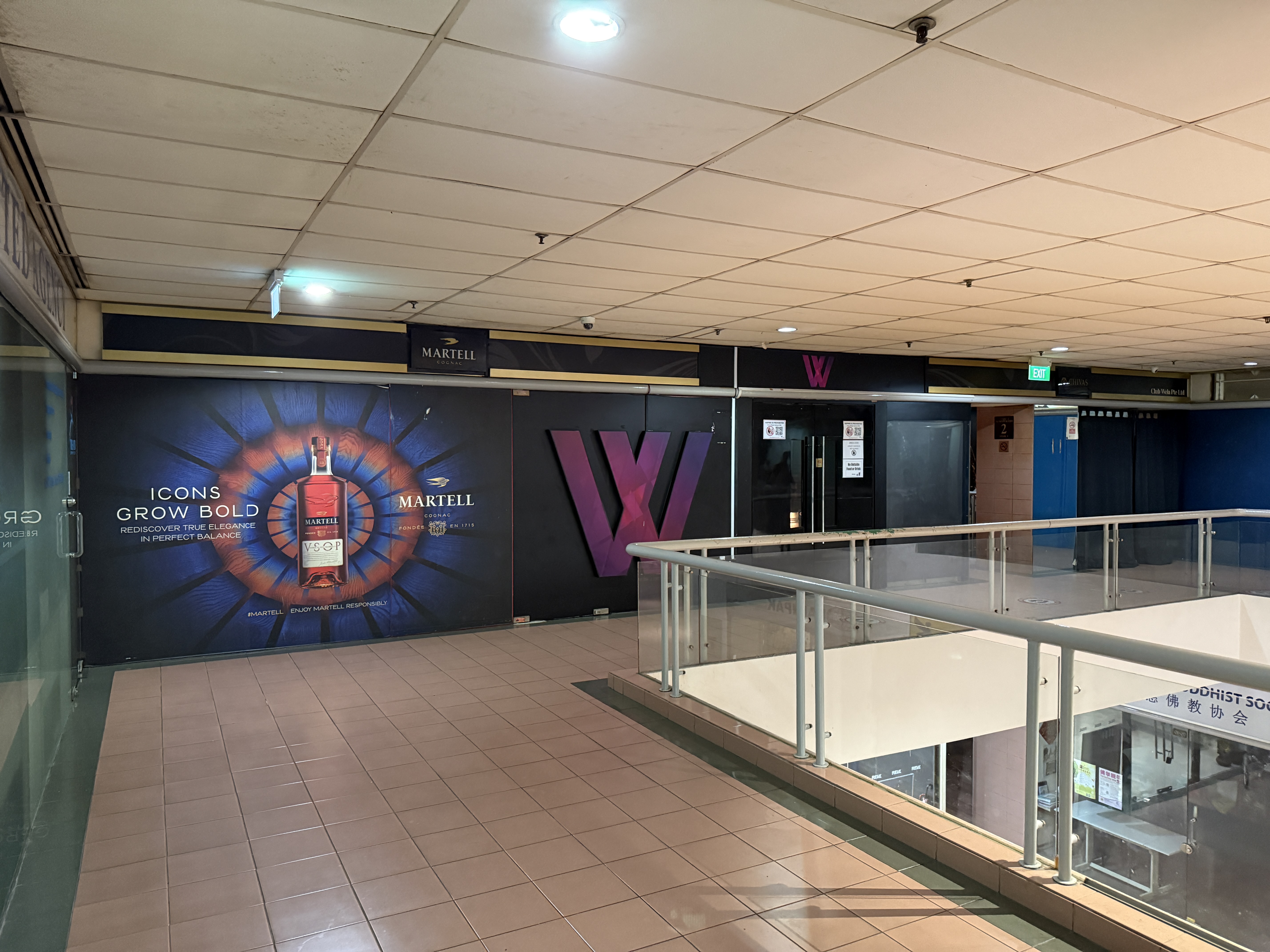 Photo via Mothership.
 Photo via Mothership.
The Society was where I would meet Sann Carrière, 42, on a Sunday morning in July.
Carrière is Dutch, and also a Taoist priest in Singapore.
How did this curious situation come to be?
A Dutch woman in a Taoist class
According to the 2025 General Household Survey, 7.3 per cent of Singapore residents aged 15 and over are Taoists.
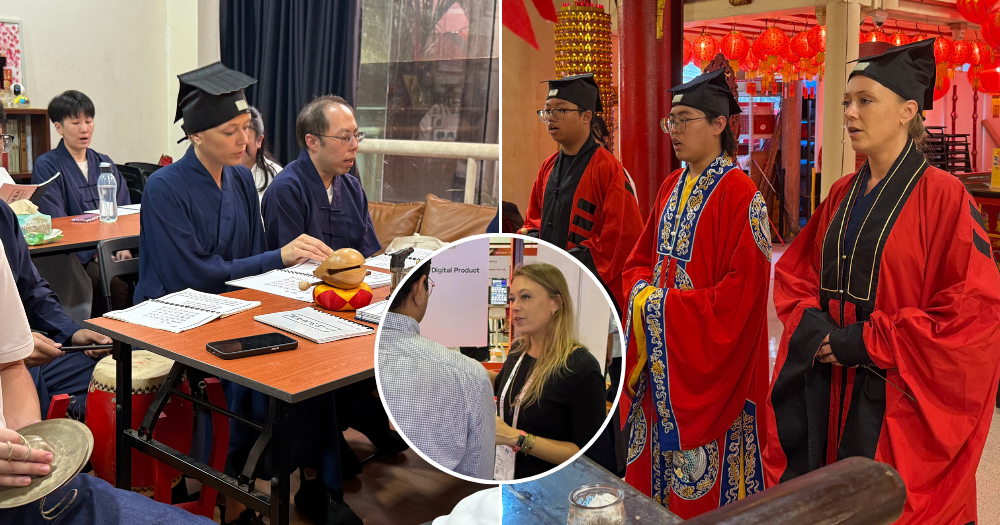
That morning, a handful of that small faction gathered at Quan Zhen for their weekly class.
Including Carrière, who did a fair job blending in with her blue priest's robes.
When we first arrived, Carrière greeted us. She had an air of calm around her as she walked us through the day's plan.
She had done most of the organising, liaising with the cultural society and various stakeholders to make our interview possible.
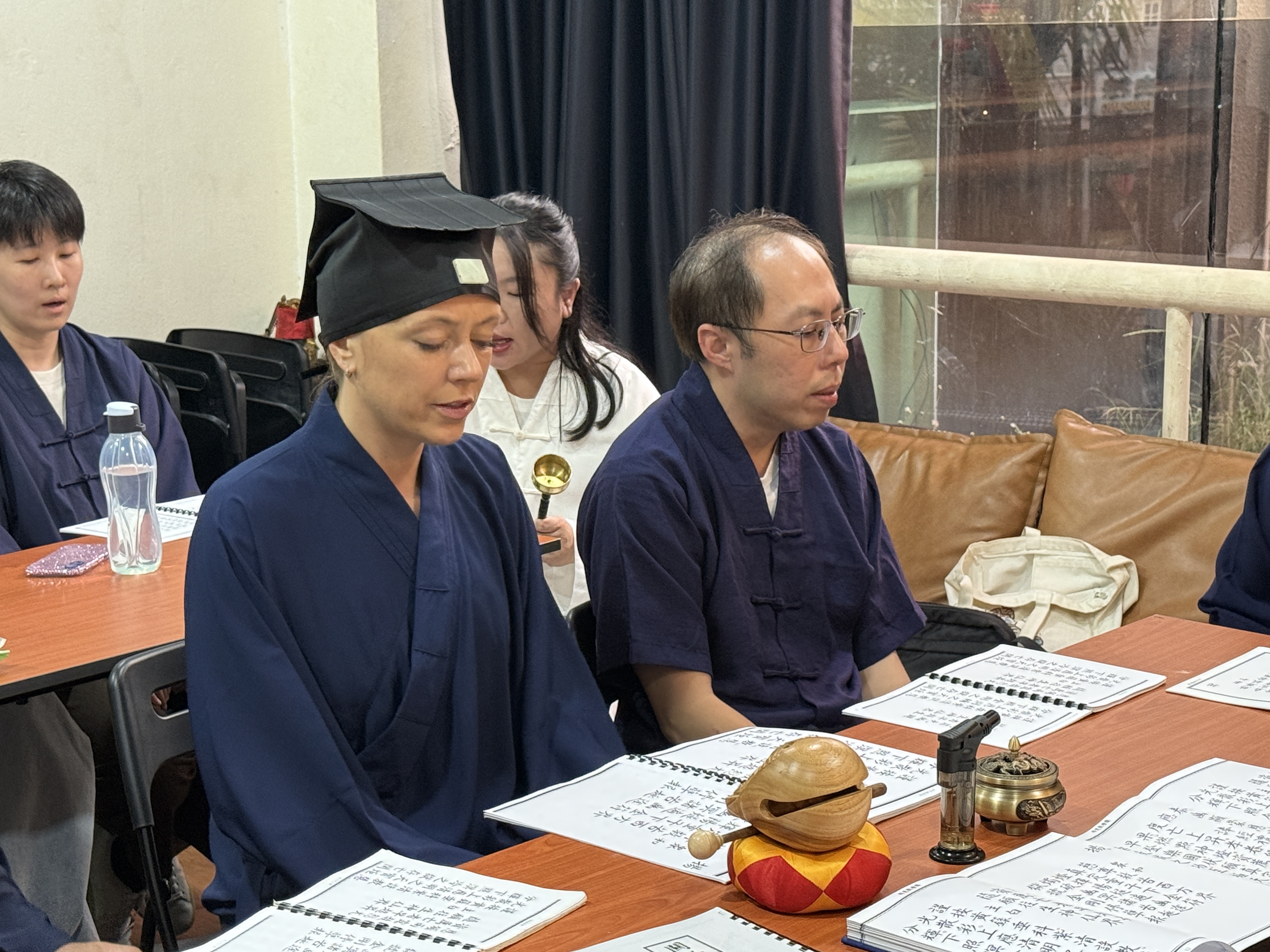 Photo by Mothership
There had been a death in the community, and the group was practising the recitations for funeral rites. I was told this was a particularly difficult one.
Led by a Taoist master, the group began their harmonic chant in Cantonese.
Occasionally, they would pause, and the master would explain its meaning in Mandarin.
 Photo via Mothership.
Even as a born-and-bred Singaporean Chinese, I could barely keep up with it all. I wondered how Carrière, a non-native Mandarin speaker, managed to do so.
I resolved to ask her at our sit-down together after class, at a temple along Beach Road.
Journey
The temple, Kheng Chiu Tin Hou Kong, is located in Kheng Chiu Building and houses the Hainan clan association.
Built by Hainanese migrants in Singapore, the temple dates back to 1857.
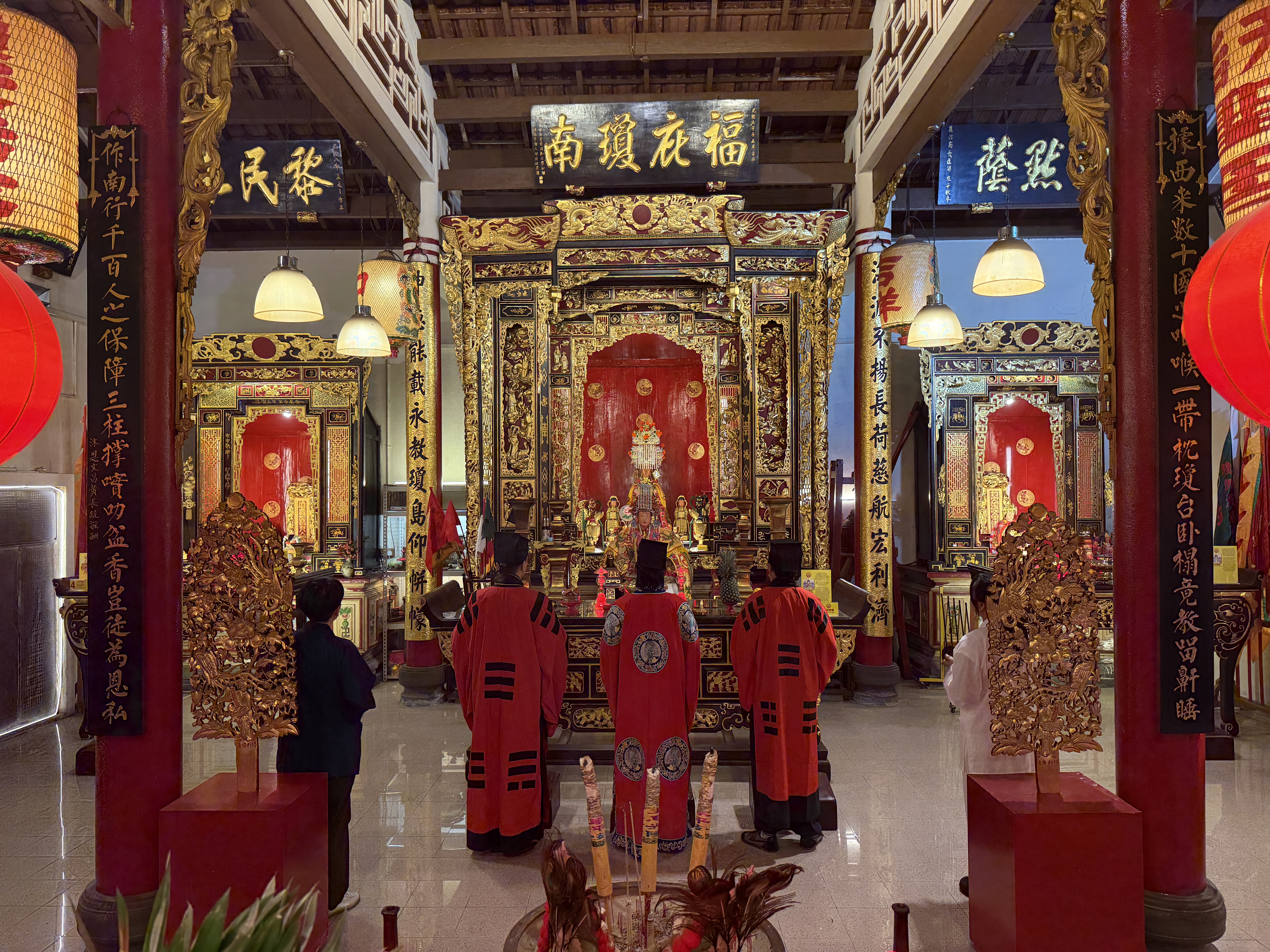 Photo via Mothership.
At the temple's centre is the main altar, where the idol for the Chinese seafaring goddess, Mazu, sits.
Here, Carrière and a few of her fellow practitioners demonstrated a quick ritual. Her red-and-black priest's robes, she later explained, are reserved for for officiants or ordained practitioners.
Whereas the ones donned by her fellow priest, which bore a more elaborate design, are reserved for the ritual master and cantor.
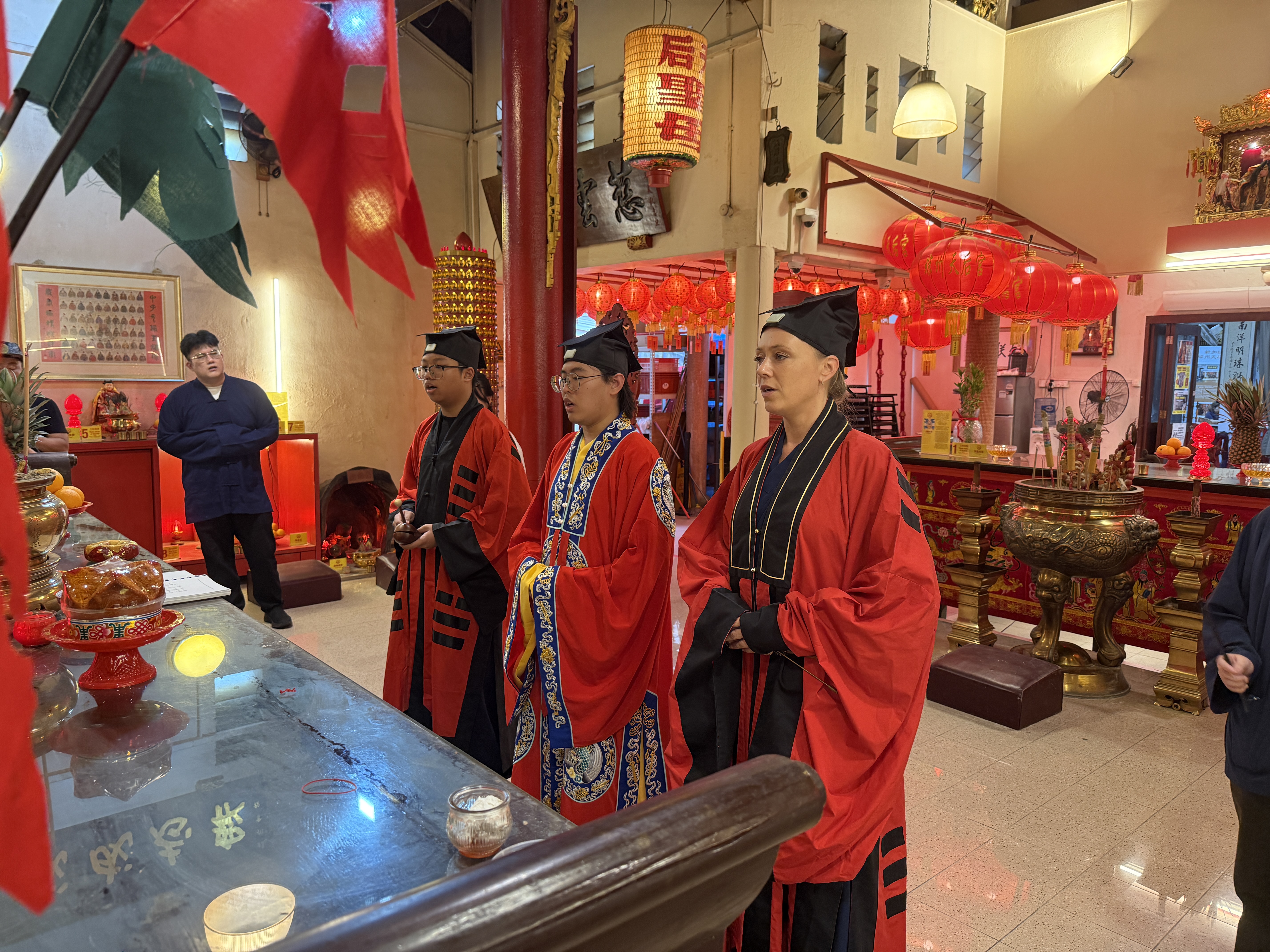 Photo via Mothership.
After the ritual, we sat down for a chat.
I got to the point. "How?" I asked.
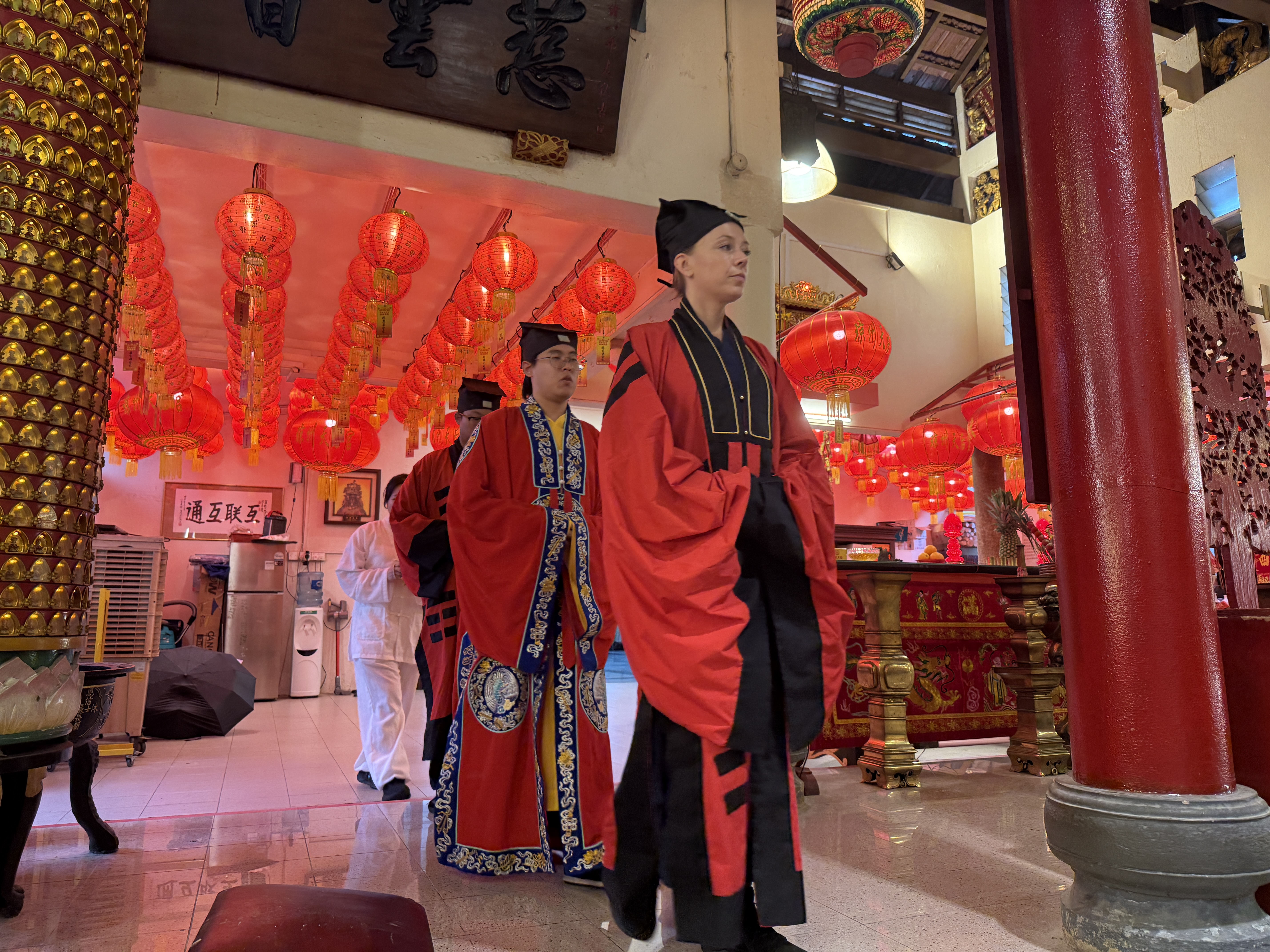 Photo via Mothership.
In English, but with a faint European accent, Carrière explained that her journey into Taoism began on a beach in a Dutch town. This was in 2012.
She had felt a"deep desire to integrate [her] spiritual path with [her] worldly path", and was looking for structure.
She clarified that she had always been "spiritual" before she found Taoism, but was not religious.
"I asked in an open prayer, 'Please, show me. Show me the way.'"
As with most things divine, what happened next seemed almost inexplicable.
At three different places in town, Carrière found flyers that referred to the practice of nei dan.
Nei dan refers to "inner alchemy" and here's how Wikipedia explains it:
"In nei dan practice, Taoists claim the human body becomes a cauldron in which the Three Treasures of Jing 'Essence', 'Breath' and 'Spirit' are 'cultivated' for the purpose of improving physical, emotional and mental health, and ultimately returning to the primordial unity of the Tao."
"Different flyers, but same location. So I knew I had to go there," she told me.
After the first class, Carrière said she instinctively knew that this was the philosophical system she was looking for.
Over the next six years, Carrière continued learning about nei dan under a mentor in the Netherlands.
Then, in December 2017, she moved halfway across the world and arrived on the shores of Singapore, on an exchange programme in sustainability between the Singaporean and Dutch governments.
Difficulties
In Singapore, she began "knocking on temple doors" in hopes of finding more nei dan practitioners, Carrière recalled.
But finding a spiritual home in Singapore was not easy. It took her five years before she found Quan Zhen.
As she tells it, it was another divine stroke of luck. Carrière came across Quan Zhen and was intrigued by their logo.
"Luckily, my shi fu (master) is very open to foreign practitioners and to sharing the knowledge and the wisdom. So they took me in," she said.
"That's the start of the journey in Singapore."
Another difficulty she faced was language.
The chanting is in Cantonese, while members converse in a mix of Mandarin, Singlish, and English.
"So, at some points, I am lost. So, I need someone to literally point on the paper where we are, and then I can get back to the rhythm," she shared.
Although her progress may be hampered by this barrier, Carrière said she has come to terms with it.
"During the chanting and the scriptures, I learnt through mimicking. I learnt through listening and through phonetic repetition and memory of the scripture," Carrière explained.
Earlier at the Society, I saw how Carrière did her best to keep up, and how her peers helped her find her footing in the pages.
Appropriation and authenticity?
"And then, unfortunately, there is also some widespread 'unbelief' that a foreigner would understand [the practice of Taoism]," she continued.
She was referring to accusations of "cultural appropriation".
Carrière shared that, up until now, she had been apprehensive about being spotlighted, concerned about coming across as insincere.
However, it was recently the 10th anniversary of Quan Zhen, and they had asked if she would be open to being featured.
"I realised, maybe it's time. It's time to be more open," she said.
Carrière added that her friends and family generally take a positive view of her chosen path in life.
"They were very supportive, amazed. Maybe not always understanding, maybe a bit puzzled, but very supportive."
No big deal
Before we sat down for our chat, I overheard Carrière chatting with a fellow priest and member of Quan Zhen.
They were talking about how Carrière had shared about her Taoist journey with local media, but some online comments were less than encouraging.
While some may react with derision, another priest told me that Carrière's presence, rather than the extent of her assimilation or sincerity, is most important.
"Her dedication is there, and that's what's important," he added.
When I asked the other students of the Society about their reactions to having someone like Carrière in their midst, they gave replies that were akin to a shrug of the shoulders.
As the priest had told me: "I won't say it's a new thing to see a Westerner in an Eastern religion." No big deal.
Aspiration
Carrière has been with Quan Zhen for three years. In 2023, she was ordained as a Taoist priest.
That means she gets to delve into the more spiritual aspects of the religion, and is permitted to learn its rituals.
Outside of the temple, she is the founder of a sustainability start-up, Orobo.
She told me that there is much synergy between her worldly and spiritual pursuits.
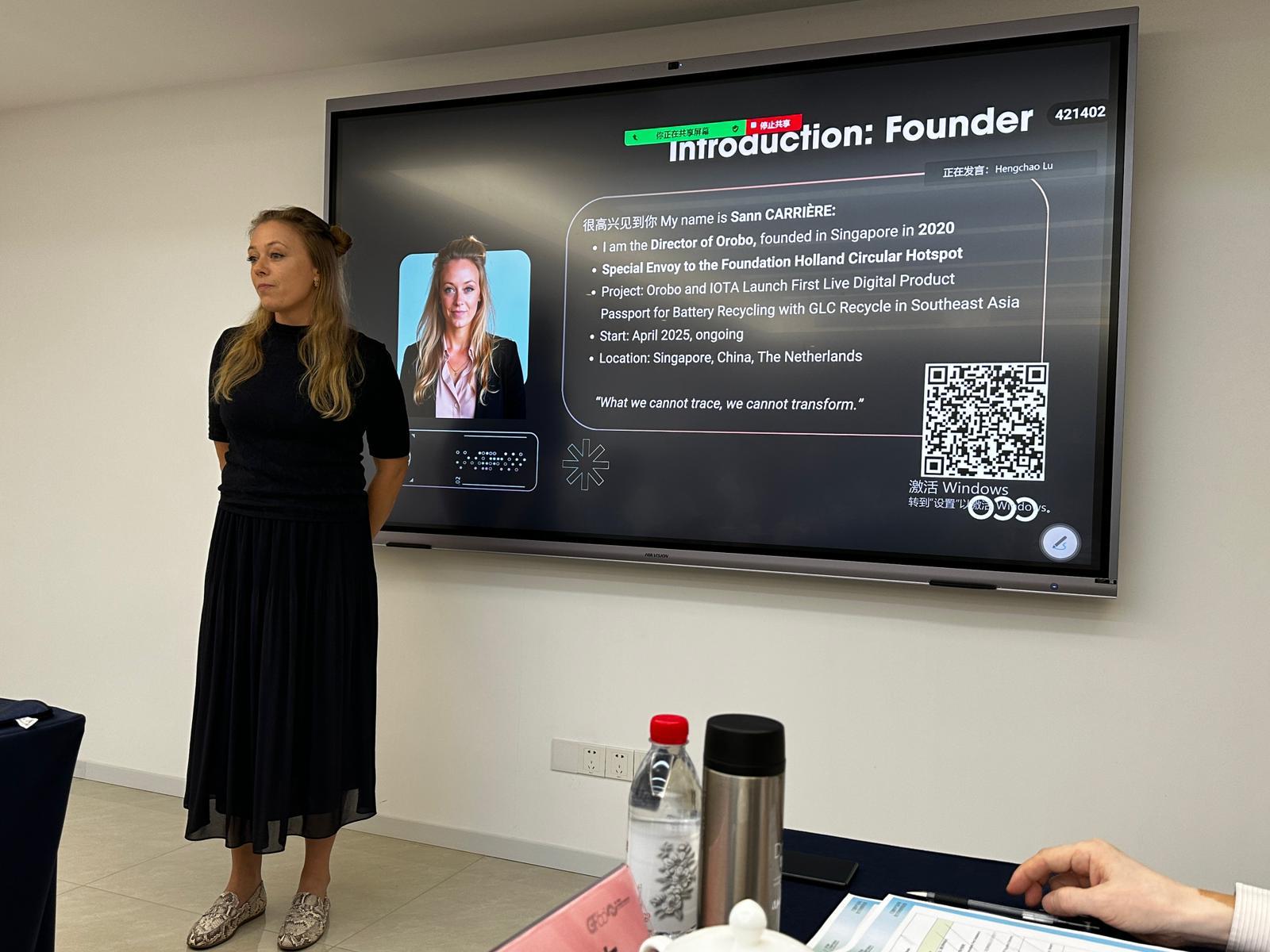 Photo courtesy of Sann Carrière.
 Photo courtesy of Sann Carrière.
Her aspiration is to one day travel to the Wudang Mountains in Hubei, China, to further her Taoist practice.
The Wudang Mountains is one of Taoism's holy sites.
"All this is preparation, so it doesn't matter much if it takes another 20 years of learning... I want to be able to present myself as such, in the hope of being accepted and to learn deeper and more," she said.
A pursuit for the self
Throughout most of our chat, Carrière was composed to the point of reticence.
But she became most impassioned when we spoke on certain topics, namely the difficulties and doubts she faces as a priest and her aspirations.
In a world that prefers when things fit in neatly with expectations, Carrière sticks out like a sore thumb.
The world, myself included, wants to know why. But the why is a deeply personal answer, part of a spiritual pursuit which only the pursuer truly understands.
As I was readying to leave, a group of elderly clan members got up onto a small stage.
They launched into a verse of an old Chinese pop song. Apparently, they were rehearsing for an event; the air of reverence was replaced by revelry, in the deities' full view.
It felt apt, to me: From the initial messiness of Balestier Point, to Carriére's fish-out-of-water pursuit, and now back to the randomness of a Mandopop song in a historic temple.
Like contrast and balance, yin and yang. Harmony between contrasting concepts — the story of Carriére's life.
@mothershipsg "The chanting is in Cantonese. So at some points, I am lost." What’s it like embracing Taoism as a Dutch woman in S’pore?🇳🇱🇸🇬 #mothershiporiginals ♬ original sound - Mothership