News


1,800 pest management workers to get better wages & career pathways under Progressive Wage Model
The model also intends to support workers who will need better training and skills to take on higher-value roles.
July 15, 2026, 03:56 PM
Top images via Mothership


Around 1,800 full-time and part-time resident pest management workers, including licensed vector control technicians, will benefit from sustainable wage increases and clearer career pathways, after the sector became the tenth to join the Progressive Wage Model (PWM).
The move was announced in a joint press release on Jul. 15 by the Ministry of Manpower (MOM), the National Trades Union Congress (NTUC), and the Singapore National Employers Federation (SNEF), together with pest management industry stakeholders.
Speaking to reporters, Minister of State for Manpower Dinesh Vasu Dash said that about about 150,000 lower-wage workers have benefited from the wage and career progression pathways under the PWM to date, since the scheme began in 2014.
Why pest management
Dinesh said the sector was chosen partly because of the public health role it plays, given that many diseases are spread through rodents and other pests.
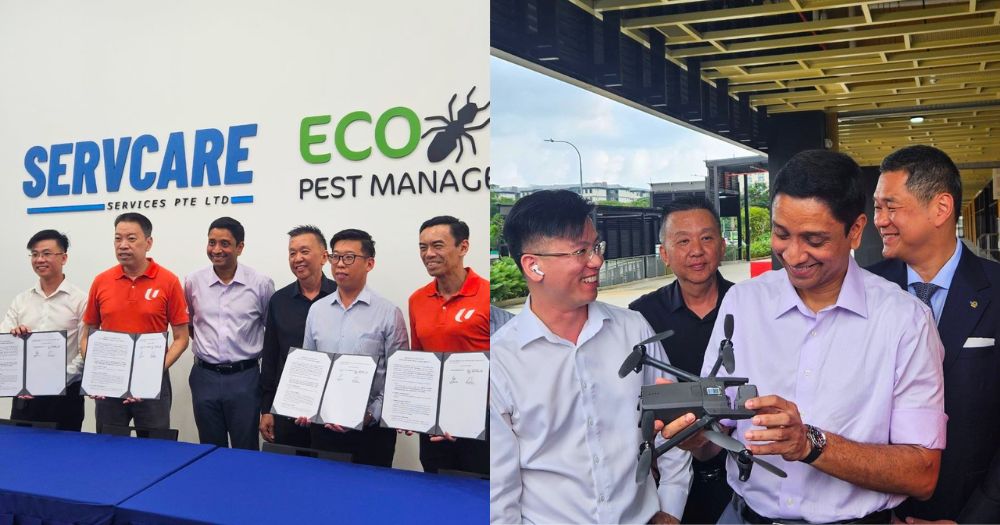
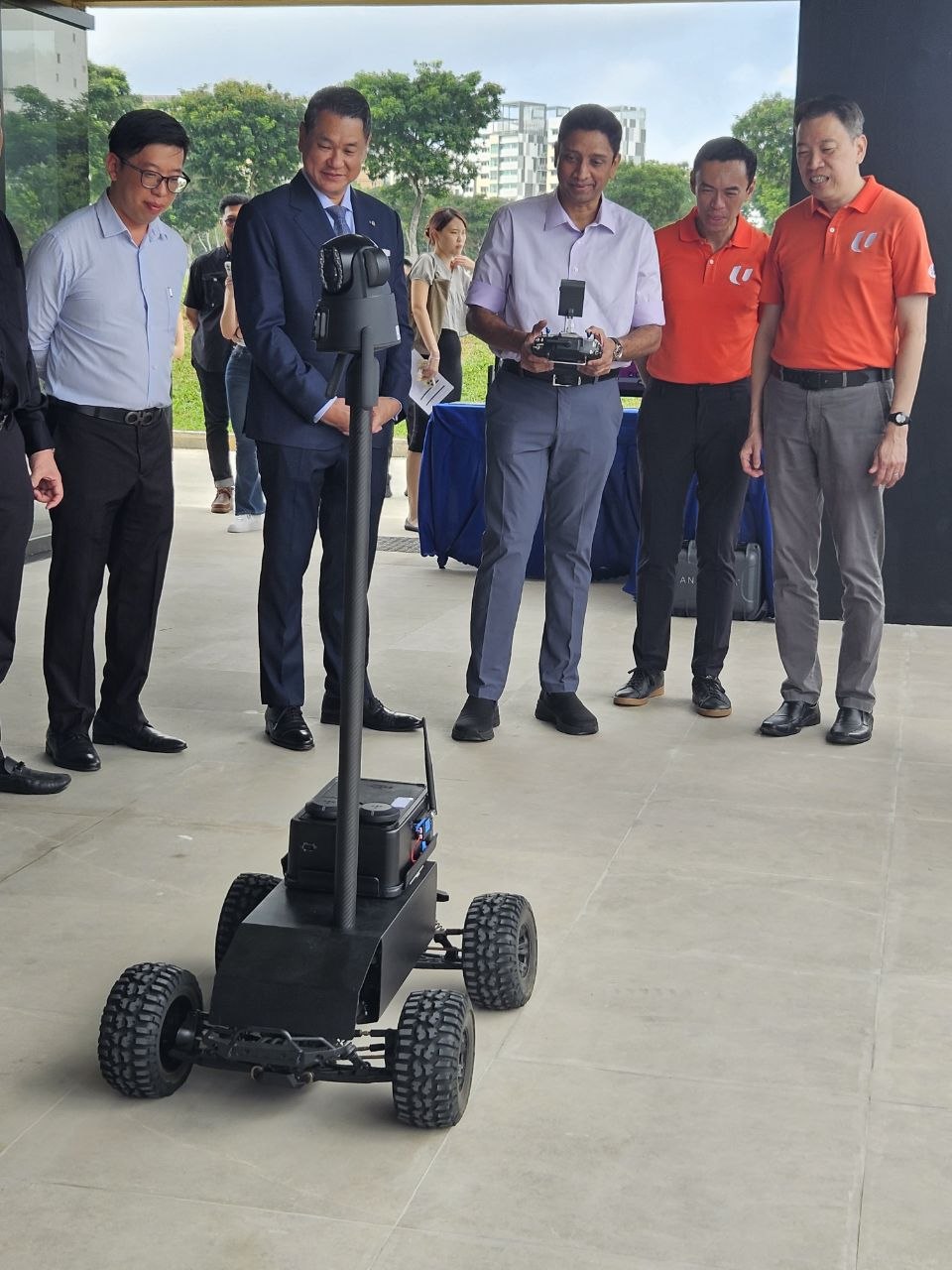 Image via Mothership
He noted that the industry has grown more professionalised in recent years, with companies increasingly using drones, sensors and thermal imaging technology to narrow down search areas — tools that both improve detection and free up workers for more productive, hands-on work.
He said: "The other way to look at it is they will be able to expand their business by virtue of the fact that they have got productivity tools that allows them to capture better market share. So we want to create tiers and pathways for our workers to be able to move up the chain."
This shift, he added, means workers will need better training and skills to take on higher-value roles, which the PWM is intended to support.
Wong, a 44-year-old operations manager in the pest management industry, said his team already uses thermal imaging technology to detect termites on-site, helping them work more efficiently instead of visiting sites unnecessarily.
Though he does not yet hold a drone licence, this is something he hopes to be trained for under the new model.
New tripartite cluster for pest management
To develop and oversee the PWM's rollout, a new Tripartite Cluster for Pest Management (TCPM) is being formed.
It will be guided by four objectives: developing the PWM's wages, supporting career progression tied to higher responsibilities, enhancing workforce professionalism and monitoring compliance with the PWM and its impact on the sector.
The TCPM will be chaired by Wan Rizal, Director of Stakeholder Management, Career Services and Partnership Group at NTUC's e2i (Employment and Employability Institute), and co-chaired by Kung Teong Wah, an SNEF representative and Cluster General Manager of Parkroyal Collection.
Its members will include representatives from industry associations — covering both service providers and service buyers — as well as unions and government agencies.
Dinesh said the process would take time, noting that it typically takes about two years for MOM, NTUC and SNEF to work through details such as training requirements, salary ladders and implementation timelines with a new sector.
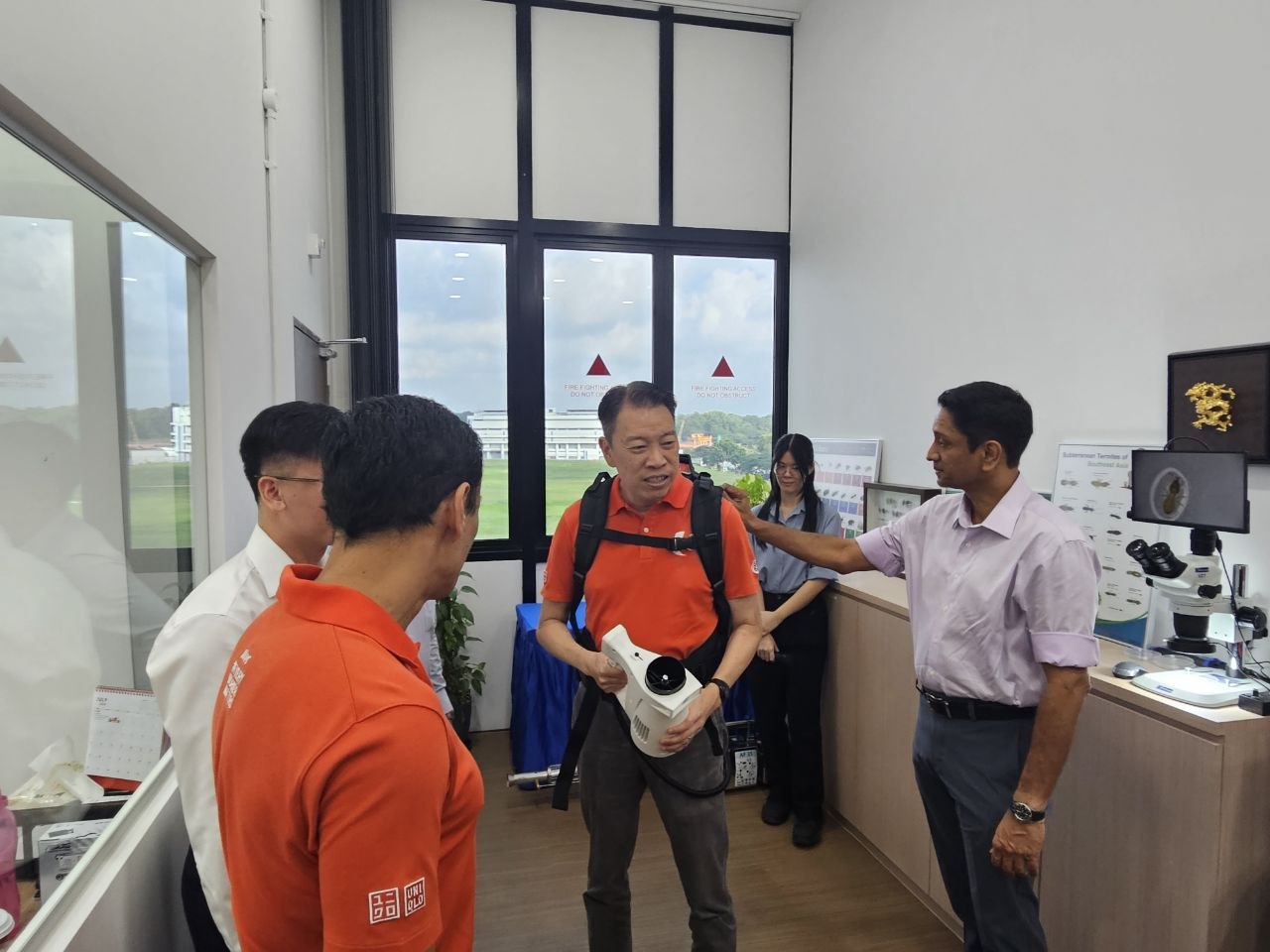 Image via Mothership
Asked which sector might be next in line for the PWM, Dinesh told Mothership:
"We don't have a particular sector in mind, but we will look at working with employers as well as the unions to do our best for the remaining part of our lower-wage workforce."
Tripartite partners welcome the move
Dinesh said that the PWM's expansion to pest management "recognises the expertise and importance of these workers," adding that MOM remains committed to "collaborating with our tripartite partners to support our workers, while balancing the needs of businesses."
The push has also come from the labour movement's side.
Melvin Yong, NTUC's Assistant Secretary-General and Director of the NTUC Care Division, said he had "advocated for the expansion of PWM to more sectors" and welcomed the move as "a significant step towards helping more workers."
Speaking to reporters separately, Yong stressed that productivity gains must go hand-in-hand with wage increases for the model to be sustainable for buyers, providers and workers alike, and encouraged wider adoption of technology across the industry.
As the person set to lead the TCPM's day-to-day work, Wan Rizal placed the emphasis on the specialised nature of the job itself, saying pest management work "requires specialised skills, from detecting pest activities and applying pest control measures, to handling chemicals safely to reduce public health risks."
He added:
“I look forward to contribut[ing] in this committee and work[ing] together with our partners to make sure that this sector gets its due recognition, and the workers get the progression [and] wage[s] increased in this area.”
Next steps
The TCPM will consult and engage industry stakeholders over the coming months to ensure the PWM is sustainable and tailored to the sector's specific conditions, while supporting business competitiveness, according to the press release.
For workers like Wong, the changes are personal. He said the PWM would give offer him the chance to upgrade his skills and earn a better salary.
These are reasons enough, according to him, to stay in the industry longer despite its physical demands.