



Environment


No regulations prohibiting restaurants from preparing wild-foraged seafood: SFA on Changi coastal foraging controversy
But the food must be handled under sanitary conditions.
July 30, 2026, 03:15 PM
Photo from Douyin


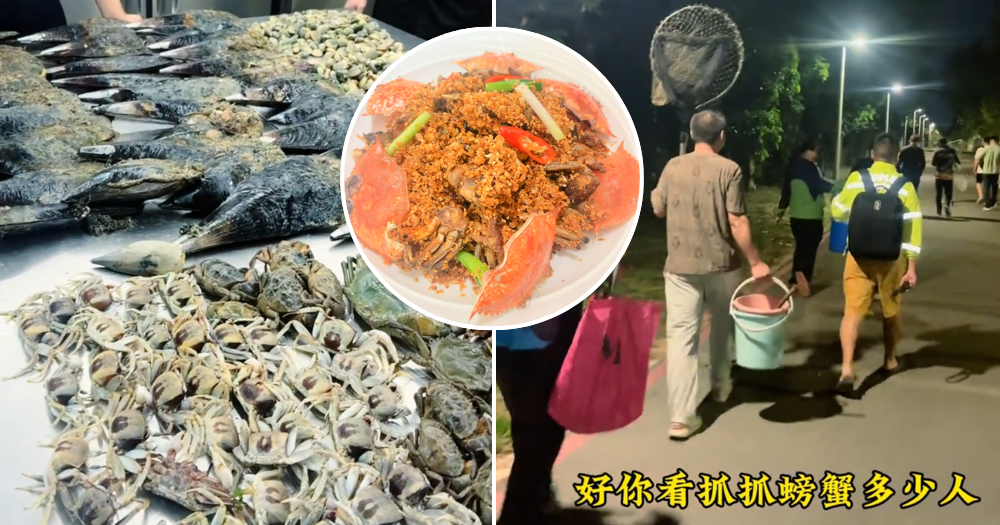
A recent incident of a group of people foraging marine life from a Changi intertidal area has sparked discussion online and backlash in the nature community.
Large amounts of seafood such as clams and crabs were later allegedly prepared and cooked at restaurant at Chinatown, Havelock Palace.
The foraging incident has been described as deplorable by Pasir-Ris Changi Member of Parliament Valerie Lee, and the restaurant has also been flooded with one-star reviews on Google Maps.
Businesses to ensure food prepared is fit for consumption
In response to Mothership's queries, the Singapore Food Agency (SFA) clarified that there are no regulations prohibiting local food businesses from preparing wild-foraged seafood or other customer supplied ingredients.
However, under the Sale of Food Act and the Environmental Public Health (Food Hygiene) Regulation, food businesses must still ensure that the food prepared on their premises is fit for consumption.
They must also be handled under sanitary conditions.
Caution and due diligence must be exercised by such businesses that accept wild-foraged catch brought in by customers, in order to ensure that the ingredients do not pose any food safety risks.
SFA noted that wild marine life collected from public shores may carry much higher food safety risks.
This is because some marine organisms can accumulate bacteria, viruses, parasites, biotoxins and contaminants from surrounding waters, some of which may not be eliminated through cooking.
Bivalve molluscs in particular, readily accumulate bacteria, viruses and toxins in their bodies as they eat by taking in and filtering water.
As such, SFA advises against harvesting and consuming shellfish from the wild, which may contain biotoxins.
All imports of live oysters must also be from SFA-approved sources and accompanied with a health certificate, to ensure food safety, according to SFA's advisory.
Not illegal to forage
Karenne Tun, Group Director at the NParks National Biodiversity Centre, previously said in response to Mothership's queries that NParks is aware of a social media post on intertidal foraging and "seeks the understanding of the public to protect our intertidal biodiversity".
According to Tun, NParks restricts the collection of animals from intertidal zones under its jurisdiction.
These zones include Sisters' Islands Marine Park, Sungei Buloh Wetland Reserve, Labrador Nature Reserve's rocky shore and Chek Jawa Wetlands.
For intertidal areas outside its jurisdiction, Tun says it focuses on public education on best practices and how visitors can interact responsibly with marine wildlife.