News


MAS allows for stronger S'pore dollar for 2nd straight quarter, expects inflation to stay elevated till early 2027
Imported costs likely to rise in coming quarters.
July 27, 2026, 03:05 PM
Photos via Canva.


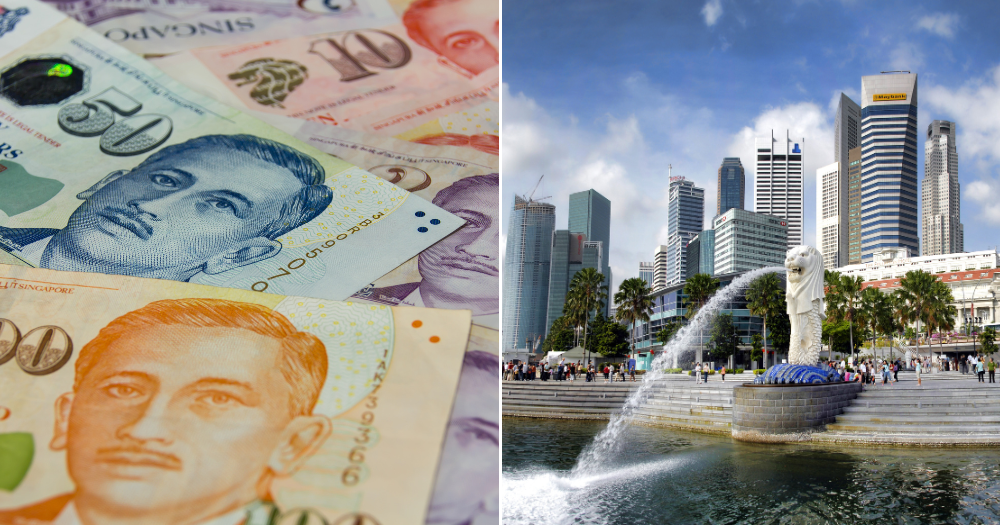
The Monetary Authority of Singapore (MAS) announced on Jul. 27 that it will be increasing the rate of appreciation of the Singapore dollar very slightly as inflation is forecast to step up in July and remain elevated into early next year.
This is the second consecutive quarter in which the central bank has tightened Singapore's monetary policy.
The first took place after the macroeconomic review in April 2026.
MAS said that the extent of July's increase in the rate of appreciation will be smaller than that of April's.
Sustained inflationary pressure
In its Jul. 27 monetary policy statement, MAS noted that the core inflation rate came in at 1.5 per cent year-on-year in Q2 2026, up from 1.2 per cent in January-February prior to the outbreak of the Middle East conflict.
It now expects core inflation rates to step up in July and remain elevated into early next year.
It has maintained its core inflation and Consumer Price Index-All Items (CPI-All Items) inflation projection at an average of 1.5 to 2.5 per cent for 2026 as a whole.
The projection was raised previously following April's macroeconomic review, up from one to two per cent.
Electricity and gas inflation will pick up due to higher energy prices, while food and retail and other goods inflation should increase alongside the passthrough of imported costs, MAS explained.
In the quarters ahead, Singapore's imported costs are likely to rise as higher fuel and electronic input costs will lift prices for items such as construction materials, capital equipment and food commodities.
Adverse weather conditions arising from El Niño in Singapore's import sources are also expected to lower agricultural output and drive up food prices.
However, MAS said that inflation should "ease more discernibly" in the second half of 2027 as global energy prices gradually moderate.
Global economy remained resilient
In terms of growth, global economic activity has been more resilient than anticipated, MAS observed.
This in part reflects the retreat in global prices of crude oil, natural gas and related chemical components from their peaks in April.
Alternative oil and gas supplies and utilisation of existing stockpiles have tempered supply disruptions, MAS noted.
At the same time, AI-related investments have remained robust, underpinning strong production and trade of IT-related goods and services in regional economies.
MAS also expects growth in Singapore's major trading partners to continue apace in the near term, with firm investment spending on technology sustaining activity in the global electronics supply chain.
Energy costs are still elevated compared to a year ago, and will contribute further to inflationary pressures worldwide.
Weaker real incomes could crimp final consumer demand in some economies, MAS noted.
S'pore's growth buoyed by AI spend
On the home front, Singapore's economy has also been stronger than expected, with the impact of the Middle East conflict discernible but contained.
Advance estimates from the Ministry of Trade and Industry placed Singapore's economic growth in Q2 2026 at 5.7 per cent year-on-year.
The disruption to oil-related sectors was more than offset by robust growth in the technology-related segments.
MAS expects the Singapore economy to continue to grow at a firm pace in the second half of the year as global AI-related investments continue to drive activity in Singapore's technology-related sector.
According to MAS, the recently imposed 12.5 per cent tariff by the U.S. on Singapore's exports would raise the effective tariff rate marginally.
However, the impact would be cushioned by export diversification and the boom in tariff-exempt electronics exports.
Altogether, Singapore's positive output gap is now forecast to widen slightly in 2026, reflecting the above-trend growth in the first half of the year, as well as the expectation that overall GDP will be sustained at high levels in the near term.
The output gap is the difference between an economy's GDP and its estimated potential GDP.
A positive output gap represents higher-than-expected economic activity and may be a precursor to rising costs and possibly rising inflation.
Tightening
Given these forecast conditions, the latest tightening of monetary policy builds on April's policy move to cap inflationary pressures, the central bank said.
Despite stronger-than-expected growth, the macroeconomic outlook continues to be uncertain, with MAS noting that inflation could pick up more strongly than anticipated if energy prices spike.
On the flip side, if there is an unexpected pullback in AI-related investments or tightening of financial conditions, inflation could weaken and GDP growth could be affected.
"MAS is well-positioned to respond effectively to any risk to medium-term price stability and will continue to closely monitor economic developments," the central bank said.