Features


'Share, even when you have little': S'pore woman, 50, once a homeless single mum of 5, distributes free food to women & families in need
At one point, she had less than a dollar in her bank.
May 10, 2026, 02:01 PM
Images via Mothership & Anggun Aida


Anggun Aida lives by the motto: Share, even when you have little.
The 50-year-old has worn many hats.
She founded a nonprofit, ran social entrepreneurship programmes for single mothers, and helped open schools and an orphanage in Indonesia.
She's also a mother of seven.
But at one point, she was a struggling single mother, trapped in a dysfunctional marriage, who later found herself homeless and alone.
The first 15 years
Anggun got married at the tender age of 17, not long after her O-Levels.
Her marriage was a decision driven in part by her family's conservatism, she said.
What followed was ten years of emotional turbulence, that felt "like a rollercoaster".
She felt trapped. On top of giving birth and believing she had to be subservient to her husband, her marriage was also tainted by elements of toxicity, her husband's harshness toward her, and her own struggles with postnatal depression.
She was also unable to continue her education, as she'd dropped out of her law programme in polytechnic to care for her children.
"I guess 15 years was more than enough, because I got married very young, and I was entering my early 30s.
So I was telling myself, 'yeah, that's it. I'm done.'"
Homelessness
In 2007, Anggun finally decided to walk out with her children.
She attributed the marriage breakdown to many reasons, but mostly because of her young age and realising that it "wasn't the life [she] wanted".
But it was far from easy. She was 31, freshly divorced, and a single mother of five.
Her youngest child then was one, and the oldest 15.
While she had a stable income working in an administrative role at an MNC, it was hardly enough to feed the family of six.
She also had neither a higher educational certificate, nor a place to go home to.
Anggun had deliberately kept her family in the dark about the divorce, in part because she feared having to justify her choices to her loved ones.
"The decision, to me, was right, but to some it was wrong," said Anggun with a wry smile.
In fact, when family members eventually found out about the separation a year later, the first thing she remembered being asked was: "What did you do?"
It was the lowest point in her life, she recalled.
But Anggun's bosses at work had always encouraged her to pursue something she wanted "if things don't work out".
Armed with this advice, she moved herself and her five children into her best friend's place, until a Member of Parliament helped secure them a room in a shelter at Marsiling weeks later.
The family would live this way for two more years – uprooting every now and then, until they were finally granted a rental flat of their own.
An eye-opener
"It wasn't a good place though," Anggun said of her first new home, a shelter designated for single parents.
She met a varied mix of people.
One woman was both a drug addict and a victim of domestic abuse.
Another was an Indonesian mother-of-two who had been so tormented by her Singaporean husband that she had fled with her children and slept by rubbish chutes.
"These were like my eye openers. I was thinking, wow, this is another world."
The trio looked out for each other, taking turns to cook and care for one another's children.
"It lightened the heart, you know, the pain we were having. All of us were going through some wounds, and that was when I said...that if one day I'm going to make it, don't forget each other."
Food and money were scarce at this point. Anggun remembered once calling up a social worker to ask if they could provide her children with food, only to be handed bread nearing its expiry date.
At one point, she had less than a dollar in her bank account, she recalled.
But it was also in this one year at the shelter that gave Anggun new perspective on her own plight — and that of women in her position.
"It was the moment that I realised...women are so resilient and so, you know, we are full of patience. I don't know why we ended up with [bad] husbands, you know?" she said with a chuckle.
'My strength, but also my weakness'
The temporary flat that followed, where Anggun lived with a couple and their three children, was not much better.
She remembers being sabotaged by her new neighbour, who falsely accused her of drug abuse and led the authorities to her door.
Despite knowing she was innocent, her priority was making sure her children did not watch her get handcuffed.
"My kids were starting to cry, and I don't know, suddenly I teared. You know, I cannot leave my kids here when you're going to take me away."
She was arrested and released on the same day, but the incident spooked her family so much that they moved out immediately.
Unbeknownst to Anggun then, it also had a drastic effect on her children, who began to act out in frustration.
"I didn't say much, but I didn't know that my kids were affected," she said.
One of her older children became noticeably introverted, while another son ended up in a fight with a classmate who told him "[his] mother used to do something bad".
The experience toughened her up and taught her to draw hard boundaries.
"It's my life, I can't keep letting people go into my boundaries and hurt me. If I'm damaged, my kids are damaged because it's like a mirror."
"They are my strength, but they are also my weakness."
Share, even when you have little
After that, things began to look up.
The divorce had been finalised, Anggun's application for a rental flat was expedited, and she moved into a new rental flat in Teck Whye with her children.
She also got remarried, to a colleague she met at work.
"I was kneeling down and I thanked God so much for the journey," she said.
"It's really, really like a nightmare, but there's always a blessing, so I trusted the whole process."
Inspired by those she had met along the way, it was here that she made up her mind to form a support group for single mothers.
This would later become Wondrously Woman GEM — a non-profit charitable trust dedicated to supporting disadvantaged single mothers, women, and children.
In its earliest stage, the organisation, comprising Anggun and a number of her friends, cooked and distributed food to single mothers among her neighbours.
Anggun, who had once been in the catering business, would create meals out of unwanted or leftover food donated by others, including companies.
"So like baked beans – some people don't like baked beans. Come give me, I do. Put little bit of tuna there, it becomes so nice and rich, you know?" she said animatedly.
"Giving away food is a blessing," she added, remembering her own plight just a year ago when putting food on the table was a struggle.
The women sometimes distributed up to 100 packs a day.
Later, they incorporated workshops into their programme, offering classes including in yoga, meditation, and embroidery.
Single mothers were their primary audience, but they also supported troubled youths and mothers of disabled children.
They kept expanding, gaining traction through the word of mouth, and eventually extended their services overseas.
At its height, they raised sufficient funds to set up two schools and an orphanage in Indonesia during the pandemic.
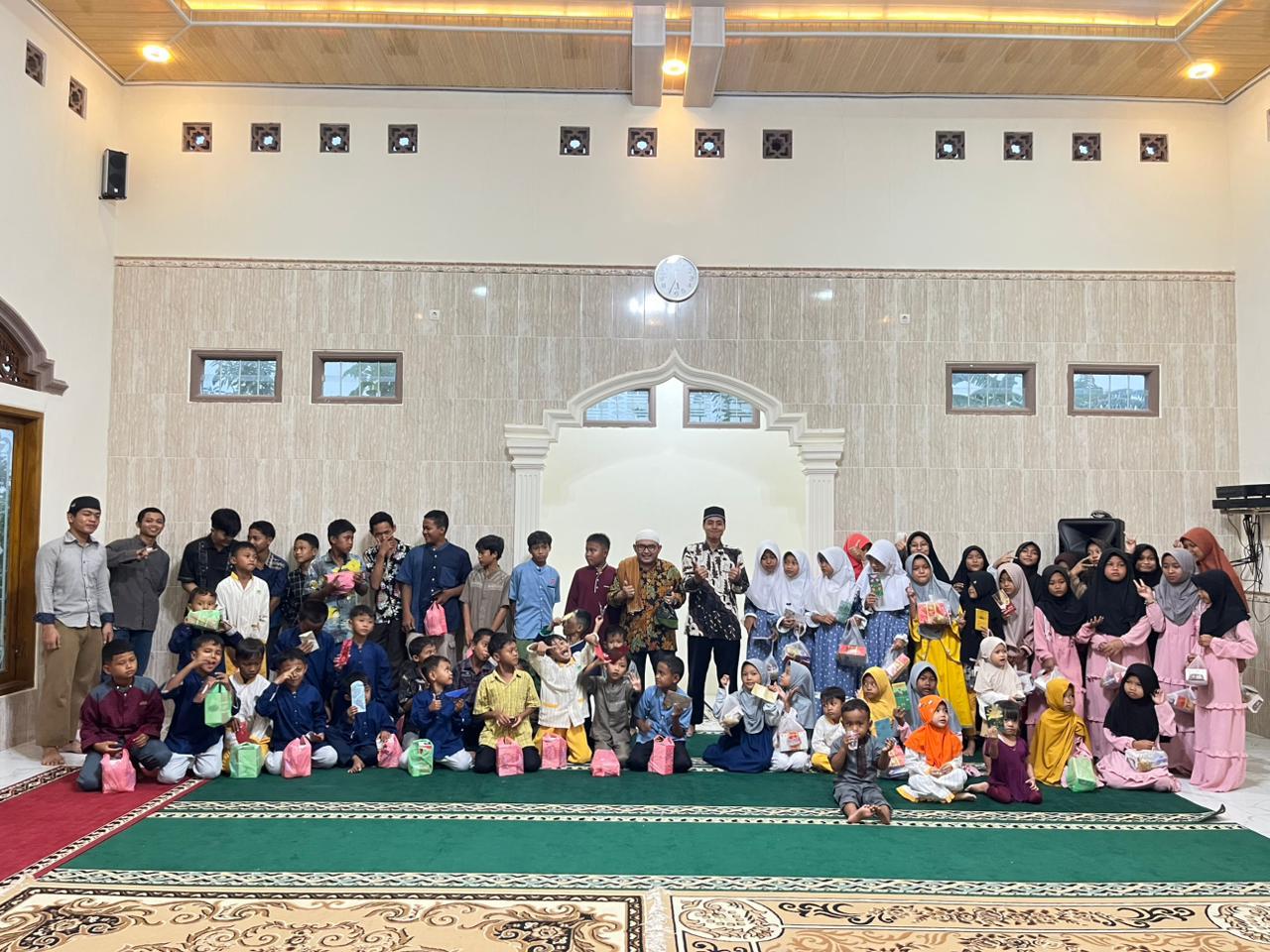 Photo by Anggun Aida
Wondrously Woman GEM gained so much attention it even attracted the support of town councils and members of parliament, many who made appearances at events.
For some 11 years, Anggun took the helm of the organisation — running social entrepreneurship programs, cooking and distributing food to the underprivileged, and raising her six children.
Another test
Then Anggun's seventh child was born.
The difficult birth ended with her daughter born with special needs which require long term medical attention.
The condition required the girl, now about 10, to undergo frequent surgeries, and Anggun had to become a full-time caregiver.
At first, it was demoralising — a setback just as things were getting better.
But Anggun soon realised there was more to be gleaned from it.
In her work, she had come across mothers caring for children with mental, physical and verbal disabilities.
But she had never been able to fully grasp just how challenging caregiving was until now.
"Every struggle a caregiver mum has to go through, it turns into another strength [in what] she never knew she would be able to overcome."
She made the decision to step back from the organisation to focus on full-time caregiving, but urged the others to continue.
Wondrously Women GEM eventually ceased operations as a charity after the 2026 Ramadan due to a mix of manpower constraints and documentation complications, but was reclassified as a social impact organisation instead.
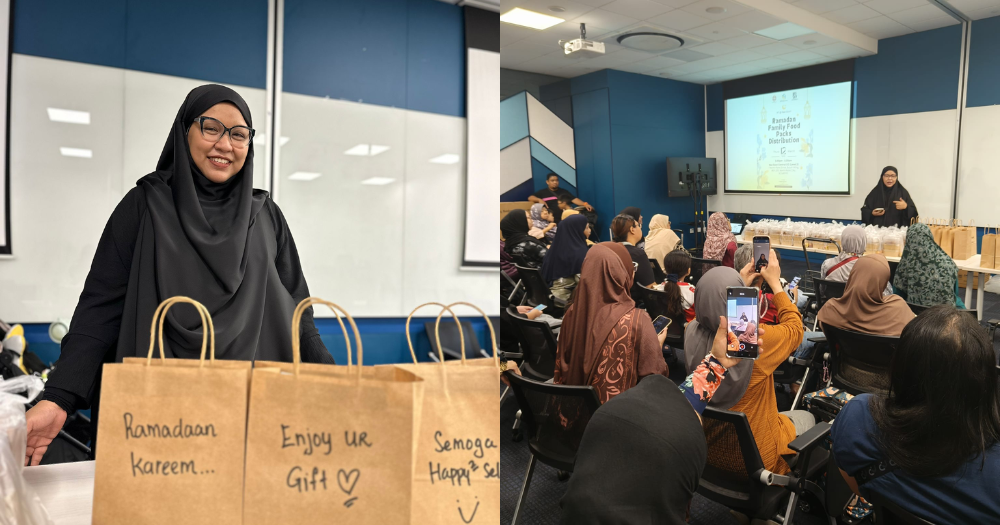
Today, Anggun continues distributing free food to the needy as a personal project. Most recently, she did so in Singapore and Indonesia during the Ramadan season.
No regrets
Asked what the hardest part of the entire journey had been, Anggun said it was about making choices as a mother, and deciding if they would put her children at risk.
At her lowest point, she even wondered if she should send her children to foster families and move on with her life, she admitted.
But it was the thought of her mother, a woman who had raised 10 children on her own, that kept her going.
"She was my [inspiration]," Anggun said.
"I might have failed in some chapters of my life, but I never gave up."
Her dream is to leave her legacy behind to the next generation and inspire other women to "believe you’re good enough".
Looking back on her life, she has no regrets.
"It was a gamble. Yeah, it was a good gamble," she said introspectively.
"When I look at it, I say, thank God I [went] through it when I was still young when we're full of energy."
Her parting words? "Trust the process.”