Features


S’porean woman, 36, leaves tech job to cycle solo across 5 countries in 101 days
Solo, but not alone.
May 06, 2026, 10:45 AM
Photos courtesy of Wing


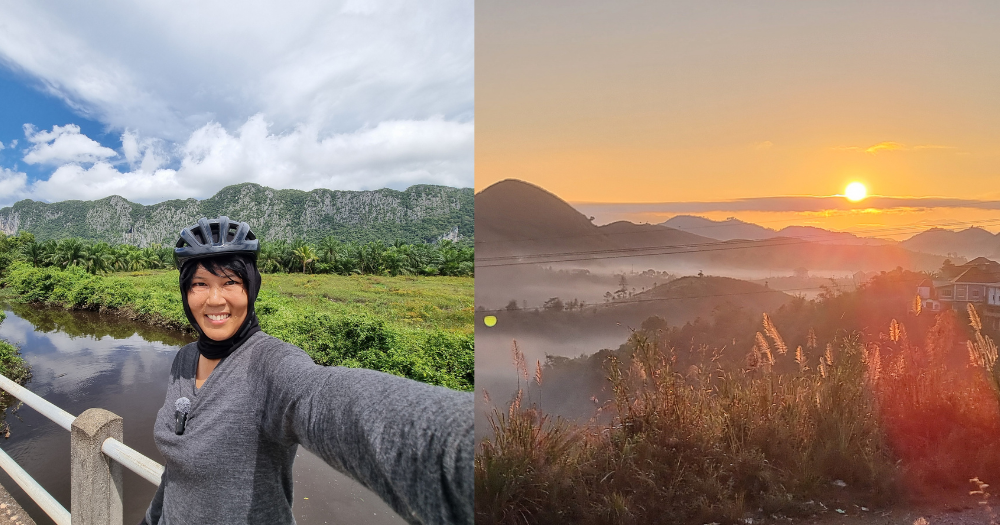
When Puah Hui Ying, 36, left her job as a software engineer to cycle solo across five countries, she did not set out expecting a neat, life-changing answer.
Instead, for 101 days, she traversed Malaysia, Thailand, India, Laos and Vietnam on a heavily loaded bicycle, encountering crashes, rough roads, broken phones and bike issues along the way.
But amid the uncertainty, one simple question kept returning to her, even if the answer was far more complicated:
"Why am I doing this?"
“I don’t want a life that just pays the bills”
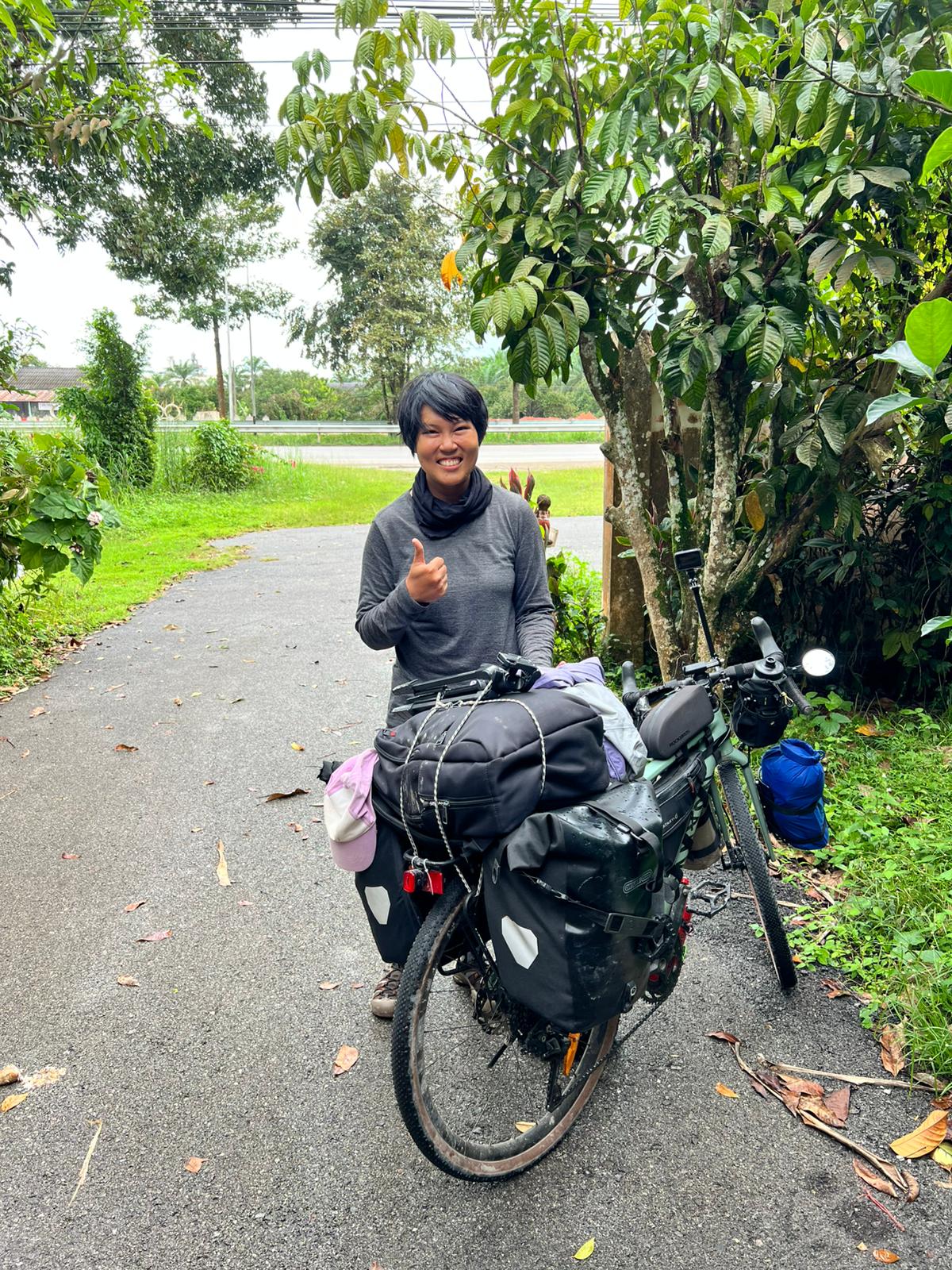
Speaking to Mothership, Hui Ying, who goes by Wing, said the idea of taking such a trip had first come to her when she was around 30.
“Honestly, it was just an idea that suddenly appeared in my mind and never really left,” she said.
She had always wanted to travel the world when she was younger, and had told herself she would do it by 35, after settling some responsibilities in Singapore.
At one point, she had secured a BTO flat, but eventually gave it up as she realised she wanted more flexibility for the future.
“I still plan to get a resale eventually, but at that point, it made more sense to let it go,” she said.
Wing’s career path before the trip had also been a road less travelled.

While she had spent more than six years working as a software engineer, the path there included several detours: working at the zoo as a junior show presenter, taking up a role at Marine Life Park, trying her hand at organic cafes, and even running a small events start-up.
Wing said she had long been drawn to work that could make an impact, especially in the area of sustainability.
Ironically, when she first entered tech, she was working in oil and gas. Her last role before the trip, however, was in green tech and smart buildings, which made things feel like they had “come full circle”.
“But personally, I still felt like something was missing,” she said.
She thought taking a year off would give her the space to think properly about what she wanted to do next.
“I don’t want a life where I have to keep saying ‘maybe one day’,” she mentioned, “I don’t want a life that just pays the bill. I want a life that makes me feel alive.”
The hardest part was not just physical

Physically, Wing said Laos was the toughest part of the trip.
She had to deal with climbs of more than 1,400 metres in elevation on a bicycle with worn-out tyres by that point in time and without the right gears to comfortably tackle the ascent.
At one point, the climb was so steep and the road conditions so poor that she did not feel it was safe to continue travelling the same way.
“I have to keep going because there was no other way that I could get myself out of the situation other than reaching the destination,” she told Mothership.
She eventually took a four-by-four and bus to cover larger distances after that.
But mentally, the most difficult moment came earlier, in Thailand, when she visited Kanchanaburi and the Death Railway.
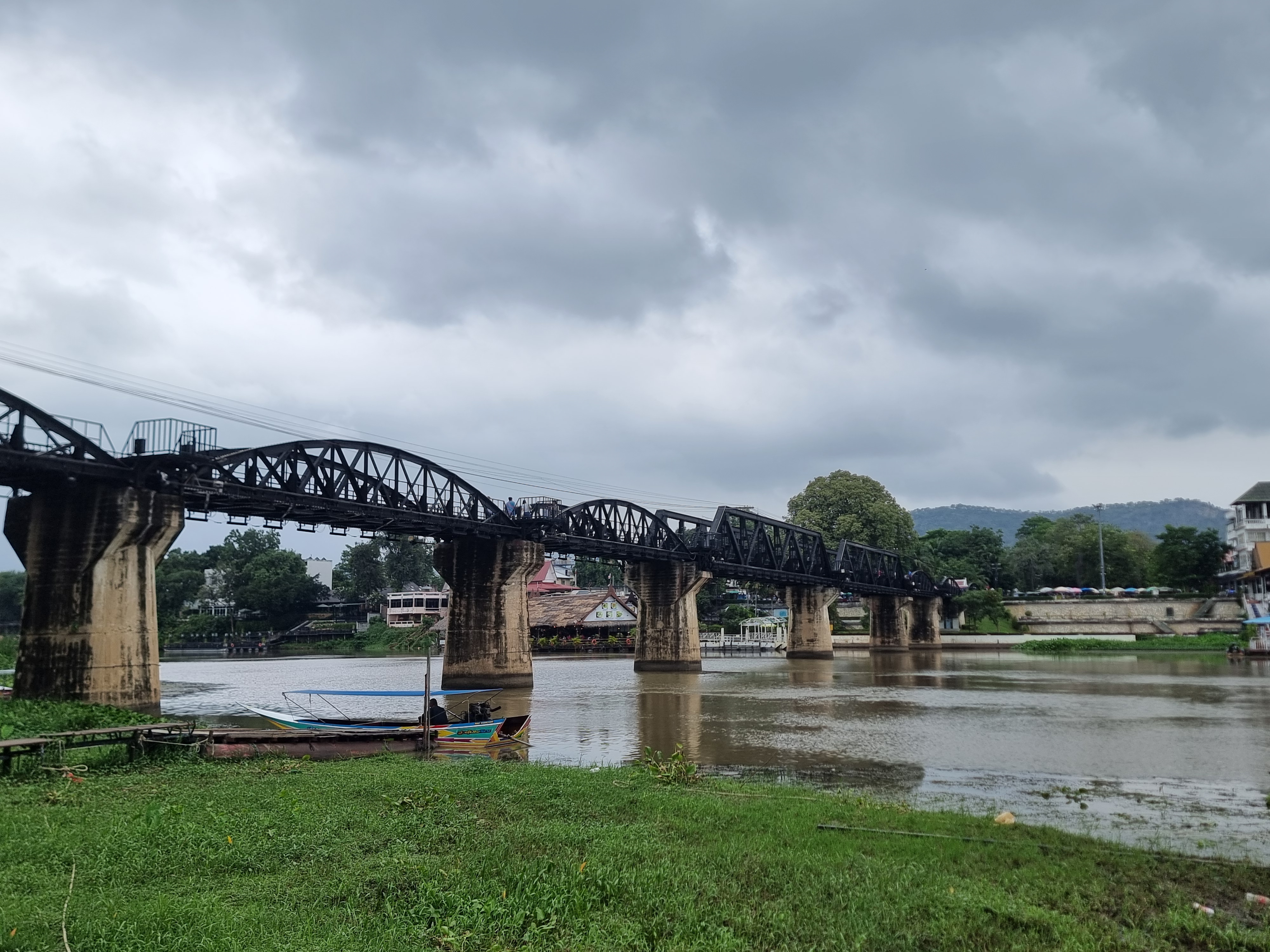
Standing there and learning about how prisoners were treated, the death rates and the scale of human suffering made the journey feel heavy for the first time.
“After that, I made it a point to visit historical sites in Laos and Vietnam too,” she said. “I realised I didn’t just want to pass through countries. I wanted to understand what shaped them.”
Of all the countries she travelled through though, she admitted that Laos also stood out most to her. Wing described it as having the most beautiful scenery of the entire trip.


She said she was struck by the country’s modernisation efforts and how difficult it can be to balance development and politics.
“It’s about seeing how certain actions can have repercussions in other parts of the country,” she said.
The trip also deepened her interest in sustainability, infrastructure and how different countries are shaped by issues such as floods, history and development.
Strangers who said hello
Wing’s comfort with solitude did not come out of nowhere.

She described herself growing up as “the loner”, “the weird kid”, “the ugly one”, and the child who stood at the side of the playground watching others.
Being alone on the road, however, reminded her that solo travel was rarely truly solo.
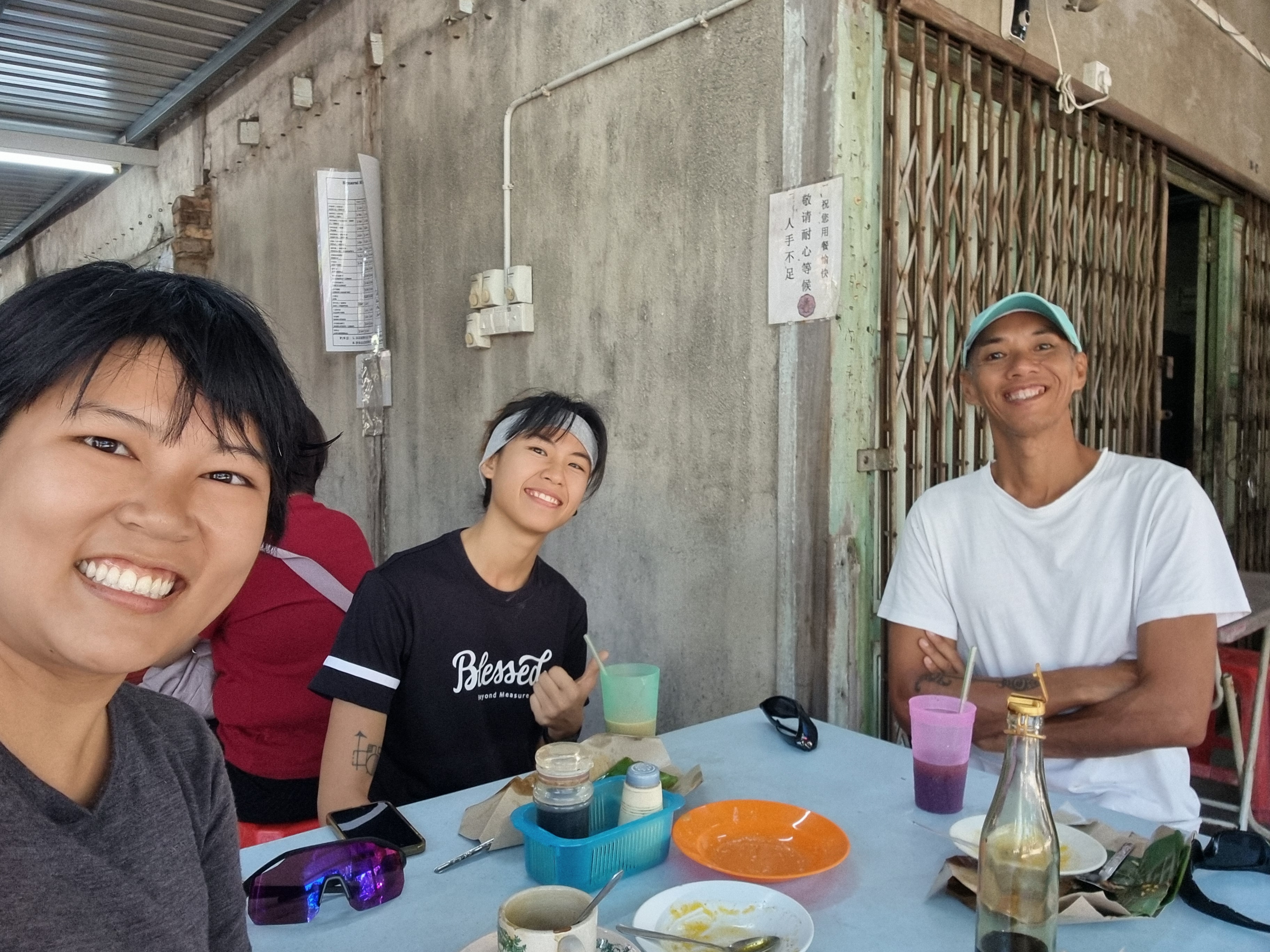
For Wing what stayed with her most were the people she met along the way, and despite travelling alone as a woman, she said she felt safe for most of the trip.
One such encounter happened early in the trip, in Malacca.
Wing had booked a hotel for two nights and was trying to be conservative with her money. While recording on Jonker Street one night, the owner of TiffiTap struck up a conversation with her.
She ended up hanging out with him and his group for the two nights they were there.

On the last night, Wing told them she planned to camp for a few more nights while finishing her video edit. They advised her that the area was not the nicest place to be in and that there had been incidents.
Instead, he invited her to stay at his place.


“His house was one of the most beautiful places that I stayed in,” Wing said, describing an outdoor garden and a home decorated with paintings and surfboards to Mothership.
“It seems that every corner of his place has a story.”
After camping for two nights at Gunung Ledang, Wing dropped by his place again as she needed to get supplies.
He and his girlfriend then accompanied her around Malacca to help her with them, and introduced her to local food.
“They didn’t have to do any of this. He didn’t have to offer his house to a complete stranger. It all started because he said hello.”
Bicycle became a conversation starter
Another memorable encounter was with a Singaporean woman in Thailand.
Wing was slightly lost at a train station and first spoke to the woman’s husband to ask about buying a ticket and boarding the train with a bicycle.

The woman later appeared, and it turned out they were heading to the same location.
They spoke about why the woman had relocated to Thailand and what her life there was like.

They later met again in Hua Hin, where the woman brought Wing around for a few days, showing her good food and the night market.
For Wing, the encounter made her reflect again on the purpose of her own trip. Cycling, she said, changed the way she connected with people.
Bicycle tourers are still relatively rare in Southeast Asia, and people would get curious about her loaded bike.
Her bicycle then became a conversation starter. In Laos, for instance, she met a group of miners and a Chinese tourist because they were intrigued by it.
The vulnerability of travelling by bicycle also created more unexpected encounters.

She said:
“People will give me things on the road. Someone even tried to give me cash.”
She also used Warmshowers, an app that connects bicycle tourists with hosts, similar to Couchsurfing but for cyclists.
By staying with locals, she said she got to better understand their lives, including how they grew up, what they thought of their systems, their worries and what they felt could be improved.
No clear answer at the end

Unlike the tidy resolutions often found in books or shows, Wing did not immediately find a clear answer to the question of why she had done it after completing her solo cycling trip.
“It was still quite fuzzy,” she said.
She knew the journey had changed her, but could not explain how at first.
After returning to Singapore, she caught up with friends, read more, attended industry events again and faced the reality of the current tech landscape, including layoffs and the rise of artificial intelligence.

Looking back, she realised she had spent much of her life doing things she cared about, including work related to animals, sustainability and community-driven projects.
But many of those paths lacked long-term growth and stability.
Software engineering gave her that stability, and she genuinely enjoyed problem-solving. At the same time, she still wanted work that felt more aligned with what she cared about.
Now, Wing wants to move deeper into smart buildings or green tech, specifically in presales, bridging the technical and commercial sides.
She mused:
“The trip didn’t hand me the answer directly.
“But being alone for that long, and seeing how floods, infrastructure, history, and sustainability issues affected different countries during the journey, definitely strengthened my resolve to contribute more intentionally in that space.”
Advice: start small

For Singaporeans who want to do something similar but are afraid, Wing’s advice is to start smaller.
“You don’t need to quit your job immediately,” she said. “Try a shorter trip first and see how you feel.”
She added that as a “very pragmatic Singaporean”, savings are important, and for those above 30, having some form of passive income can provide even more peace of mind.
For those in their twenties, however, she put it more simply: “Honestly, just go. Time is your biggest advantage.”
She added that Southeast Asia, especially from Malaysia to Vietnam, is generally safe for bicycle touring, but says one must exercise common sense, trust their gut and respect local advice.