News


A straight line 60 years long, the Japan-S'pore diplomatic relationship in a nutshell
A long term pragmatism drives the relationship.
March 12, 2026, 07:09 PM
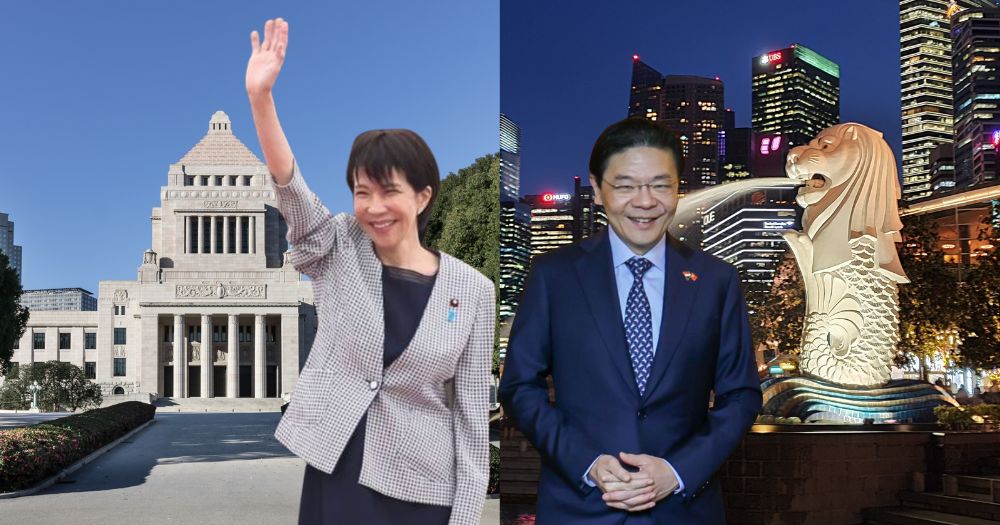

 Prime Minister Lawrence Wong is heading to Japan in the near future, his first official visit since becoming Prime Minister in 2024.
At the same time, he will commemorate the 60th Anniversary of the establishment of diplomatic relations between Singapore and Japan.
But Japan and Singapore have a complicated history, as Japan does with everyone in East Asia, which is something of an understatement: 2025 marked the 80th anniversary of the end of the Second World War, when Japan occupied Singapore for over three and a half years.
But in the years since the war, Japan has become an economic powerhouse and has invested heavily throughout Southeast Asia, providing a catalyst for development in the post-war period, even to this day.
The modern relationship is a balance between these two experiences, and for 60 years, Singapore’s leaders have attempted to be pragmatic and managed to build a long-lasting friendship that has had remarkably few and shallow low points.
To not rekindle fires of hatred
On the morning of Mar. 15, 1967, Singapore’s first prime minister, Lee Kuan Yew, unveiled the Civilian War Memorial, giving a speech that would form the basis of Singapore's approach to the Japanese occupation and Singapore's own security going forward.
The speech was referenced by his son, Senior Minister Lee Hsien Loong, at a book launch about the Singapore-Japan relationship in 2025, but also by Senior Minister of State in the Ministry of Foreign Affairs Sim Ann at the Mar. 6, 2026, Business China event.
SM Lee said then that the memorial was not to rekindle old fires of hatred nor to seek settlements for blood debts, but to remember the lessons of the occupation, of “what can happen to people caught completely unaware and unprepared”.
It is useful to know the historical context of when he gave the speech.
In 1967, Japan was disarmed, but the Cold War was raging, with the Vietnam War ramping up.
In Singapore, Konfrontasi had only ended the year before, and the next year would see the start of the Second Malayan Emergency in Melaka.
The elder Lee noted that since the war, the geopolitical order had changed radically, with Japan no longer being a threat to the country.
Safety for Singapore would not be achieved by addressing wide-ranging concerns.
Masters of our destiny
Sim Ann echoed these words in her speech: “The most important legacy of the Japanese Occupation was a fierce determination to be masters of our destiny – to build strong defence, self-reliance and a united multiracial country.”
“If today as we remember these lessons of the past, we strengthen our resolve and determination to make our future more secure, then these men and women for whom we mourn would not have died in vain.”
The elder Lee could not have been clearer; the debt to the victims of the war was repaid not in blood, but by securing the future for those who survived.
In this, Singapore draws a straight path between that morning in 1967 all the way to the present day, a path that chooses not to ignore history, but to recognise the needs of the present over resentments, no matter how justified, of the past, for the benefit of the future.
In any case, Singapore received *some* restitution, as Sim Ann related to the Business China audience. In 1966 Japan agreed to "acknowledge" wartime suffering, a demand of the Singapore people "especially in the Chinese community."
The two countries resolved the issue with Japan agreeing to provide S$50 million, half in grants and half in special loans; a sum that, as best as I can figure, is about S$500 million in 2025.
The War Memorial would play host to another monumental moment in Singapore-Japan relations, when in 1994, Japan’s then-PM Tomiichi Murayama would lay a wreath at its base.
1994 represents a kind of midpoint for the relationship, and after laying the wreath at the War Memorial, Tomiichi would continue with his working visit, and was even toasted by ESM Goh Chok Tong at a state banquet.
Restless search
Goh paid tribute to the many ways the relationship had developed, lauding training initiatives, tourism, and the fact that Japan was Singapore’s third-largest trading partner and second-largest foreign investor.
31 years later, SM Lee would tout similar stats, Singapore and Japan still took part in sizable cross-border training, Singaporeans visited Japan in droves, only matched by the number of Japanese tourists in Singapore, and both countries were in each other’s top 10 investors and trading partners.
During the first-ever visit by a Singaporean PM to Japan in 1968, Lee Kuan Yew spoke of the “restless search" that Japan was undertaking for trading and economic arrangements in the Pacific, and of Singapore’s need for bilateral cooperation with such countries.
Once again, in the development of the economic relationship, the same goals that drove it at its start are the same motives that drive it in the present, into the future.
That restless search would mean that Singapore and Japan’s economic paths would cross time and again, and that is where the bilateral relationship really shines.
Spirit of pragmatism
SM Lee spoke about that pragmatism in 2025.
He said that in the 60s, the Japanese economy was growing rapidly, and it ultimately needed low-cost locations in developing countries, such as Singapore, to set up production facilities.
Singapore, for its part, was looking for investments to create jobs, bring in new technologies, upgrade Singapore’s capabilities, and to open up markets in developed countries for the fruits of Singapore’s production.
“In this spirit of pragmatism, both countries turned the page on history and began a mutually beneficial and highly successful economic partnership.”
It is this pragmatism that has been evident since the earliest days of the relationship and shines through to this day.
Top image via Wikipedia, Unsplash, Sanae Takaichi/X, & Lawrence Wong/Facebook