News


S'pore disputes claims made by US in trade practices probe, seeks clarification from trade office
The U.S. claimed that Singapore has a trade surplus with it and has unfairly propped up some sectors.
March 13, 2026, 12:04 PM
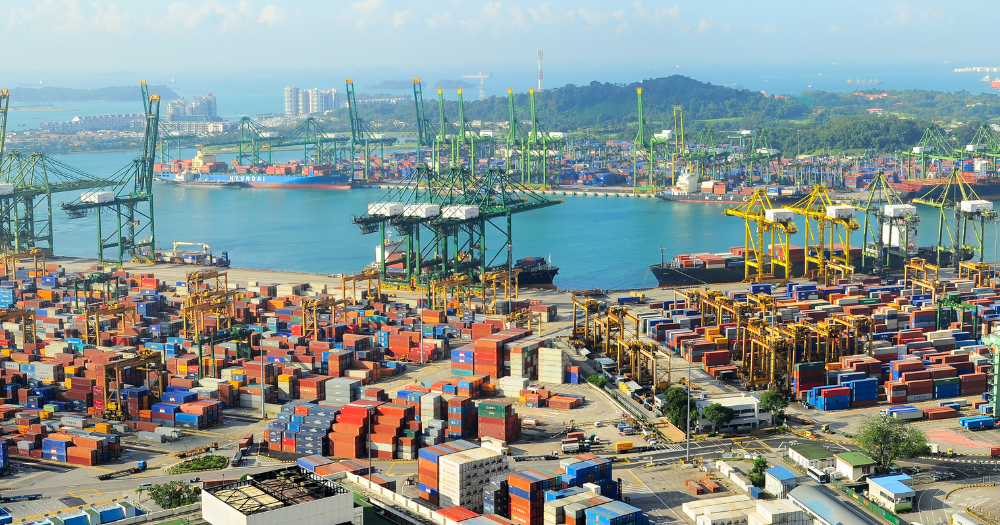


Singapore's Ministry of Trade and Industry (MTI) has disputed the claims made by the U.S. regarding Singapore's trade practices, which the U.S. claims it is disadvantaged by.
The trade practices of concern to the U.S. relate to what it calls structural excess capacity and production, as well as Singapore's trade surplus.
Alongside Singapore, the U.S. Office of Trade Representative (USTR) is also launching investigations under Section 301 of the Trade Act of 1974 on 15 other countries, including China, Malaysia, Cambodia and Vietnam.
Singapore runs trade deficit with U.S.: MTI
Responding to the U.S. announcement in a Mar. 12 statement, MTI disputed claims by the USTR that Singapore's economic policies have resulted in structural excess capacity and production in sectors such as semiconductors, electronic equipment, petrochemicals and pharmaceuticals.
USTR claimed that this is evidenced by Singapore's global goods trade surplus, which is recorded as US$47 billion (S$60 billion) in 2024.
It noted that, with the U.S., Singapore has a bilateral trade surplus of US$27 billion (S$34.5 billion) in 2024.
It also claimed that Singapore experienced a recent drop in industrial occupancy rate but continued to expand manufacturing capacity.
MTI referred to data from the U.S. Bureau of Economic Analysis and pointed out that Singapore runs a trade deficit with the U.S., recording a bilateral goods trade deficit of US$1.7 billion (S$2.2 billion) and a services trade deficit of US$25.1 billion (S$32 billion) in 2024.
This deficit totals US$27 billion (S$34.5 billion).
MTI also pointed out that Singapore's industrial occupancy rate remained healthy at around 90 per cent, contrary to the USTR's claim of a recent drop.
The ministry further explained that land is a scarce resource in Singapore, and the amount of land set aside for industrial use has decreased over time due to other land-use needs.
"MTI has provided the USTR with this information and will be engaging the USTR to seek further clarification on the trade data and on the Section 301 investigations," the ministry said, adding that it will provide further updates when available.
Investigation could be part of push to replace struck-down tariffs
The newly announced investigations may set the stage for a new round of tariffs, following the U.S. Supreme Court's strike down of Trump's past tariffs, including the sweeping Liberation Day tariffs, Bloomberg wrote.
Structural excess capacity and production refers to a persistent situation where an industry or economy develops the capacity to produce more goods than market demand, potentially resulting in overproduction.
This may be attributed in part to government support through policies like industry grants, rather than market forces.
The USTR explained that such overproduction often leads to the surplus goods being absorbed by U.S. markets directly or via third-party countries, displacing existing U.S. domestic production.
This, it noted, poses a "serious challenge" to U.S. efforts to "re-shore supply chains and provide good-paying jobs for American workers".
According to USTR, Section 301 is a U.S. trade law that is designed to address unfair foreign practices that affect U.S. commerce, MTI explained.
Investigations under Section 301(b) examine whether the acts, policies, or practices of a foreign country are unreasonable or discriminatory and burden or restrict U.S. commerce.
Top image via Canva