News


1 in 3 employers of foreign domestic workers don't give regular weekly rest days: NTU student survey
If they choose to work on that rest day, they must receive one day's salary in compensation.
February 07, 2026, 02:30 PM


One in three employers of foreign domestic workers (FDW) do not provide them with regular weekly rest days, found a survey conducted by a team of final-year undergraduate students from Nanyang Technological University (NTU).
The team, from the Wee Kim Wee School of Communications and Information, surveyed 105 current employers of FDWs, and also found that 50 per cent of FDWs work more than nine hours a day.
Mandatory rest day
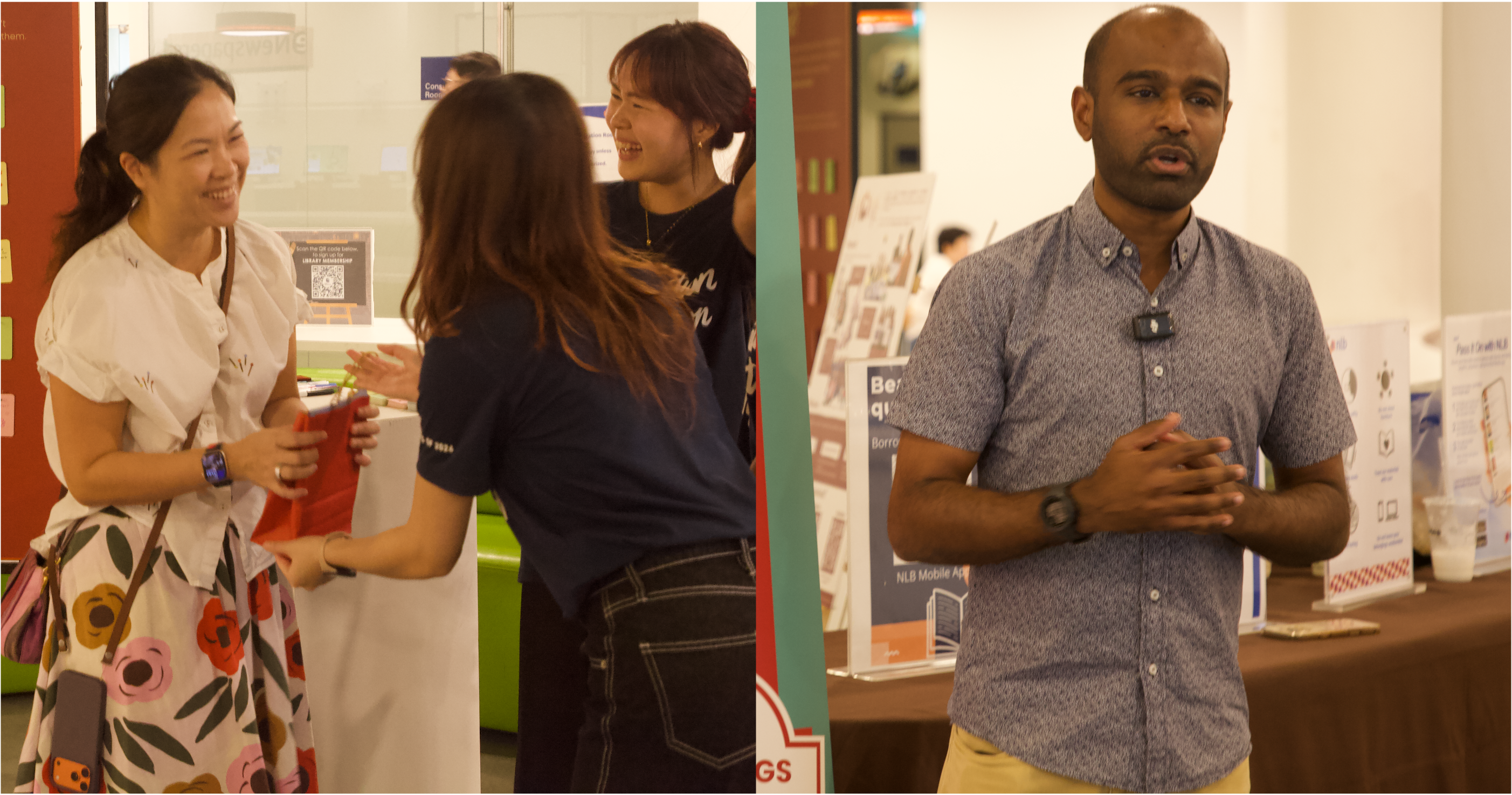
The group partnered with Singapore-based charity, the Humanitarian Organisation for Migration Economics (HOME) to launch a public roadshow at Jurong Regional Library that raises awareness of the issue by sharing personal stories from FDWs and their employers.
The roadshow's exhibition also included educational content on fair employment practices, to help Singaporeans get a better understanding of the rest and other fair treatment that FDWs should receive.
Attending the event was Member of Parliament Hamid Razak, who represents West Coast-Jurong West GRC, and also He Ting Ru of the Workers' Party, who represents Sengkang GRC.
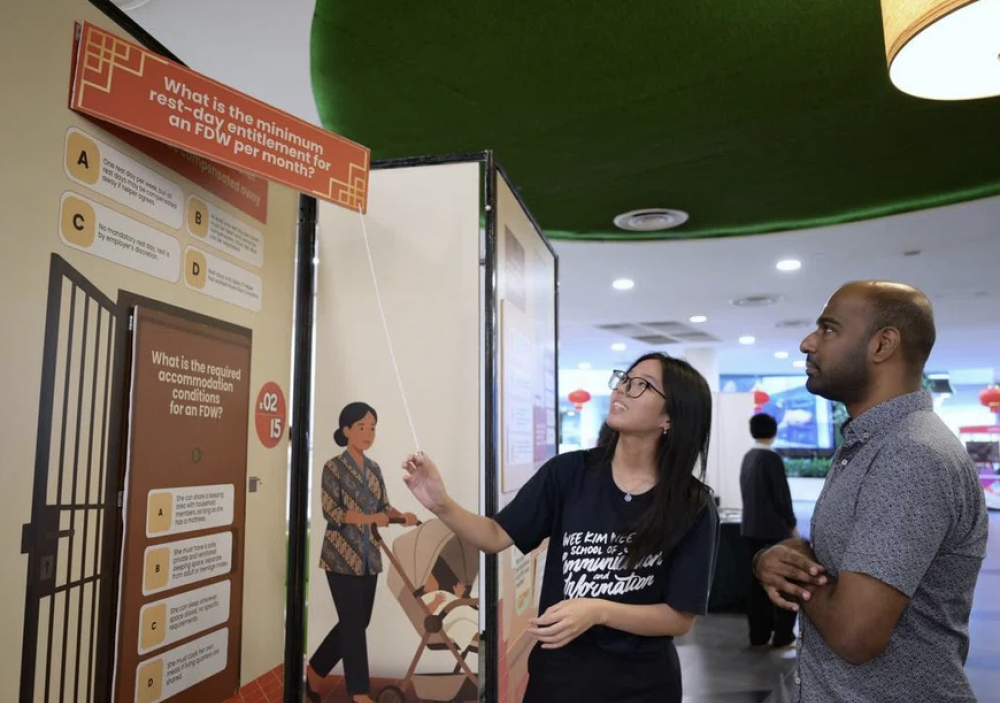 Image courtesy of Maid of Honour
Hamid Razak shared that there are about 308,000 FDWs in Singapore, which means that one in five households depends on their work to support their own lives.
However, other studies have shown that one in nine employers does not even provide them with their mandatory rest day.
Under Ministry of Manpower rules, FDWs are entitled to one rest day per week, mutually agreed between them and their employer.
If they choose to work on that rest day, they must receive one day's salary in compensation.
In addition, they are also entitled to one rest day per month that cannot be compensated away.
In his speech at the event, Hamid Razak said:
"Sometimes, it is not that people do not care. We are human. We have blind spots. In the hustle and bustle of daily life, we can forget what should otherwise come naturally.
Exhibitions like this help us recognise those blind spots and remind us that they need attention. More importantly, they remind us that behaviour must change."
He added that while policy work in Parliament is important, through questions and debate, policy alone probably cannot shape daily decisions made by employers and individuals.
"Dignity is a daily decision," he said.
He added that he hoped the awareness raised by the exhibition would lead to conversations that can help address these blind spots, as a mature society.
 Image courtesy of Maid of Honour.
He Ting Ru said she was delighted to attend the roadshow this weekend at Jurong Regional Library.
"A thoughtful and intentional project by final NTU students, the campaign hopes to shine a light on the numerous women who leave behind their homes and loved ones and travel many miles to take on a significant portion of the labour that it takes to keep our households running."
She added that she hoped that the provoking conversations started by this initiative do not stop, but carry on rippling through our communities, as we continue to shape how we care for our families.
The exhibition at the Jurong Regional Library will remain open to the public until Feb. 28, 2026. The group's website can be found at this link.
Top image courtesy of Maid of Honour.