News

We hope 2025 will have been 'more exciting' than 2026: SM Lee on global upheaval in the past year
'May you live in interesting times'.
January 08, 2026, 12:13 PM

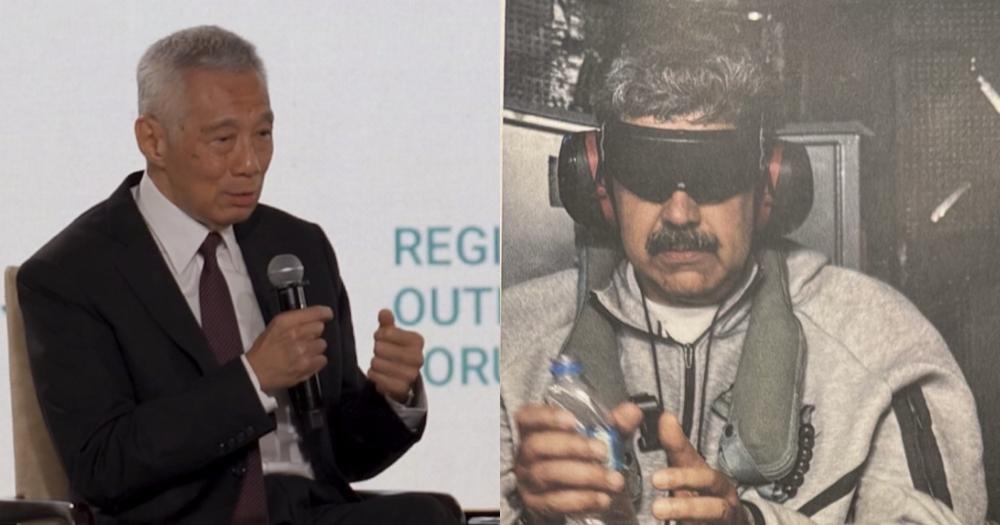
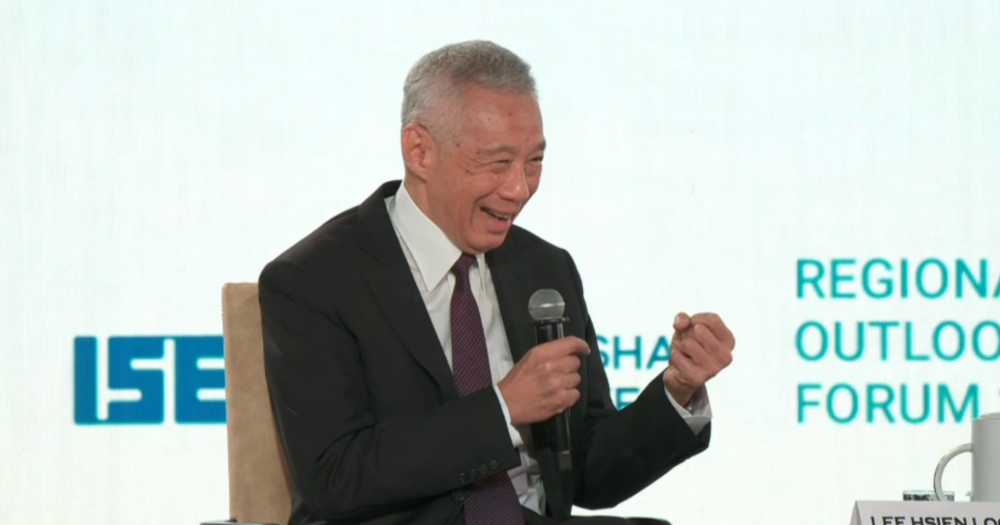
 Senior Minister Lee Hsien Loong reflected on 2025 in his opening speech at the ISEAS-Yusof Ishak Institute Regional Outlook Forum (ROF) on Jan. 8, calling it "a year of strategic changes".
He addressed a number of significant global events that he said would leave "long term changes".
Trade
On the top of his list was changes to the global trading system, in particular how it was impacted by U.S. president Donald Trump's tariffs, that were first announced on Apr. 2, 2025.
The U.S.'s shift towards making deals bilaterally, or one-on-one with countries instead of through a multilateral trading system, gives them the leverage of using tariffs as a policy tool for many other purposes as well, he said.
The effects will take time to play out, he continued, but countries will retaliate by defending their own supply chains, which will in turn hurt the world economy and lead to "less stability, less growth, less prosperity, less economic integration and technological progress".
Security
Security policies also saw a major change in 2025, SM Lee added.
European countries, in particular, are "engaged in deep soul searching" on how they can determine their own security policy and be less dependent on the U.S., who he described as "completely different".
"It's going to not just be a lot of budget, but it's also going to be the difficulty of coming up with a European policy security, direction and action, and that's a fundamental change to the world."
He referred to Ukraine, locked in a nearly four-year war with Russia. They will now have to think about a realistic path forward without relying on the U.S., SM Lee said.
In the Asia-Pacific, U.S.-China relations continue to be the key factor and fundamental source of tensions, he said, adding, "On top of that is overlaid a reluctance on both parties to incur the cost of a full scale trade war."
SM Lee further pointed out the growing influence of China as a security and economic power in Asia, which rivals the U.S., who remains a very important partner.
"I think a lot in the Asia-Pacific will depend on how the U.S. or how China decides that it wants to engage its regional neighbours and the world."
Military intervention
On the U.S.'s increasingly unilateral decisions to intervene in other countries, including Venezuela, Iran and Nigeria, he said that while there may be "spectacular" military success in the short term, the longer term effects leave the question of adherence to international law and UN principles up in the air.
"I'm not sure that that (UN principles) has been furthered by this environment," SM Lee articulated.
As for Asean, collaborating to deal with external problems "as one unit, rather than as 11 different countries" should be the way forward, he posited.
However, SM Lee acknowledged that member countries still have a way to go with resolving their own conflicts, including the Thailand-Cambodia border dispute and Myanmar's internal conflict.
"This is a complicated world. If you ask me what happens in 2026, I would say as far as the growth is concerned, it could be plus a bit, minus a bit, compared to last year," he concluded.
Describing 2025 as a "sea change", he said 2026 and the years to come will see the consequences of such changes.
"We hope we do not have any tectonic shocks," he quipped. "Again, I cannot say for sure. Nobody can predict these things, but we hope that 2025 will have been more exciting than 2026."
Top image via ISEAS-Yusof Ishak Institute