Parliament

GIC & Temasek's returns 'reasonable & within expectations', govt doesn't assess their performance against other funds: Jeffrey Siow
Siow was addressing recent Financial Times reports comparing both entities' performance to that of other funds.
January 12, 2026, 03:57 PM


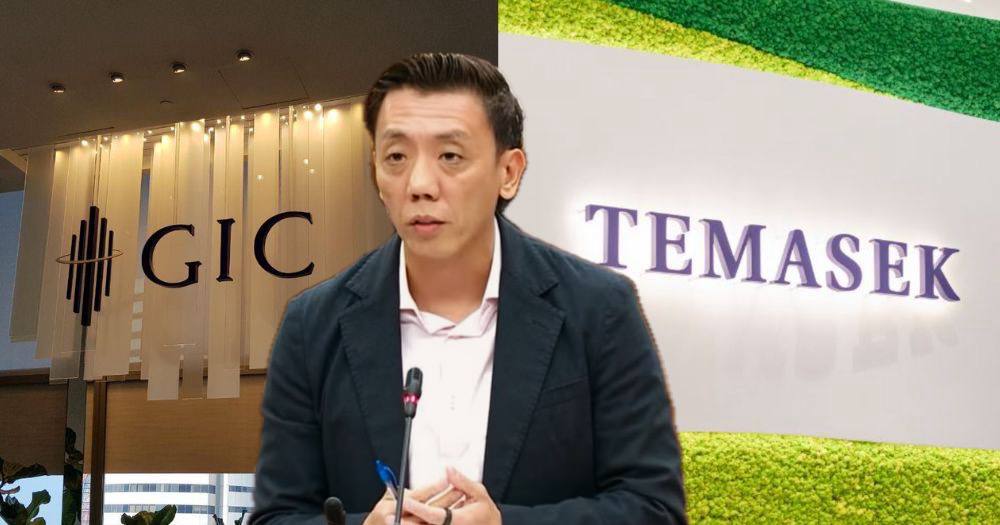
Speaking on Jan. 12 in his capacity as Senior Minister of State for Finance, Jeffrey Siow, who is also the acting Minister of Transport, addressed parliamentary questions about the performance of Singapore’s two sovereign wealth funds, Temasek and GIC.
Siow addressed media reports comparing GIC and Temasek’s performance to that of other funds — these articles were published by the Financial Times on Jan. 12, and earlier on Dec. 5, 2025.
Siow said that such comparisons were frequent, but needed to be interpreted in their proper context, as "different funds operate under different mandates and risk profiles”.
It is these mandates and risk profiles that the government primarily uses to assess GIC's and Temasek’s performance, not the performance of other funds, with its main focus being on long-term performance, rather than short-term, year-to-year performance.
Mandates
Siow explained the mandates of GIC and Temasek.
GIC
GIC operates as the government’s fund manager. Its mandate is to “preserve and enhance the international purchasing power of the assets under its management”.
In recent years, it had taken pre-emptive measures to moderate its risk exposure, but those measures had resulted in some forgone returns as the equity markets it was invested in have continued to remain elevated.
"Any assessment of returns must therefore be considered alongside the risks that are taken to achieve them," he said.
Siow added that GIC monitors a wide range of risk indicators and that it publishes both the returns and the volatility, or the risks associated with its portfolio in its annual report to provide a more complete picture.
“Ultimately, what's more important is the longer-term performance that's achieved within acceptable risk limits."
GIC had achieved a real return of 3.8 per cent per annum over the past 20 years, which "reflects in part GIC's active management, which enabled it to consistently add value to portfolio returns, to preserve the international purchasing power of its assets under management and deliver returns above global inflation."
Temasek
Siow then explained Temasek’s origins as a holding company for the Singapore government’s local assets, which has since expanded its investments throughout Asia and more recently, internationally.
He described Temasek as an “active bottom-up investor”, investing directly in companies in areas and domains where it has built "deeper capabilities", as well as where it sees long-term growth potential.
Relative to GIC, it operates at the “higher end of the risk spectrum”.
Temasek has reported a total shareholder return of 8 per cent per annum in U.S. dollar terms over the past 20 years.
“Taken as a whole, the government’s assessment is that the returns generated by GIC and Temasek are reasonable and within expectations given their mandates and their risk profiles.”
Siow said the government would continue to review both funds’ mandates and performance regularly, “in line with changes in the global economic investment landscape.
Ability to meet CPF liabilities
Siow addressed questions about the government’s ability to meet its CPF liabilities, given the implications of the funds’ recent performance.
Siow said that the Net Investment Return Framework (NIRC) was “designed to ensure a steady and sustainable stream of income for the annual budget”.
As such, the NIRC is derived from the expected long-term real rate of return, and not short-term market fluctuations or returns.
The government is therefore able to meet all debt servicing costs and obligations, including the committed CPF rates through the Special Singapore Government Securities (SSGS).
Siow reiterated that GIC does not manage SSGWS or CPF monies alone, but instead a combined pool of government funds, an approach that allows GIC to secure good long-term returns.
The government was thus able to absorb short-term fluctuations and risks due to its "strong balance sheet", despite the volatility of investment markets.
“This substantial buffer on net assets enables the government to meet the obligations on its liabilities and continues to underpin the government's strong fiscal position.”
Top photo from Temasek, Mothership, & MDDI/YouTube