News

'There are a lot of flies in the house': Kenneth Tiong & Chee Hong Tat spar on MAS action against financial crimes
Having high standards are not at odds with being efficient and competitive, Chee argued.
November 05, 2025, 12:41 PM
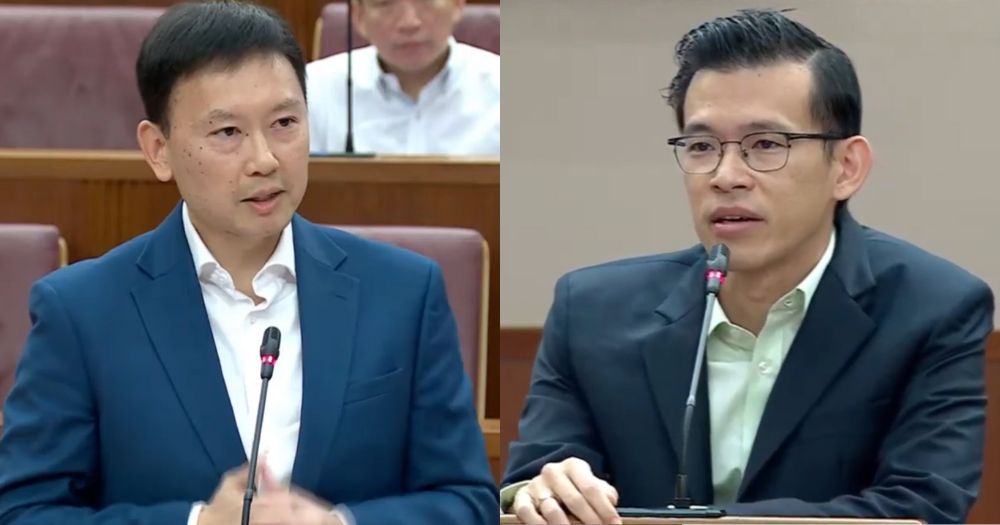


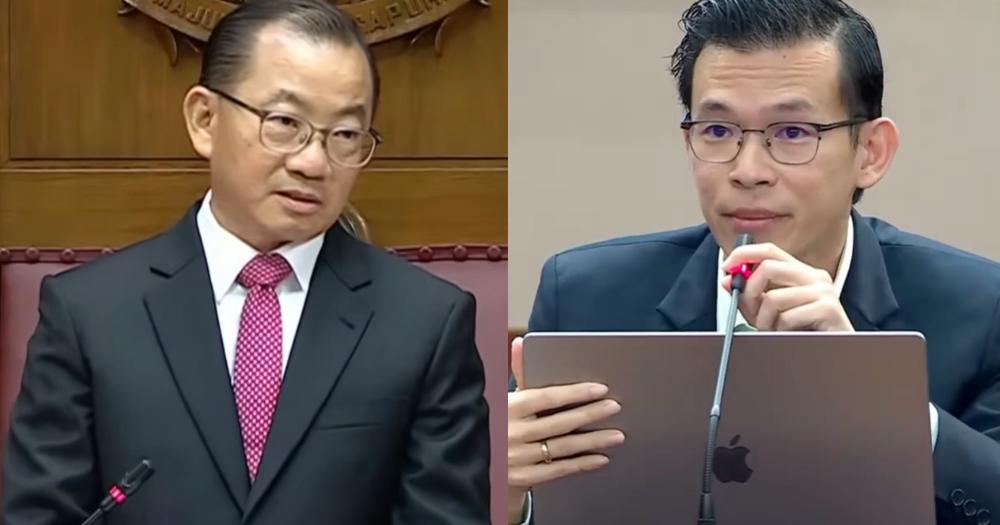
Singapore takes a risk-proportionate rather than a zero-risk approach to maintain high regulatory standards in the country's financial system, Minister for National Development Chee Hong Tat said in parliament on Nov. 5.
Chee, who is also currently deputy chairman of the Monetary Authority of Singapore (MAS), was responding to a parliamentary question about whether any of the individuals sanctioned by the United States for alleged transnational criminal activities, or convicted in Singapore's largest money laundering case, had operated tax-exempt family offices locally.
The question was posed by Workers' Party's Kenneth Tiong, member of parliament (MP) for Aljunied GRC, who also asked about diligence checks and systemic reforms by the MAS against such potential crimes and exploitation.
Firm enforcement action
Chee highlighted that the many investors view Singapore as a trusted financial hub for the high regulatory standards of its financial system.
Nonetheless, it is not foolproof.
"Like other global financial centres, having high standards does not mean there will be zero cases involving entities and individuals who break the rules or who fail to comply with our regulatory requirements," he said.
"What is key is that where wrongdoing is identified, the authorities will investigate thoroughly and take firm enforcement action in accordance with the law."
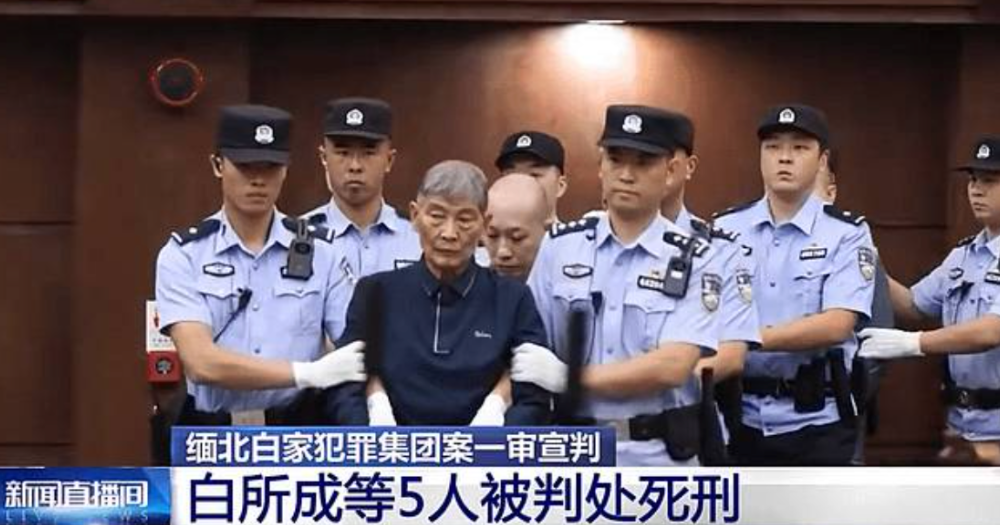
He shared about the recent enforcement operation against the individuals linked to Prince Holding Group, an alleged transnational scam syndicate, and therefore sanctioned by the U.S. on Oct. 14.
On Oct. 30, the Singapore police seized over S$150 million in assets — including properties, cars, bank accounts, and securities accounts — tied to Prince Holding Group's chairman Chen Zhi and his associates.
Prior to the indictment of Chen by the U.S., the Singapore police had been conducting probes into Chen and his associates, Chee shared.
Thus far, MAS has identified that two single-family office (SFO) funds granted tax incentives were linked to the sanctioned individuals, and subsequently ceased these tax incentives.
MAS regularly reviews and refines its regulatory regime, including screening applications for tax incentives, Chee said.
Over the past three years, about 3 per cent of 1,300 such applications were rejected.
Letting in sunlight and fresh air
But tightening Singapore's due diligence standards further could make processes overly cumbersome, and affect competitiveness, deter legitimate investors, and put many local jobs at risk, Chee cautioned.
"There is a Chinese saying that when we open the windows, some flies may also enter," he said. "The solution is not to shut our windows and block out sunlight and fresh air. What matters is that we act swiftly to deal with the flies that enter, while also letting in sunlight and fresh air."
"This is the approach we take in Singapore: risk-proportionate, not zero-risk."
Tiong, however, countered that in his views "there are a lot of flies in the house", as more cases of criminality associated with family offices come to light.
He asked if the government will mandate enhanced due diligence on existing client relationships across all regulated financial sectors, and not just when onboarding new clients.
"Stupid question"
Before responding, Chee sought clarification if Tiong meant that the Workers' Party’s position was that the authorities should adopt a zero-risk approach, or if he agreed that Singapore should adopt a risk-proportionate approach.
To which Tiong replied that "there’s a pattern of ministers and political office-holders asking...rhetorical questions, which have no meaning".
When Speaker of Parliament Seah Kian Peng interjected and requested for Tiong to answer Chee's question, Tiong said the answer is no.
"I don't think it is the minister's point of view that you should, in fact, have a zero risk approach, because it's impossible," Tiong said. "So he's asking a stupid question."
Chee then said it was not appropriate for Tiong to use the word stupid, and asked Tiong to withdraw the comment.
Tiong said he would withdraw the comment, but maintained that Chee's question was not a meaningful one.
Chee replied that he was "disappointed" that Tiong chose to conduct the discussion in this manner.
"Earlier, some of his other colleagues, including Mr Pritam Singh, Leader of the Opposition, said that Workers' Party will be a responsible opposition party, and I hope Mr Tiong bears that in mind in our future discourse," Chee added.
Returning to the subject, Chee said, "We want to remain a trusted financial centre, and at the same time remain efficient and competitive. Having high standards are not at odds with being efficient and competitive."
As far as he was aware, the house of Singapore does not have many flies, and would deal with any detected.
He asserted that Tiong was mistaken to suggest that MAS only conducts checks at the point of application and not on an ongoing basis.
The banks do file suspicious transaction report (STRs), and MAS is also in the process of reviewing its rule on them, Chee added.
Top images from MDDI's Youtube