Features
The 'ang moh' butcher: Australian man, 42, sets up stall in Toa Payoh wet market, now feels right at home
Since opening his stall in November 2024, Speering has gained media attention as the first "ang moh butcher" in a wet market.
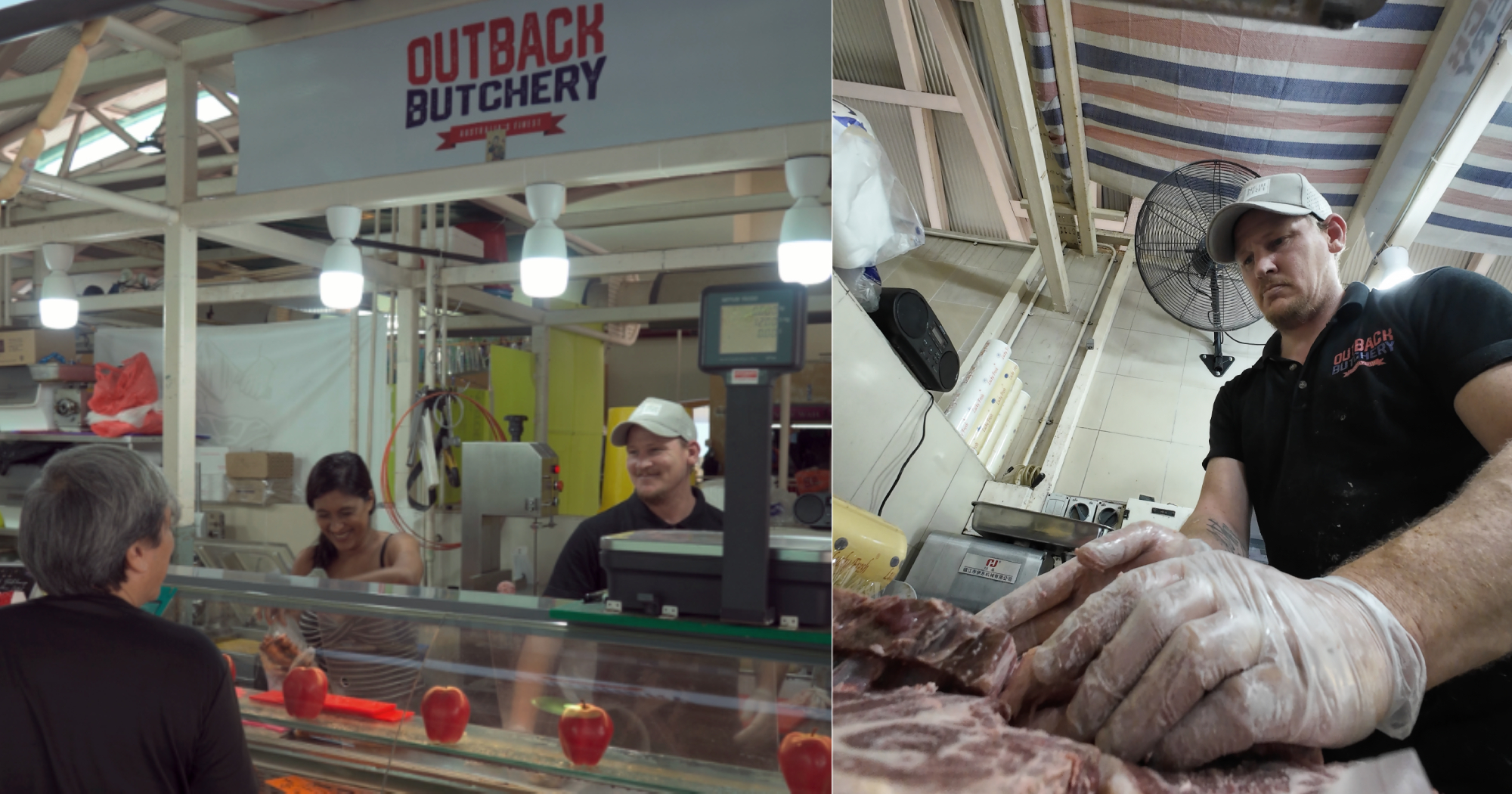


It might be a surprise for first-time visitors to see a burly white man behind a stall at Toa Payoh Vista Market.
But to many customers, Adam Speering has become their regular neighbourhood butcher.
On an early Friday morning, they stop by Outback Butchery in a steady stream, most of them greet Speering by his first name.
Before placing their orders, they smile and ask how he is doing.
It's a relationship that has gradually developed over the year since the 42-year-old set up the stall in the market.
 Photo by Khoo Wen-en/Mothership
An unusual sight
At the beginning, the stall attracted a lot of curious glances.
"I think everyone was a bit surprised, you know, seeing an Australian coming to the wet market," Speering recalled. "Everyone was a-looking and seeing what we were doing."
It's not just him that makes Outback Butchery an unusual sight.
The stall's modern design and neat display of Australia-imported meats — even a Christmas pre-order menu when Mothership visited — look like they belong more in a mall or shophouse than a wet market.
The butchery did start out as a shop in Katong Shopping Centre, where it operated for a year, before rising rent pushed Speering to move to this wet market in November 2024.
It was not only a lot cheaper, but also at a convenient location.
As with probably many of his customers, the place is a neighbourhood market to Speering, a short distance from his HDB flat at Toa Payoh Lor 8.
 Photo by Khoo Wen-en/Mothership
From Sydney to Singapore
Born in Sydney to a family of butchers, Speering knew early on that he wanted to carry on the trade.
From the young age of eight, he started learning the craft from his father and brother. He would spend his school holidays making sausages at butcher shops.
Years later, he got professionally certified at a technical college.
Unlike in Singapore, butchery is a trade in Australia that you take courses for, Speering explained.
Throughout a four-year programme, he learned everything from breaking down different cuts of meat, to how to advise customers.
 Photo by Khoo Wen-en/Mothership
In 2015, Speering brought his trade to Singapore, along with the family he had started with his Singaporean wife, Ann.
They met in Sydney while Ann was there on holiday. She later relocated to Australia to be with him.
"But then, once we started having children, we thought maybe it's safer, and [there would be] better education for them over here," Speering said.
12 hours a day
Outback Butchery is a bit of a family effort. Ann, who works at a bank, helps out at the stall whenever she has the time.
Their five children, whose ages range between three and 24, also join them on occasion.
Despite the kids' interest in what he does, Speering is unsure about them following so closely in his footsteps.
"One of my sons always tells me he wants to be a butcher when he grows up," he said. "I don't know about him being a butcher. I think he can do maybe a bit more of the management [of Outback Butchery], not so much the butchery part."
Perhaps he doesn't want his son to suffer the long, irregular hours he does.
Every day at 12am, when many are already in bed, Speering is just starting his day at the stall, cutting the meats and making sausages.
After opening at 5am, he and Ann attend to customers as they come in, all the way till the market crowd dies down at about 11am.
Then, they start cleaning up, grab some curry puffs for breakfast, and finally leave for home around noon.
It's exhausting just hearing about this routine. But Speering, speaking to me after more than nine hours of work, describes it with a straight face.
"I've seen it from a very young age," he shared. "So for me, doing a 12-hour shift is a normal thing. In Australia, butchers are always doing 12-hour shifts. It's just part of the job."
 Photo by Khoo Wen-en/Mothership
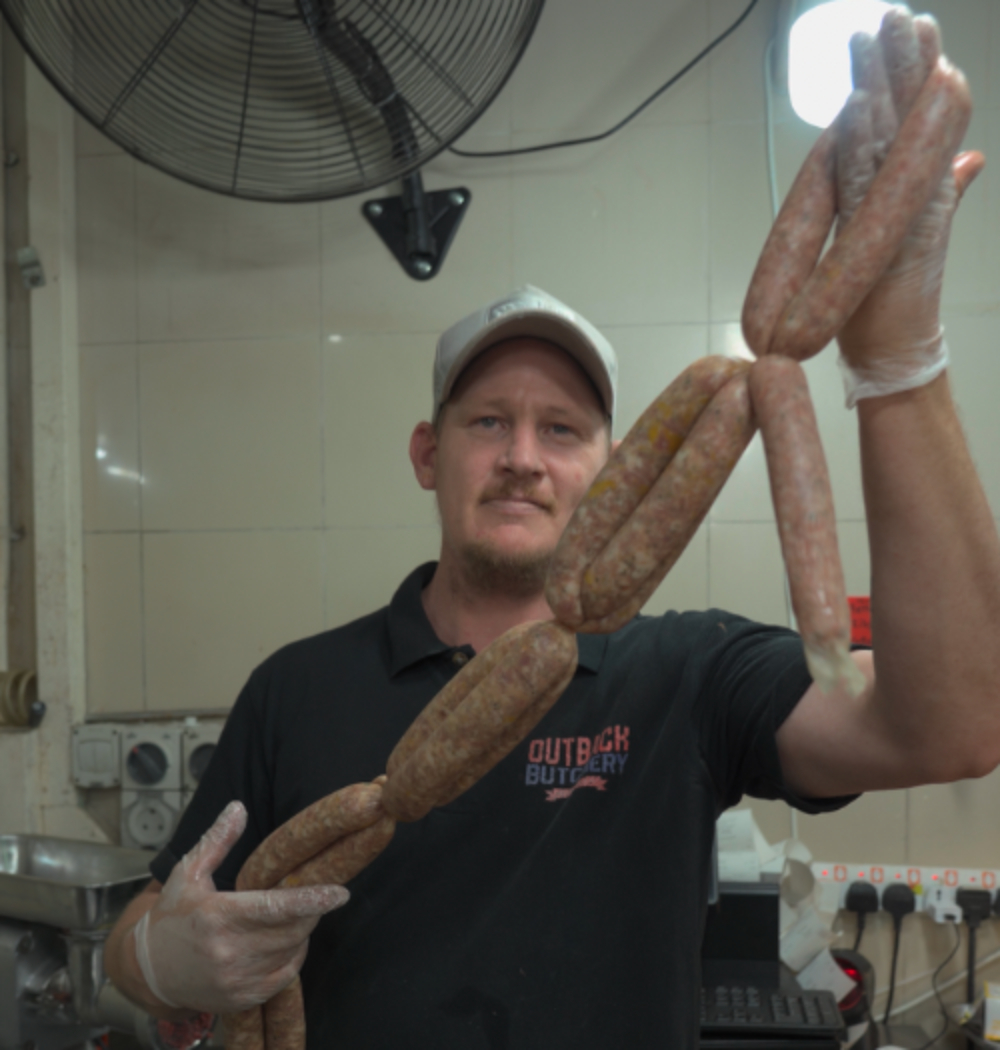 Photo by Khoo Wen-en/Mothership
"The ang moh butcher"
With his stall, Speering seized on the opportunity to bring something fresh to the market.
"We hadn't seen a Western-style butchery inside a market, so we thought maybe we could give it a try," he said.
But he did not expect to create this much fascination.
Less than two months after Outback Butchery arrived at Toa Payoh Vista Market, its novelty began gaining attention online.
"[Ann] kept saying to me, 'You're the first ang moh butcher [in a wet market]'," he said.
She encouraged him to lean into the novelty of his position, seeing it as a selling point for the business.
Being spotlighted this way struck him as a bit strange, but he has shrugged it off.
"For me, I don't care," he said good-naturedly.
Just a normal person
What really threw him was when customers initially called him "sir".
"I was a bit shocked, because in Australia, we don't get people calling you 'sir'," he said. "It's very awkward because I'm just a normal person."
After a month or two, however, they started treating him more like a local.
 Photo by Khoo Wen-en/Mothership
The unique intimacy of a wet market has much to do with that.
"I think everyone is a bit more down to earth here in the wet market, compared to your supermarket," he said.
"In the supermarket, you pick off the shelf, you take it to the register, and you're gone. At least here, you get to talk to your supplier...you get to chit chat."
Some older women have become so comfortable they giggle as they talk to him — something Ann has observed and jokingly told me she needs to keep an eye out for.
It's a setting that suits his profession, he added, as customers are the number-one priority to a butcher.
Several times during our conversation, he spots a little queue growing, and breaks off with an apology before running back to the counter to assist Ann with the customers.
When his regular customers come by, Speering is quick to start a conversation. At one time, he engages in some light banter; at another, he offers tips when asked how to marinate and store the meat.
"We give them as much advice as we can," he said. "It's a pleasure to pass on the knowledge to the customer."
 Photo by Khoo Wen-en/Mothership
Under one roof
Working in a wet market has also been refreshing for Speering, who shared that butchers in Australia can only operate in a shopping centre or a standalone shop.
"I think the wet market is unique," he said. "It's a chance for everyone to work outdoors under [one] roof."
The stall owners are a little community, chatting casually during downtime, and helping one another out.
"If I don't have change, I'll ask my neighbour, and vice versa," Speering shared. "Or when I go home and the power [at the market] might go out, they will give us a call and let us know."
Despite the whole ang moh novelty, the stallowners don't treat Speering any differently. It's likely to do with Ann, who's a familiar face; she frequented the market while growing up in Toa Payoh, and most of them have known her since her youth.
The pair make for a disparate couple. While he is calm and polite in his interactions with customers, Ann's energy bubbles over in loud, warm laughter.
But they match each other well, swerving around each other behind the counter with practised ease, one tending to the till as the other speaks to the customer.
Taste test
A customer who arrived sometime past nine told me that he came all the way from Woodlands just for Speering's meats.
He can’t find this price and taste elsewhere, he said.
As if sensing our curiosity growing, Speering handed my colleague and me a pack of his handmade sausages before we left, inviting us to give them a try.
My colleague was delighted to find the pork mango sausage in the pack — it’s his favourite as a longtime customer.
His mother regularly buys meat from Outback Butchery, feeling that buying meat directly from a person instead of a shelf makes the meat more special.
The idea of savoury pork mixed with sweet, tangy mango made me hesitate, but the mango turned out to have a very subtle hint that hits just right.
The other sausage in the pack was beef herb and garlic, which drew me in even as I was frying them up.
They smelled so good, sizzling in the hot oil, I couldn’t resist taking a tiny bite.
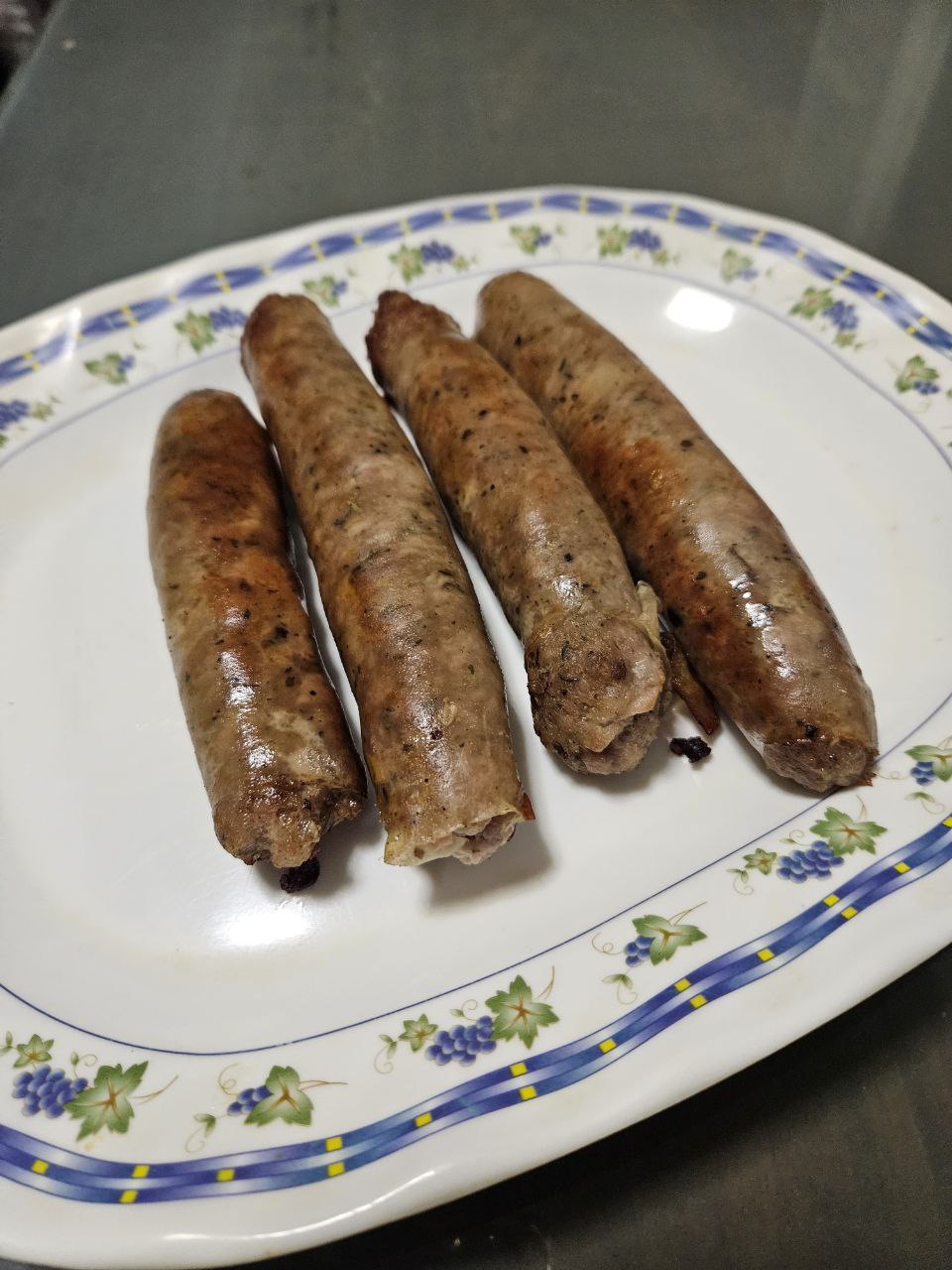 Photo by Nurshahiylia Sidin/Mothership
I haven’t had sausages oozing with this much flavour from the supermarket or even restaurants. This is the difference with eating handmade sausages, I thought.
My husband took a bite too. “Wow, these are so tender,” he said.
Move over, customer from Woodlands — I’d travel all the way from Bedok to buy more from Outback Butchery.
@mothershipsg my ah ma was the one looking👀 #tiktoksg #fypsg ♬ original sound - Mothership
Top images by Khoo Wen-en/Mothership