News

S'pore's national stockpiles important for unforeseen disruptions like Covid-19: Zaqy Mohamad
The stockpile includes frozen chicken, canned vegetables and rice.
October 22, 2025, 05:47 PM
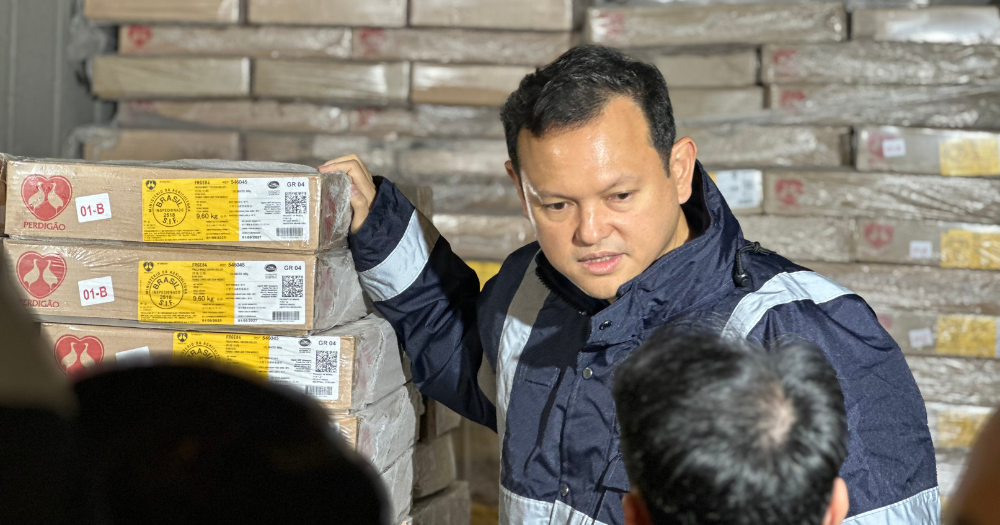


The national stockpiles held by the Singapore government are important for national disruptions such as Covid-19, Senior Minister of State for Sustainability and the Environment Zaqy Mohamad said.
He gave his comments on Oct. 22 during a tour of a warehouse of YCH Group, Singapore's largest home-grown supply chain and logistics company.
National secret
For those who didn't know, Singapore has warehouses which hold the country's national stockpiles.
These stockpiles are often held in nondescript warehouses that look like any other commercial warehouse from the outside, but their size and exact location remain a national secret, as is the case for stockpiles all over the world.
Mothership visited one of these warehouses, YCH warehouse, to take a look at the national stockpiles.
An automated storage and retrieval system (ASRS) is used for storing and sorting ambient-temperature goods such as rice, canned foods and pharmaceuticals.
Standing at 50m tall, it is among the largest and tallest ASRS facilities in Asia and can hold up to 66,624 pallets of supplies.
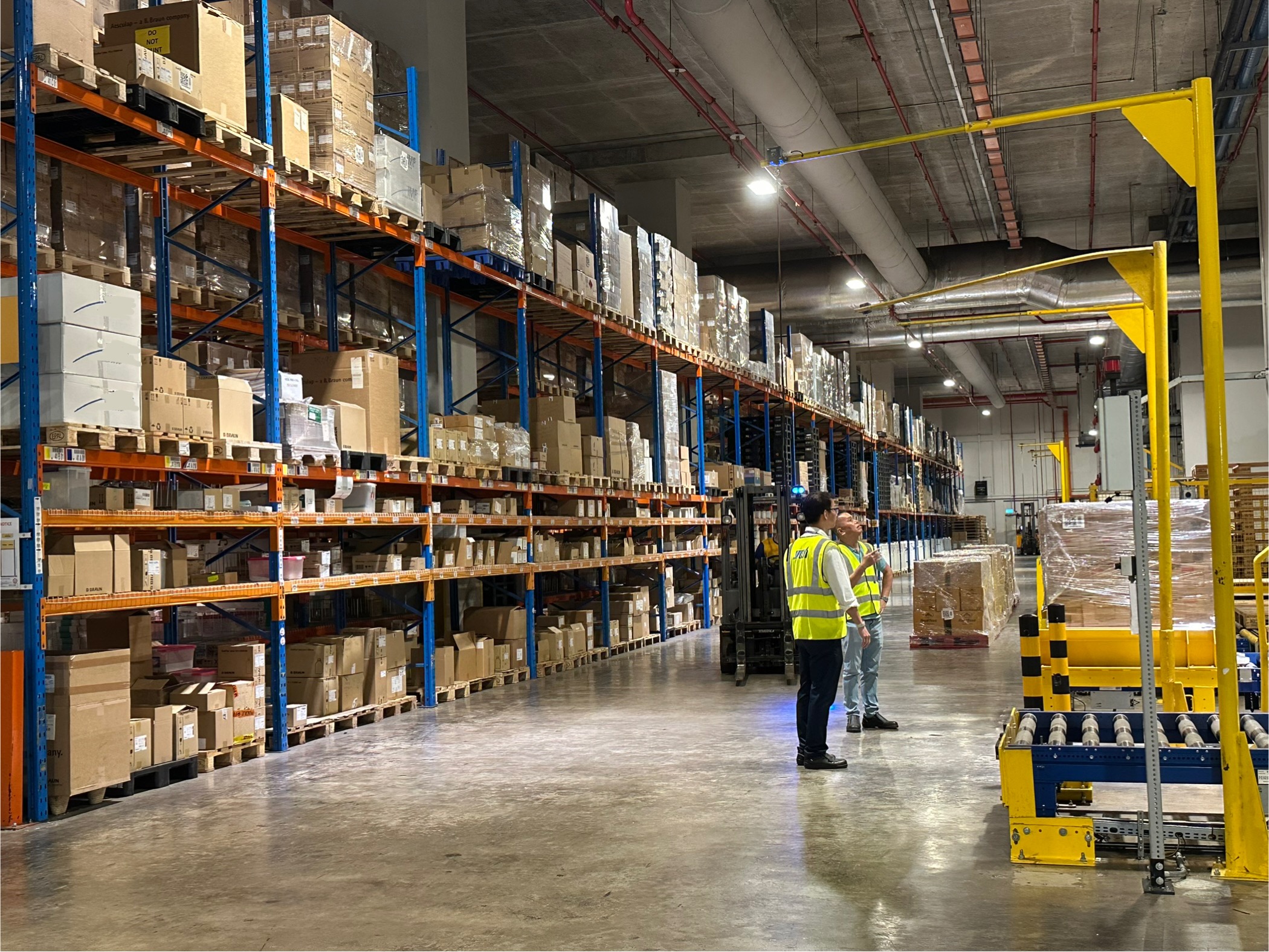 Ambient-temperature storage area. Image via Mothership
 ASRS system with boxes of rice. Gif via Mothership
What's in a stockpile?
Frozen food, like chicken, is stored in a freezer storage, which can hold up to 20,500 pallets of food.
Named the YCH mega freezer, this section maintains a temperature between -18°C and -23°C.
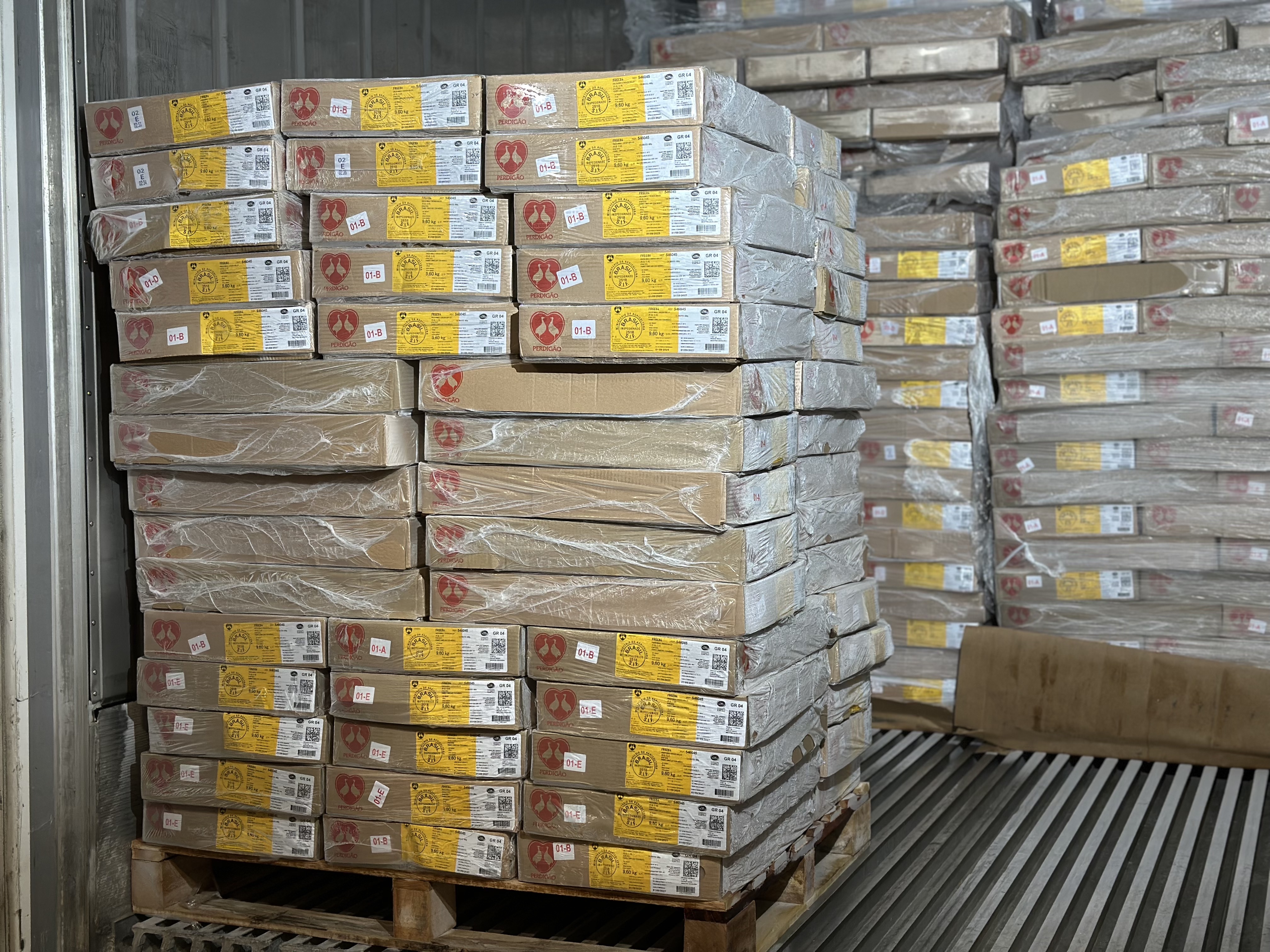 One pallet of frozen proteins. Image via Mothership
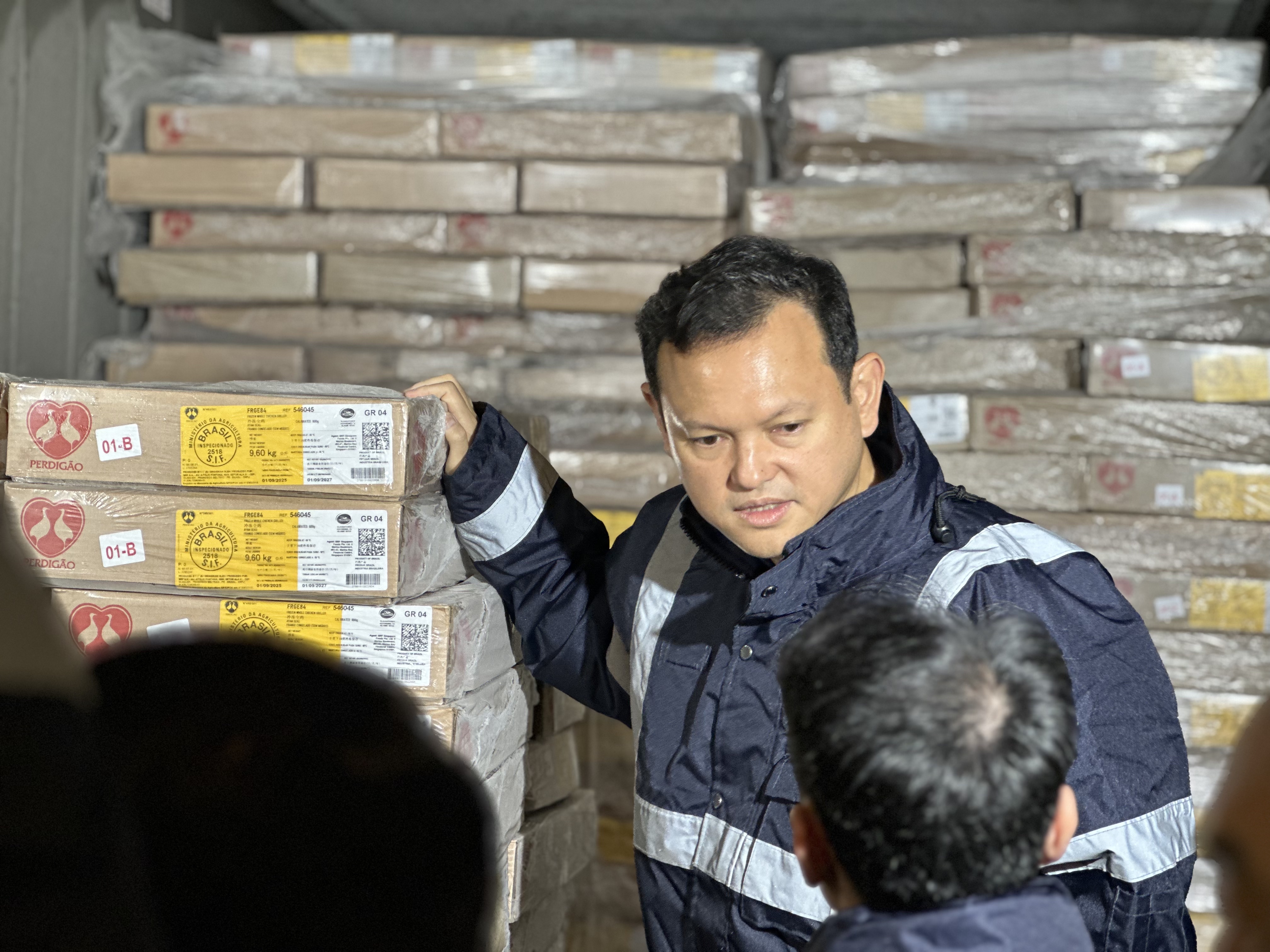 Image via Mothership
 Semi-automated storage of food in YCH mega freezer. Gif via Mothership
Certain facilities in the YCH warehouse are tailored for stockpiling, making use of technology such as RF (radio frequency) verification and real-time monitoring of the stockpiles.
What is a stockpile?
In most countries, including Singapore, national stockpiles contain essential items like food and pharmaceuticals that are meant to be used in national emergencies and supply shortages.
Import bans, climate change and disruptions to the geopolitical scene are some such examples, Zaqy said.
It is a key part of ensuring food and national security by providing Singaporeans with baseline nutrition "in the worst case scenario", he added.
Singapore's government began stockpiling in 1968 when food security was a national concern, beginning with just a carbohydrate: rice.
Since the Covid-19 pandemic, it has moved on to include proteins like frozen halal chicken and fibres like canned vegetables, taking into consideration the population's needs and evolving tastes.
While the quantity of stockpiled food in Singapore remains a highly kept secret, Zaqy said stockpiling rates are dependent on several factors, including the state of local food production and global situations.
Top image via Mothership