




News

Review into Megan Khung’s death finds instances of ‘lack of clear understanding & communication’ among agencies
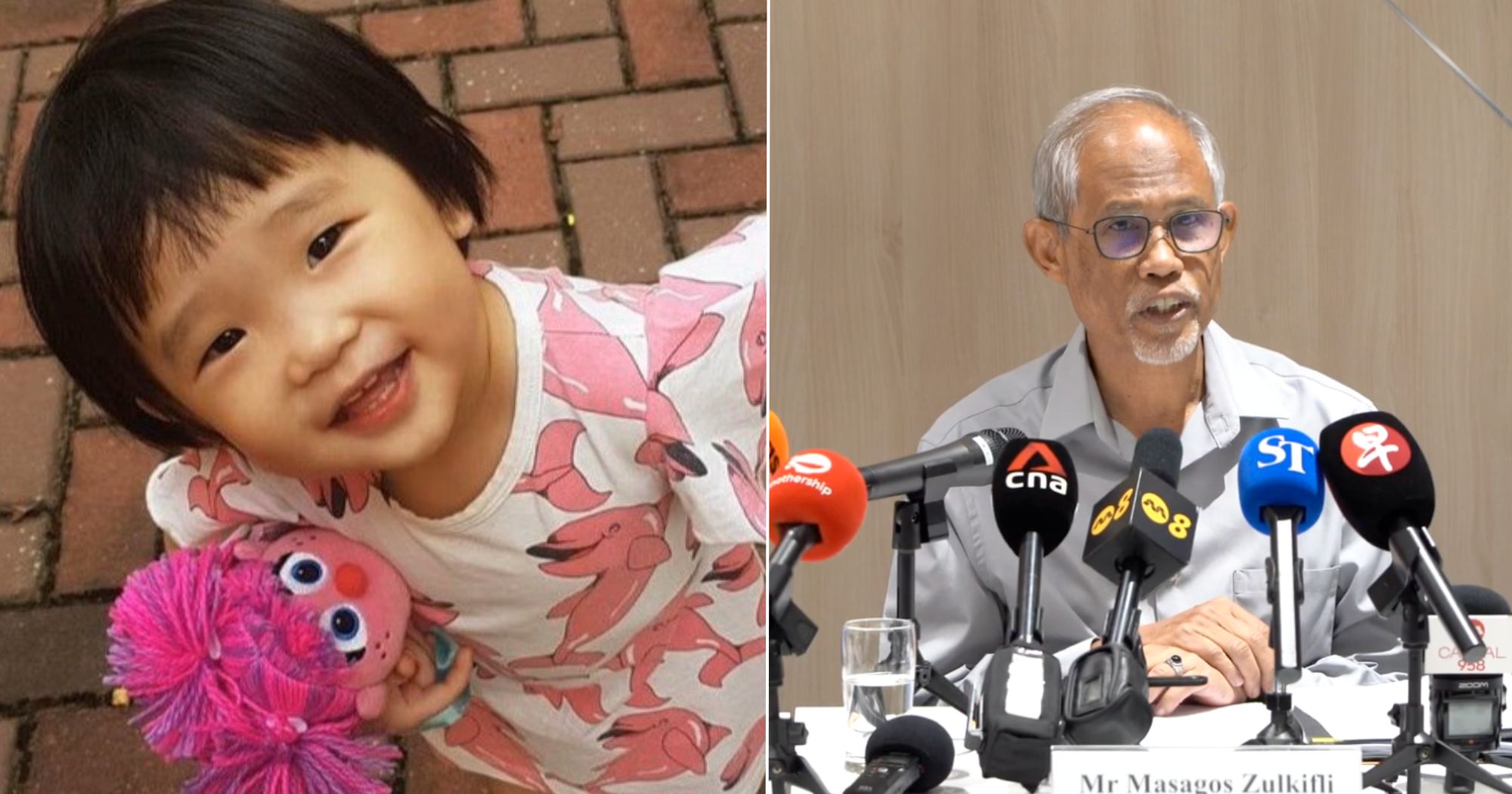
Megan died after 13 months of physical and psychological abuse by her mother and mother's boyfriend.
October 23, 2025, 04:32 PM


A report on the review of four-year-old Megan Khung’s death from abuse by her mother, Foo Li Ping and her boyfriend, Brian Wong, was published on Oct. 23.
This comes after the review panel was first appointed by Minister for Social and Family Development, Masagos Zulkifli, in May 2025 to look into strengthening the child protection ecosystem following the death of Megan.
Megan was subjected to 13 months of physical and psychological abuse by Foo and Wong, who have since been jailed for 19 years and 30 years, respectively.
The review looked into the actions of the relevant agencies involved before the discovery of Megan’s death in July 2020, the enhanced protocols and processes that the agencies instituted afterwards and made recommendations to enhance children’s safety.
Agencies involved include the preschool Healthy Start Child Development Centre (HSCDC), Beyond Social Services (BSS), the community agency that operates HSCDC, the Early Childhood Development Agency (ECDA), Child Protective Service (CPS) and the Singapore Police Force (SPF).
The panel found that while there were “appropriate actions” taken by the agencies involved in “some instances”, there were also “areas where agencies could have done better”.
They also noted instances of “a lack of clear understanding and communication among the agencies”.
Chronological account of what happened to Megan and findings by the review panel
First period (Mar to Aug 2019)
Megan first started attending HSCDC’s Playgroup in May 2017 and regularly attended until end-January 2019, which coincided with the time Foo moved to live in a rented apartment.
While she continued to stay with her grandmother, she would stay over at the rented apartment on some weekends.
She attended preschool for five days in Feb 2019 and was absent entirely from Feb. 18 to Mar. 18, 2019.
The report stated that 15 HSCDC staff and a BSS community worker communicated with Foo over WhatsApp regarding Megan’s absence from preschool.
On Mar. 9, 2019, Foo told the community worker that Megan was not attending preschool as she had taken “disciplinary action” on Megan and “did not want the school to think that Megan had been abused”.
Ten days later, Megan returned to preschool, and her teachers observed bruises on her body and alerted HSCDC staff and BSS community workers.
When questioned, Foo said that some of the bruises were due to disciplinary action inflicted by her, while others were injuries sustained when Megan fell while cycling.
BSS explained to the panel that Foo was assessed to be “open and honest about her methods of disciplining Megan” and “expressed willingness to collaborate with HSCDC staff in learning alternative ways of disciplining Megan”.
They also clarified to the panel that the community workers also considered that there “were no [known] prior instances” of excessive discipline and “mother and child have shown to have a positive relationship”.
The community workers then developed a temporary care plan to ensure the welfare of Megan, which included only staying overnight at her grandmother’s house until a long-term arrangement was fixed for Megan’s care, and that only her grandmother would drop off and pick her up from preschool.
The temporary care plan was mutually agreed upon by Foo and Megan’s grandmother and put in place by the end of the day on Mar. 19, 2019.
About three days later, the temporary care plan was enhanced after a quarrel involving Megan’s grandmother, Foo, and Wong.
Enhancements included returning Megan to her grandmother before 8pm if Foo took Megan out over the weekend.
That same evening, the grandmother also expressed concerns about Foo and Wong’s suspected drug-related activities to the community worker.
Finding 1
The panel found that while HSCDC teachers were “vigilant” in discovering Megan’s bruises on Mar. 19 and reporting them internally to the BSS community workers within the day, BSS’s incident report to ECDA could have been more detailed and timely in describing Megan’s injuries.
According to the report, the preschool principal was away on overseas leave on the day of the incident, and the incident report was only sent to ECDA 17 days later, after the bruises were found.
The panel noted that at the relevant time, the ECDC Regulations 2018 and Code of Practice did not specify a timeframe for suspected child abuse reports to be made, and also did not specify that only the principal could report an incident to ECDA.
As such, the panel found the need for better internal coordination within BSS and HSCDC so the incident report could have been treated with greater urgency, and the report could have been sent by another staff member on behalf of the preschool principal.
The panel also noted that the incident report attached to the email described the injuries as “bruises on Megan’s face, arms, thighs, feet, buttocks” and characterised them as being due to “physical punishment [that] was excessive”.
.
The panel felt these descriptions differed from how Megan’s teacher subsequently described them after Megan’s death was discovered.
However, this was with the “benefit of hindsight”, the panel noted.
In particular, the incident report to ECDA did not record that injuries were sustained on the torso area, which included a possible burn mark or wound of some kind and the extent of the other injuries.
Megan’s teacher had taken photographs of her injuries and shared these with the community workers and the principal, but was later asked to delete them to “avoid inflicting further trauma on the victim”.
The panel acknowledged that “unnecessary photo taking” is discouraged from a professional practice perspective, but noted that the photographs provided a clear picture of the extent of Megan’s injuries.
The teacher also did not end up deleting the photographs as she felt it was important to have them as a record, and thus they were available as part of the evidence collected during SPF’s investigations into the death.
The incident report also did not include Megan’s grandmother’s allegations that Foo and Wong were using drugs, as it could not be verified, according to BSS.
However, the panel found that these additional details on the full extent of the injuries via photographs and suspected drug use would likely have “raised the level of suspicion and could have prompted ECDA to refer the case to CPS”.
Second period (Sep to Dec 2019)
On Sep. 10, 2019, Megan’s grandmother informed HSCDC that Megan was unwell and was being cared for by and staying with Foo, which breached the temporary care plan.
She also subsequently updated Megan’s teacher that Foo would bring Megan back to preschool on Sep. 17, but this did not happen.
The community workers were also unsuccessful in their attempts to contact Foo.
Instead, Foo emailed HSCDC to withdraw Megan from the preschool on Sep. 17, citing the preschool’s lack of Chinese Language lessons.
Megan’s grandmother later said she had video calls with Megan around Sep. 10 to 20, 2019, and that Megan “appeared to be fine”.
Concerned for Megan’s safety, a BSS community worker contacted various agencies and relayed information about Megan’s case to them.
These include:
• Two calls to CPS between Sep. 20 and 25, 2019;
• Calls and emails to HEART@Fei Yue (HFY) CPSC between Sep. 25 and 27, 2019;
• Call and emails to ECDA in Oct. 2019; and
• Emails to two different SPF officers on Oct. 4 and 17, 2019.
Finding 2
The panel was informed that MSF initially could not find the two calls made to CPS between Sep. 20 and 25 following the discovery of Megan’s death.
They were able to locate the audio recording of one of the calls after BSS found the exact time and date of that call on Apr. 9, 2025.
After a review of the call’s transcript, the panel found that BSS’s communication of the situation to CPS “could have been clearer”.
Notably, the community worker had added that the grandmother “feels the child is fine [as of the moment]”, which “diluted” the concerns they had.
The panel also noted that CPS seemed to have “accepted the grandmother’s assessment of the risk” and stated that it would be “difficult to act if the child was not located”.
The call ended with CPS advising that “if grandma is worried, she can also make a police report where the child in this case is missing and she has concerns over child’s safety”.
The panel felt CPS could have gone beyond providing advice on the immediate steps BSS could take, to “probe further to understand the risk-level of the case”.
In addition, the officer did not register the call, despite established processes within CPS.
As a result, the call was not discussed further with the supervisor on duty, as was the standard treatment for all calls to CPS.
MSF has commenced a disciplinary investigation into the actions of the CPS officer, the panel heard.
Finding 3
The panel also found that while HFY tried to convene a meeting with Megan’s family, it did not proceed further.
On Sep. 25, 2019, BSS called HFY and followed up with an email, stating that BSS “was looking for referral to triage”.
HFY subsequently proposed to BSS to “contact all the relevant parties to set up [a] meeting”, to which BSS asked if the meeting could go ahead with the grandmother only for fear of Foo and Wong cutting off contact entirely with her.
HFY responded that while Megan’s whereabouts and her welfare were “a pressing concern”, they “would not be able to make any headway, for any concrete risk assessment or intervention plan if [they] could not locate the child, Megan, and her parent”.
HFY had also suggested “to continue to encourage [grandmother] to find ways to have physical contact with Megan, to check in on her well-being”, and that HFY “could only take in this case if we have the address of the natural mum, to locate Megan”.
HFY later explained to the panel that while there were concerns about the case, there was “no evidence at that point to suggest that Megan was in imminent danger that required immediate intervention to ensure safety”.
However, the panel felt HFY should have treated BSS’s call and follow-up email as a “referral for HFY to take the case”, rather than a referral for triage.
This was in view of the fact that Megan was unsighted, had been exposed to excessive punishment in the past, a temporary care plan had not been complied with, and that Foo was abusing drugs.
Finding 4
The panel also found that there was a prevalent impression that a police report about a missing child should be made by a family member.
CPS and ECDA had advised that the grandmother should lodge a police report when BSS sought their advice.
One of the police officers whom BSS’s community worker had informally checked with had also given general advice that a police report should be made.
However, the panel was of the view that by early October 2019, it “should have been clear” to BSS that they could have gone ahead to lodge a police report themselves.
By then, Foo had ceased contact with the community workers and had been uncontactable for some time.
“It should have been clear to BSS that the wishes of the grandmother not to damage her relationship with Foo should no longer take priority over Megan’s safety,” the report stated.
The law also does not restrict who can make a police report, they noted.
Third period (Jan to Jul 2020)
More than four months after Megan was last seen at the preschool, the community worker went with Megan’s grandmother to make a police report on Jan. 17, 2020.
The investigation officer (IO) assigned to the case assessed the matter to be “a case of child discipline with low safety concern” and told her officer-in-charge (OC) that she would attempt to contact and trace Foo.
The IO attempted to locate Foo and Megan for about two weeks and was subsequently deployed for COVID-19-related duties. She did not follow up on the case following that.
Megan’s grandmother and her biological father both lodged a police report on Jul. 20, 2020, about half a year later.
The case was classified as a missing persons case, and SPF found Foo and Wong in their rented apartment three days later.
They were subsequently arrested for murder with common intention on the same day.
Their friend, Nouvelle Chua, was also arrested and charged with the concealment, desecration and disposal of Megan’s body.
Investigations revealed that Megan had been abused at the rented apartment and died on Feb. 22, 2020.
Finding 5
The panel found that individual SPF officers’ failure to follow established processes “prevented timely and appropriate action” on the first report.
SPF explained to the panel that the IO had made the initial assessment that it was “low risk” based on how HSCDC and BSS had assessed the case as one of “excessive discipline”.
They had also noted that there were no other reports of suspected abuse between Mar. 19, 2019 and Jan. 17, 2020 (day of the police report), and that Megan was with her biological mother.
While the OC had intended to raise this report for discussion in the regular case review sessions by supervisors the following day, the IO had said she would follow up with contacting and tracing Foo, so he decided not to do so.
SPF later conducted a review and found that the IO should have surfaced the case to her supervisor when she was eventually unable to contact Foo.
This would have allowed the OC to provide guidance to the IO on the investigation approach for such cases, ensuring the case was followed up appropriately.
Both officers were disciplined for not following procedures and have been formally addressed, the panel learned.
Recommendations by the panel
The panel noted that Singapore’s child protection ecosystem has evolved since 2020, with “continuous efforts made to strengthen the ecosystem”.
Recommendations to further strengthen the child protection ecosystem were made by the panel:
1) All cases of child abuse should primarily be handled by child protection case management agencies and the agencies should be adequately resourced.
2) An appeals mechanism should be established to address cases where CPSC/Protective Service (PSV) have differing views from the reporting agency on risk levels and case management.
3) MSF should review ECDA’s role in triaging potential intra-familial child protection cases.
4) While MSF had formalised protocols for what agencies should do for a missing child, MSF should work with SPF to eliminate the wrong perception on the ground that only family members can make a police report of a missing child.
5) Lessons learnt from critical incidents should be routinely shared with community agencies to enhance practice.
6) Professionals who work with children should be sensitised to issues pertaining to child safety, including being familiar with the reporting and escalation system.
7) A stronger culture of support should be promoted for practitioners involved in child protection work.
The full report can be found on MSF's website.
In a joint statement, CPS, ECDA, BSS, HFY, and SPF accepted the panel's recommendations.
MSF said they would continue to engage and work in close partnership with stakeholders to "further strengthen" their internal systems and to communicate across agencies.
MSF apologised for the outcome and said that Megan's death saddened "all of us". They acknowledged that more should have been done for the case and that they would learn from this incident.
Related articles:
Top image from Simon Khung Instagram, Foo Li Ping Instagram, Mothership reader