Community
Picky S'porean eater goes on culinary journey through 4 lesser-known prefectures in Tohoku, Japan
Stomach was bursting throughout this trip.
Japan is a foodie's paradise, with its diversity of dishes, from street food to omakases.
Each prefecture has its own specialties and traditional foods but as a basic Singaporean that has mostly travelled to Tokyo and Kyoto, the rest of the country remains largely an unknown entity to me.
So has a large portion of authentic Japanese food.
I wouldn't describe myself as a foodie, and admittedly, I’m not the most adventurous when it comes to the gastronomic side of things.
Those who know me know that there's a list of foods I tend to avoid, or would prefer not to eat — sometimes, I cringe at the fishy odour of seafood (yes, I like Japanese food but am not a fan of seafood, sue me), or the overwhelmingly earthy taste of a mushroom.
I've thus stuck to the Japanese cuisines I'm more comfortable with, aka cooked non-seafood dishes like katsudon, ramen and tempura.
Which is why a recent trip to the Tohoku region was a prime opportunity for me to broaden the horizons of my palate, and at the same time, get to know some parts of Japan which are off the beaten track.
Tohoku region
For the uninitiated, Tohoku is one of the 10 big regions in Japan, and lies on the northern part of the country.
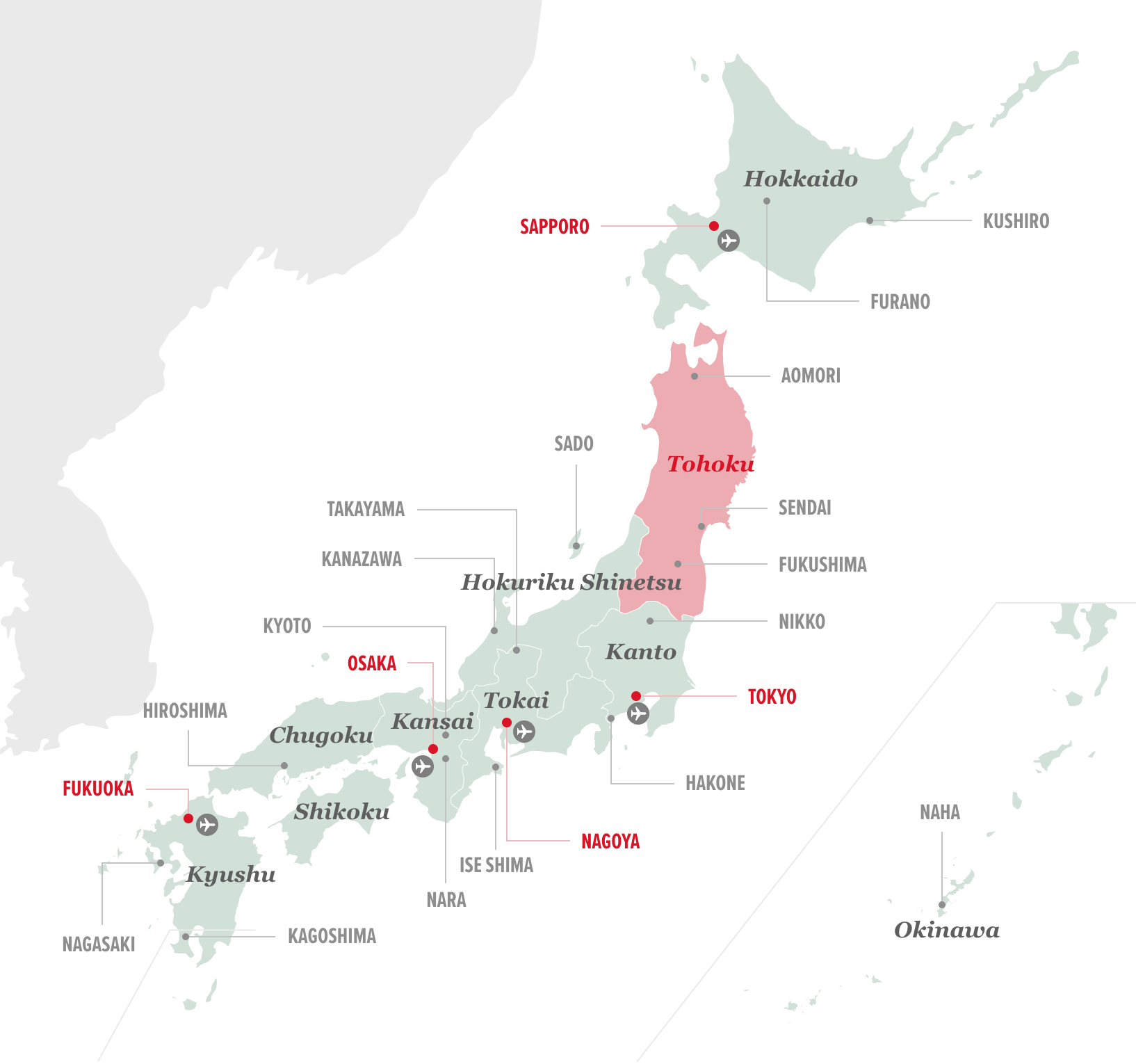 Photo by JNTO Singapore
It consists of six prefectures, Akita, Aomori, Iwate, Miyagi, Fukushima and Yamagata, and I was lucky enough to be able to check out the first four.
If you’re looking for someplace less crowded, where you can explore without having to wade through throngs of people, read on.
Iwate
Iwate is the second-largest prefecture in Japan, and famous for its nature and onsens.
A new soba experience
Unique to Iwate is wanko soba.
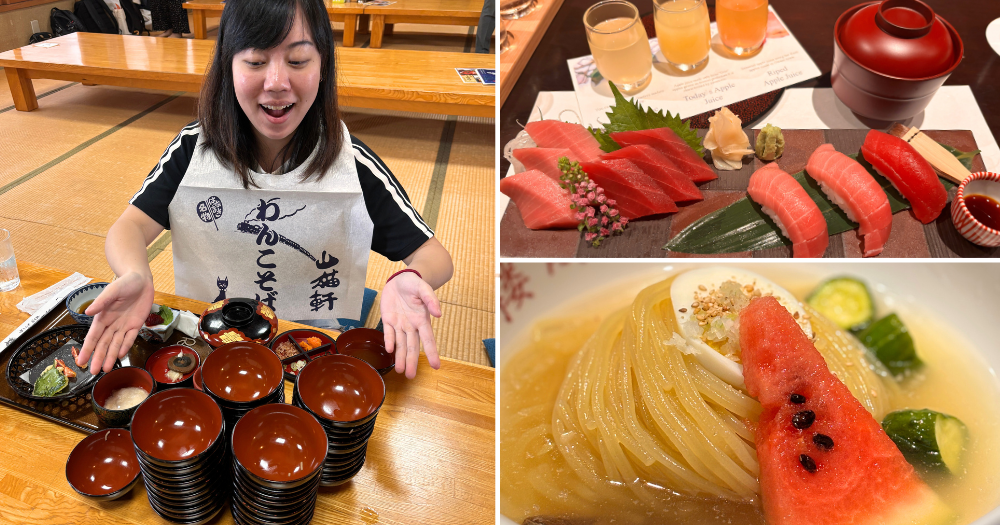
A meal of wanko soba is sort of like an eating challenge — bite-sized portions of soba are served in small bowls. Finish a bowl, and the server hovering nearby immediately refills your bowl.
This style of eating soba is said to have originated more than 400 years ago, when a feudal lord loved the dish so much, he continuously asked for refill after refill.
It is also said that wanko soba comes about from Iwate’s spirit of hospitality, where guests should be served the best meal possible, and can eat to their hearts' content.
The challenge now lies in how many bowls of soba one can consume.
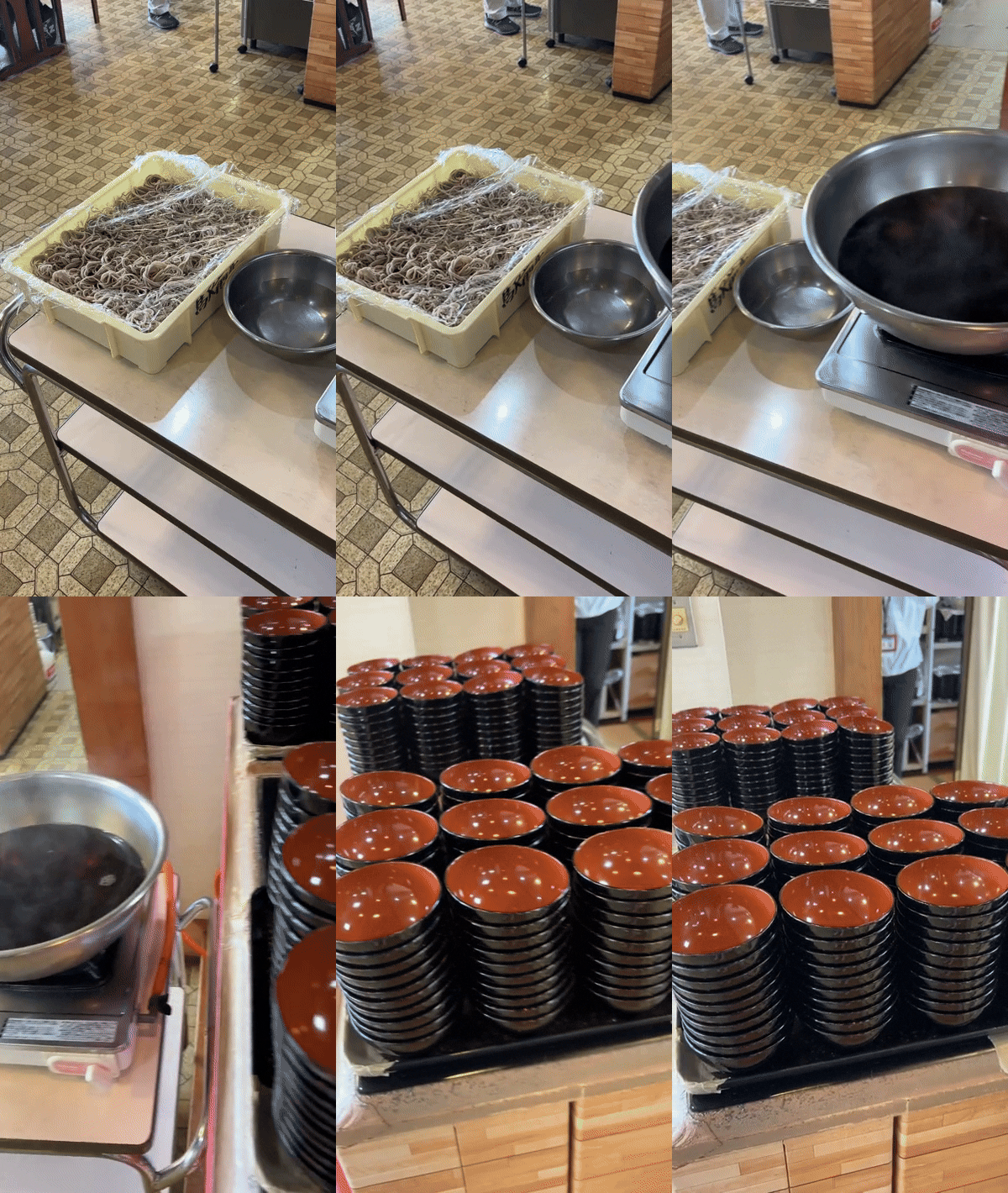 All the ingredients, including a huge amount of soba, prepped and ready. Photo by Ashley Tan
The average Japanese man is said to be able to finish 80 bowls, while the average Japanese woman, 40 bowls. The latter was thus my goal for the meal.
Of course, there are sides you can pair your soba with, such as tempura and yam paste.
Here’s a snippet of the action — it was no easy feat. The minute the soba enters your mouth and your bowl momentarily lies empty, the server swoops in to refill it.
With every fill, the server exclaims “Hai, don don!”, which means “please eat more!”. Trust me, I’m doing my best HAHA.
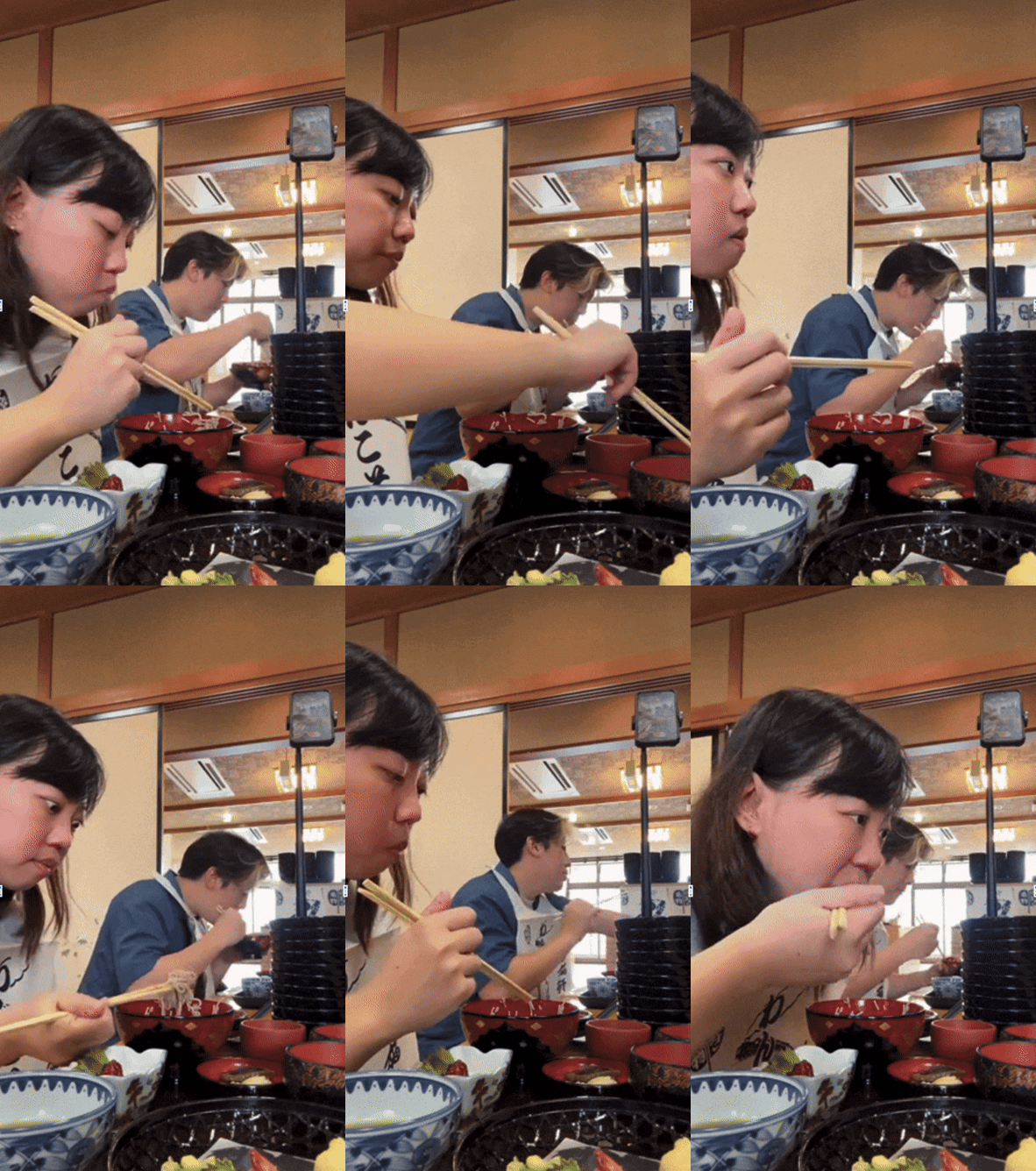 Gif from Ashley Tan
From observing the server, an elderly lady with a weathered face, continuously bending over to refill our bowls, it seemed like backbreaking work. I asked her if it was so, to which she replied that she was used to it.
I was eventually able to hit my goal of at least 40 bowls, and my stomach was bursting.
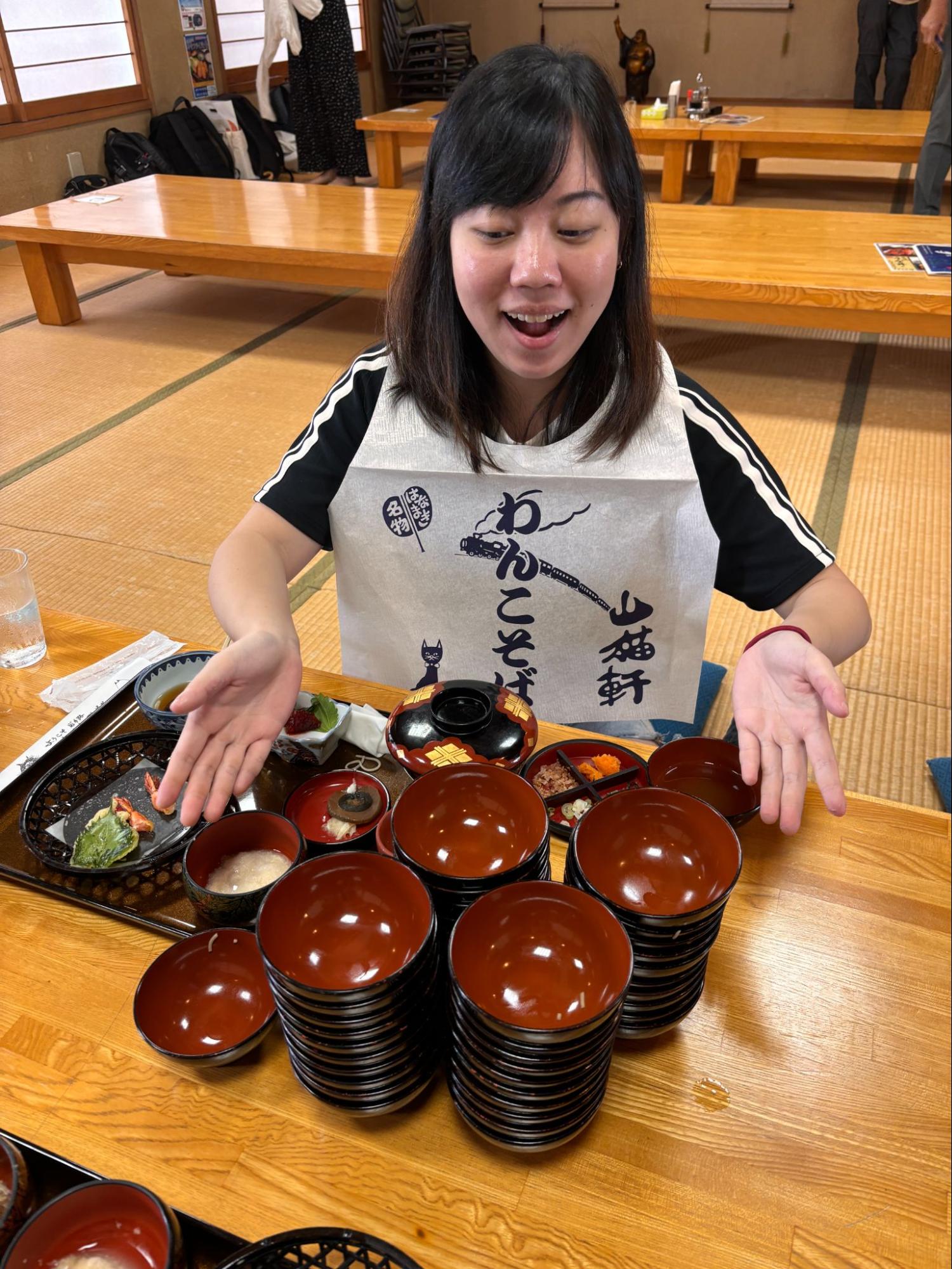 Photo by Ashley Tan
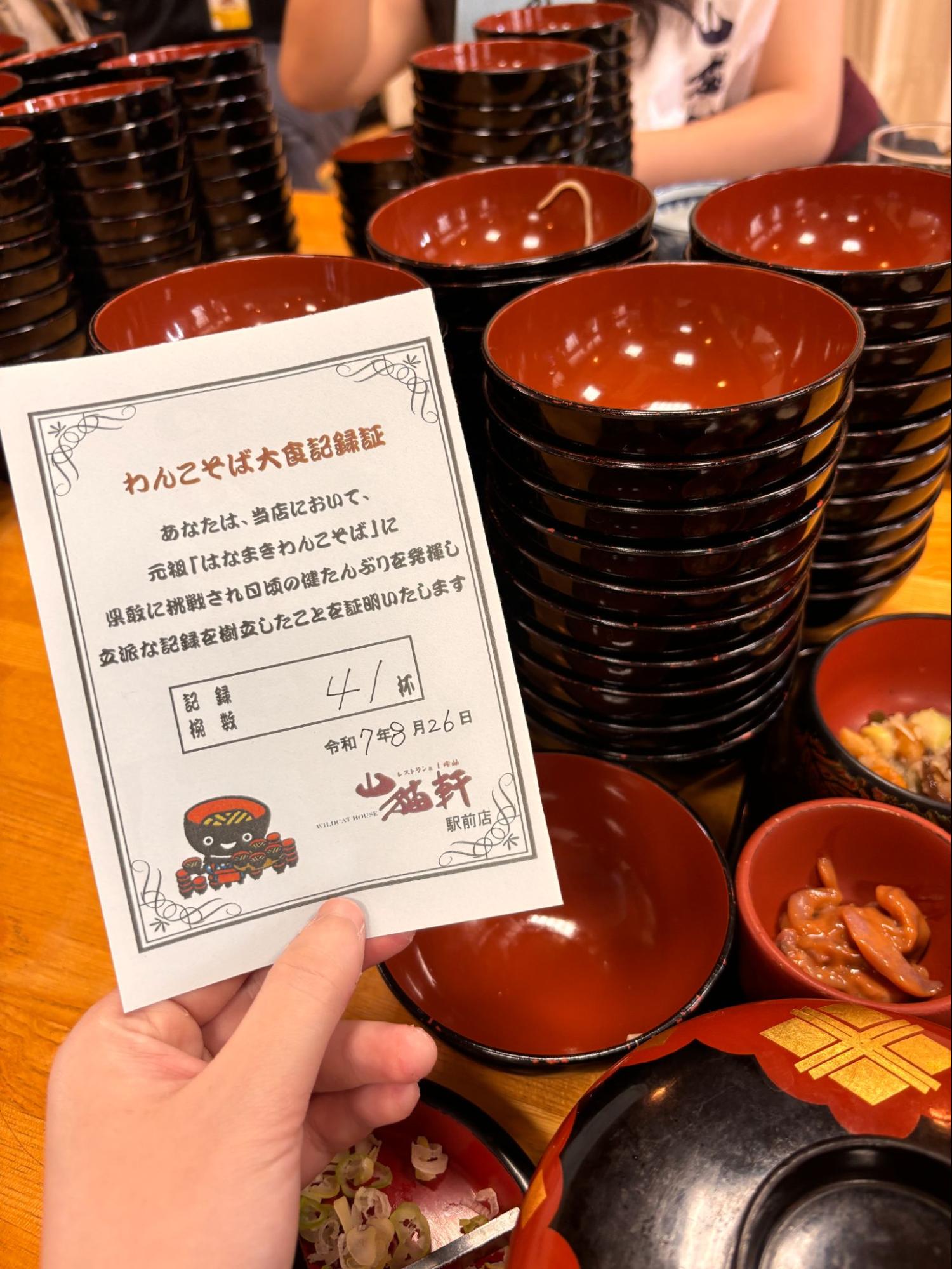 Managed to finish 41 bowls in the end. Photo by Ashley Tan
Reimen
Now, I’ve had cold soba, but never have I had cold noodles in cold salty broth.
This is Morioka reimen — not ramen — a dish from Morioka, the capital of Iwate.
This style of noodles made from potato starch and buckwheat flour was inspired by Korean naengmyeon, and first brought to Japan by a Korean in the early 1900s.
The noodles come in a beef broth, and it is common to eat them with yakiniku.
The watermelon might seem like a weird addition, and I fully expected it to taste salty after soaking in the broth, but it was surprisingly sweet.
Along with the springy noodles, this was a refreshing dish, especially in the sweltering Japan summer.
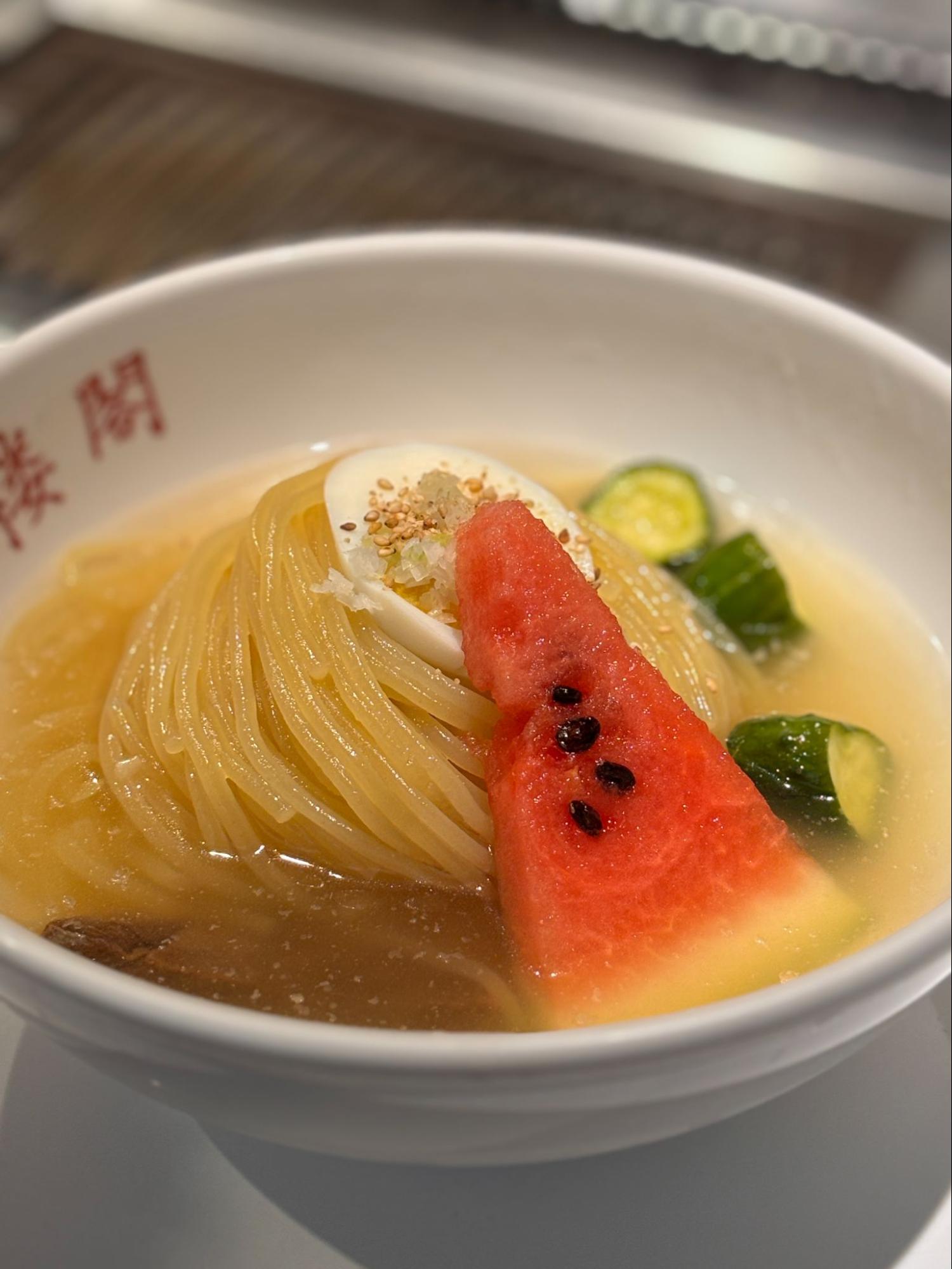 Photo by Ashley Tan
Maesawa beef
Another dish we got to try that’s unique to Iwate is Maesawa beef, a premium Wagyu beef brand from the Maesawa region of Oshu City.
It’s known for its marbling and melt-in-your-mouth texture.
And melt in my mouth it did.
 Gif by Ashley Tan
I also got to try the shabu shabu version, which was equally great.
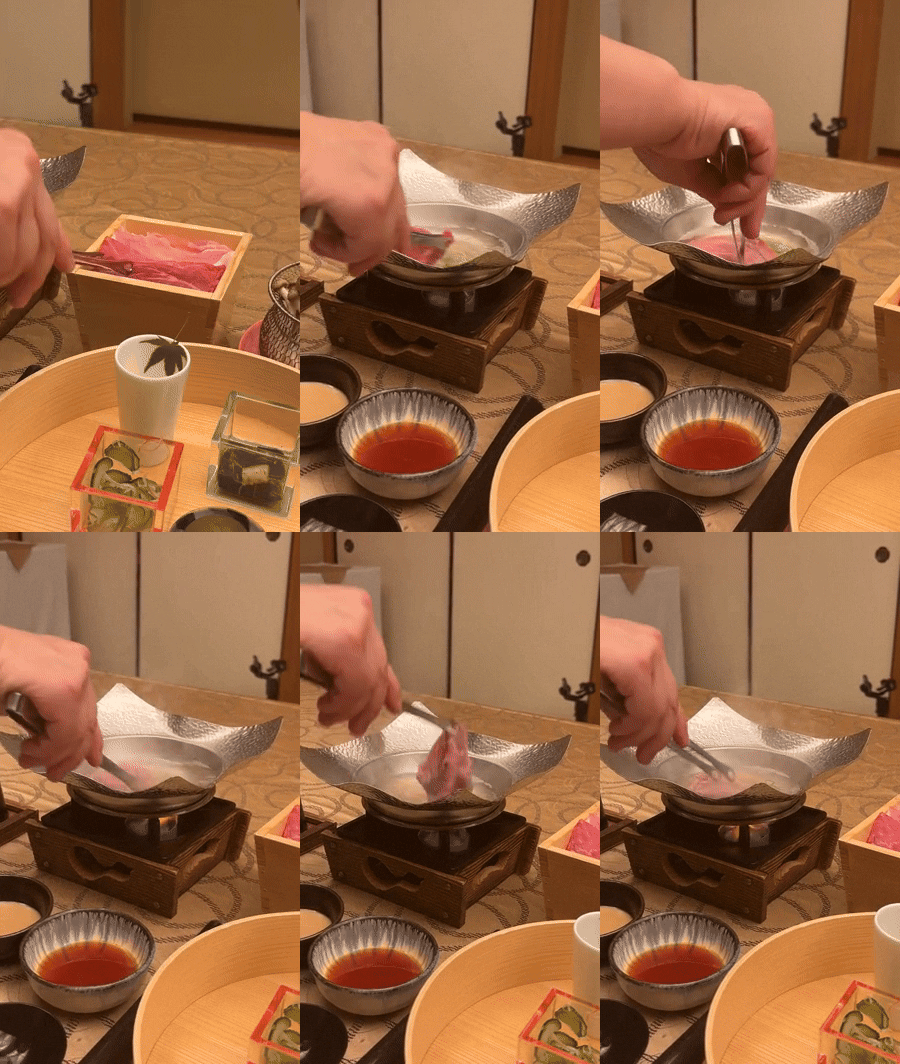 Gif by Ashley Tan
Learn more about sake and its history
It’s not a vacation without some alcohol, and at this heritage centre, you can learn all about local sake from Nambu Toji, a sake producing region in Iwate.
Nambu Toji Tradition Museum is a centre where visitors can find out more about traditional culture of sake brewing, which dates back to the 17th century, as well techniques used by master brewers in Iwate.
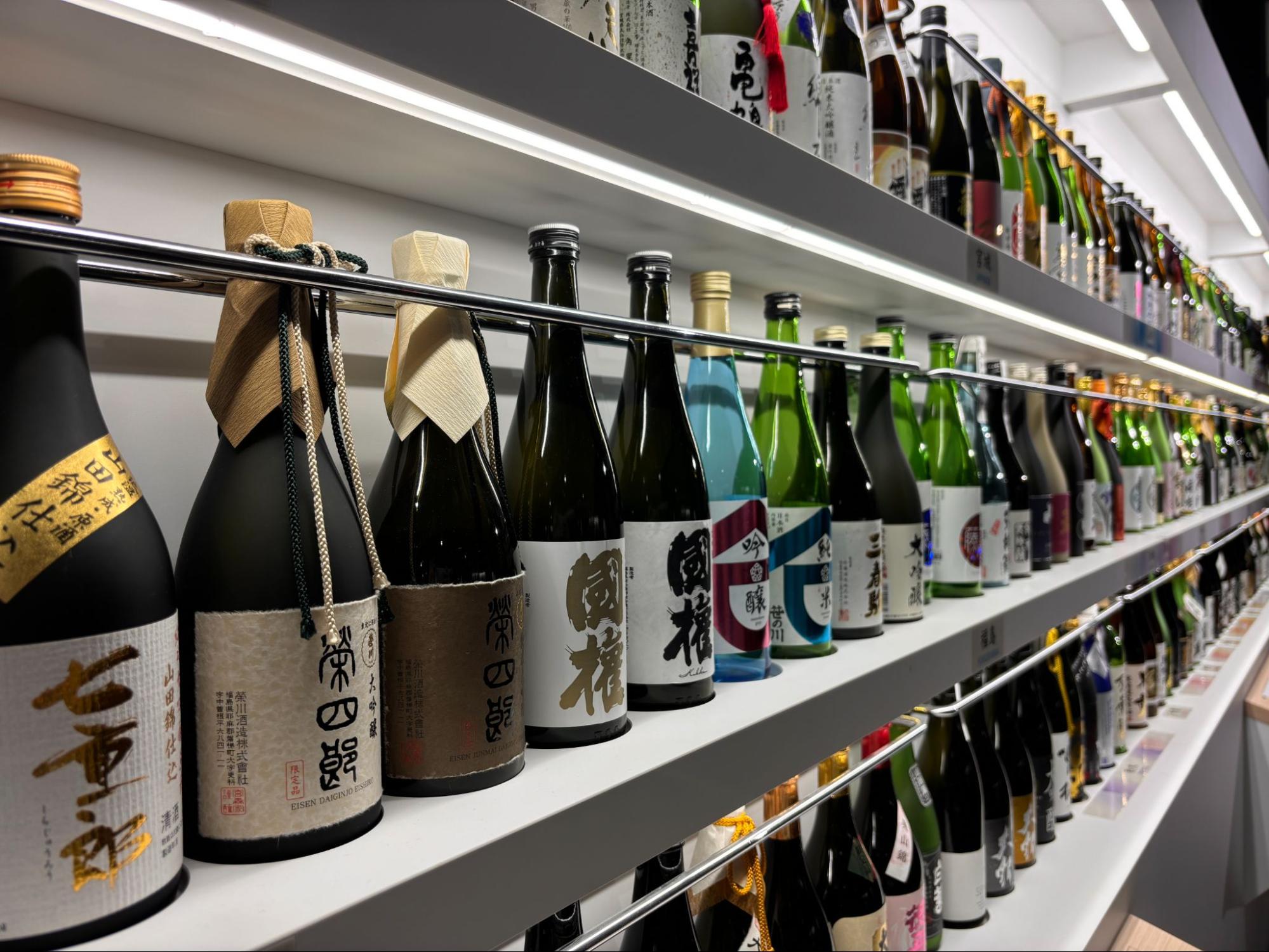 Photo by Ashley Tan
There’s even a sake tasting corner with a variety of sake from Nambu Toji.
Simply fork out ¥200 (a mere S$1.74!) in return for two tokens which you can feed into a sake-dispensing machine.
Each token allows you to try a shot of one type of sake.
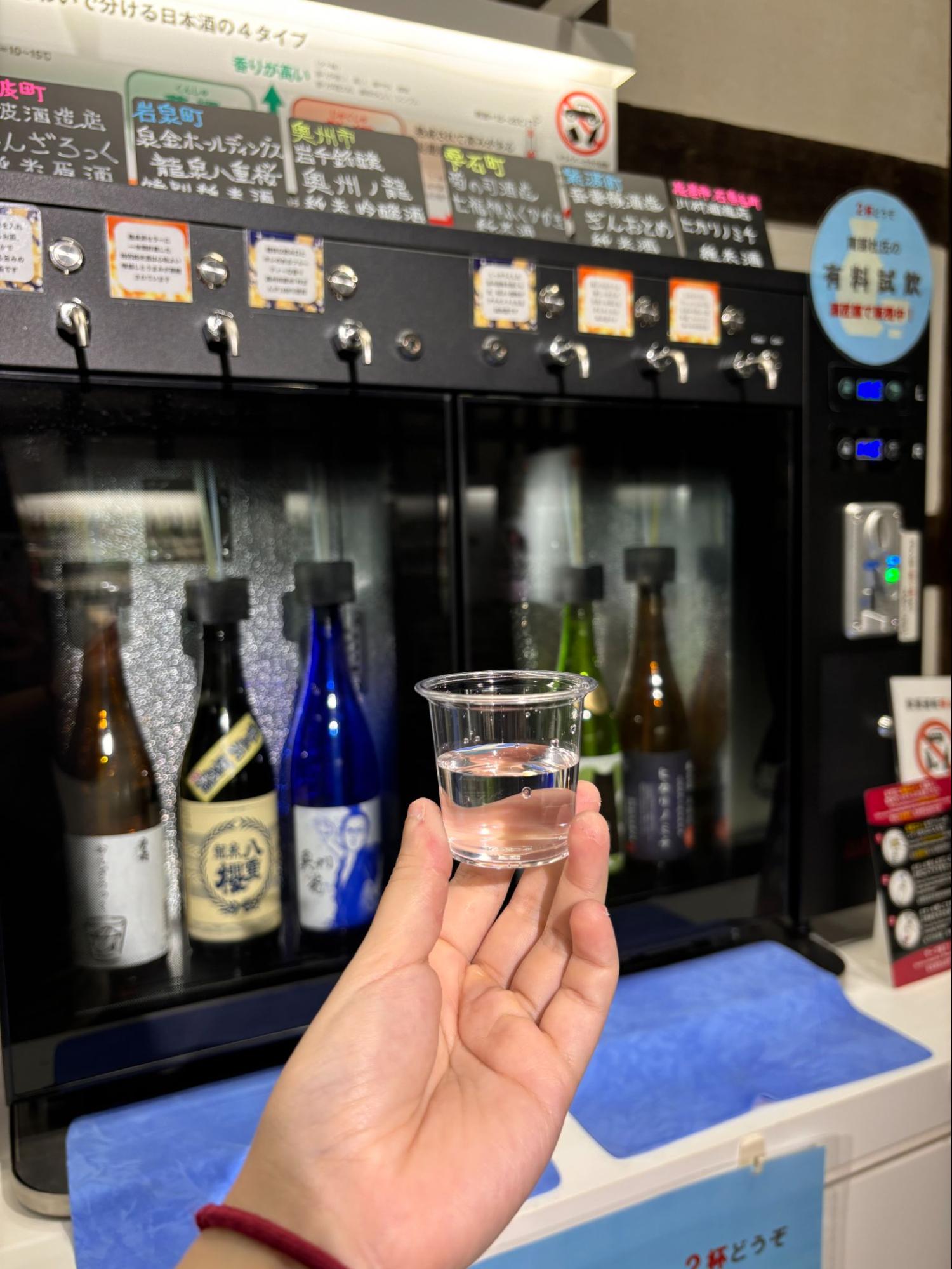 Photo by Ashley Tan
I tried Oshu no Ryu, a limited edition sake from Oshu City in Iwate. The sake was made to support famed baseball player Shohei Ohtani, who hails from the city.
The sake is said to have a “fruity aroma” and “clean, crisp finish”, and it was my favourite out of the three that I tried.
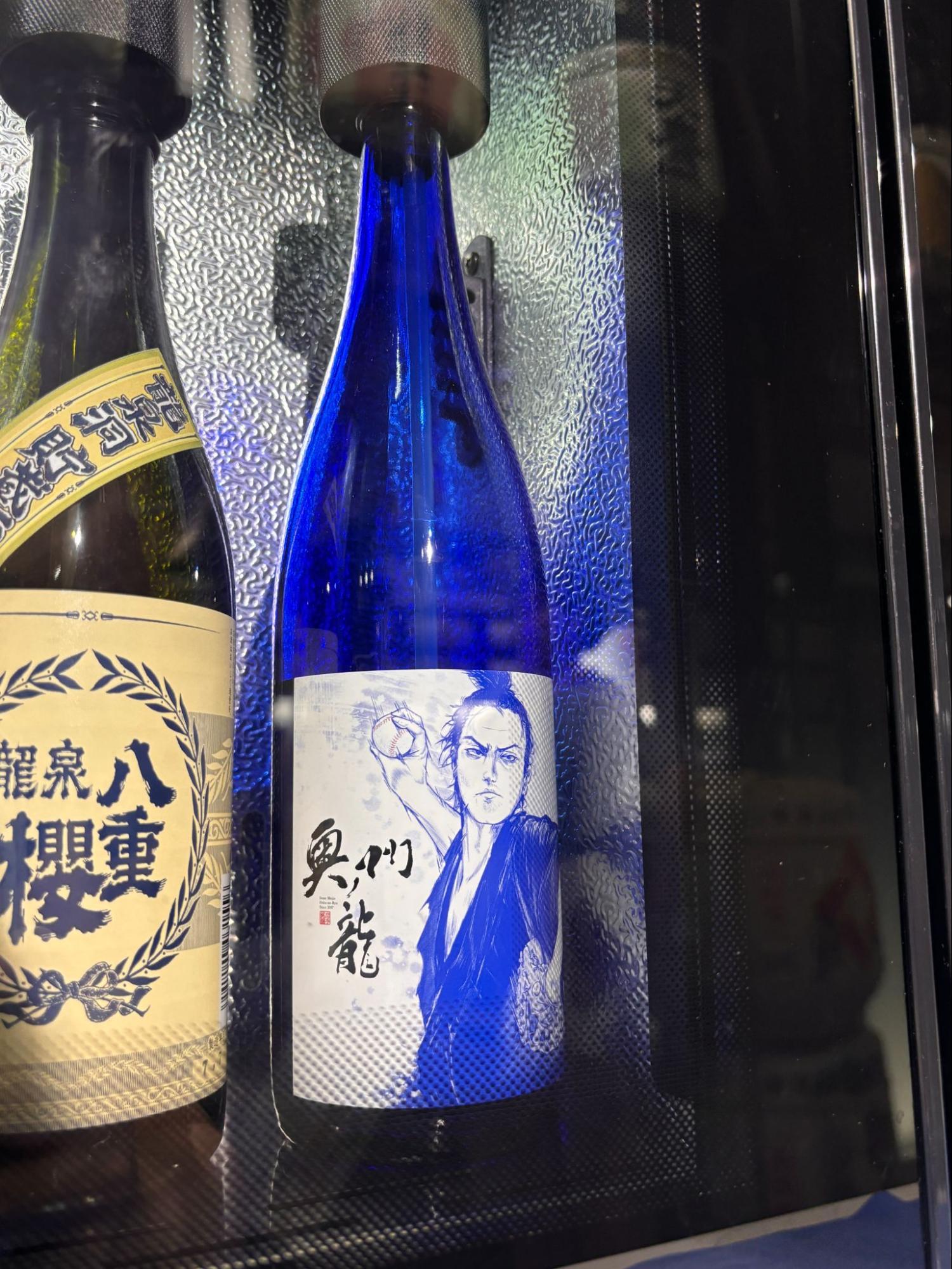 Photo by Ashley Tan
Fans of stamp collecting in Japan can find some unique ones at this centre too.
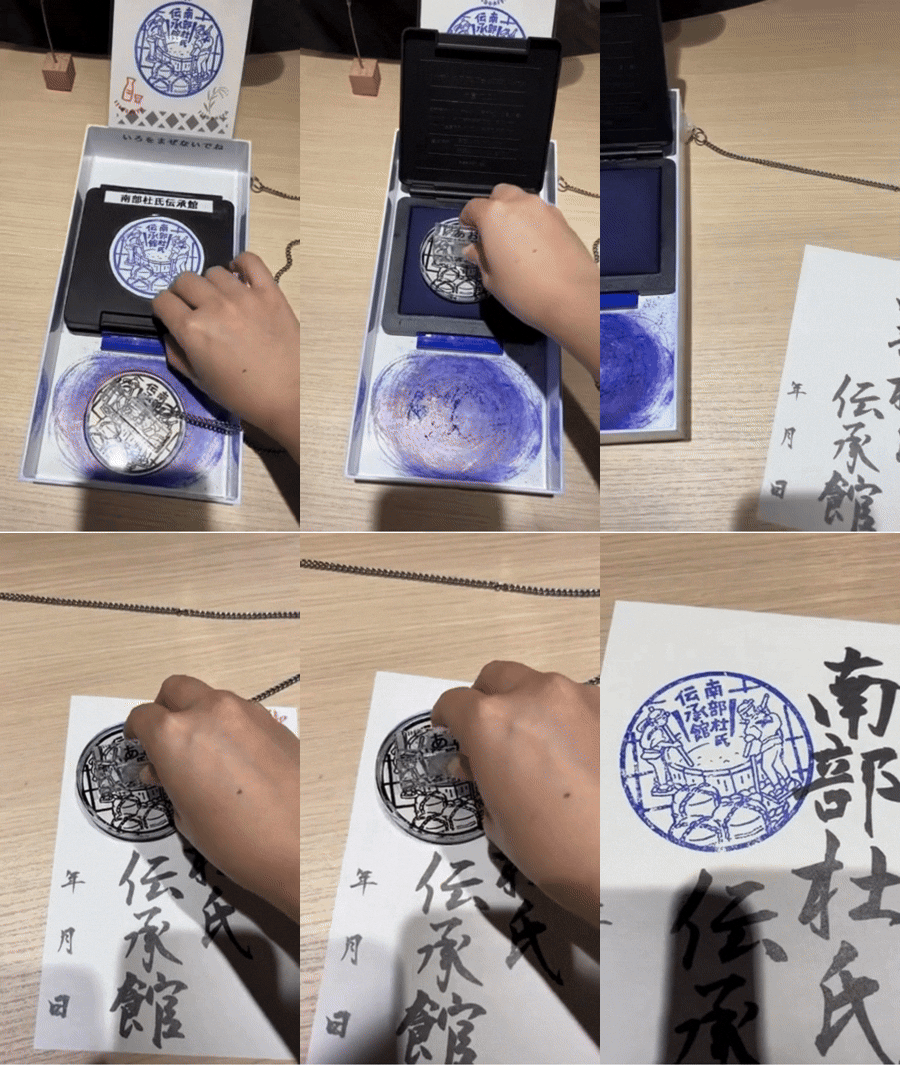 Gif by Ashley Tan
Near the centre is a souvenir shop where you can also try sake-flavoured ice cream.
Koiwai Farm
Another attraction in Iwate is Koiwai Farm, a dairy farm with over 130 years of rich history.
Spanning about 3,000 hectares total, part of the grounds offer a range of activities such as horse rides, pedal cart rides, archery, and has play areas perfect for kids.
 Gif by Ashley Tan
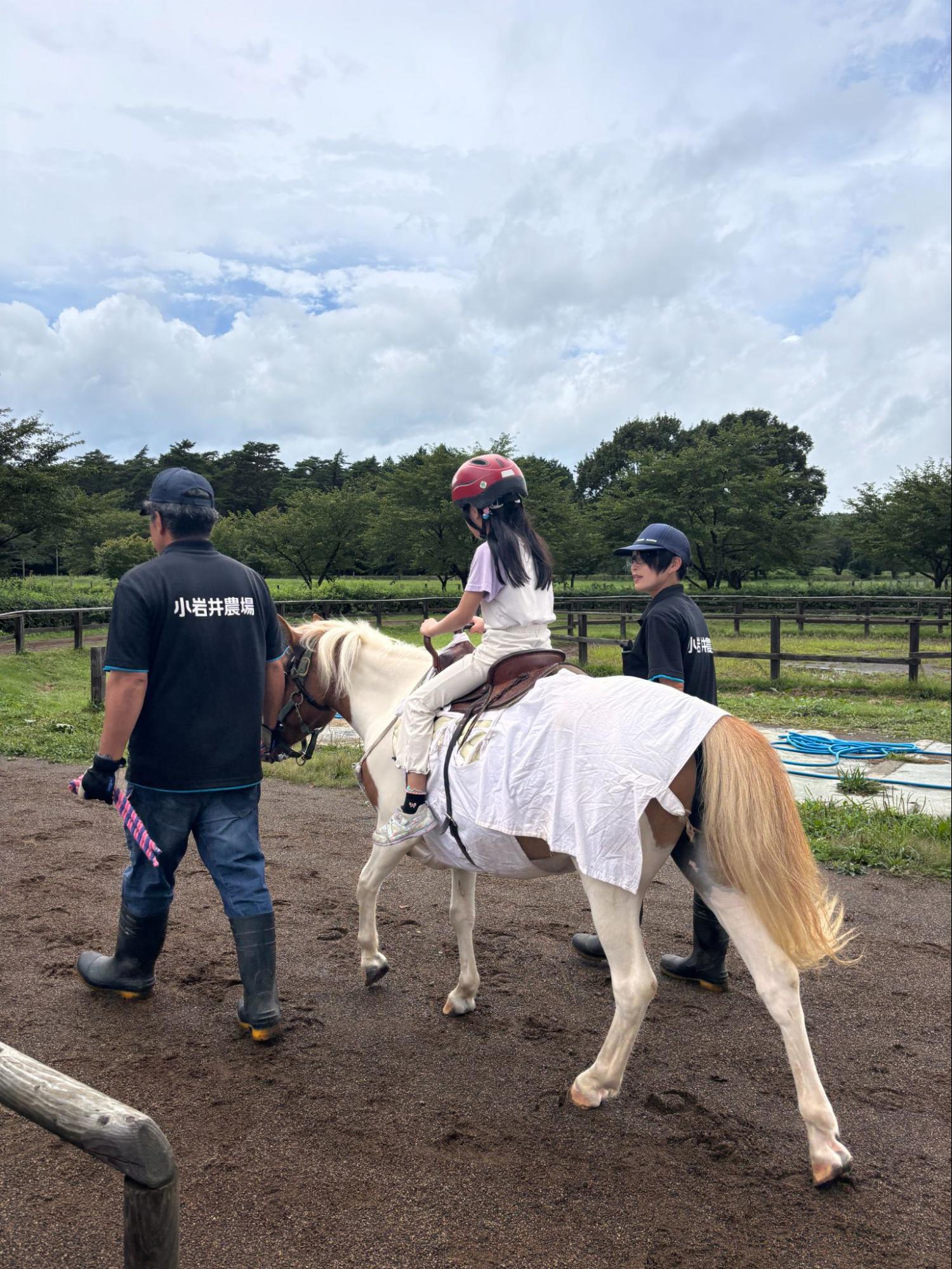 Photo by Ashley Tan
At the cattle-rearing area, visitors can see cows up close and learn more about how Koiwai’s dairy products are made.
This place is not for the lactose intolerant (or if you are, don’t forget your lactase pills). Some Koiwai Farm delicacies include its milky soft serve ice cream, as well as steamed potatoes with fermented butter.
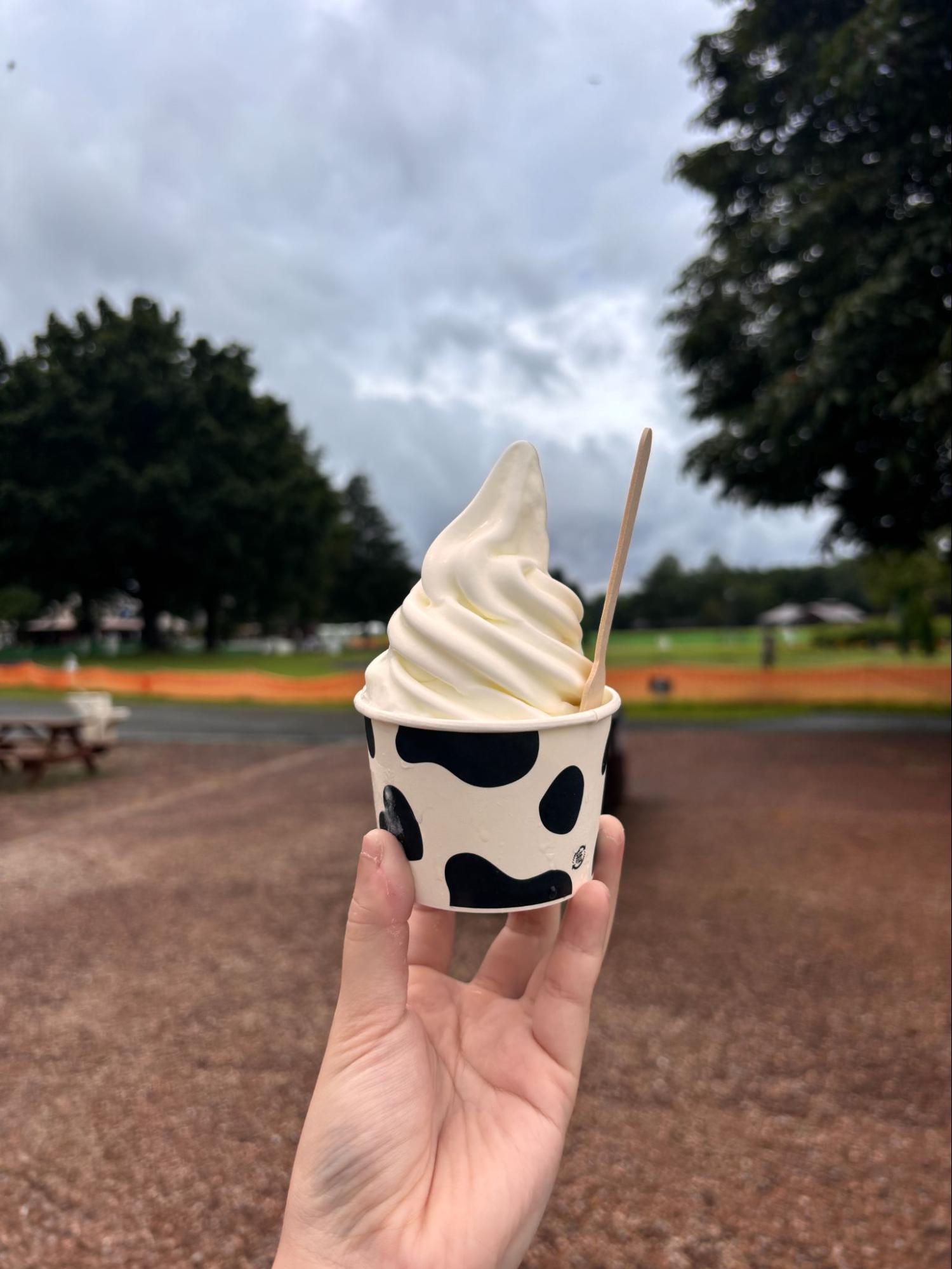 Photo by Ashley Tan
The restaurant on the farm, Makiba no Ramen, also serves up a unique milk ramen — the broth is a mix of dashi stock and the farm’s own pasteurised milk.
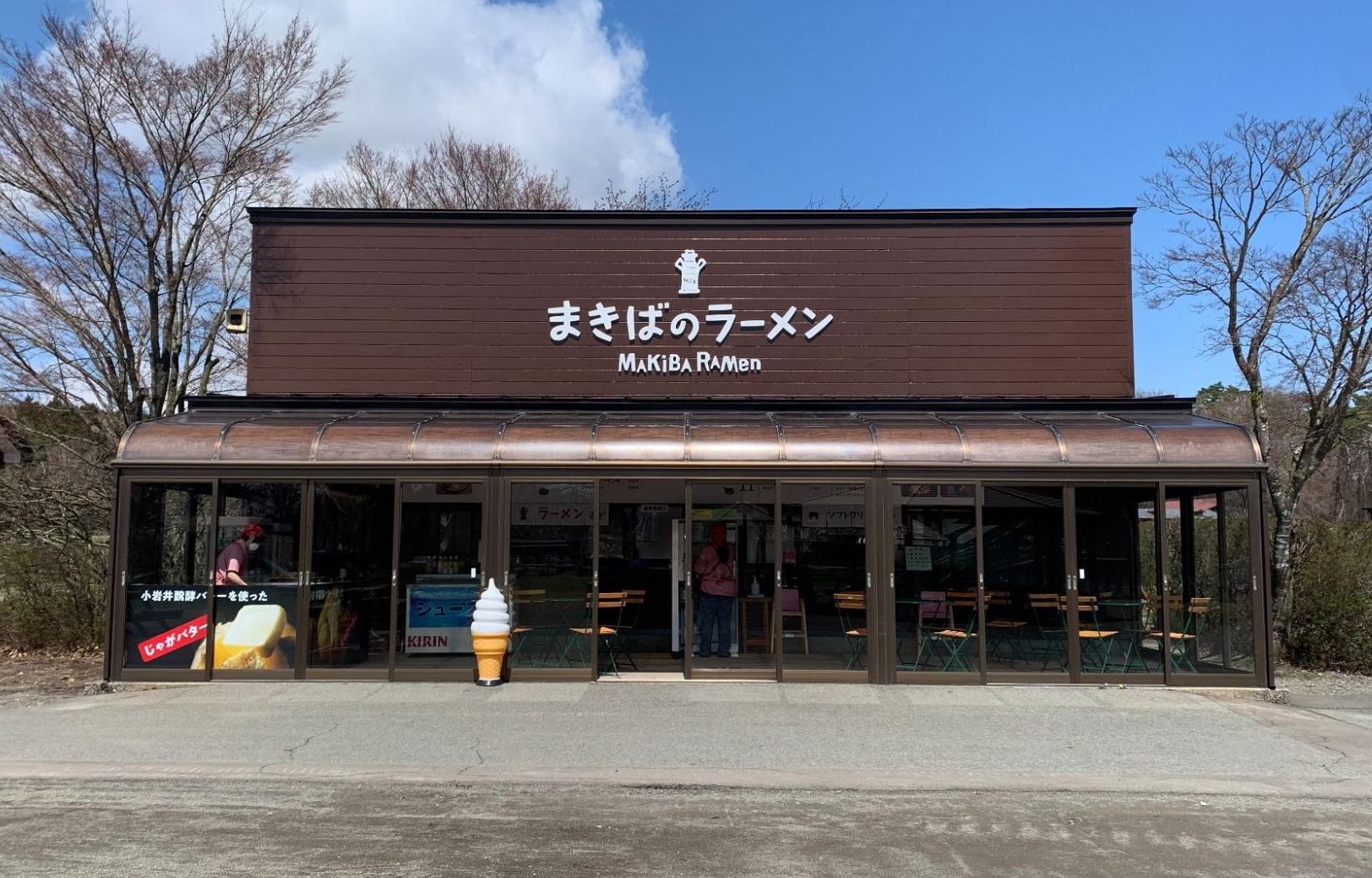 Photo by Ashley Tan
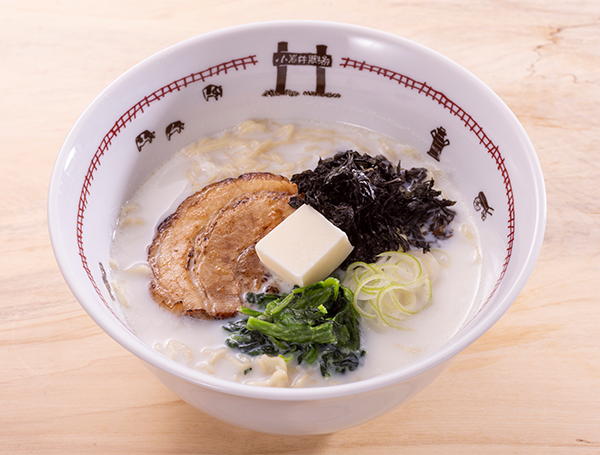 Photo from Koiwai Farm
Traditional deer dance
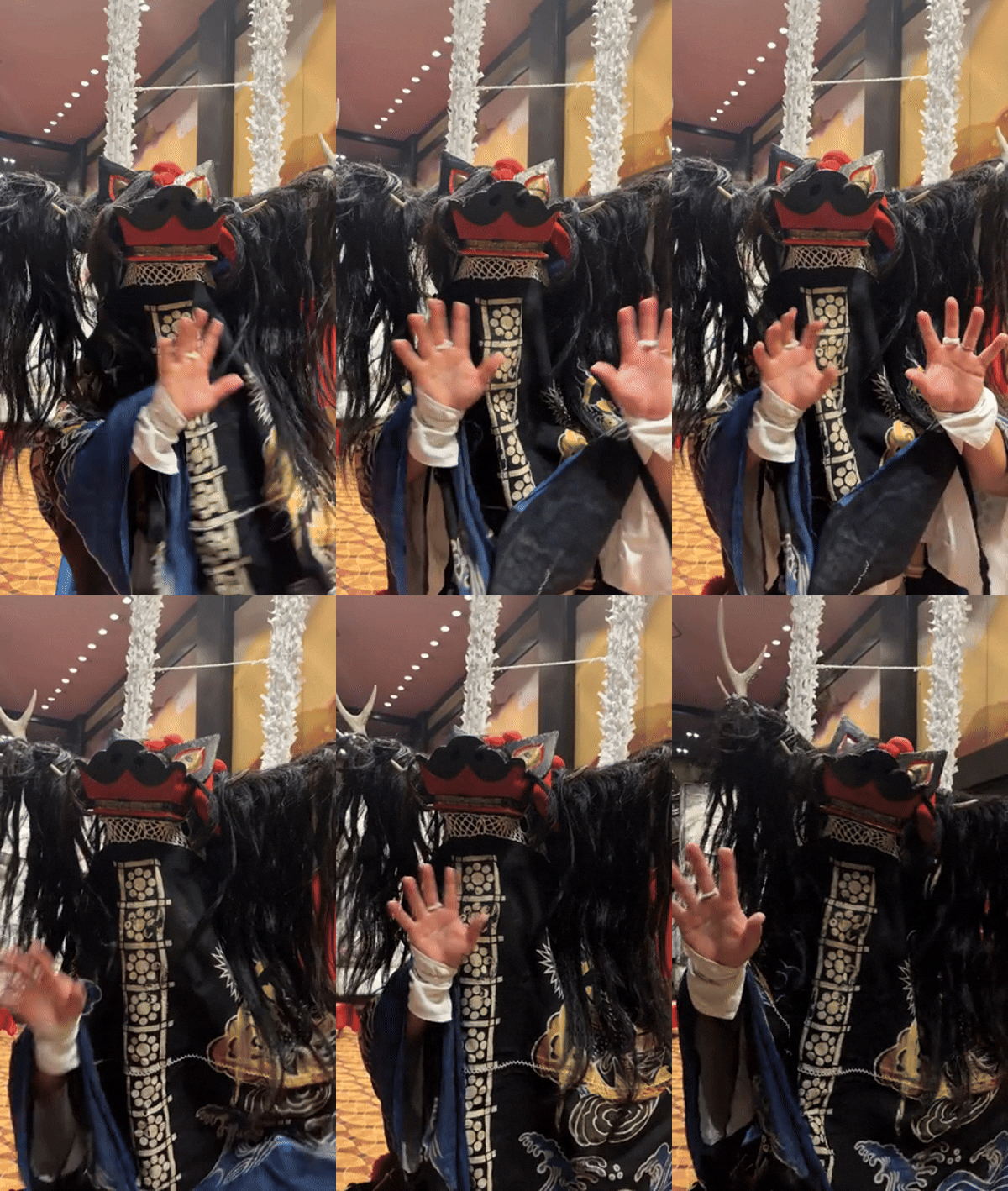
Lastly, witness one of Iwate’s cultural rituals with the shishi-odori (or “deer dance”).
In this folk dance, dancers don an elaborate and hefty 15kg get-up with masks that mimic deer. While beating taiko drums strung from their waists, the dancers chant and spring around rhythmically.
 Gif by Ashley Tan
The shishi-odori originated as a hunter’s ritual meant to honour the accidental killing of a deer, and soothe the creature’s soul.
Now, the dance is performed at village festivals in the summer, such as Iwate’s Hanamaki Festival, and occasionally at weddings.
 Gif by Ashley Tan
Miyagi
Miyagi is the most populous area in Tohoku, and is only an hour and a half away from Tokyo via shinkansen.
One for the anime fans
In fact, the prefecture is featured prominently in volleyball anime "Haikyu!!", with the show's fictional schools set in the capital city, Sendai.
Dotted around Sendai are "Haikyu!!" Easter eggs — at a small park nestled among the suburbs, Tomizawa Park, is a monument dedicated to the anime.
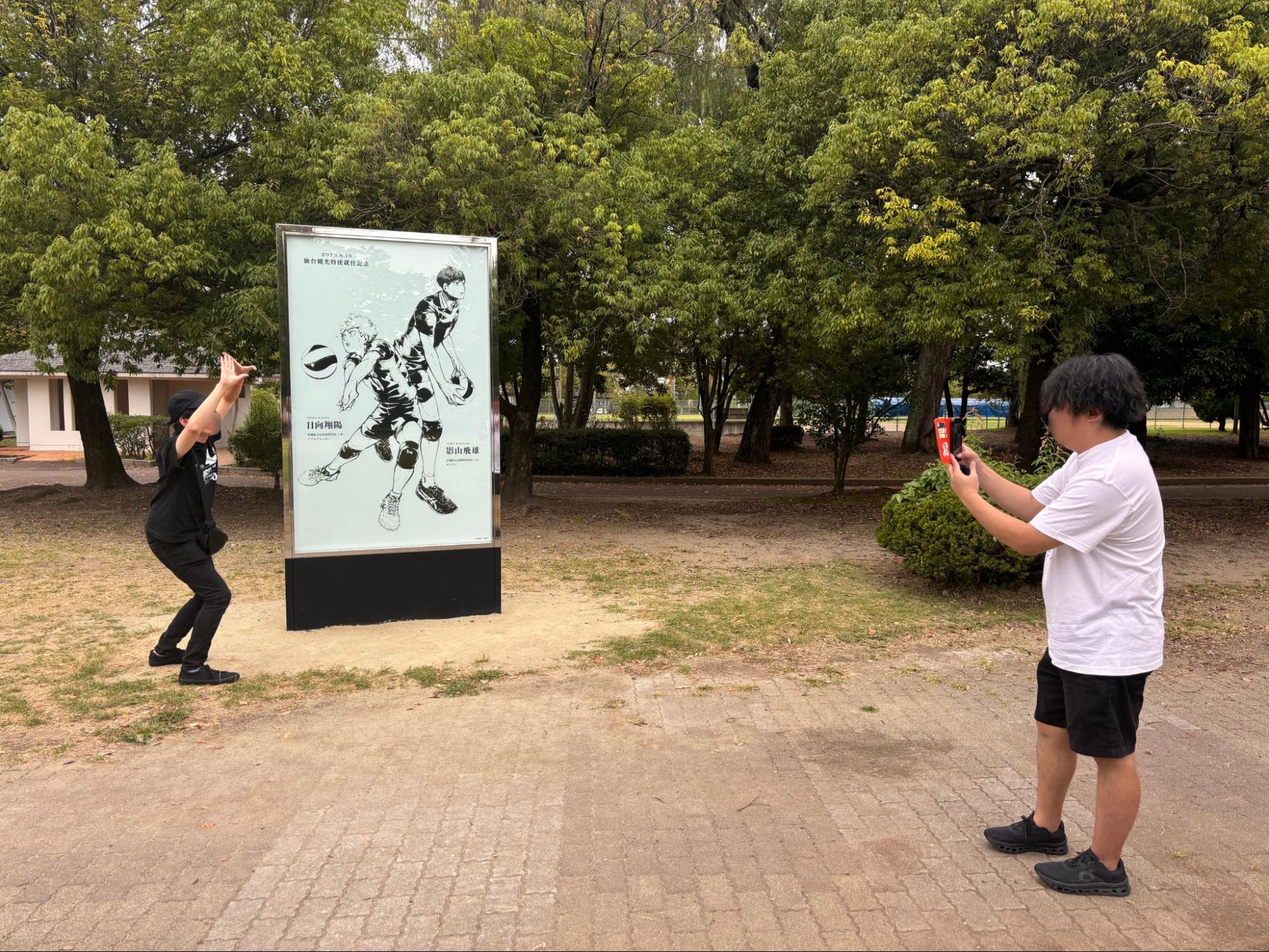 Some "Haikyu!!" fans spotted. Photo by Ashley Tan
In the vicinity are other landmarks that appeared in the anime, such as the Sendai City Gymnasium (though it is currently under renovation). The monument was originally located outside the gymnasium.
A little further away from the park are some manholes decorated with images of "Haikyu!!" characters from the four fictional schools in the anime.
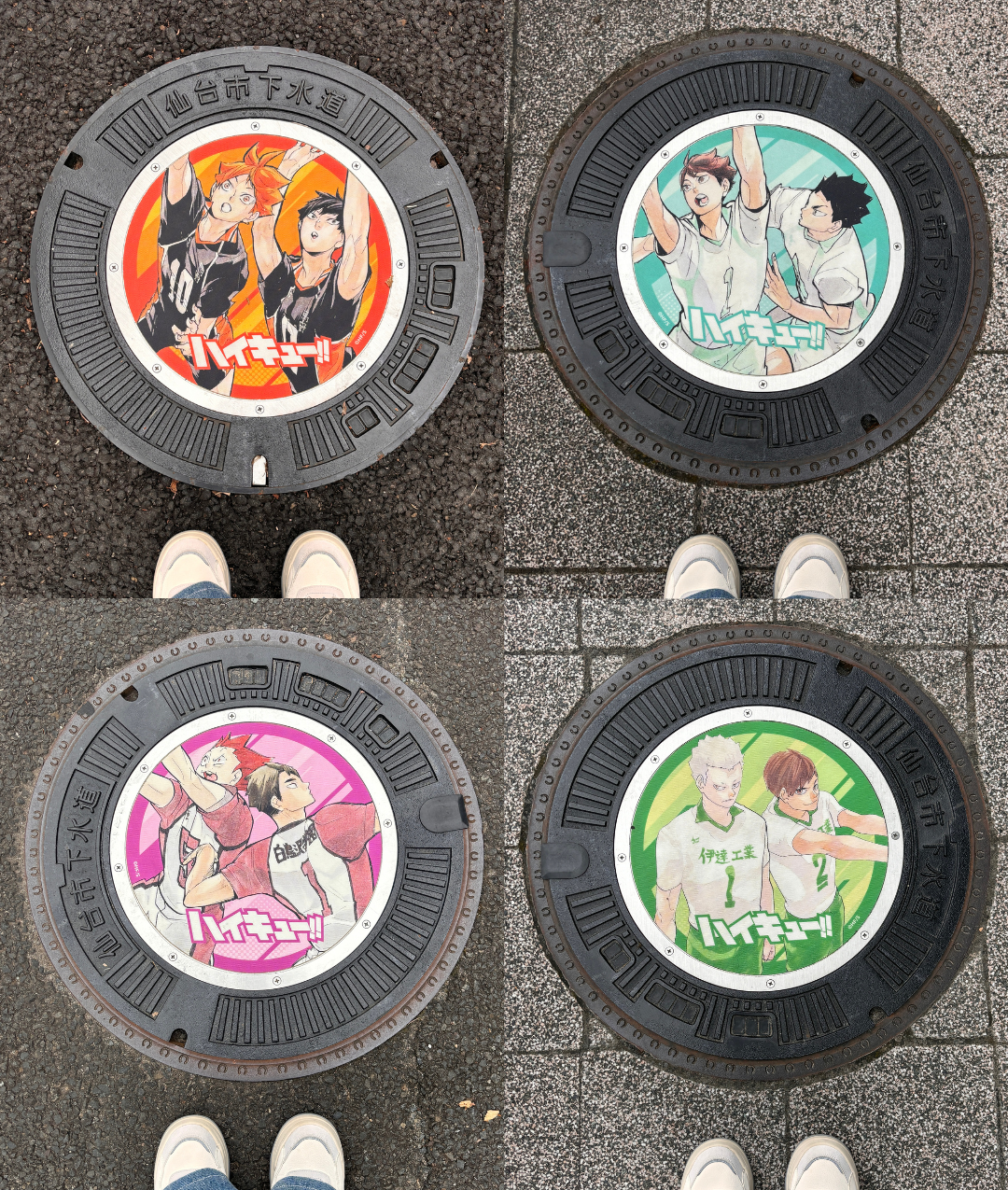 Photo by Ashley Tan
Here’s a nifty map if you want to locate them.
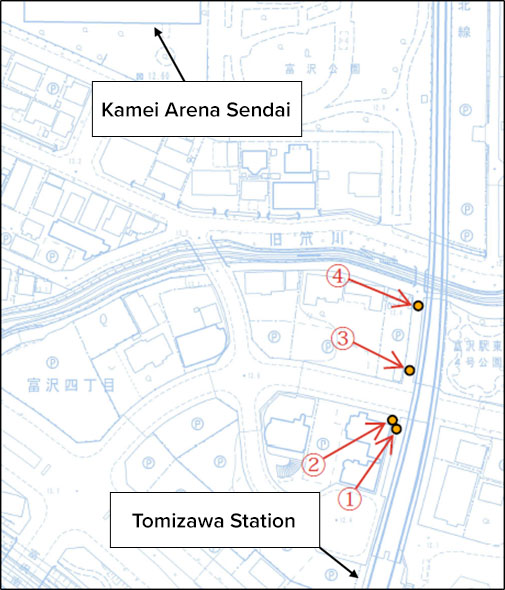 Map by JNTO Singapore (Source: Sendai City Website)
Zunda
Meanwhile, fans of “Jujutsu Kaisen” are in for a treat — literally.
If you’ve watched Episode 2 of the anime, you might have noticed one of the characters, Gojo Satoru, name-dropping a mysterious mochi that he got as a souvenir.
A “Sendai specialty,” he said.
Guess what, this mochi is entirely real. It’s called kikufuku, and is filled with whipped cream and zunda, a sweet green paste made from edamame.
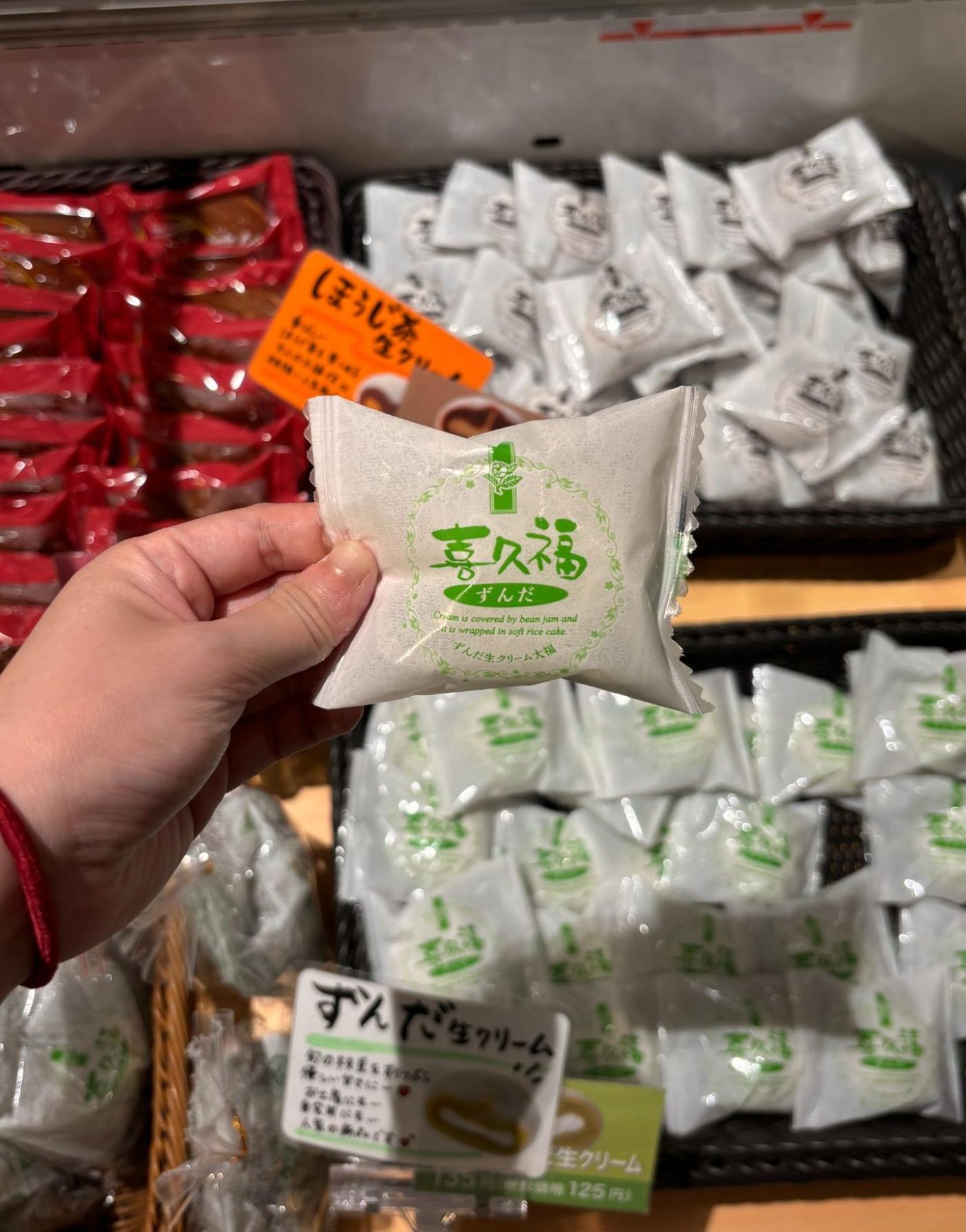 Exact same packaging as in the anime. Photo by Ashley Tan
I got to try some out, and aside from looking exactly like it did in the anime, has a creamy and light bean-y taste.
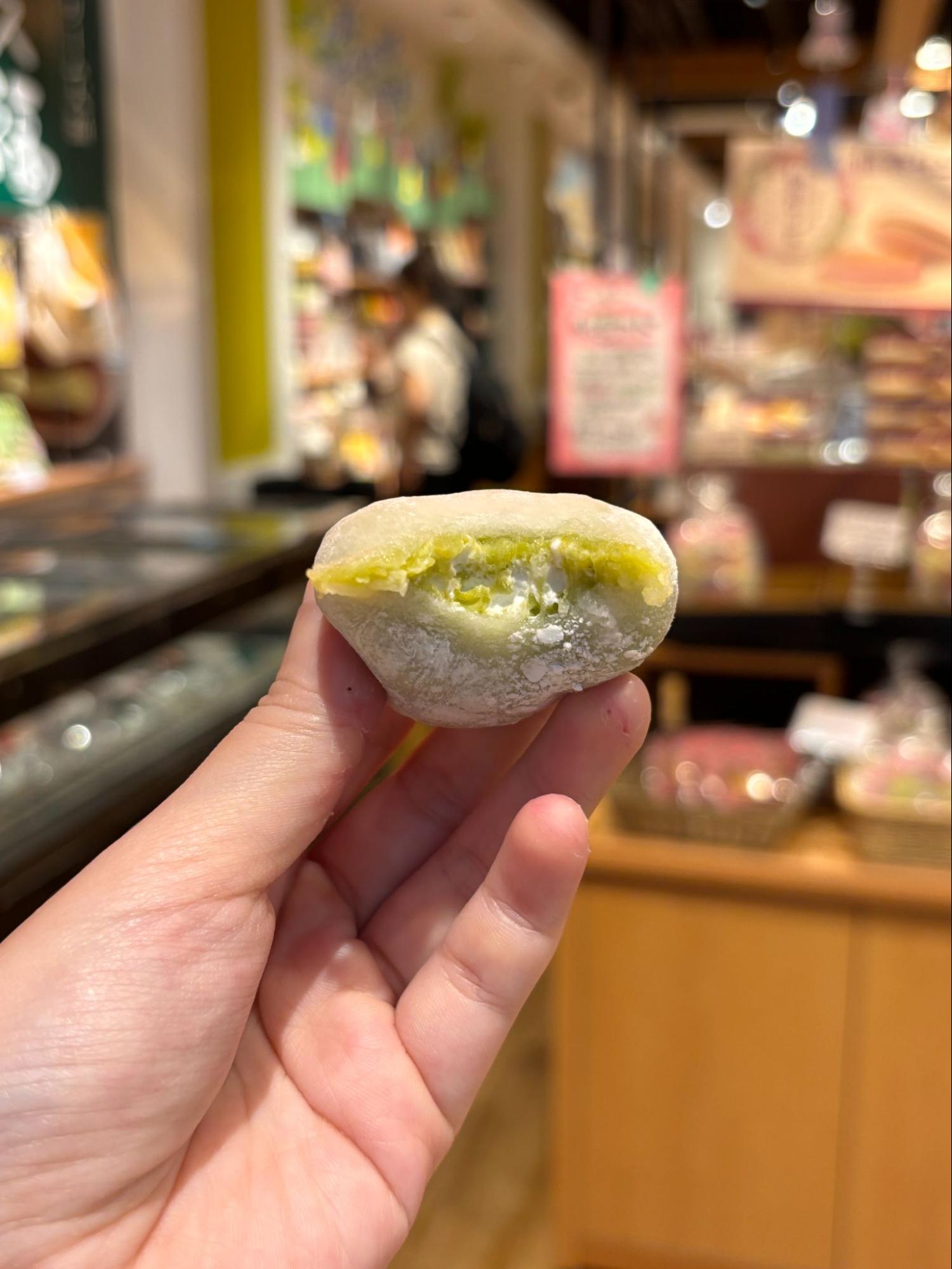 Photo by Ashley Tan
Ocha No Igeta, a sweets store which sells kikufuku located along a traditional shopping street in Sendai, also offers a variety of other zunda-related snacks, such as a zunda shake.
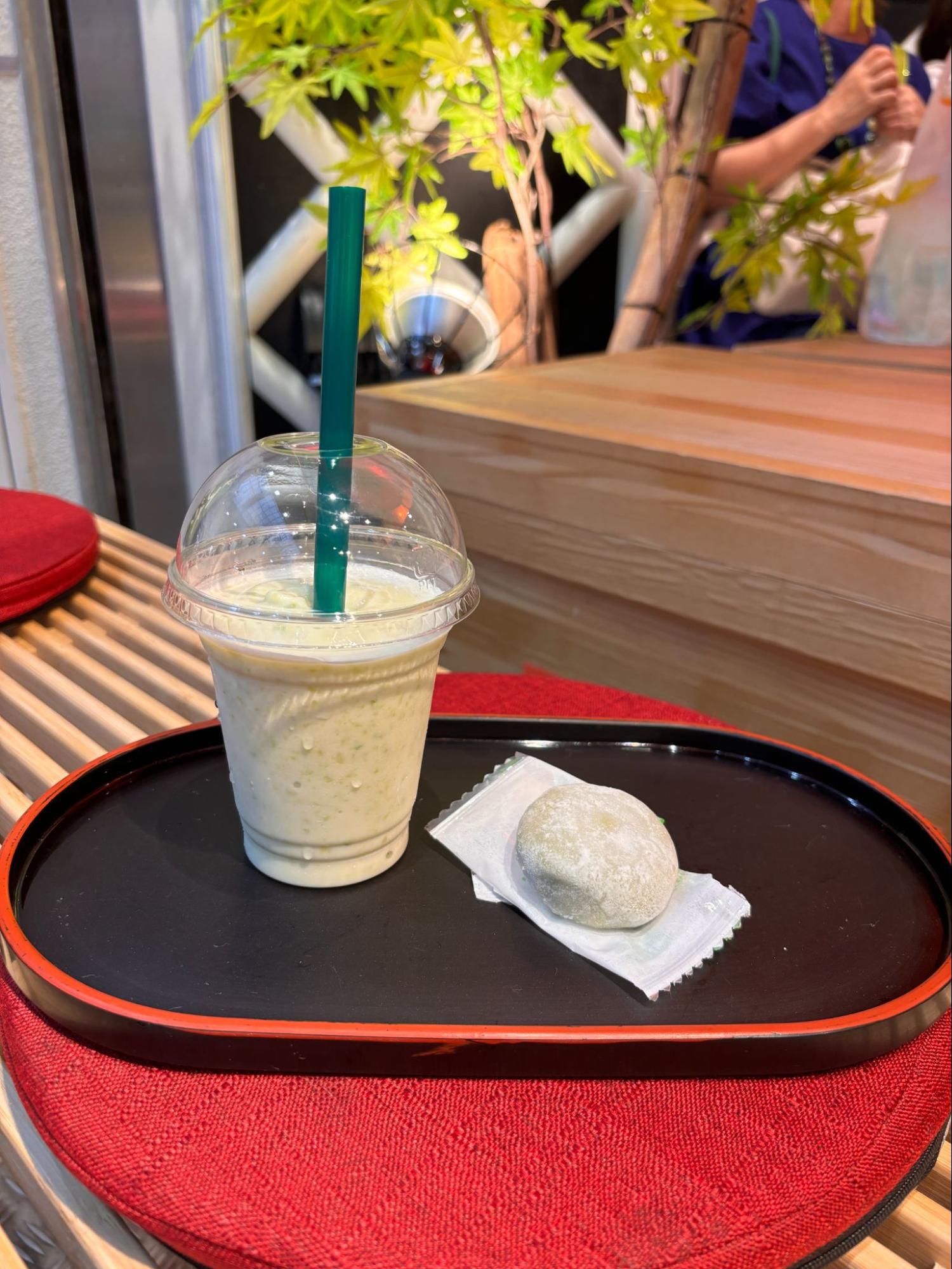 Zunda shake and kikufuku. Photo by Ashley Tan
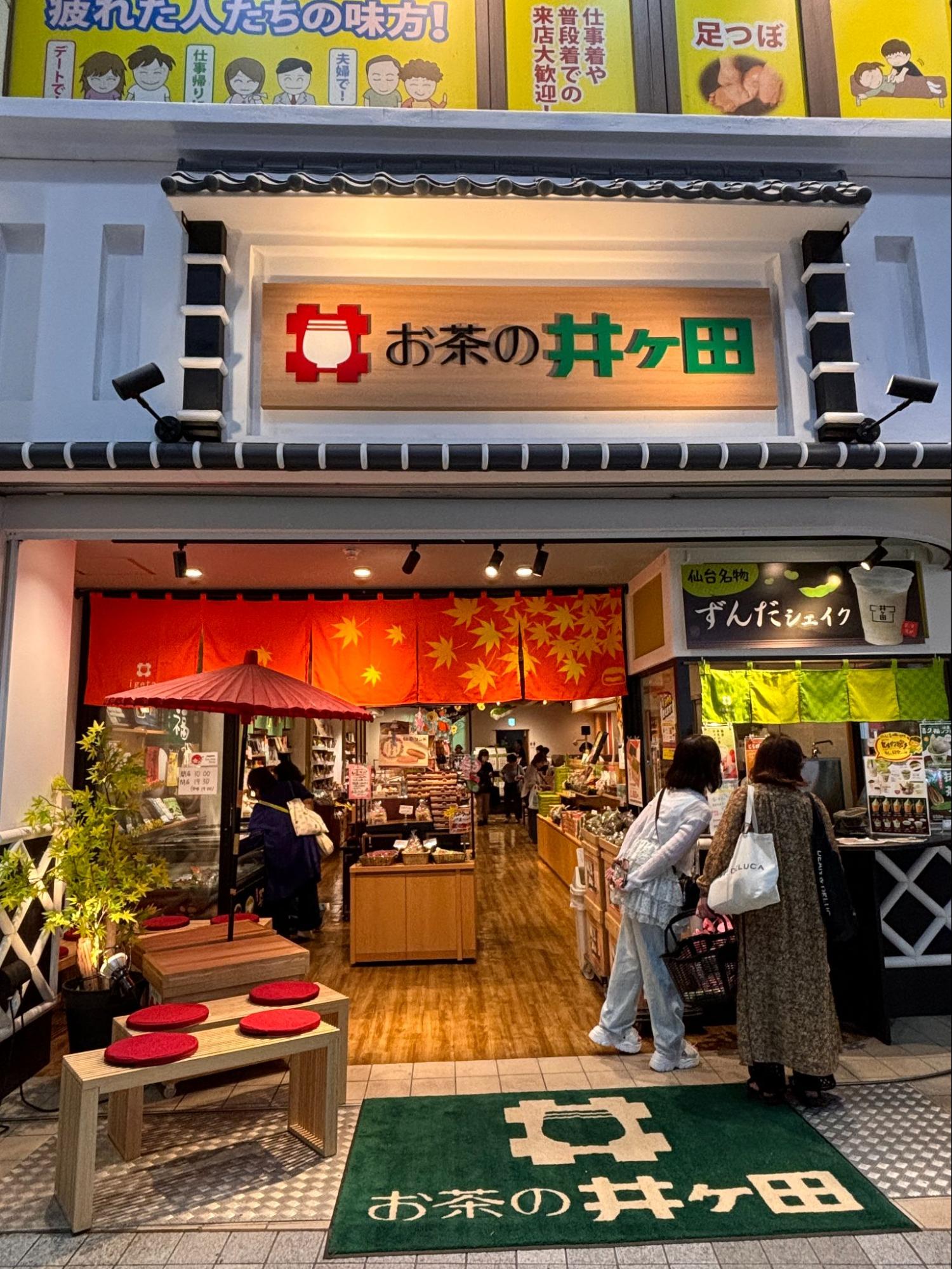 Photo by Ashley Tan
Tea at Matsushima
After satisfying some of the munchies, I headed over to Matsushima, a half-hour drive away from Sendai.
Matsushima Bay, which is dotted with around 260 small islands, is one of the top three most scenic spots in Japan, alongside Amanohashidate and Miyajima.
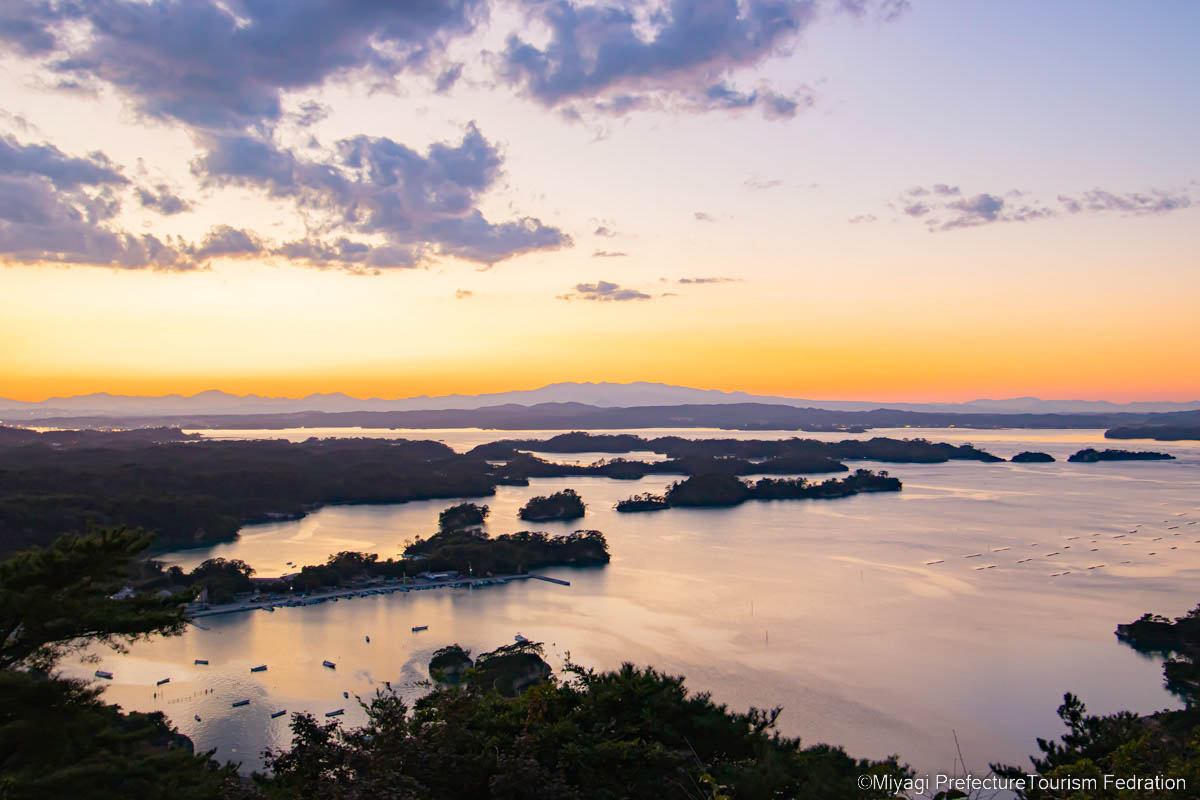
You can take a 50-minute cruise ride looping around the bay, where you can enjoy the salty sea breeze and a closer view of the islands.
If you would prefer to keep your feet planted on land, tucked away in a hilly outcrop overlooking the bay is Kanrantei Teahouse.
The teahouse is steeped (haha) in history — it is said to have originally been part of a castle belonging to a Japanese samurai and daimyo (feudal lord) in the 1500s. It was then relocated from the castle in Kyoto to Matsushima in Miyagi.
The place still retains its traditional styles and architecture, and makes for a relaxing spot with a good view.
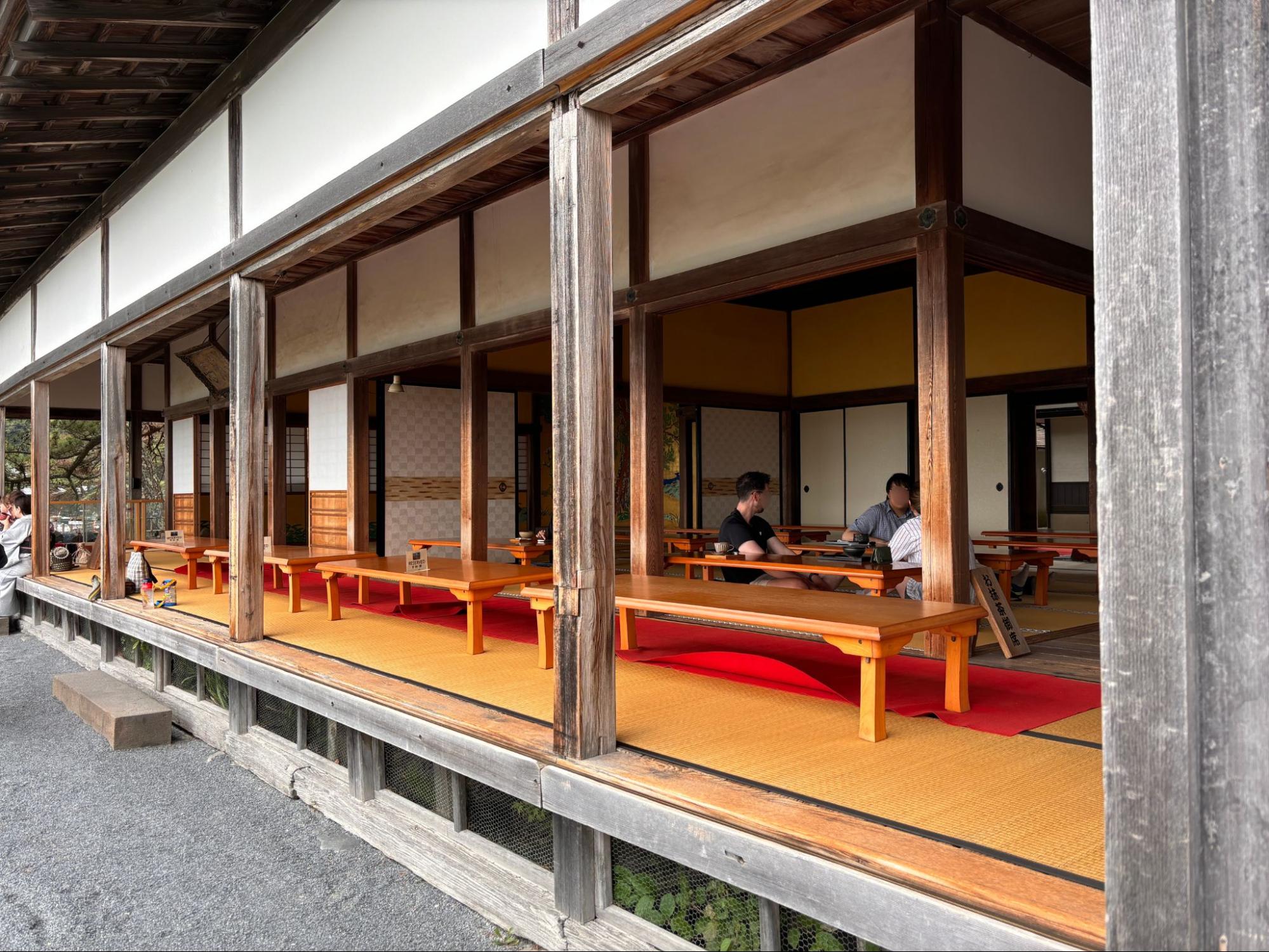 Photo by Ashley Tan
 Gif by Ashley Tan
One can sit on the tatami mats, sip on some hot or cold matcha paired with a small snack, and enjoy the splendid views of the sea.
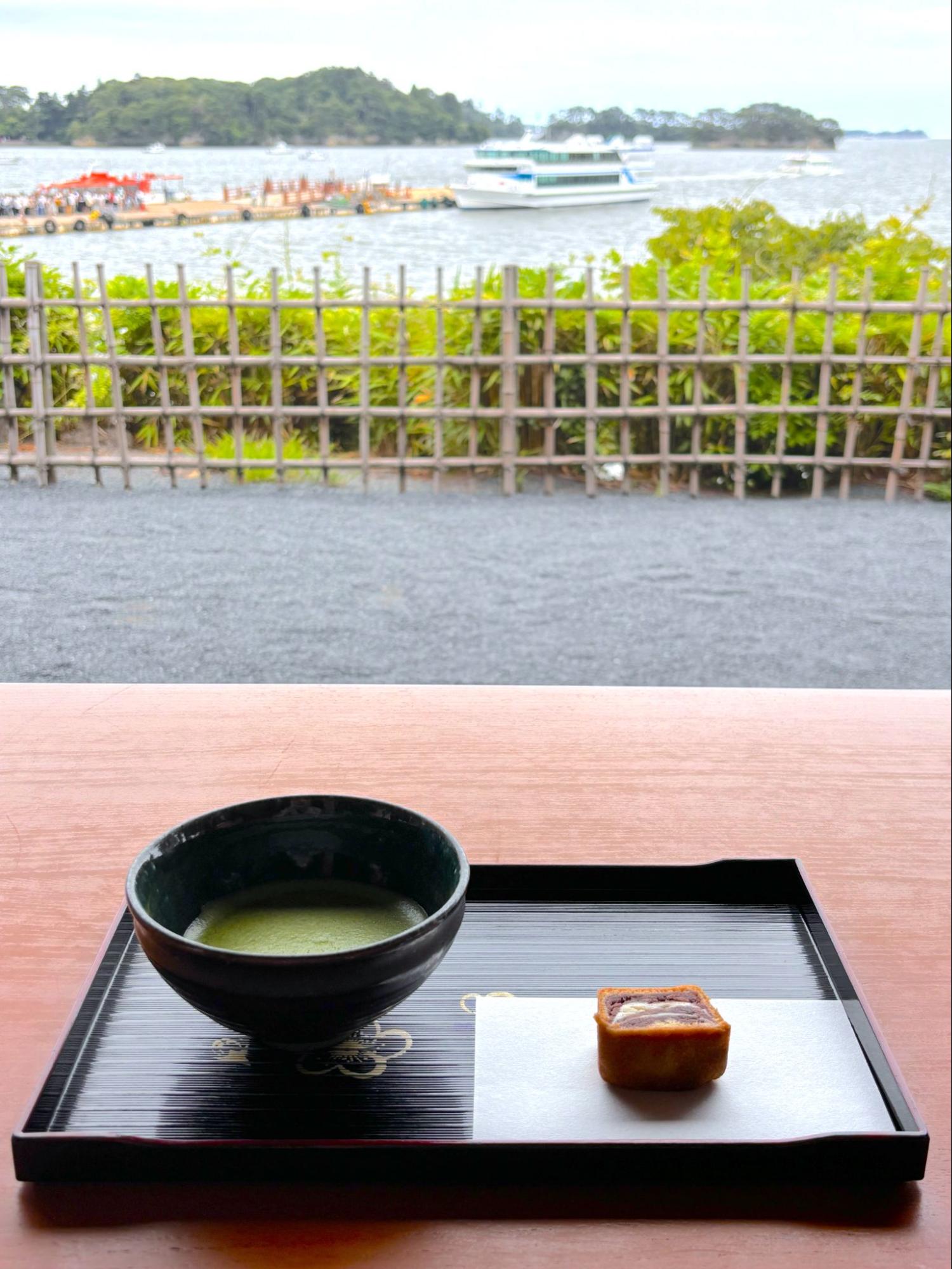 Hot matcha with an anko (red bean) and cream cheese pastry. This set cost ¥700 (S$6). Photo by Ashley Tan
Beef tongue
After zunda, it’s time to try another Sendai specialty, beef tongue.
Here, it’s also known as gyutan (“gyu” means “cow” in Japanese, while “tan” stems from the English word “tongue”).
I’m generally not a huge fan of any meat other than the conventional parts of an animal, like ears or offal, but this was a delicious surprise.
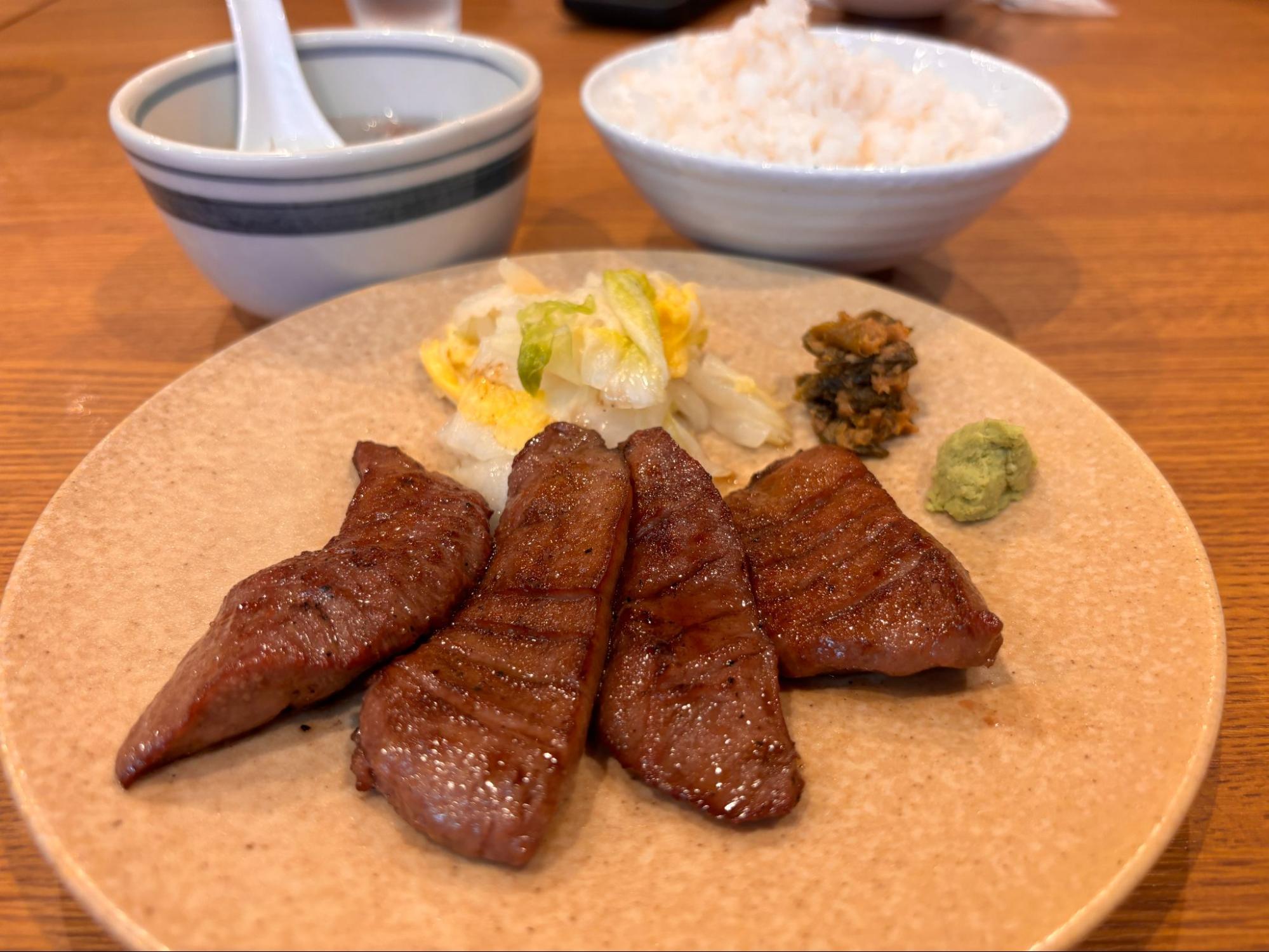 Photo by Ashley Tan
The beef tongue was well marinated and extremely flavorful. It’s also rather chewy, great for those who prefer some bite to their food.
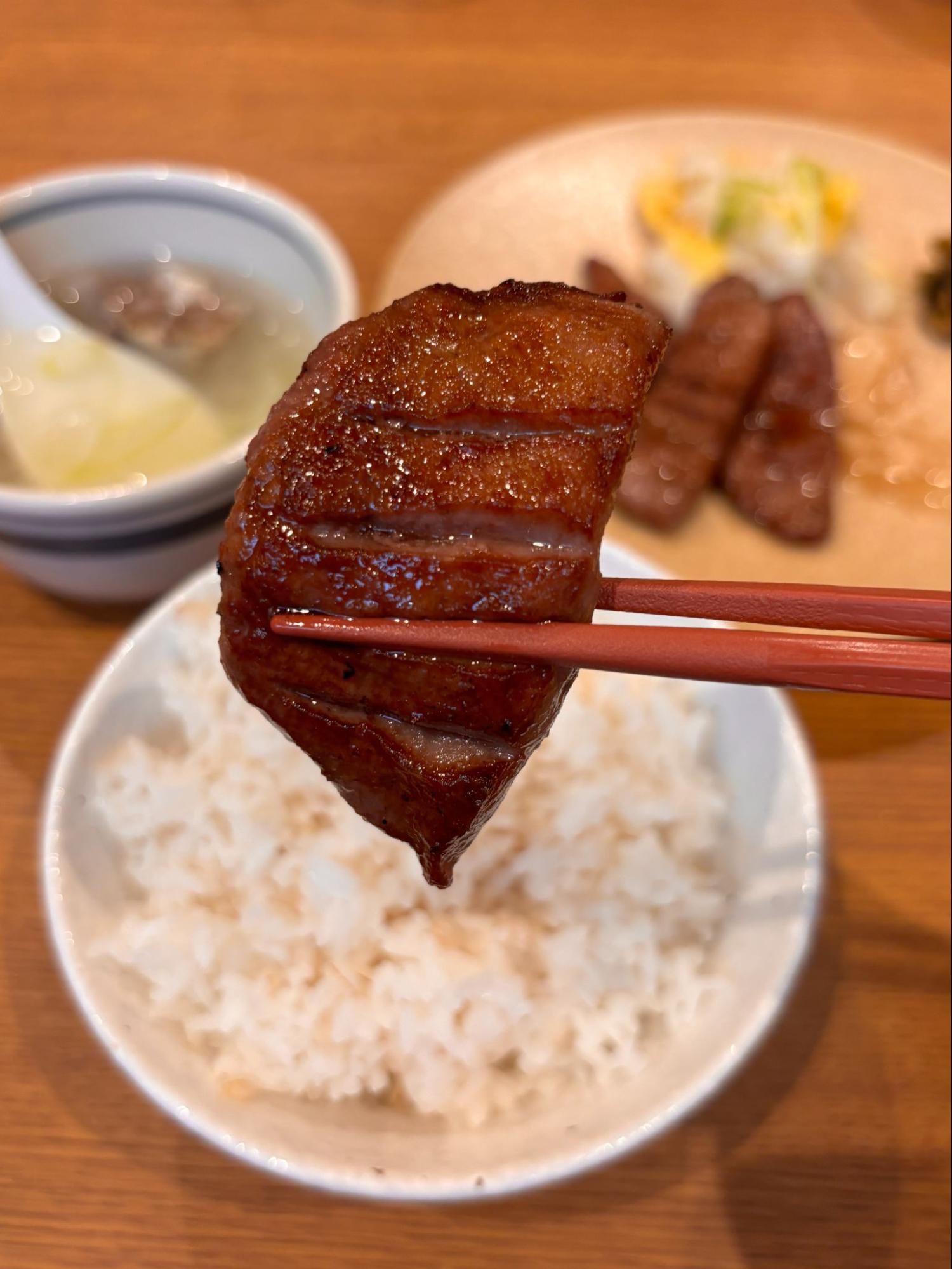 Photo by Ashley Tan
Robata
To cap off my time in Miyagi is dinner at an old Japanese-style tavern, Ganso Robata.
The place is warm and intimate, with a maximum of 15 pax seated around a sake station in the middle, from which a server will serve hot sake to guests with the aid of long paddles.
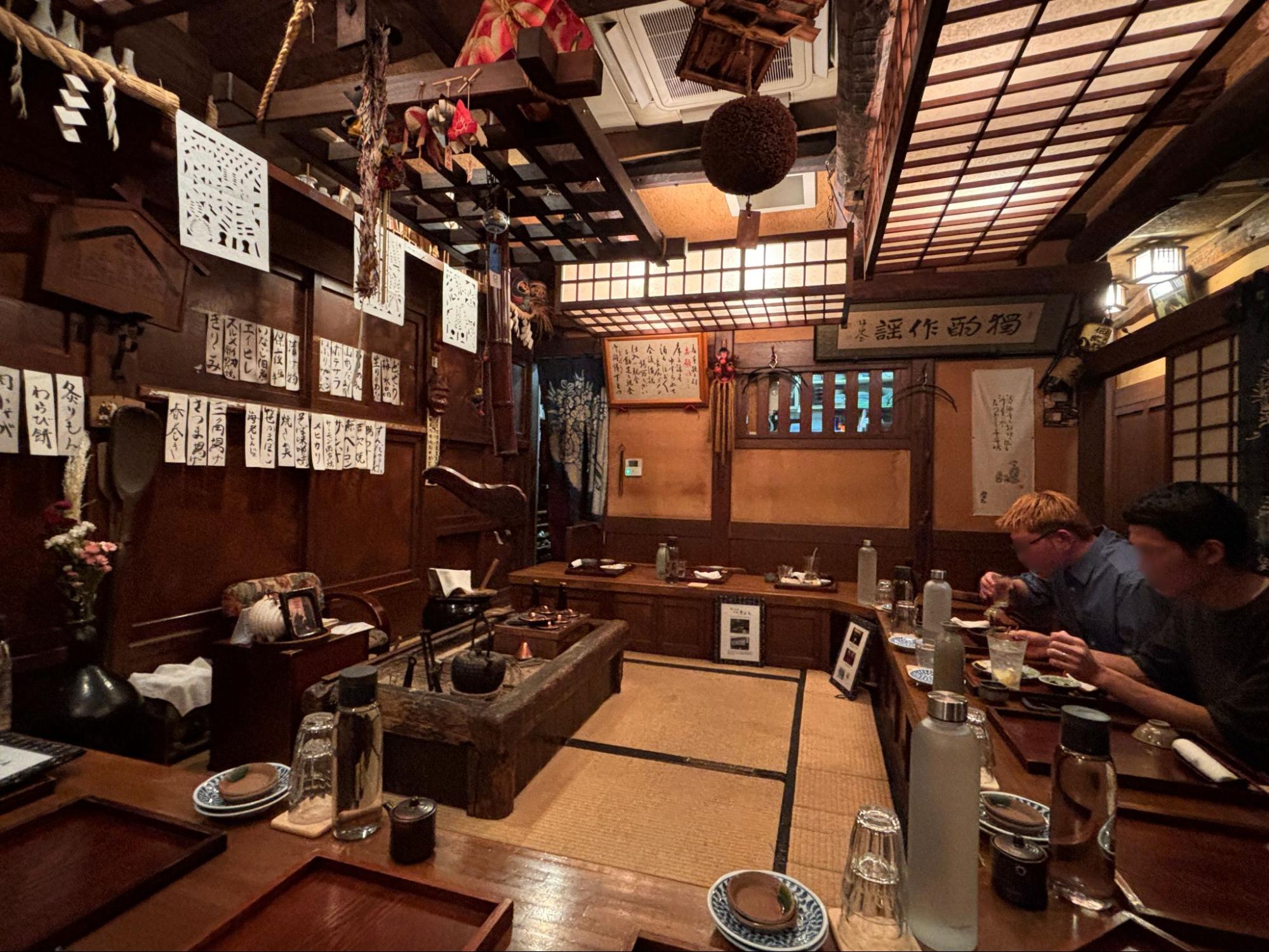 Photo by Ashley Tan
 Gif from Ashley Tan
The dishes are very much similar to that of an izakaya.
My stomach was full to bursting after downing their 11-course set, which costs a very reasonable ¥6,800 (S$59), and includes sashimi, grilled mackerel, sea squirt, duck and more gyutan, and seasoned rice with unagi, among others.
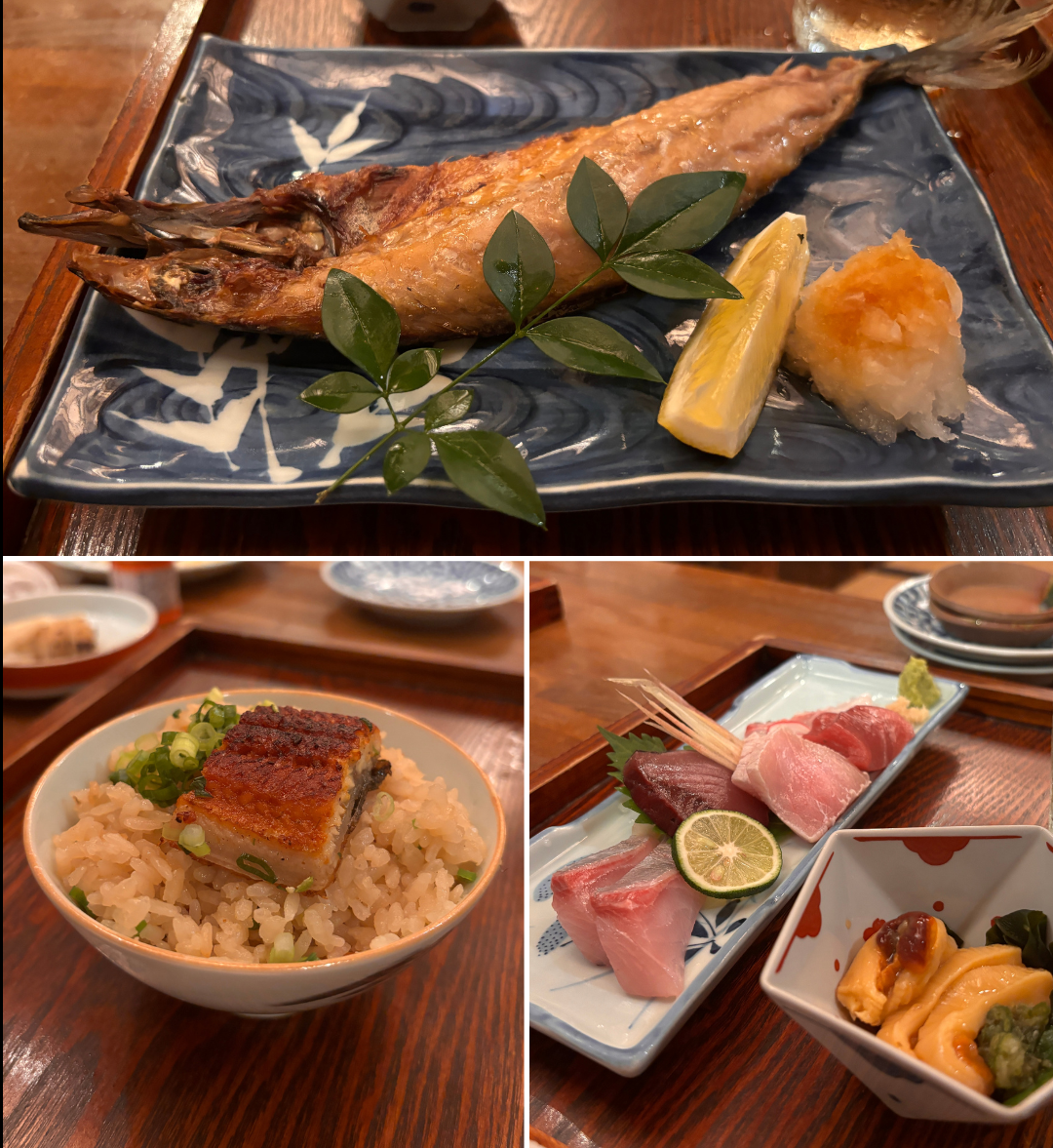 Photo by Ashley Tan
The service added to the entire experience, and to top it off, the staff gives you the receipt and collects your cash/card payments with the paddle too.
Aomori
City of apples
If you haven’t heard of Miyagi or Iwate, you might have at least heard of Aomori through its apples.
In fact, the famous Fuji apples — known for their stark red skin, sweetness and crisp texture — were developed in this prefecture, contrary to what their name might suggest.
Aomori also produces around 60 per cent of Japan’s apples, comprising about 50 different apple varieties.
If you’re travelling to Aomori with kids, apple-picking at one of its numerous orchards could be a fun addition to your itinerary.
At the Tsugaru Yume Apple Farm, pick as many apples as you want in an hour, for ¥1,300 (S$11.70) per adult and ¥750 (S$6.52) for kids.
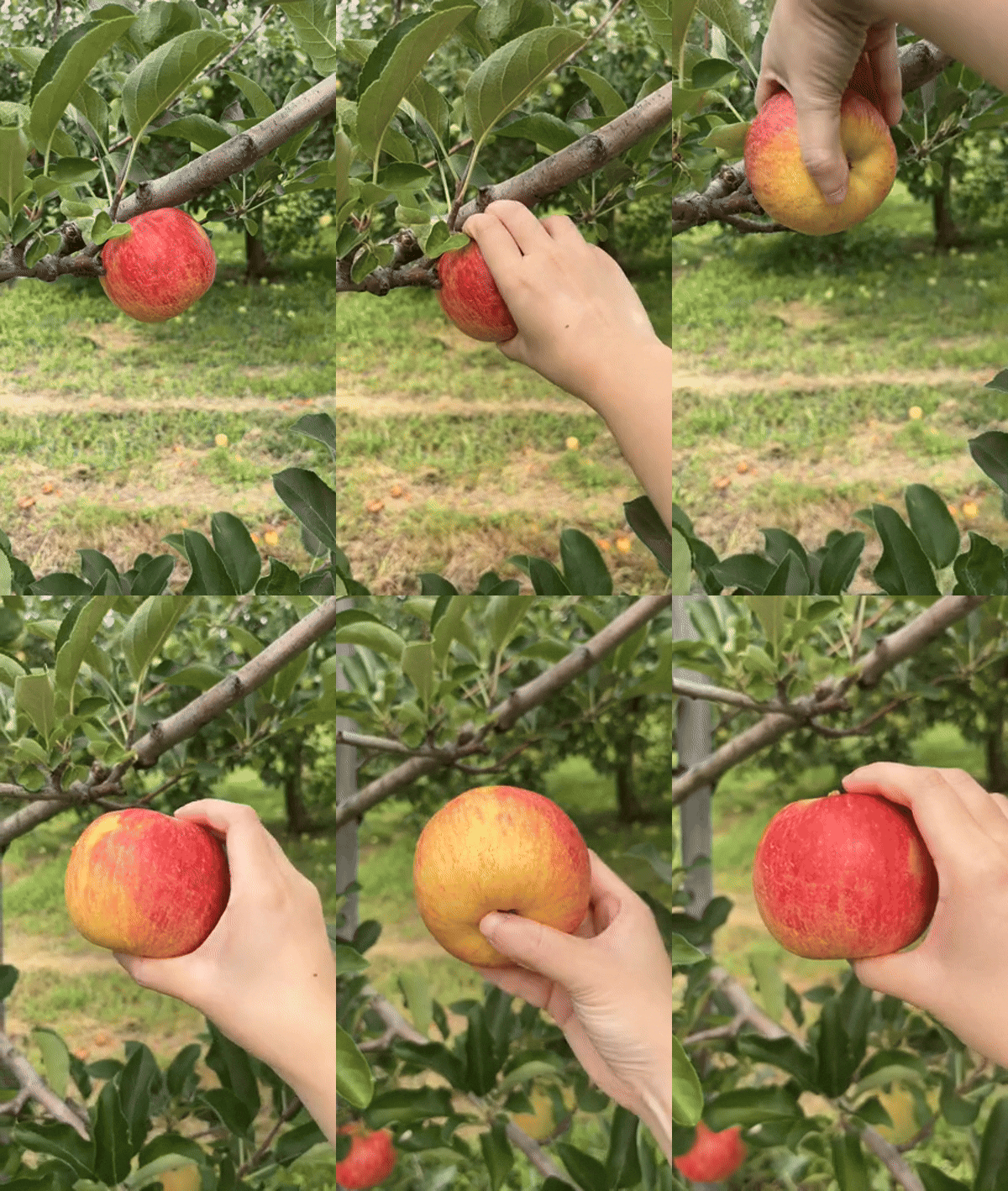 Gif by Ashley Tan
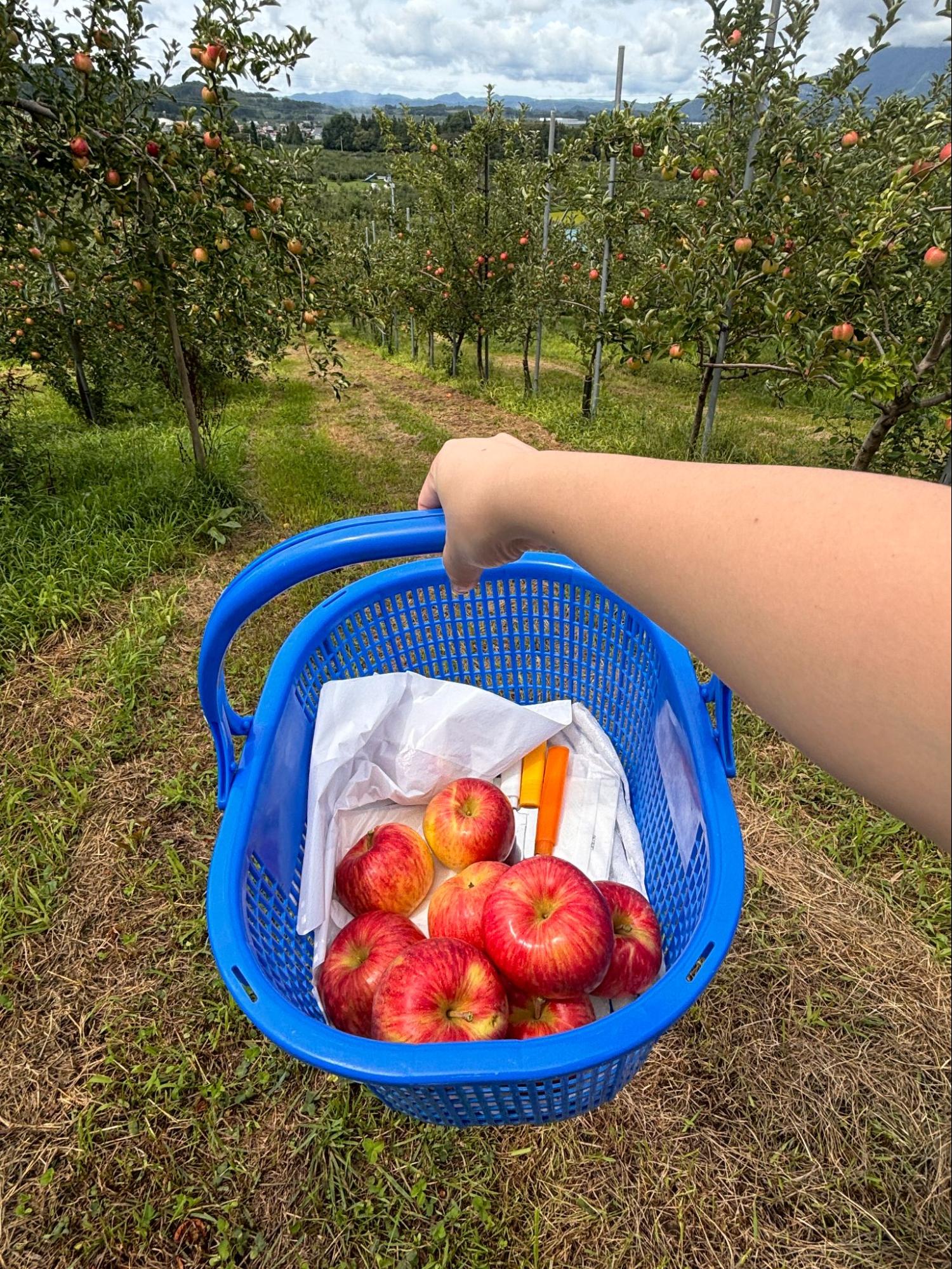 Photo by Ashley Tan
You can bring home up to two apples. Any more than that will be chargeable at ¥846 (S$7.28) per kg.
Fret not though. The staff there will help you cut the fruits and you’ll get to gulp down some refreshing apple juice too.
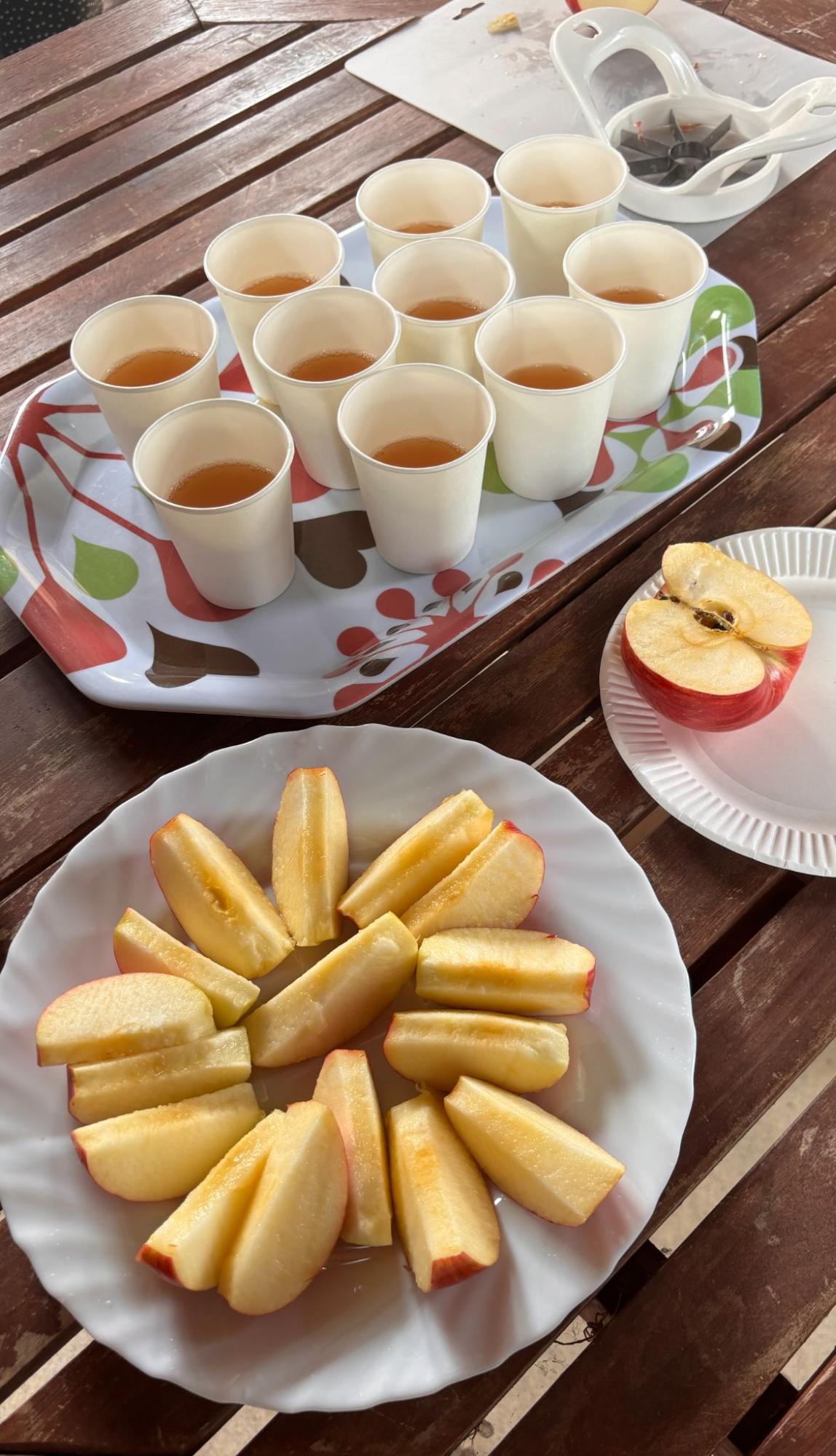 Photo by Ashley Tan
It’s best to go apple-picking from September onwards, as that’s when most apple varieties ripen.
If you haven’t had your fill of fresh apples yet, A-FACTORY is a heaven-sent destination for all products apple-related.
Ciders, apple jams, wine, juices, snacks, pastries, gelato, ice cream, souvenirs — you name it, they’ve probably got it.
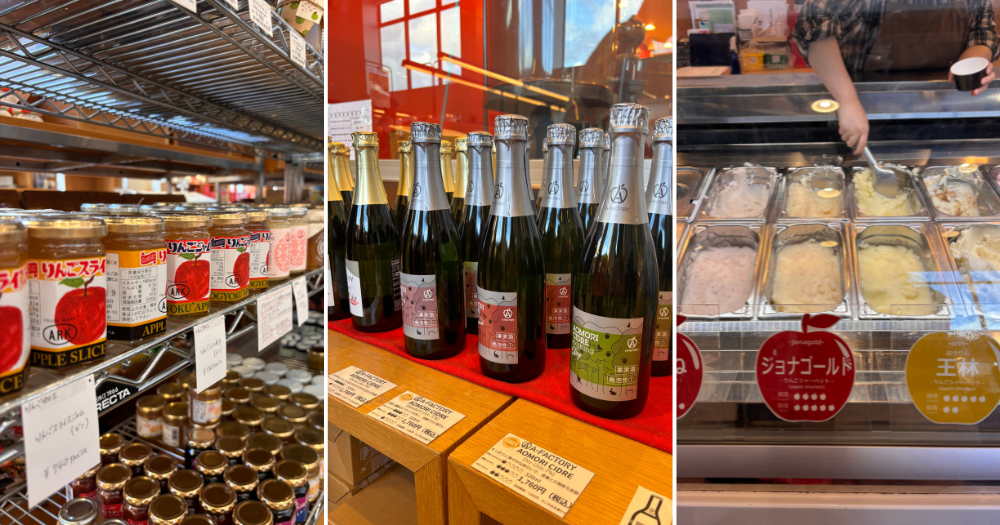 Photo by Ashley Tan
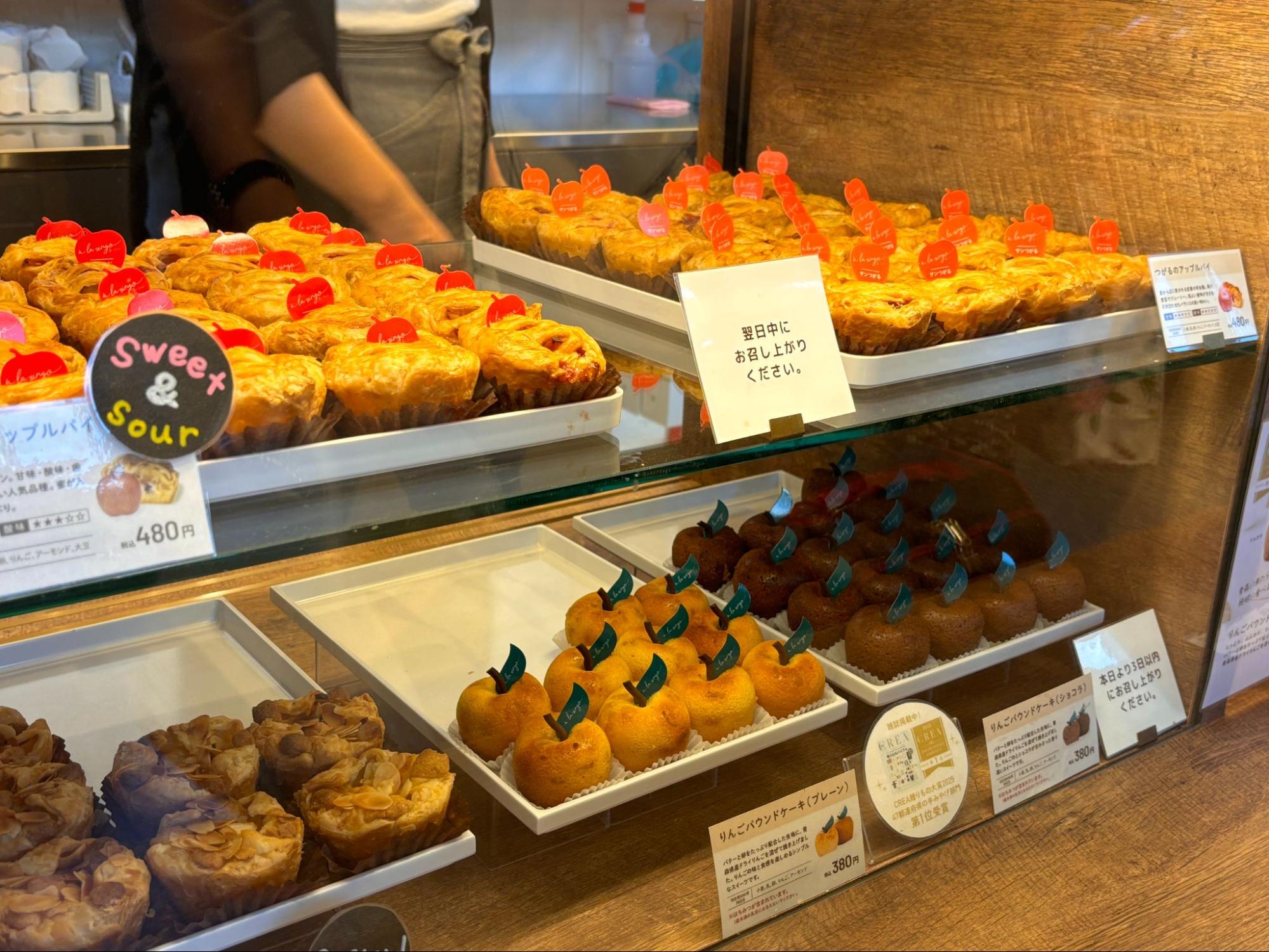 Photo by Ashley Tan
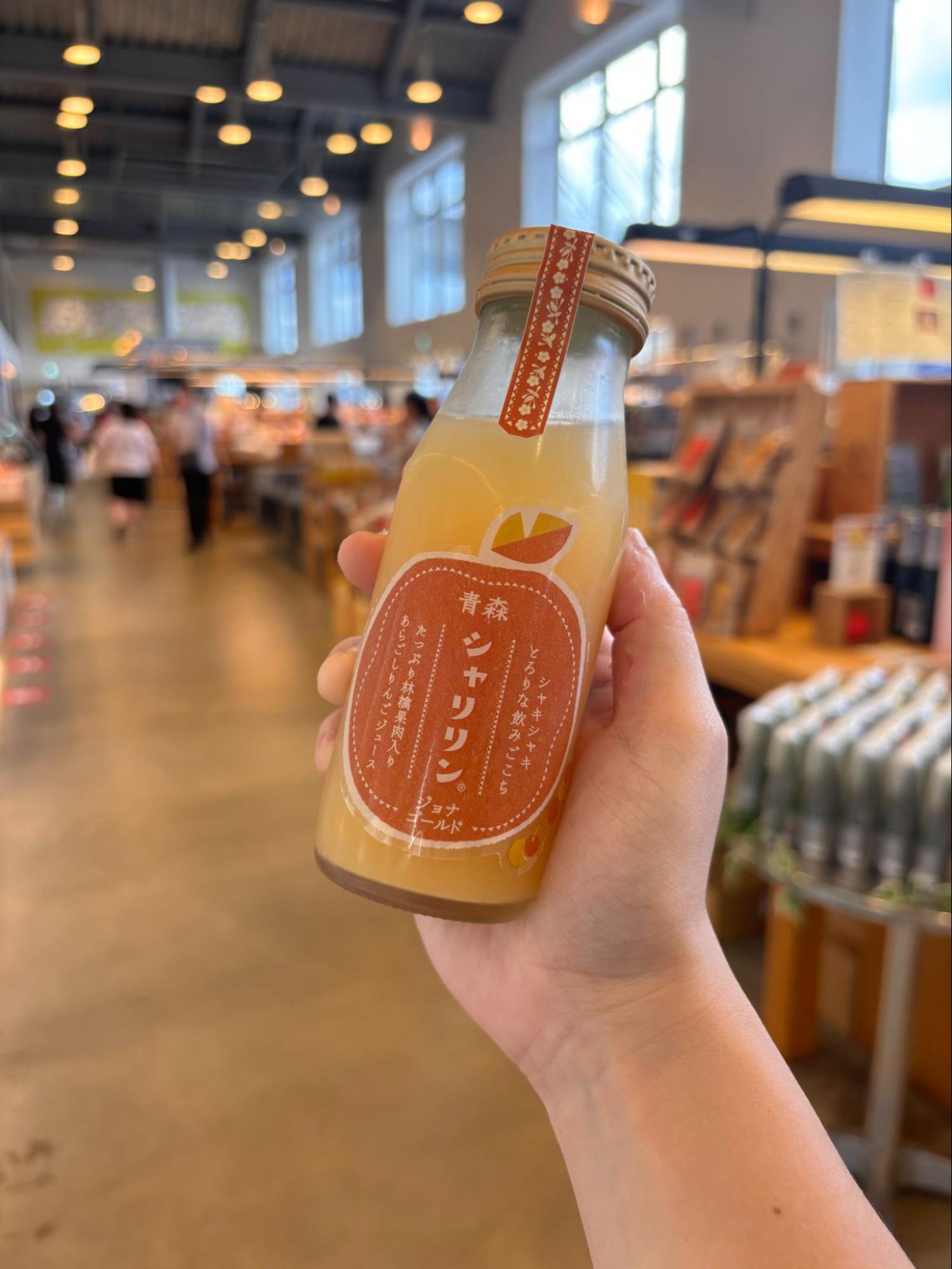 Some crisp, sweet apple juice with apple pulp and chunks inside. Photo by Ashley Tan
There’s even a small diner inside the store that serves a burger with apple slices nestled between the patties.
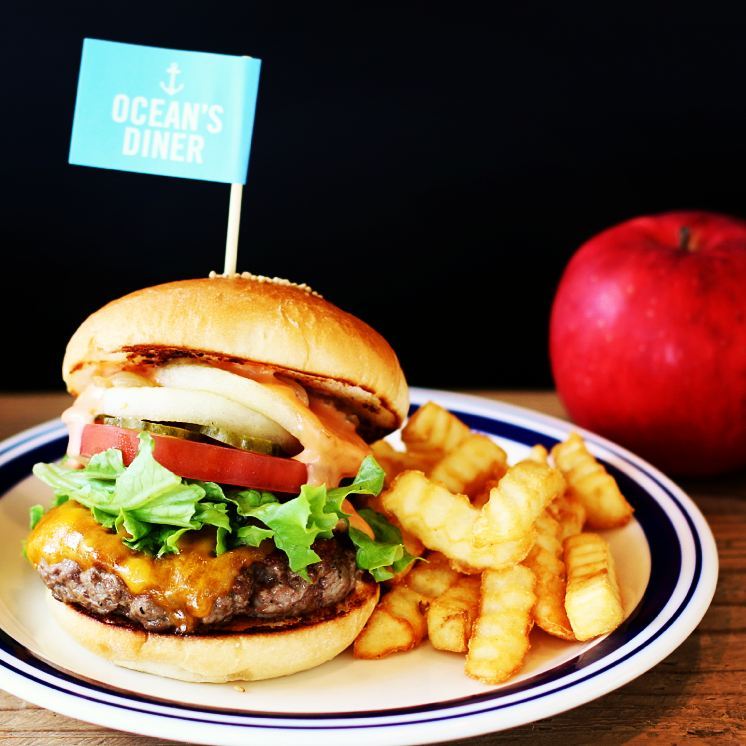 Photo from A-Factory
Gigantic rice paddy art
Hop over next to Inakadate village, a 45-minute drive from Aomori City.
This is where you can view in person a unique artwork of giant proportions, created not with any conventional materials, but with rice plants.
Inakadate’s rice paddy art has garnered international fame.
Started in 1993 to raise awareness on rice cultivation and revitalise the rural area, different varieties of rice plants are used to bring colour to this larger-than-life canvas.
Every year, a new design is chosen for the 10,000 sqm paddy fields.
Sometimes, the fields feature characters from Japanese mythology and culture, but occasionally Western pop culture references take centre-stage, such as the Mona Lisa, and “Star Wars”.
This year, the art includes scenes from classic movies “Gone With The Wind” and “Roman Holiday”, as well as the village’s mascot, Ichihime.
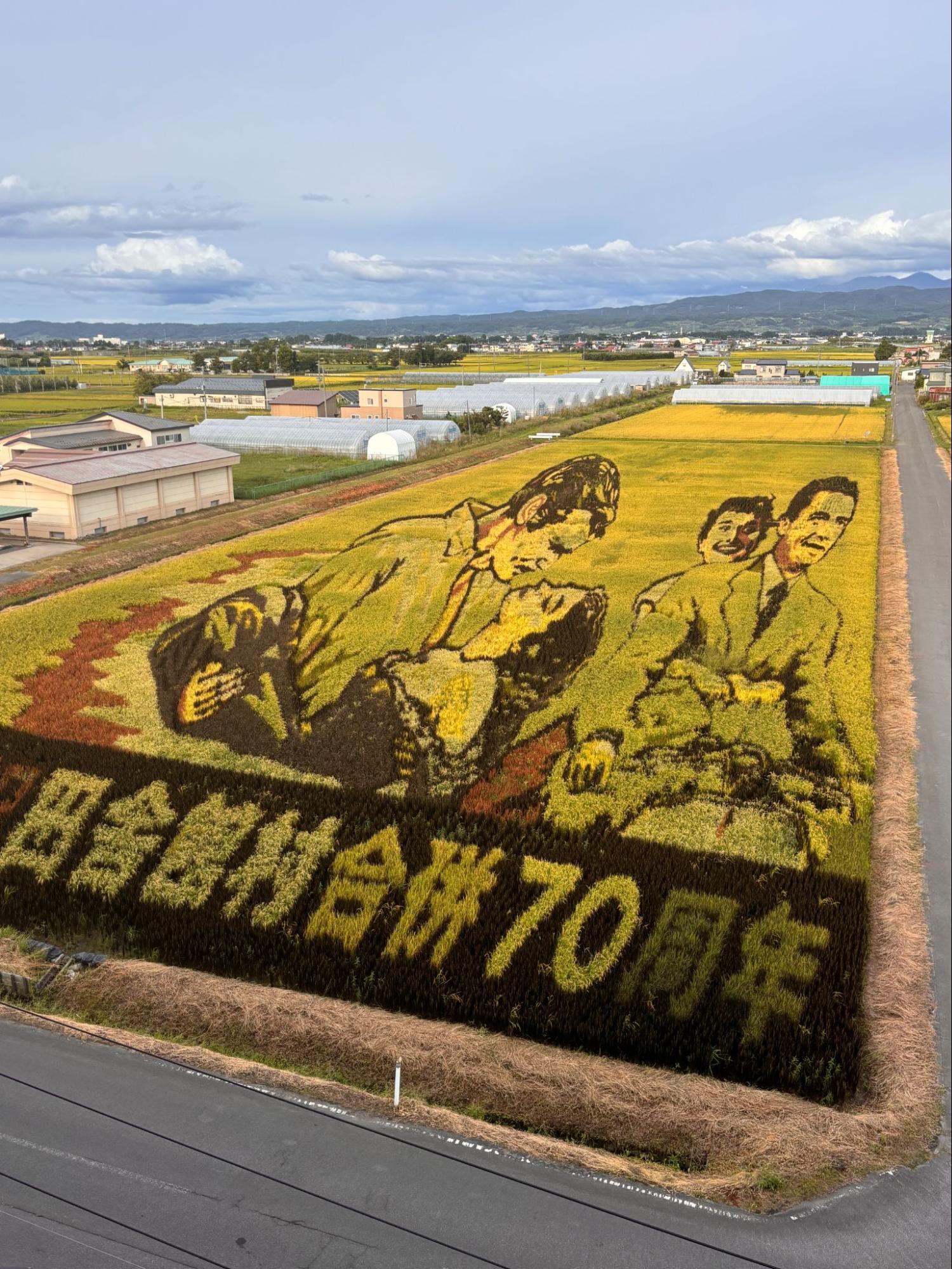 Photo by Ashley Tan
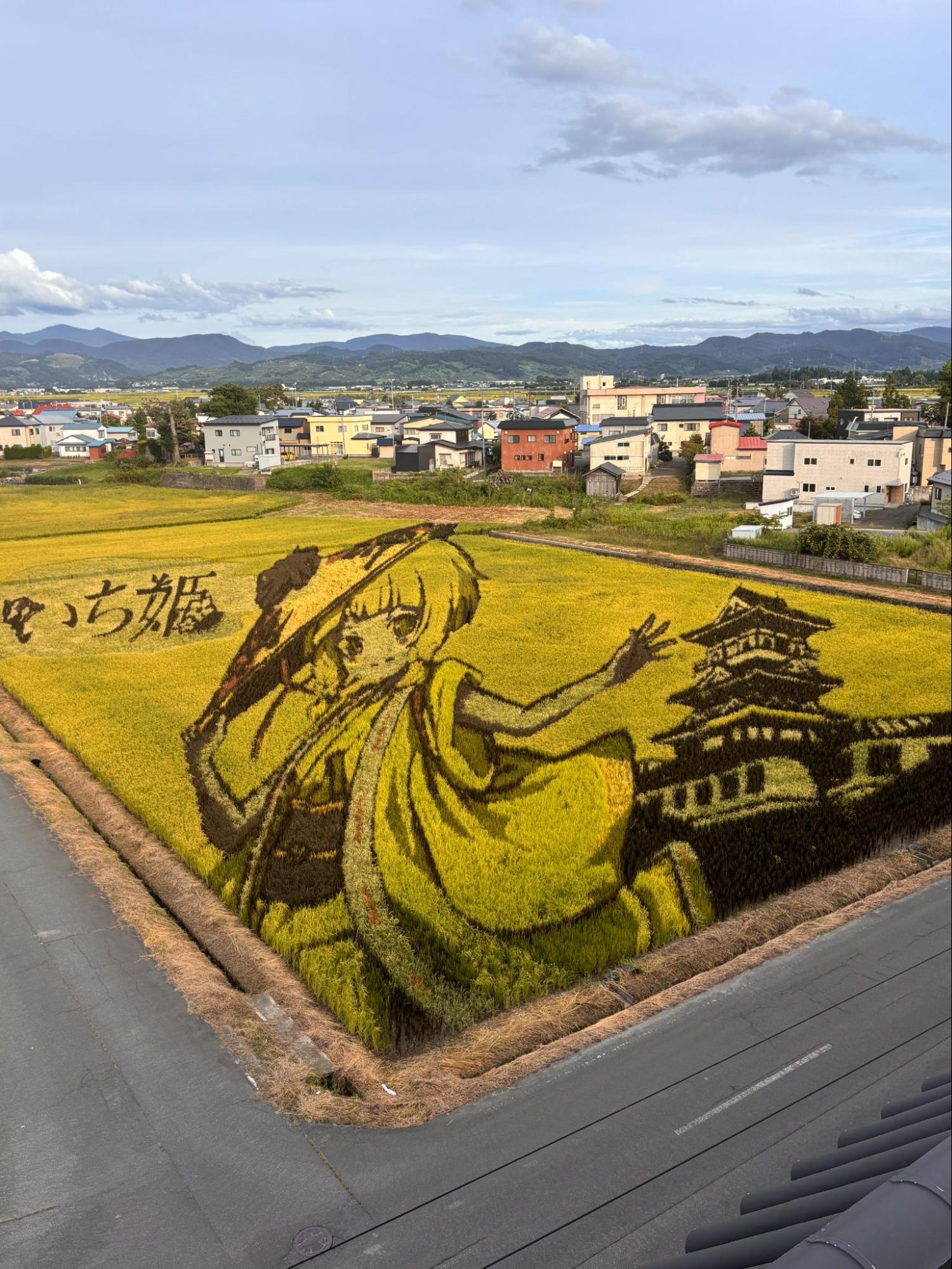 Photo by Ashley Tan
There are two observation towers you can view the paddy fields from, and you can find more information here.
Fresh seafood
You can’t visit a new prefecture without trying their local dishes.
In Aomori, one of these is kaiyaki-miso, or miso-grilled scallops. A traditional dish from the Tsugaru region, scallops are cooked directly in their shell in a miso broth. A beaten egg is then added on top.
The scallop tasted very fresh, with none of the fishy odour occasionally associated with seafood.
Along with the egg and mixed with rice, this serves as a flavourful, hearty meal.
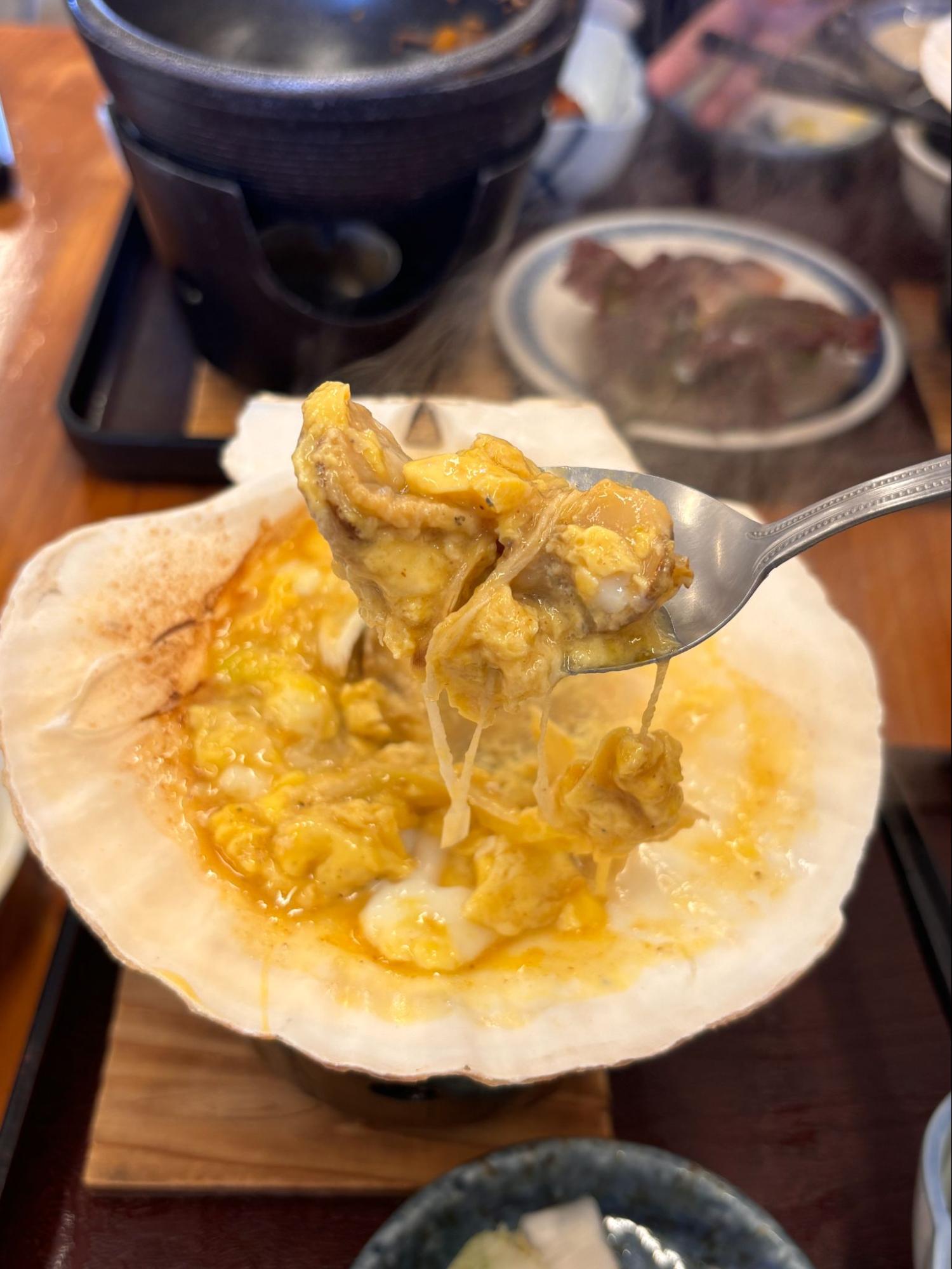 Photo by Ashley Tan
The Japanese are huge fans of tuna, and in Aomori, one can get fresh bluefin tuna.
Tuna caught from the Tsugaru Strait off Oma town in Aomori is known as oma maguro. They’re recognised for their larger-than-average size and the rich flavour of their fatty meat.
One of the meals on the trip was fresh tuna sashimi, which I paired with a tasting set of apple juices.
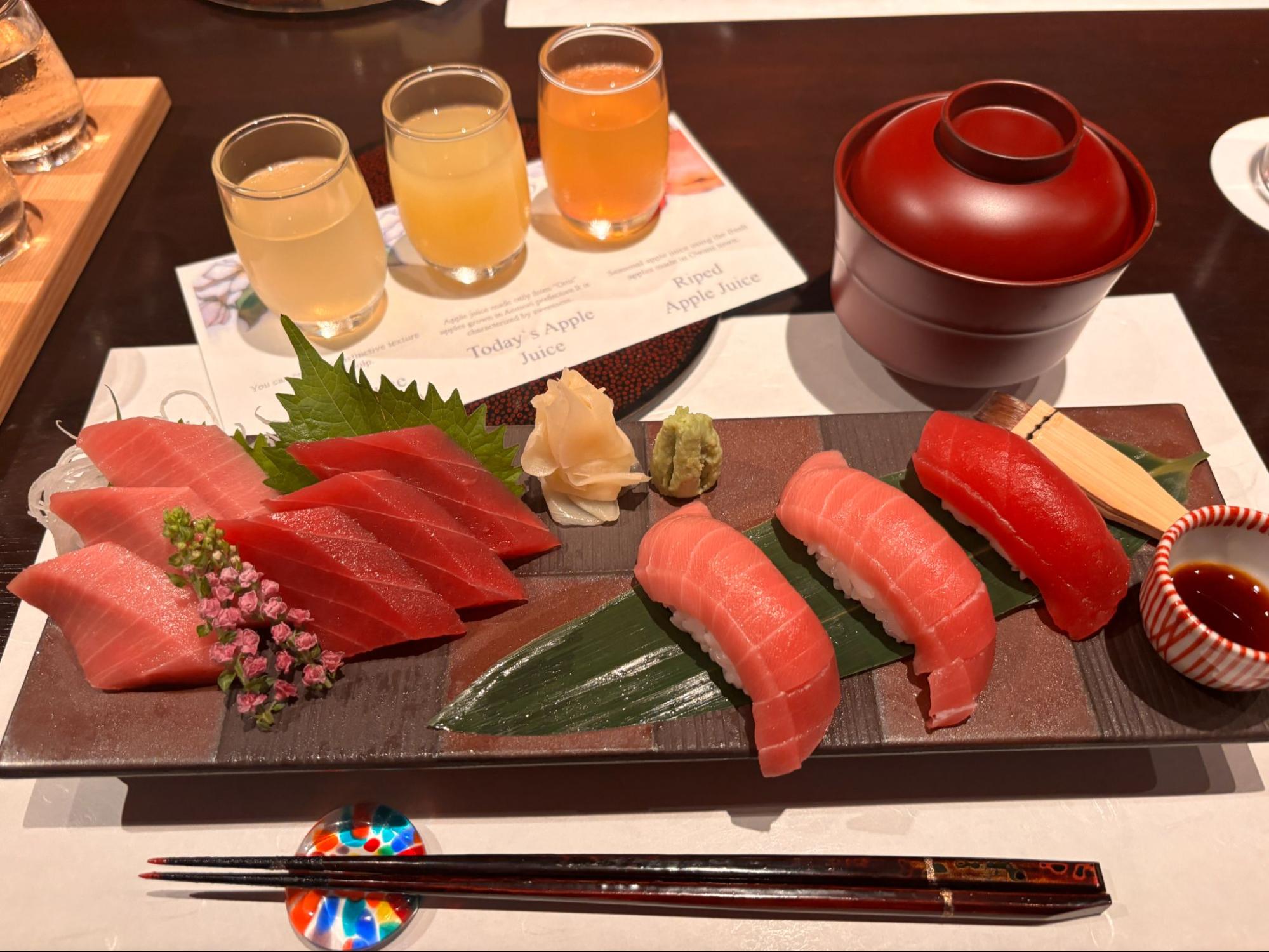 Tuna sashimi from Hoshino Resorts KAI Tsugaru. Photo by Ashley Tan
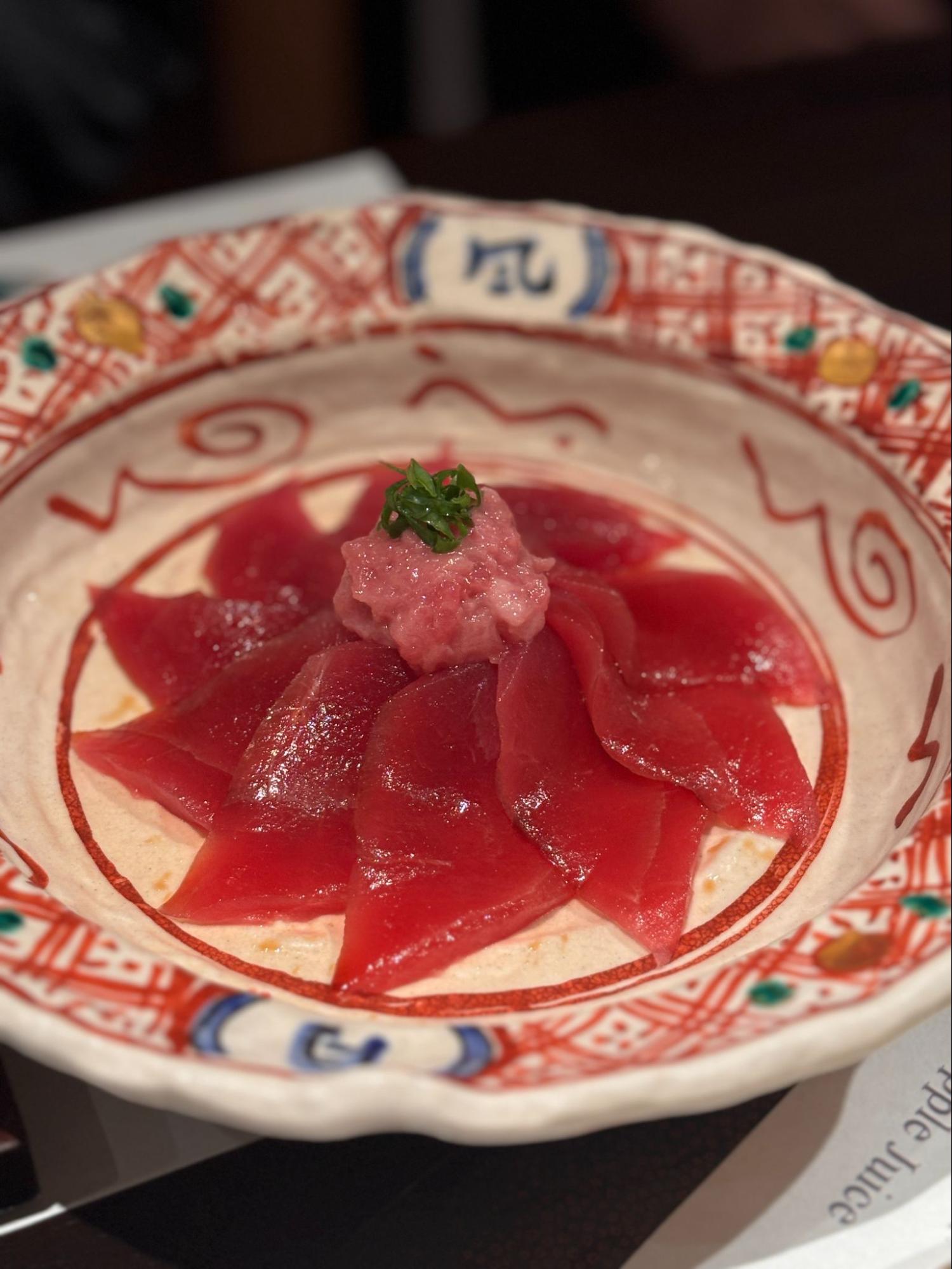 Photo by Ashley Tan
Akita
You might have heard of the akita inu, and this dog breed hails from its namesake prefecture.
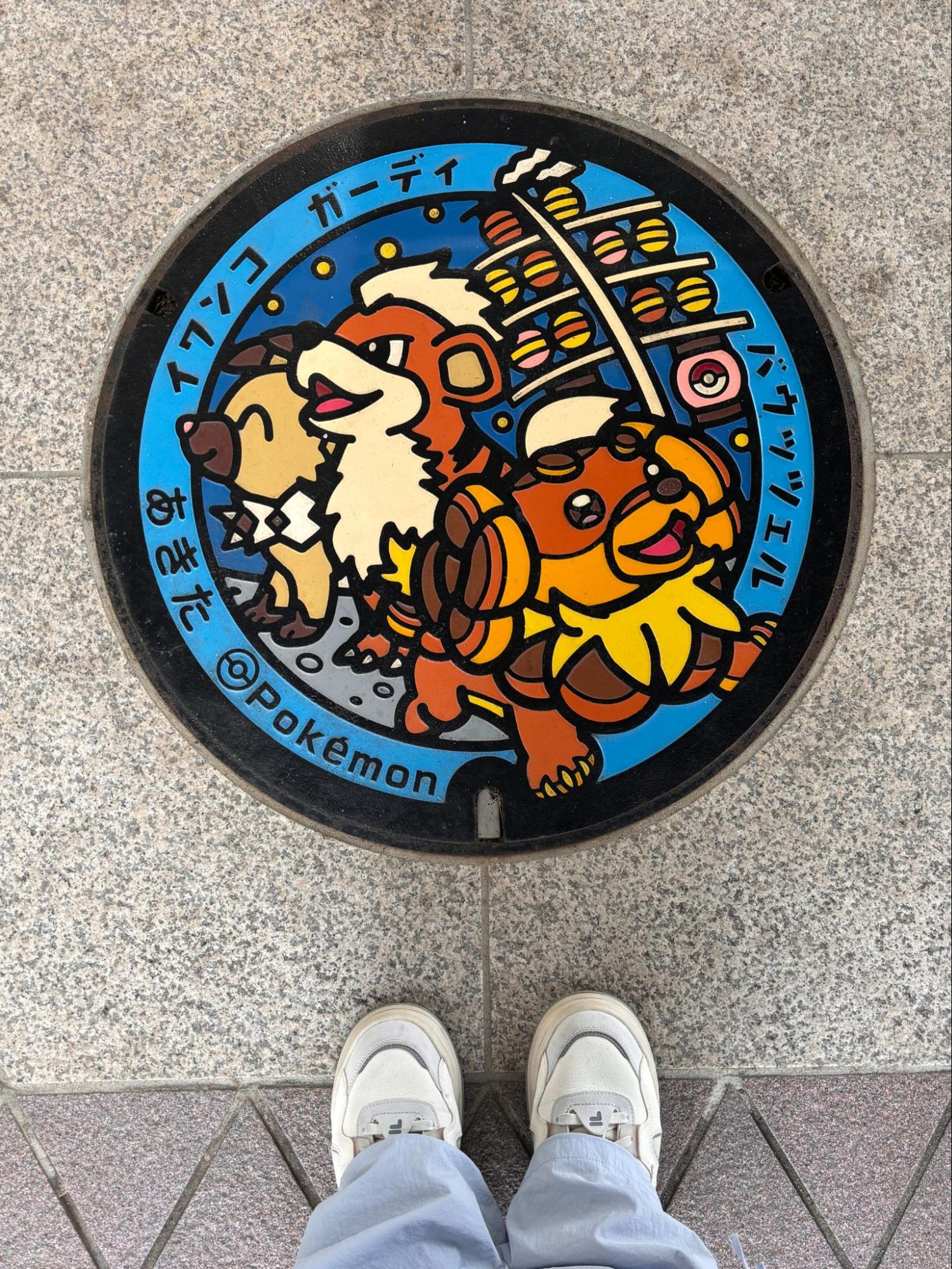 Photo by Ashley Tan
Horse meat
You might think you’ve read the above header wrong, but your eyes aren’t deceiving you.
Horse meat is a thing in some parts of Japan, such as the northern areas of Akita.
It’s not exactly a common dish, and deemed more of a delicacy. However, Sakuratei is one such restaurant located near the mountainous area of Shirakami Sanchi, offering horse meat at affordable prices.
The restaurant also owns a farm located at the base of the mountain, where they breed horses for consumption.
Raw horse meat is called “sakura niku”, which means “cherry blossom meat”, due to its pink colouration.
Now, horse lovers might find the idea of this dish rather stomach churning. I, on the hand, had no such qualms. It was to me, in a way, similar to eating other less conventional meats like kangaroo, rabbit and veal.
I had expected horse meat to taste more gamey, but it was in fact, very similar to beef. The hamburg that I got was well marinated too.
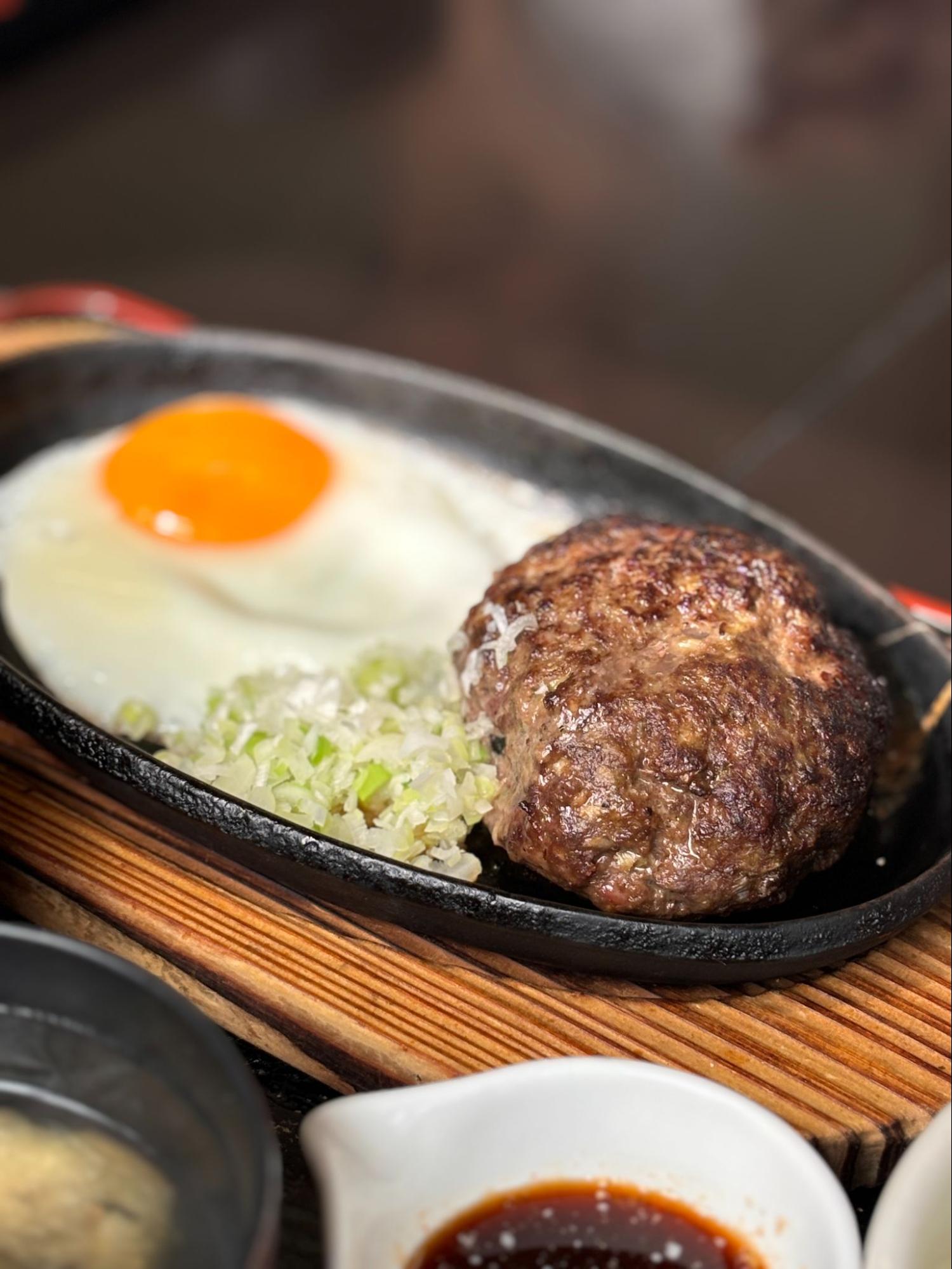 Photo by Ashley Tan
Sakuratei also offers raw horse meat dishes, for the more adventurous.
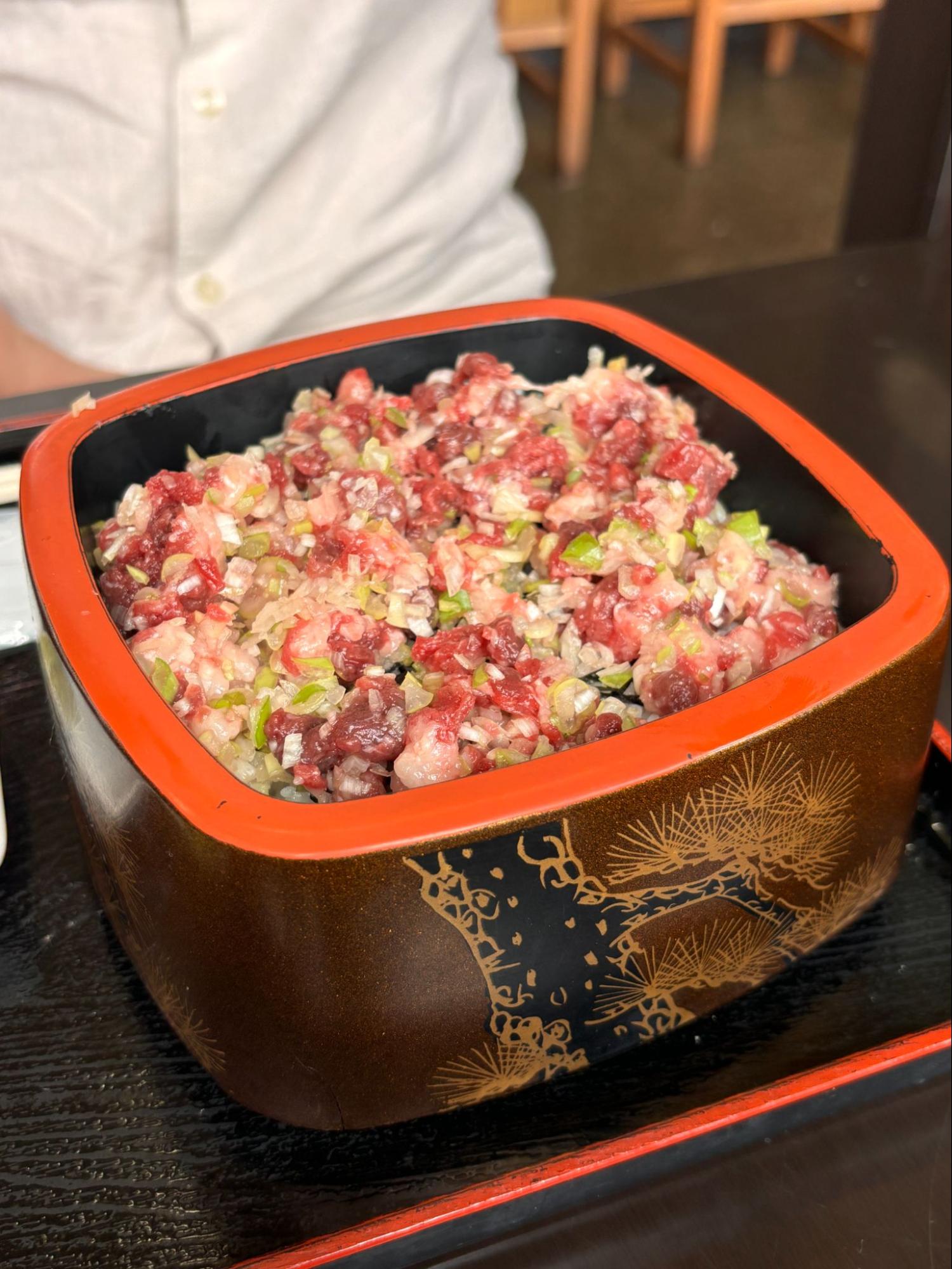 Photo by Ashley Tan
A different type of udon
Udon usually brings to mind the image of thick, chewy noodles. In Akita, Inaniwa udon is slightly different.
Originating from the Inaniwa area in Akita, this special udon is thinner, smoother, and has a silky texture.
It’s typically served chilled, with a dipping sauce.
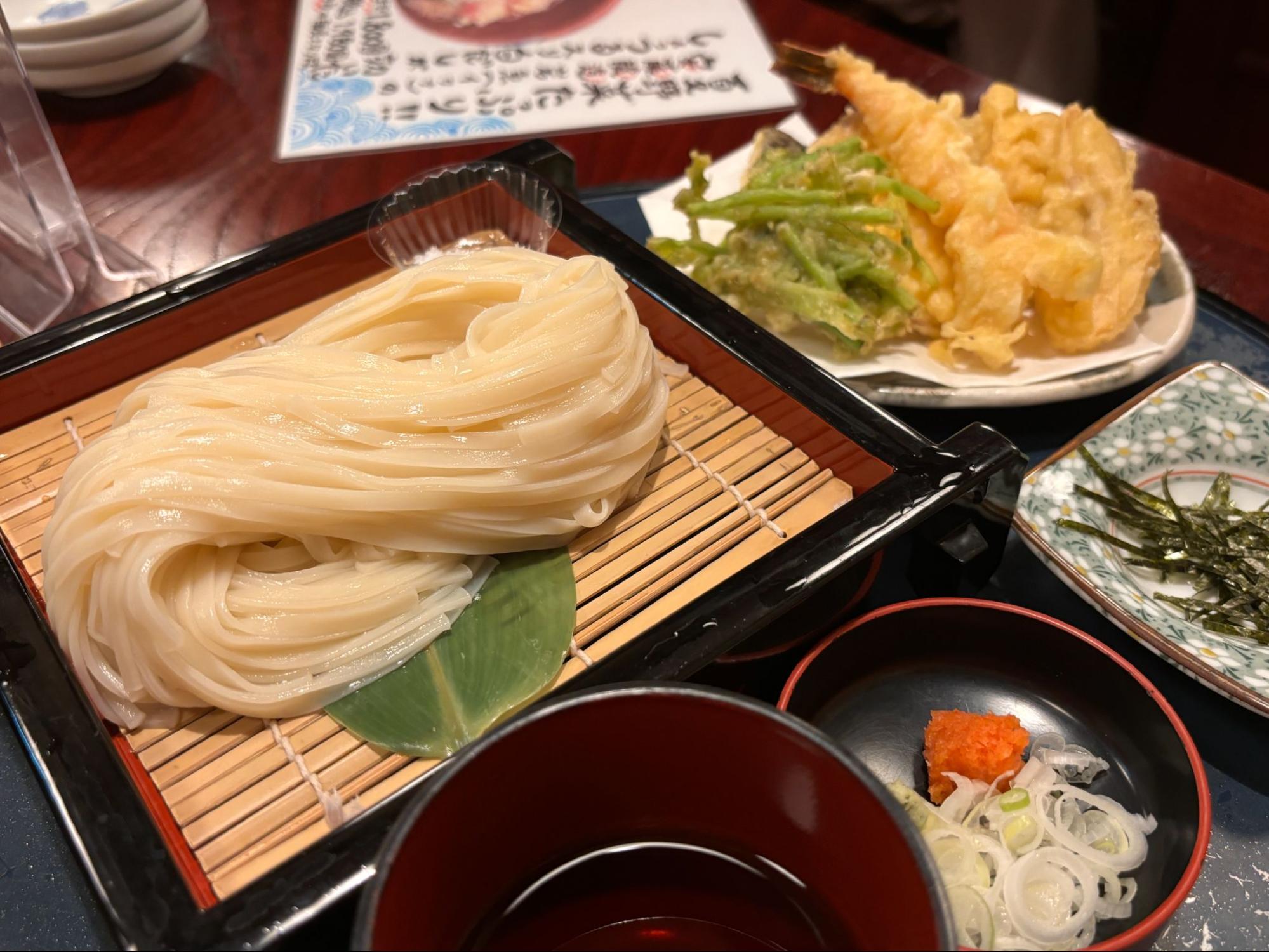 Photo by Ashley Tan
I also got to try iburigakko, an interesting combination of smoked pickled radishes with slabs of cream cheese, which is unique to Akita.
The creaminess of the latter balances out the tartness of the pickles, yum.
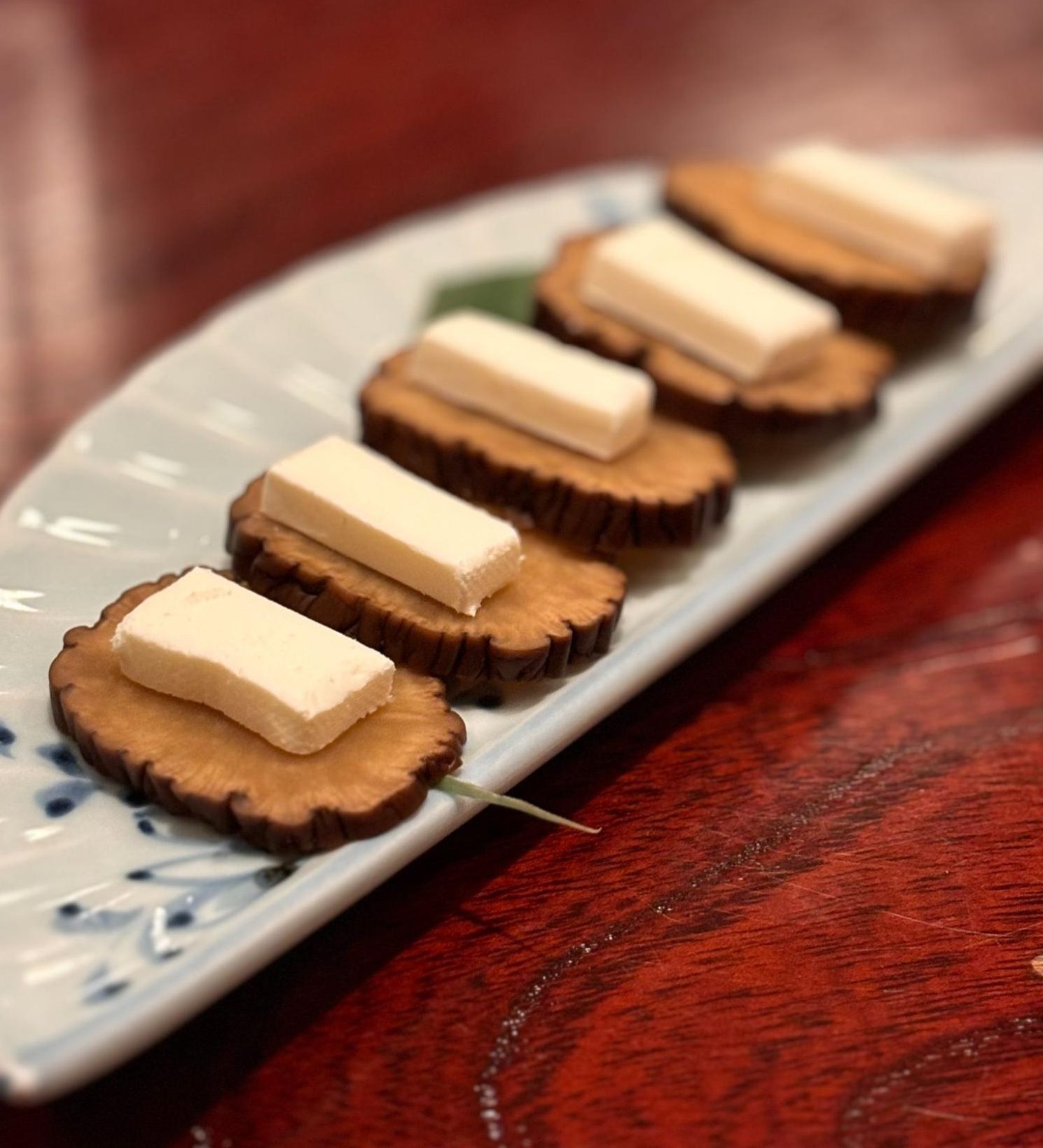 Photo by Ashley Tan
Namahage Museum
Find out more about local folklore in Akita too.
The Namahage are believed to be demon-like beings from the mountains who are worshipped in Oga Peninsula. They are said to be visiting deities that appear on New Year’s Eve, going from house to house to ward off evil, bring good fortune, and a bountiful harvest for the new year.
As part of tradition these days, men will don oni-like masks and straw costumes to resemble Namahage.
At the Namahage Museum, visitors can check out the varying masks used by different villages in the peninsula, as well as snap a photo in Namahage get-up.
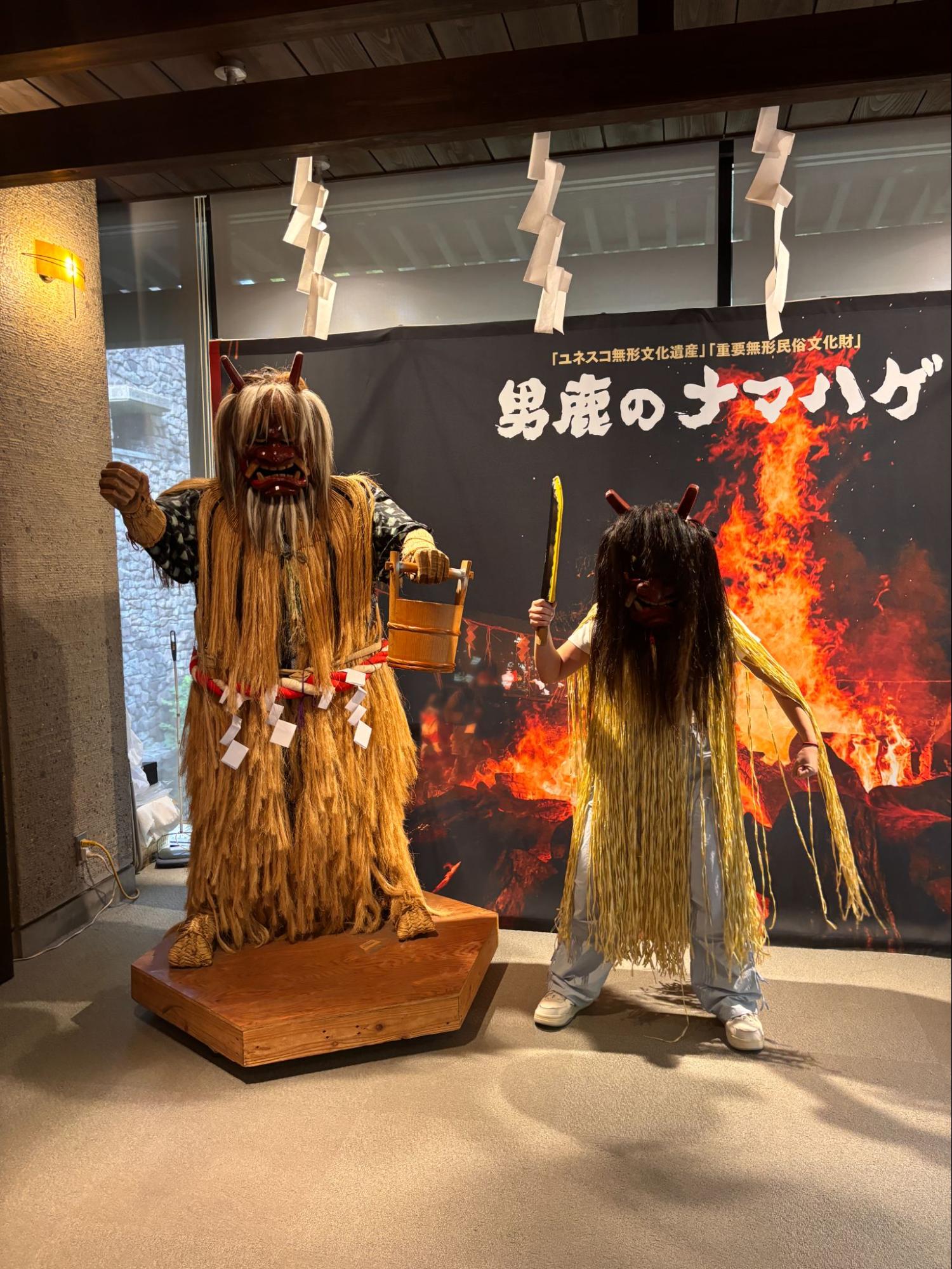 Photo by Ashley Tan
The highlight though, is a reenactment of the tradition where the Namahage burst into a resident’s home.
Visitors can observe the performance from a traditional Japanese home.
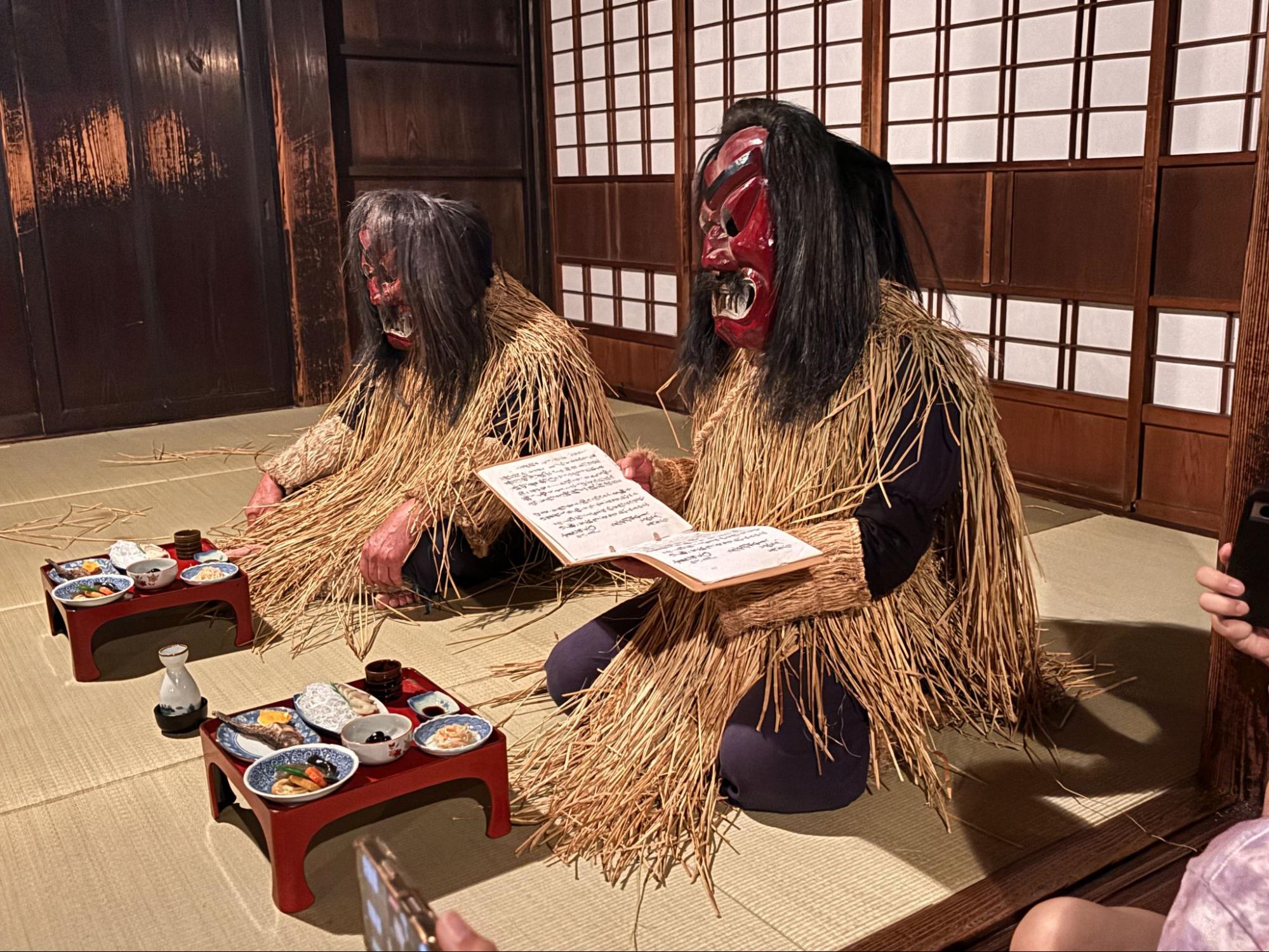 Photo by Ashley Tan
The Namahage will stomp around the audience, peering at faces in search of lazy people and children, which makes for a rather immersive experience.
Transport
Domestic flights or shinkansen
Miyagi, Iwate, Aomori and Akita might be off the beaten path, but that doesn’t mean they’re inaccessible.
You can opt for a domestic flight, which would take at most a few hours between prefectures.
In other good news, you can also conveniently travel there with the JR East pass, which covers the Tohoku area and includes shinkansen rides to Sendai, Iwate, Aomori and Akita.
You can find out more about the JR East pass here.
Sightseeing train
If you’re travelling between Akita and Aomori and would prefer the scenic route, you can also opt for the longer but more quaint Resort Shirakami.
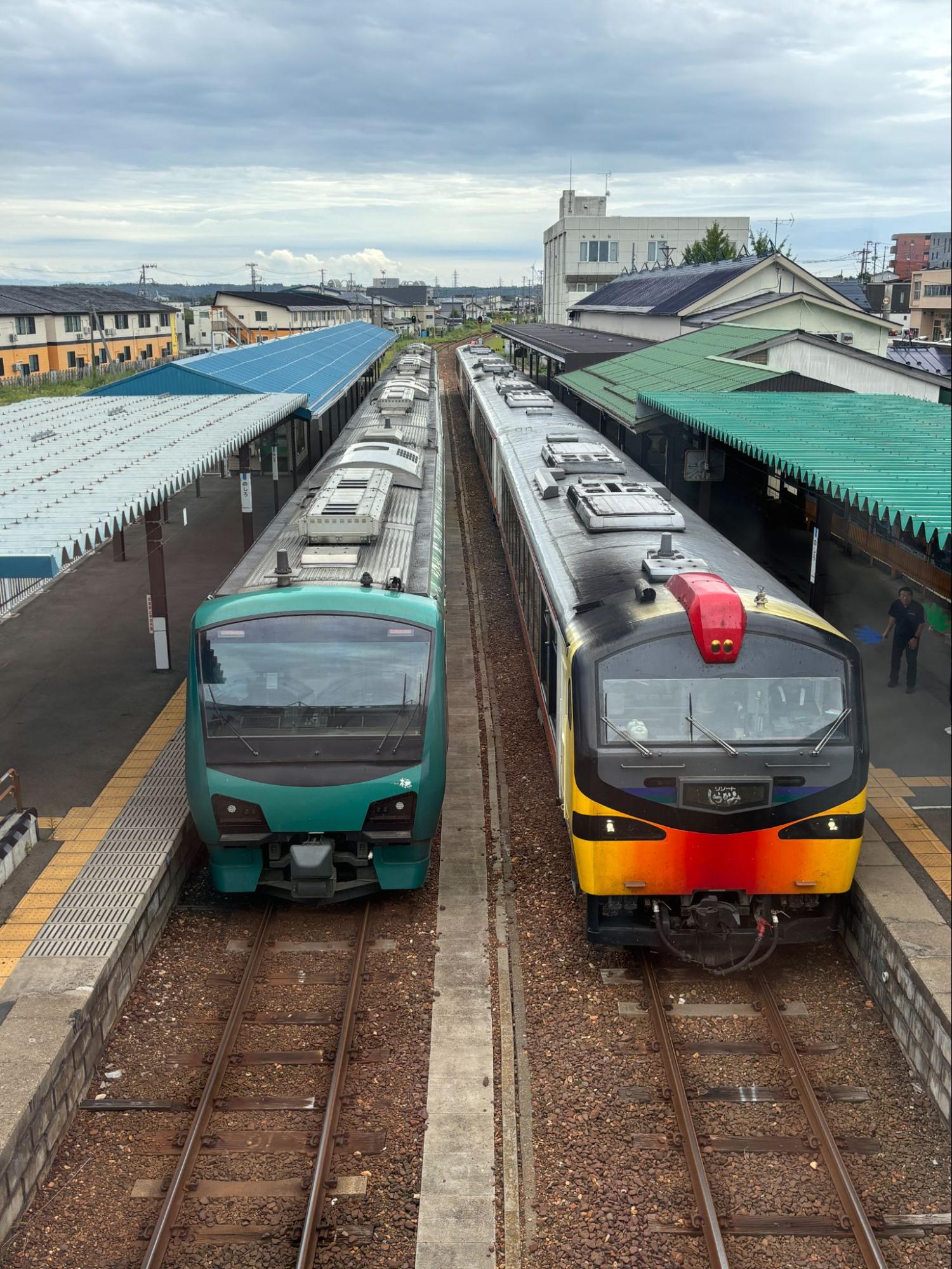 Photo by Ashley Tan
Covered by the JR East Pass (Tohoku Area), the train runs along the coast and around the Shirakami-sanchi mountain range, offering splendid views of the Sea of Japan.
While the train has regular seats with wide windows, you can choose the booths for a more luxurious and cozy ride.
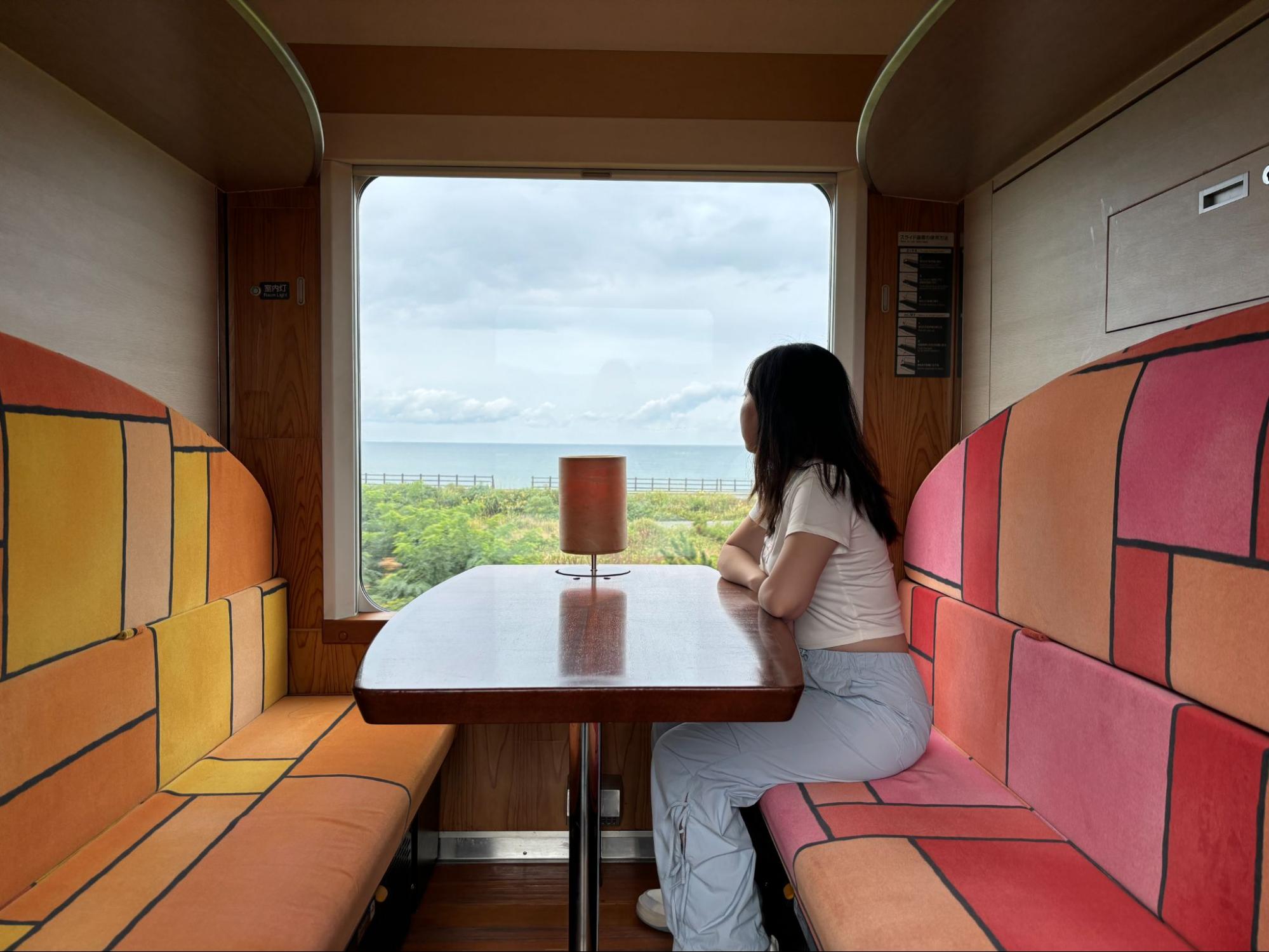 Photo by Ashley Tan
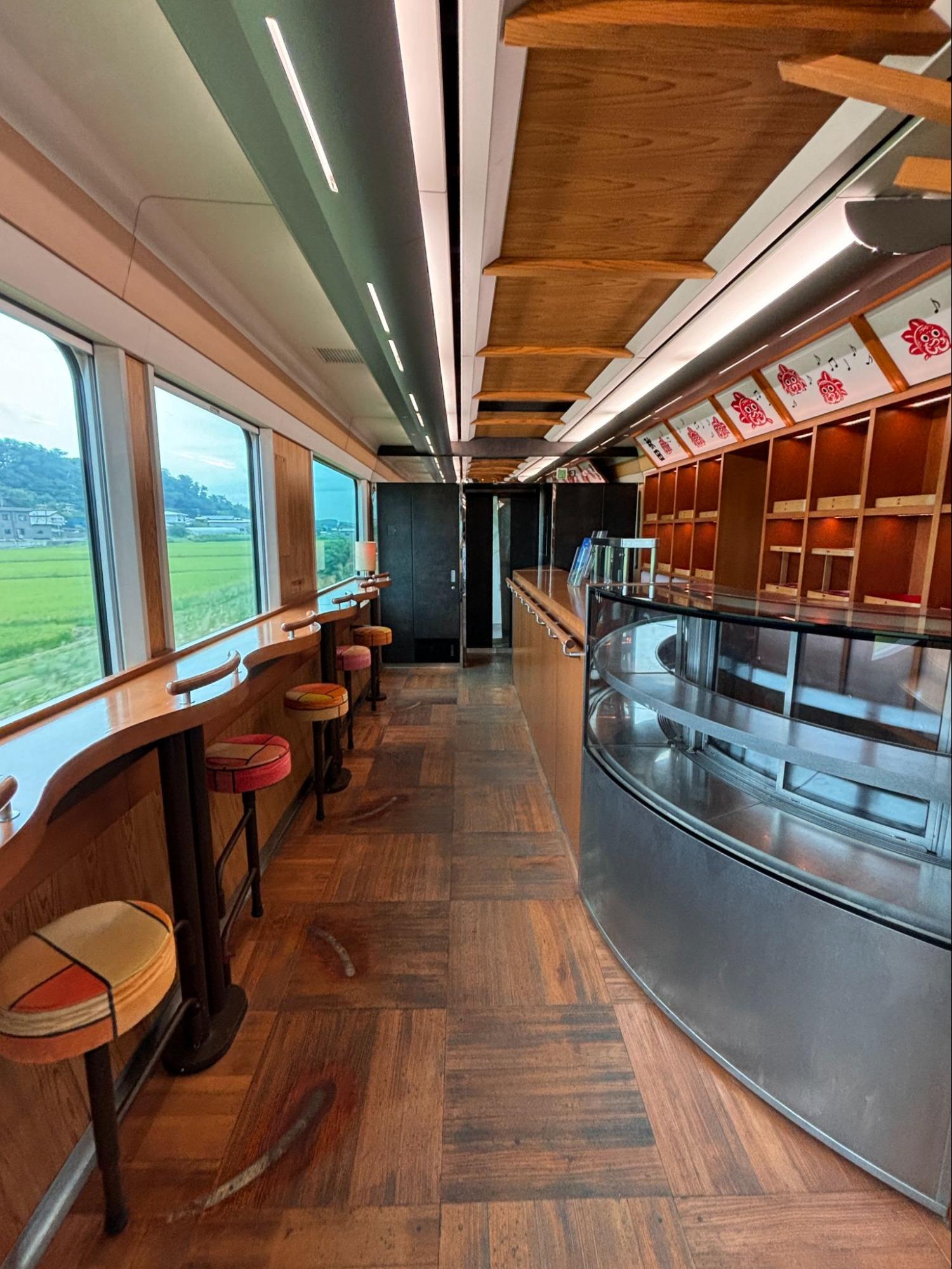 Photo by Ashley Tan
Depending on which of the three Resort Shirakami trains you book, you can also enjoy shamisen performances and puppet shows on the train itself.
This branded article is brought to you by Japan National Tourism Organisation.
Top photo from Ashley Tan