News
Fracture & conflict the norm in world events, but S'pore still can survive & prosper despite it: Bilahari
Let's talk about Pax.

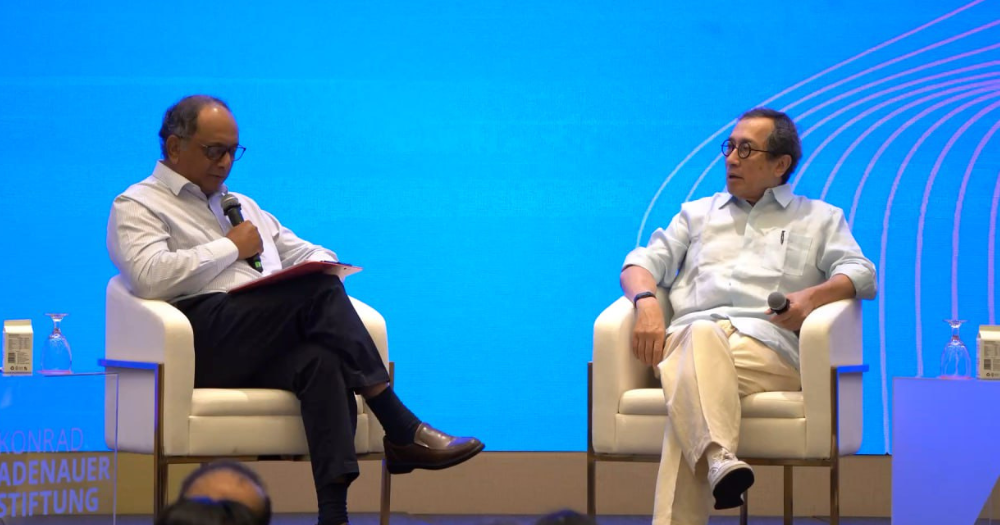
 Former Singaporean diplomat Bilahari Kausikan opened the 2025 Asian Conference for Political Communication on Oct. 21, cautioning the audience against over reliance on political cliches to form their view of the world.
In a wide-ranging pair of panels moderated by veteran journalist Ravi Velloor, Bilahari spoke on Asia’s future in a fractured world, as well as a new post “Pax Americana” world.
The former Foreign Ministry permanent secretary and head of the Middle East Institute reminded the audience that the fracture was the norm, not the “pax”.
Let's talk about 17th century philosophy
Bilahari spoke about the various conceptions of the “world order” that had come to the fore in recent decades, but opined that there had only really been one world order that had stood the test of time.
That, he said, was the Westphalian Order, the 17th-century conception of International Relations that gave the world our modern conception of nation-states.
However, the Peace of Westphalia did not seek to eliminate conflict between states; instead, it assumed conflict would occur, only seeking to make it less dangerous.
The idea of a peace initiated and maintained at its own cost by the United States, the Pax Americana, was a concept that had only lasted two decades.
The preceding forty years between the Second World War and the fall of the Berlin Wall were defined by “a contest between the American conception of world order and the Soviet conception”.
That was followed by U.S. dominance, but by 2008, the Global Financial Crisis had “caused widespread disillusionment with American-led globalisation, including among many Americans”.
Always like this
He chided those who talked about a “fractured world”, instead contesting the idea that the world had ever been unified except in “the most elementary kind of way”, the avoidance of mutual destruction.
He would say that he thought it was a “fundamental mistake to think of any world order as a result of consensus.”
Instead, world history indicated that the only order was that of contests and efforts to make that contest less dangerous.
Bilahari suggested that much of the present angst and uncertainty of the present moment was tied up in what he said was the mistaken belief that the “short, exceptional period” of peace that followed the end of the Cold War was the norm.
Instead, “what we are experiencing now”, that is to say, the outbreak of numerous conflicts across the world, “is the return to the norm after that short period”.
Known unknowns
But Bilahari framed this narrative in a hopeful way.
After listing several modern and historical examples showing that there were conflicts even in “peaceful times”.
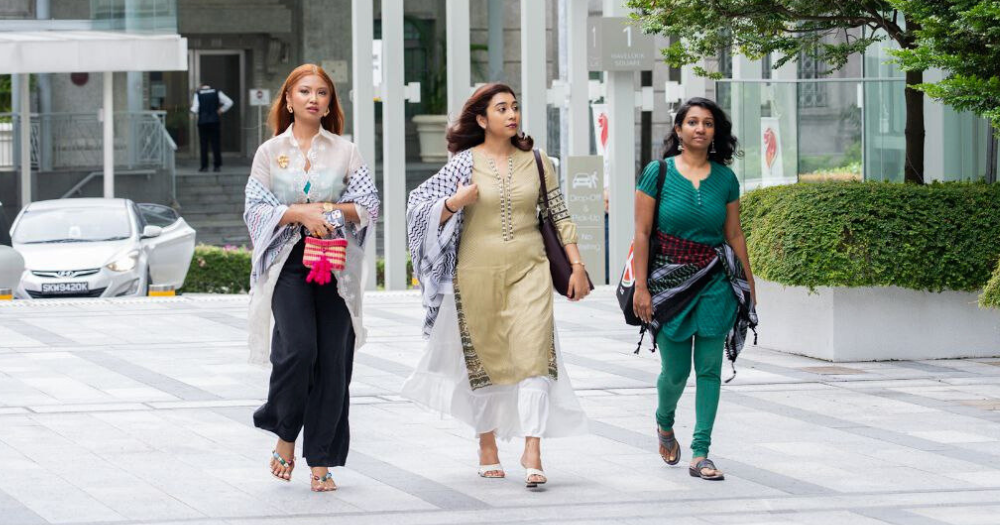
Pointing out a diverse audience at the conference from Southeast Asia, South and Northeast Asia, and Europe, to name a few, Bilhari said that all had been through the worst period of a fractured world.
However, these places not only survived those periods, but also prospered despite them.
He urged the audience to take the conflict and attendant uncertainties “seriously, but let’s not let them paralyse us, or think that this is a unique situation”.
There were, as Bilhari noted that former U.S. defense secretary Donald Rumsfeld had called them, “known unknowns”, things that we knew we did not know.
But “we have navigated them before, and we can navigate them again”.
Top image via Mothership