News

'I too have friends who have gone astray': PM Wong advises reporting loved ones who turn to extremist ideologies early
Every Singaporean has a role to play.
September 13, 2025, 06:30 PM


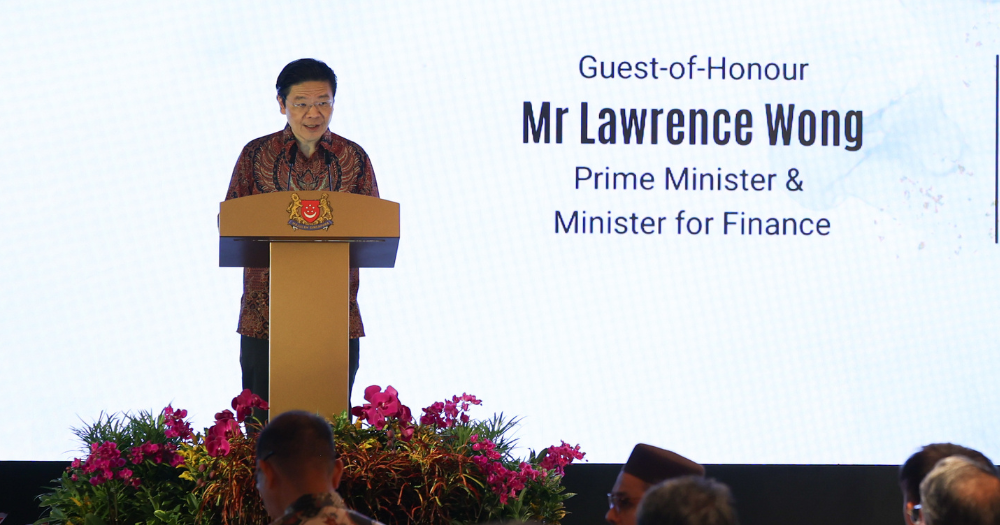
Prime Minister Lawrence Wong shared that he had friends he knew when they were younger, but had "gone astray".
Speaking at the Ministry of Home Affairs (MHA) appreciation lunch for community volunteers, PM Wong warned that self-radicalisation is on the rise in Singapore and security agencies are doing their best to detect and neutralise threats.
PM Wong advised that if anyone sees their loved one succumbing to extremist ideologies, they should report them early so they can receive help.
"I know it is not easy. I too have friends who have gone astray. I knew them when they were younger, and I would never have expected them to turn to extremism.
But these things can happen. And when they do, we want to be able to act early and help them back on the right path as soon as possible."
85 percent made progress
Of the 150 Singaporeans who were dealt with under the Internal Security Act (ISA) since 2022, close to 85 per cent have made progress, said PM Wong.
Many of them have reintegrated into society, with some starting their own businesses and others pursuing higher education and finding meaningful careers.
PM Wong added that the families are doing well, with the children of detainees doing well in school.
Extremist propaganda is more accessible
PM Wong warned that digital and online technology have made extremist propaganda more accessible than before.
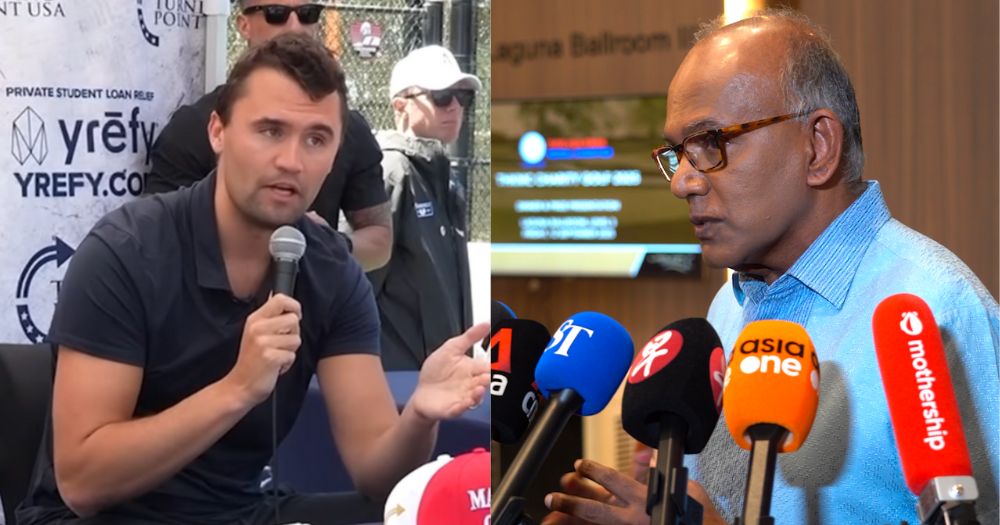
He cited the recent assassination of the American conservative Charlie Kirk, stating that it shows how "easy" online radicalisation can translate into real-world harm.
He added that in Singapore, the Internal Security Department (ISD) had to deal with cases of individuals who not only get radicalised online, but also use AI chatbots to draft manifestos or find instructions to make weapons.
In addition, the range of extremist ideologies has widened, no longer limited to religious extremism.
He noted people have been drawn to neo-Nazi movements or the incel movement, which has evolved into a subculture.
Incel means involuntarily celibate, where a person, usually a man, is unable to find a partner despite wanting one.
PM Wong brought up the two cases that were reported earlier in the week, where two Singaporeans were issued Restriction Orders under the ISA.
First, a 30-year-old aspired to take up arms for Turkïye in its territorial disputes with Greece. This man's motive was not religiously motivated but personal grievances and his desire to find meaning in overthrowing what he believed were oppressive regimes.
The second case was a 14-year-old boy who self-radicalised with a mix of extremist ideologies. The teen professed to be an ISIS supporter but also subscribed to far-right extremism and identified as an incel.
Worrying
PM Wong expressed his worry as there are more cases of young Singaporeans succumbing to extremist ideologies.
Since 2015, 18 youths between 14 and 20 have been dealt with under ISA, with more than two-thirds of them emerging in the last five years.
In response to the worrying trends, PM Wong made four points.
Firstly, Singapore will deepen international cooperation as terrorism knows no borders.
He said that countries must work together to disrupt terrorist plans, adding that many countries are keen to learn from Singapore's rehabilitation approach.
Secondly, PM Wong called for Singapore to remain vigilant, never letting its guard down.
Thirdly, Singapore will strengthen its rehabilitation capabilities.
PM Wong said that Singapore has to go beyond Islamic religious counselling and has already started doing so.
He cited a suite of interventions tailored explicitly for self-radicalised young people, which includes mentorship, cyber wellness, and programmes to improve their social skills.
PM Wong brought up the 16-year-old Singaporean Christian youth who was detained in December 2020 after being radicalised online by far-right extremist propaganda and planned to attack Muslims at two mosques.
The teen received counselling from a Christian pastor and, at the same time, had two mentors who provided him with social support and guidance.
The teen has since been released in January 2024 and is continuing studies at an Institute of Higher Learning.
Lastly, Singapore must continue to build strong and cohesive bonds.
PM Wong pointed out that self-radicalisation often preys on those who feel more isolated, and to counter that, through fostering belonging, human connections and trust.
He added that Singapore must guard against new divides, like those arising from social and economic inequality.
"Because if left unchecked, they can weaken trust and eroade the cohesion we have painstakingly built up," he said.
"On the whole, Singapore is in a far better position compared to many other countries. We are fortunate to stand on the strong foundations built by our pioneers. My team and I in the government are committed to deepening this reservoir of trust, and keeping Singapore secure and united, even as we embrace our diversity."
Related story
Top photo via MDDI & PMO