News

S'pore is India's largest investor, confident in future prospects: PM Wong
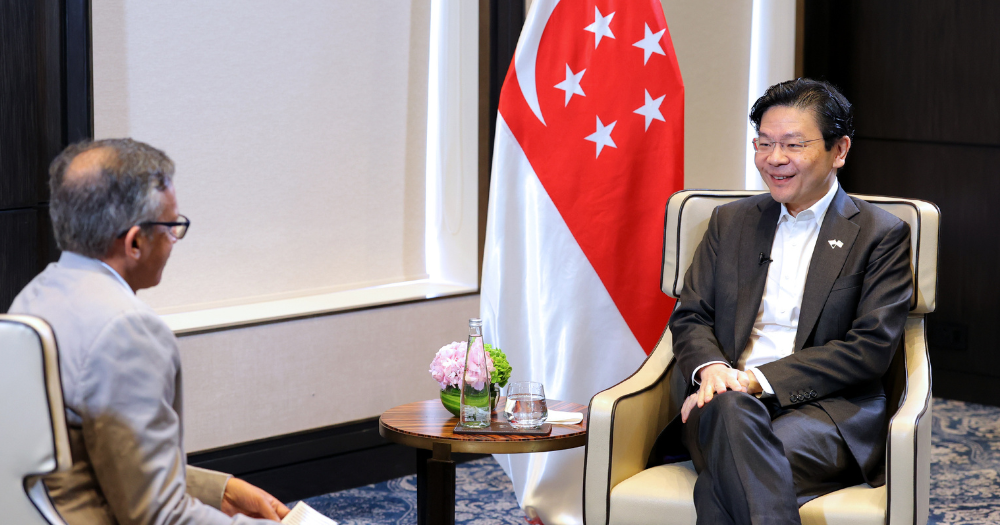
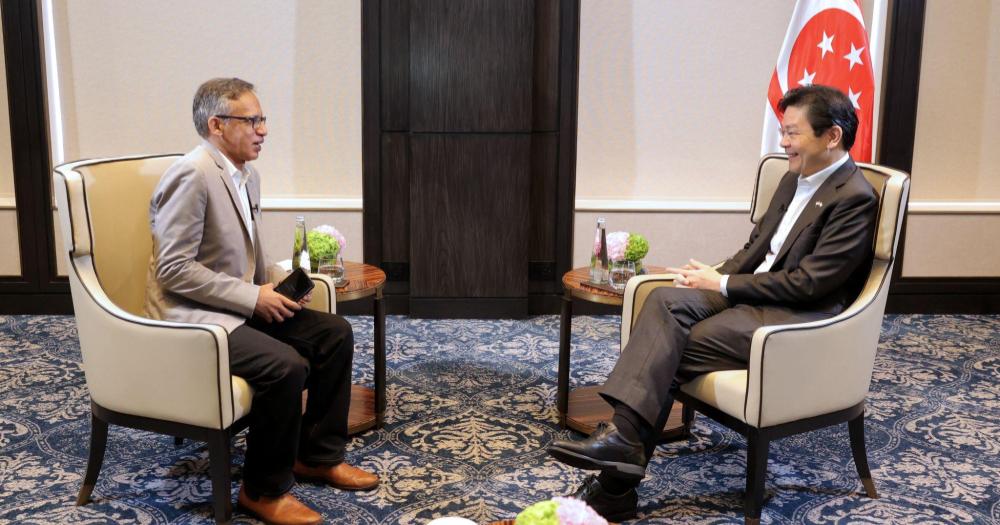
PM Wong was speaking to the Hindustan Times as part of his three day working visit.
September 04, 2025, 02:00 PM

 Singapore’s Prime Minister Lawrence Wong is in India on his first visit as Prime Minister.
PM Wong noted the warm bilateral relationship between the two countries, even noting that the visit mirrored a similar one made by his Indian counterpart, Narendra Modi, in 2024 to Singapore, and the significant advancement in cooperation made in the year between visits.
While in India, PM Wong spoke with the Hindustan Times, where they discussed bilateral cooperation, but also Singapore’s economic objectives in India, and how they fit with India’s own ambitions, especially in a turbulent geopolitical time.
No safe bets
In light of the fast-changing geopolitical context, PM Wong was asked if India was “still a safe bet for Singaporean investors”?
PM Wong countered by saying that safe bets in investments did not make money.
Risk was a necessity, and with investments, there would always be short-term volatility.
Singapore retained optimism in India’s growth prospects, with PM Wong noting India’s young population, rising middle class, dynamic tech sector, but “importantly, a government that is committed to reforms”.
Singapore’s confidence in India, he said, was not new and was backed by a “proven track record and actions”.
The Comprehensive Economic Cooperation Agreement (CECA) with India was signed 20 years ago, during which bilateral trade has increased two and a half times, and Singapore has been India’s largest investor for seven consecutive years.
"So we will continue to invest in India. We will continue to have confidence in India's prospects for the future. As to what industries and what areas, well, we have to leave it to the private sector," he said.
While the Singaporean government did not itself invest in India, PM Wong said it set the conditions and the framework, providing the overall environment for businesses and investors.
Semiconductors
One such area was in semiconductors.
PM Wong was asked about India’s ambitions to become a semiconductor hub and how Singapore can help in this.
He highlighted three areas where progress had been made, such as having a “green lane” to make it easier to import semiconductor goods into India; skills development, where Singapore was discussing a possible joint skills training centre in Gujarat; and also in collaboration around research and innovation.
Singapore’s interest was expressed in three reasons:
Firstly, the importance of semiconductor chips in propelling the digital economy forward, and thus the need for a more “diversified and resilient supply chain” in the world.
Secondly, a significant number of semiconductor-related businesses are interested in opportunities in India, as well as linking up with their Indian counterparts to take advantage of opportunities to grow their businesses.
Thirdly, a “strong and rising India contributes to the stability, resilience, and shared prosperity in Asia”, which would in turn open new opportunities for India’s partners in the region.
Green energy
PM Wong was also asked how India could help Singapore achieve its green energy and decarbonisation ambitions.
He explained that as a city-state, Singapore had fewer options than others, with less land and access to large-scale renewables.
Singapore would therefore have to rely on a variety of different energy sources, including green energy imported from its neighbours and civilian nuclear power.
He elaborated that Singapore is building up the technological capabilities to make use of future advancements like nuclear fusion and small modular reactors, and said Singapore is ready to work with India on energy security.
Food security and data corridors
The interviewer also noted the wide range of cooperation that Singapore and India already enjoyed, such as with food security.
As of 2023, Singapore imported up to 40 per cent of its rice from India, as well as in real-time digital payments.
In terms of the latter, PM Wong said that the UPI-PayNow linkage had proven to be very successful, and that what remained was to expand digital linkages in other areas, creating a more seamless business process.
Fundamentally, he said, there was scope for a more "seamless cross-border data exchange between our two countries”, as data was what underpinned many activities for finance and the digital economy.
Singapore and India were exploring a pilot cross-border data corridor between Singapore and the Gujarat International Finance Tec-City, which would allow both sides to understand the concerns that the other had.
Asean
PM Wong also said the Asean-India relationship was important and critical, with longstanding civilisational ties that had been “grounded on trade and cultural exchanges over a long period of time”.
He spoke about the strategic level Asean-India ties, saying that they were of critical importance as the global economy’s centre of gravity shifts towards Asia.
In that context, India would be one of two engines of growth in Asia, China being the other, with the belief that Asean can be the third.
Combined, the three will contribute to the stability, resilience, and continued prosperity of Asia.”
PM Wong is on the final day of his three day working visit, and is due to meet senior Indian leaders, such as India's PM Narendra Modi.
Related story
Top image via MDDI