News

Jeffrey Siow: Jamus Lim's needs-based COE system proposal 'subjective, divisive & benefits too few'
Lim called for COE discounts for parents with multiple young children, for caregivers to elderly parents, and for people with disabilities.
September 23, 2025, 01:55 PM
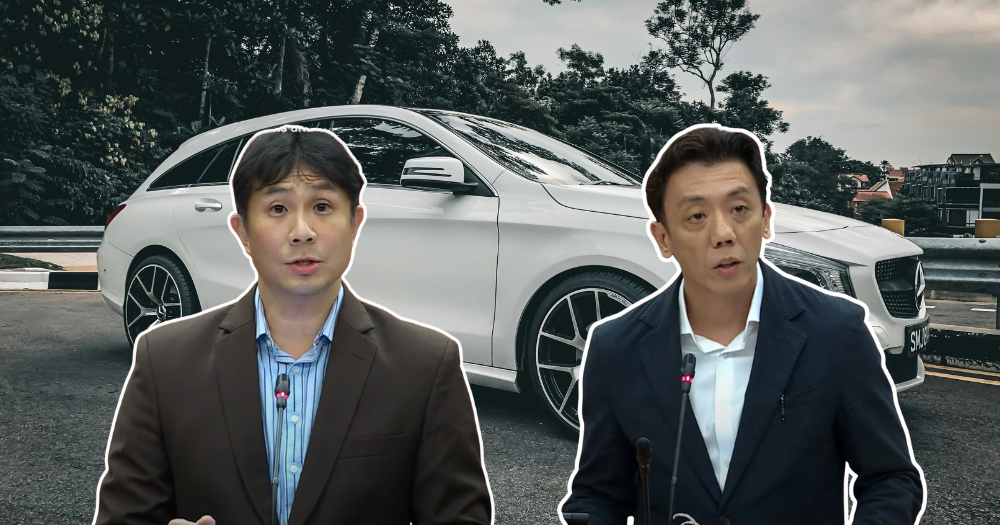


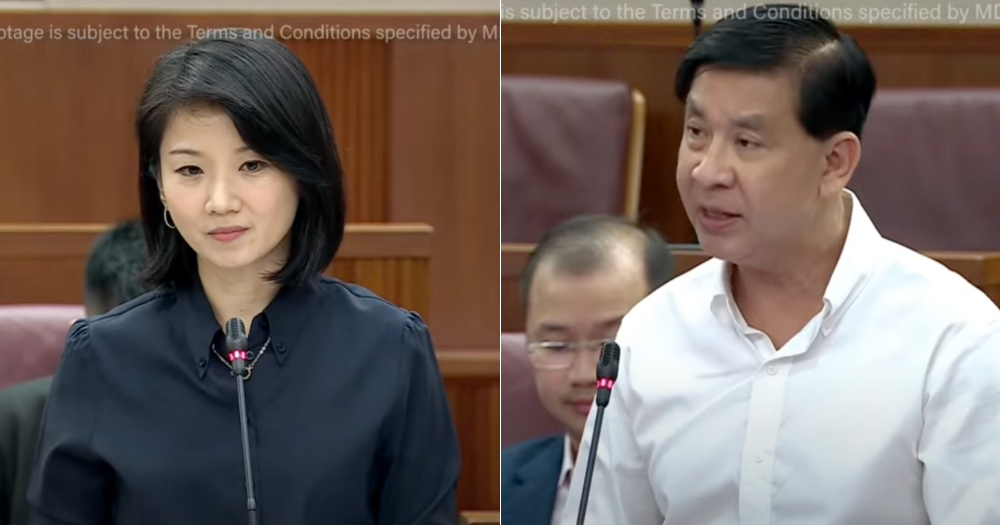
Allocating the certificate of entitlement (COE) based on needs sounds attractive, but it is subjective, divisive, and benefits too few in practice, Acting Transport Minister Jeffrey Siow said in parliament on Sep. 22.
He was responding to a proposal by Workers' Party MP Jamus Lim to make Singapore's COE system fairer for three groups of people who "benefit disproportionately from private car ownership".
These groups are parents with multiple young children, caregivers to elderly parents, and people with disabilities.
"Their need for private transportation is more acute than that of the average citizen," Lim said in an adjournment motion. "They would accordingly benefit from financial support that would make a car more accessible to them."
He was building on his Jul. 16 Facebook post, where he said the allocation of COE via competitive price bidding overlooks people with genuine needs for a car but may not be able to afford one.
Lim's proposal
Lim suggested providing discounts as a "cleaner approach" to incorporate the needs of those three groups in the COE allocation system.
He laid out several proposed policies, saying that the government could consider variants of them.
For people with disabilities, he highlighted that a 100 per cent discount, or a full waiver, on COEs is already in place through the Disabled Persons Scheme.
For parents with two or more children, of which at least two are under 14 years old, he proposed a 10 per cent discount for each additional child after the first.
For example, a family with two children aged between four and seven would receive a 10 per cent discount, while another with three children aged between two and 13 would receive a 20 per cent discount.
He also suggested a 10 per cent discount for primary caregivers of two parents both above 80 years old, or those of one parent who suffers from a chronic illness that is in need of regular medical checkups.
In these cases, the parents and caregivers must all live within the same household.
In Lim's proposed system, the discount will apply at the time of purchase, and COE prices would still follow market values thereafter.
If the vehicle bought on such discounts get sold, the benefits would remain only with the family that qualified for the discount.
Anticipating concerns that subsidies would simply pass on as higher COE prices, he argued that people who would qualify for the discounts make up a "much smaller segment of potential buyers" and thus it would be "highly unlikely that they will materially move markets".
To ensure that his proposed needs-based system caters to genuine needs while remaining fiscally sound, Lim suggested including some form of means testing.
For example, the discount may be given to families that earn below the medium-income threshold, or the top 20 per cent of earners may be excluded from the scheme.
Siow's response
Replying to Lim, Siow acknowledged that the current COE system is neither perfect nor popular.
Siow said tther Singaporeans have shared with him perspectives similar to Lim's, and he has received many appeals for COE subsidies for such families as mentioned by Lim.
However, Siow said it is challenging for the government to allocate COEs based on needs.
What appears deserving to one person might not appear fair to another, he explained.
There would have to be considerations, such as the number and ages of children for a family to qualify for subsidies, whether big households should be more deserving than small families, and whether any income-based allocation should be based on household income or personal income.
"All these ideas sound very attractive, but no matter how one draws the line, there will still be people who fall on the wrong side, who believe they are more deserving," Siow said.
He added that rather than giving one family a substantial COE subsidy, the same amount of subsidy can be redistributed to benefit many more families, including those who do not want or are not able to have a car.
It could be redistributed to give more credits to families to be used for transport services, or as cash or vouchers to defray other expenditures, Siow said.
Additionally, the government's approach to "deliver the greatest good for the greatest number" is by "investing heavily in our public transport system", Siow said.
Ultimately, he asserted that the market mechanism behind the current COE system is transparent and "allows the government to channel COE revenues to the benefit of the wider public".
"This is not a perfect system, but it is the fairest and most effective way to allocate a scarce resource in Singapore’s context," he said.
Top images from Pexels and MDDI/YouTube