News

PM Lee to M'sian parliament: Special rights won't fix Malay economic problems
Could this be his last speech in the Malaysian Parliament?
August 06, 2025, 09:13 PM
Over the next few days leading up to National Day, follow along as Mothership takes you back, through the events which led to Singapore’s separation from Malaysia on Aug. 9, 1965.
MAY 27, 1965: On May 26, 1965, UMNO back-bencher Mahathir Mohamad, 39, opened the debate on the king’s speech in the Malaysian Parliament with a scathing critique of Singapore and the People’s Action Party (PAP).
He criticised Singapore’s Prime Minister Lee Kuan Yew as an example of the “insular, selfish, and arrogant” type of Chinese in Singapore.
These people, he said, “have never known Malay rule and could not bear the idea that the people that they have so long kept under their heels should now be in a position to rule them”.
Mahathir also denounced the PAP as “pro-Chinese, communist-oriented and positively anti-Malay”.
He added that Singapore had retained multilingualism while paying only lip-service to the national language.
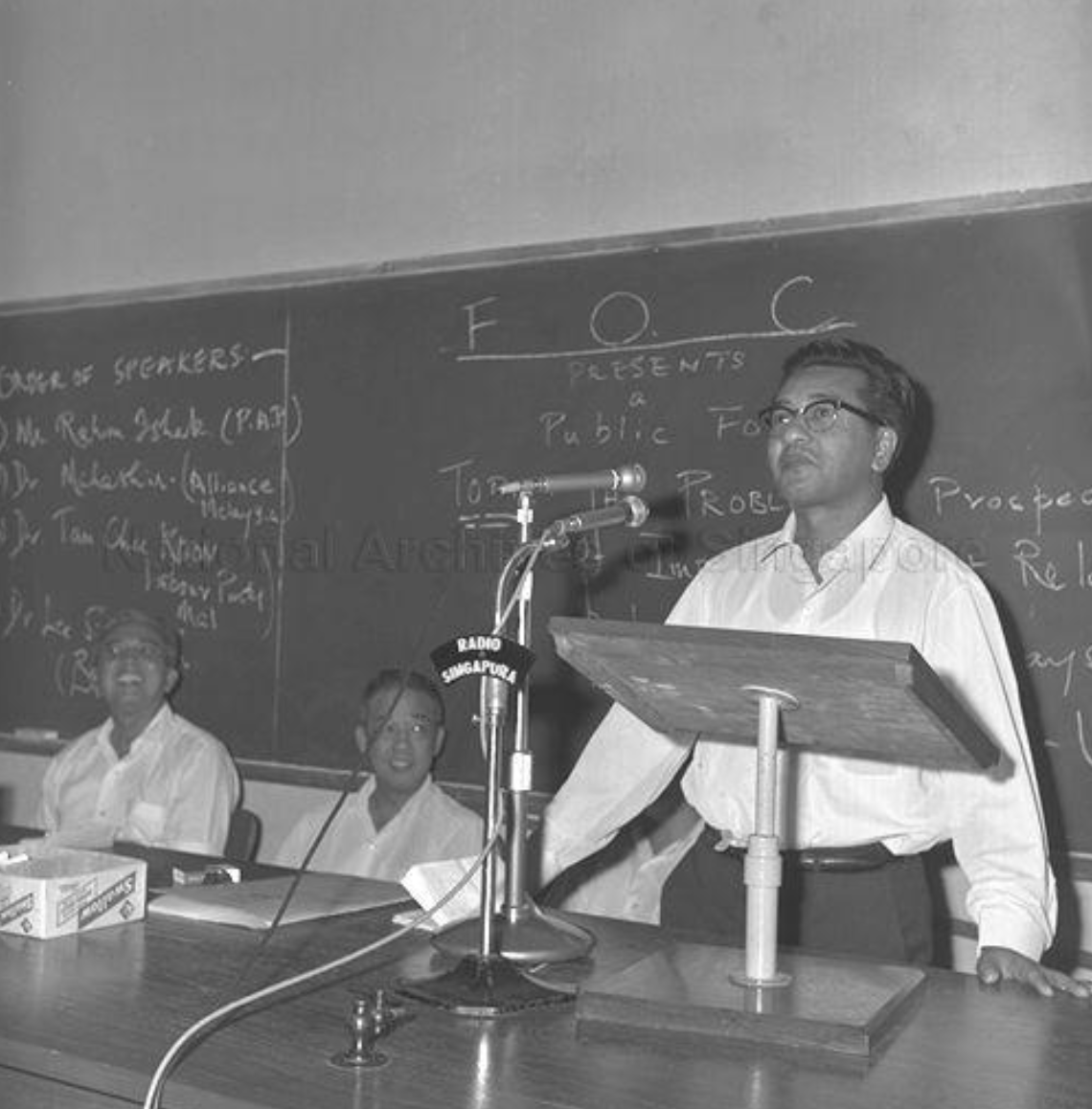 Mahathir Mohamad. Photo from the National Archives of Singapore
LKY: “We were the threat from within?”
PM Lee spoke today to rebut Mahathir and other UMNO politicians, delivering a 30 minute speech in both English and Malay.
Apart from a couple of retorts from other members of parliament, the chamber was largely silent, with several Central Government ministers seen sinking into their chairs.
On yesterday’s address by the Yang di-Pertuan Agong, PM Lee expressed regret that the speech did not reassure the nation that it would continue to progress towards a Malaysian Malaysia.
He also called on Central Government Prime Minister Tunku Abdul Rahman to explain the meaning of a line from the address: “We are also facing threats from within the country”.
Was he referring to the people of Singapore? PM Lee asked.
“I don't know what was intended and I hope the Prime Minister will take full responsibility for the text of this address”.
PM Lee then assured the House of the PAP’s loyalty.
“Because we know — and we knew before we joined Malaysia — that if we are patient, if we are firm, this constitution must mean a Malaysian nation emerges.”
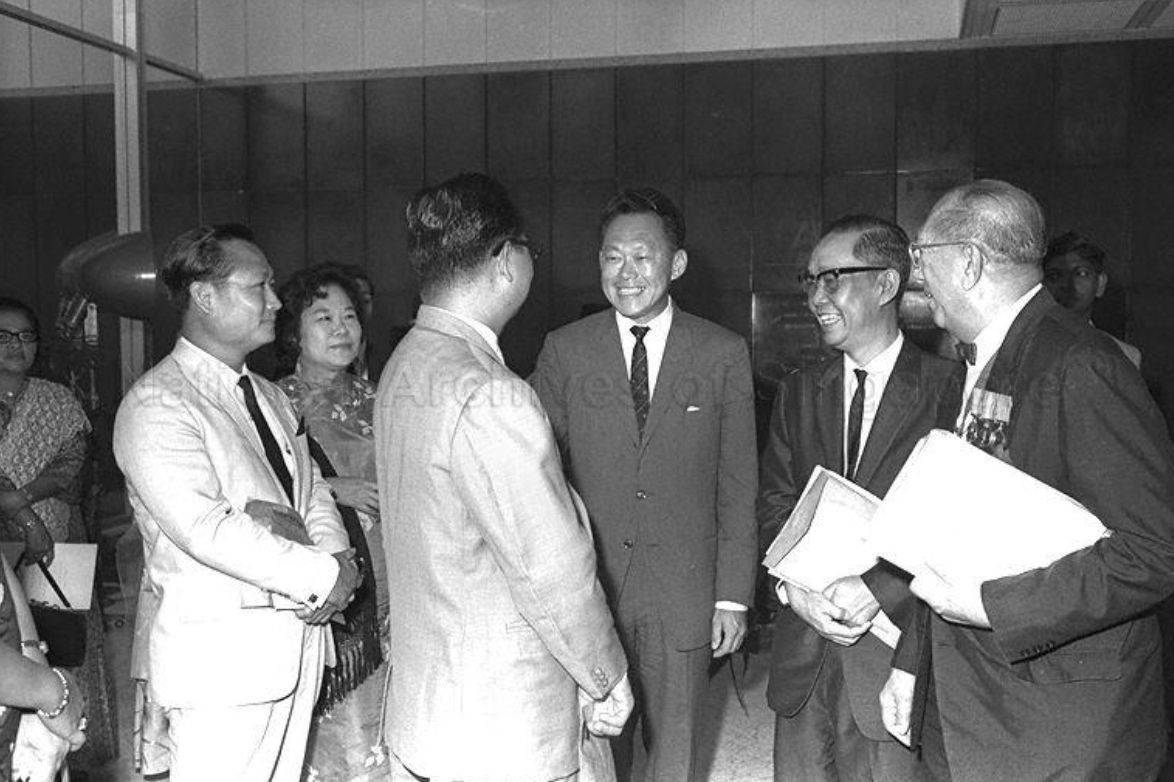
Uplifting the Malay people
Speaking in fluent Malay, and without referring to his notes, PM Lee insisted the PAP supported the provision of special rights for Malays under Article 153 of the Constitution.
“Why, if we wanted to become a Chinese state, would we merge with Malaya to become one country in the Federation of Malaysia?” he asked rhetorically.
“Why would we want to oppose or threaten the Malays? Our duty, as Malaysian citizens, is to raise the standard of living for the Malays.”
He also spoke, in English, about the move to adopt Malay as the country's sole national language.
The Singapore premier emphasised that it would not fix the "imbalance in [the country's] social and economic development".
"It will not disappear," he said.
“How does talking Malay here, or writing to the ministers of the federal government both Malays and non-Malays, in Malay — how does that increase the production of the Malay farmers?”
Alliance shouldn't stifle opposition
He added that if the ruling Alliance government did not have real answers to current economic problems, it should not stifle the opposition.
The PAP on the other hand, argued PM Lee, had an alternative solution to the plight of rural Malays: “In ten years we will breed a generation of Malays, educated and with an understanding of the techniques of science and modern industrial management.”
Singapore’s Prime Minister emphasised that Malaysian citizens needed to step up their training and education.
“If we delude people into believing that they are poor because there are no Malay rights or because opposition members oppose Malay rights, where are we going to end up?
You let people in the kampongs believe that they are poor because we don't speak Malay, because the government does not write in Malay. So he expects a miracle to take place in 1967 (the year Malay would become the national and sole official language).
The moment we all start speaking Malay, he is going to have an uplift in the standard of living, and if it doesn’t happen, what happens then?”
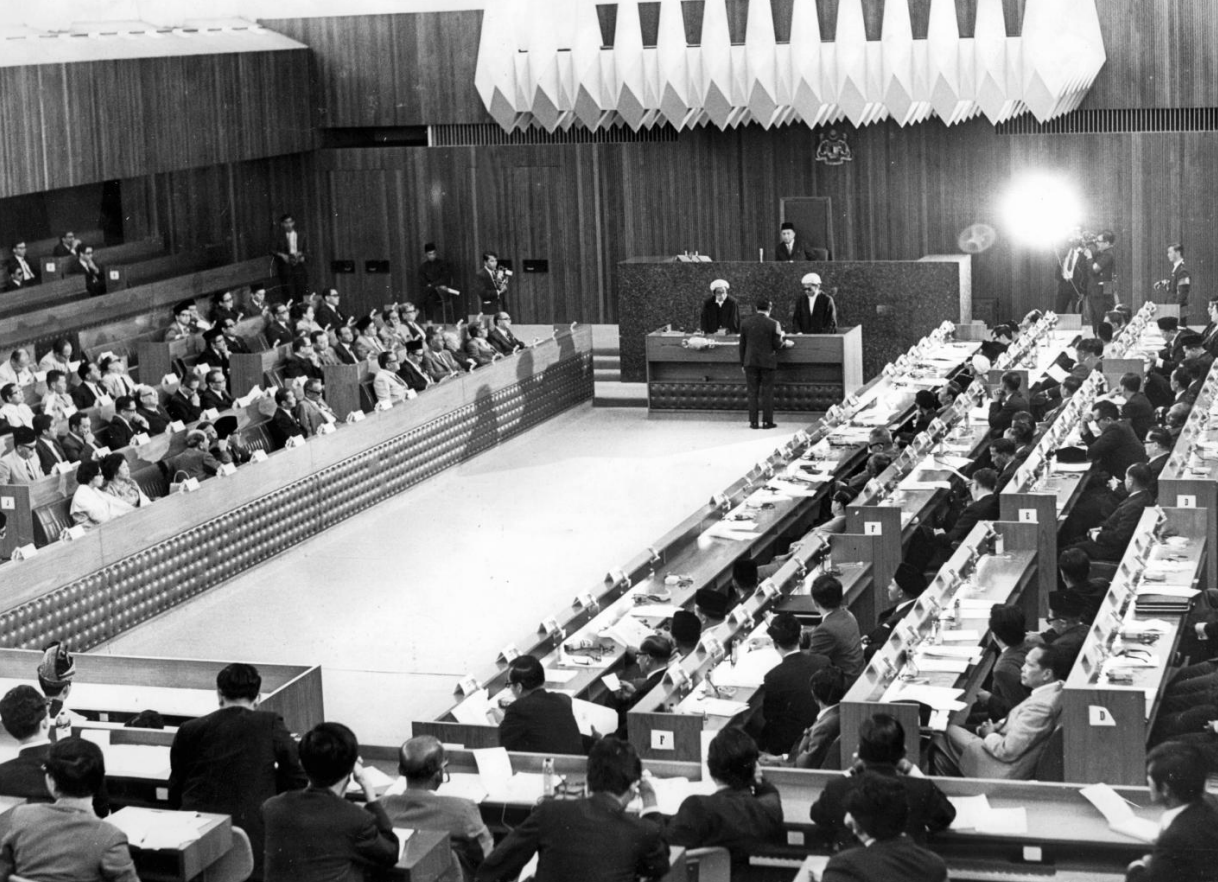 Malaysian Parliament. Photo from National Archives of Malaysia
Excerpts of PM Lee's speech
“How does the Malay in the kampong find his way out into this modernised civil society? By becoming servants of the 0.3 per cent who would have the money to hire them to clean their shoes, open their motorcar doors?
…Of course there are Chinese millionaires in big cars and big houses. Is it the answer to make a few Malay millionaires with big cars and big houses?
How does telling a Malay bus driver that he should support the party of his Malay director (UMNO) and the Chinese bus conductor to join another party of his Chinese director (MCA) – how does that improve the standards of the Malay bus driver and the Chinese bus conductor who are both workers in the same company?
If we delude people into believing that they are poor because there are no Malay rights or because opposition members oppose Malay rights, where are we going to end up?
You let people in the kampongs believe that they are poor because we don't speak Malay, because the government does not write in Malay, so he expects a miracle to take place in 1967 (the year Malay would become the national and sole official language).
The moment we all start speaking Malay, he is going to have an uplift in the standard of living. And if it doesn’t happen, what happens then?
…Meanwhile, whenever there is a failure of economic, social and educational policies, you come back and say, oh, these wicked Chinese, Indians and others opposing Malay rights.
They don’t oppose Malay rights. They, the Malays, have the right as Malaysian citizens to go up to the level of training and education that the more competitive societies, the non-Malay society, has produced.
That is what must be done, isn’t it? Not to feed them with this obscurantist doctrine that all they have got to do is to get Malay rights for a few special Malays and their problem has been resolved…”
Previous stories
Top image from National Archives of Singapore