News

'Japanese 1st' party tough on immigration wins big in Upper House election, PM Ishiba loses majority
Japan's ruling Liberal Democratic Party (LDP) and coalition partner Komeito won 47 seats in total.
July 21, 2025, 01:00 PM
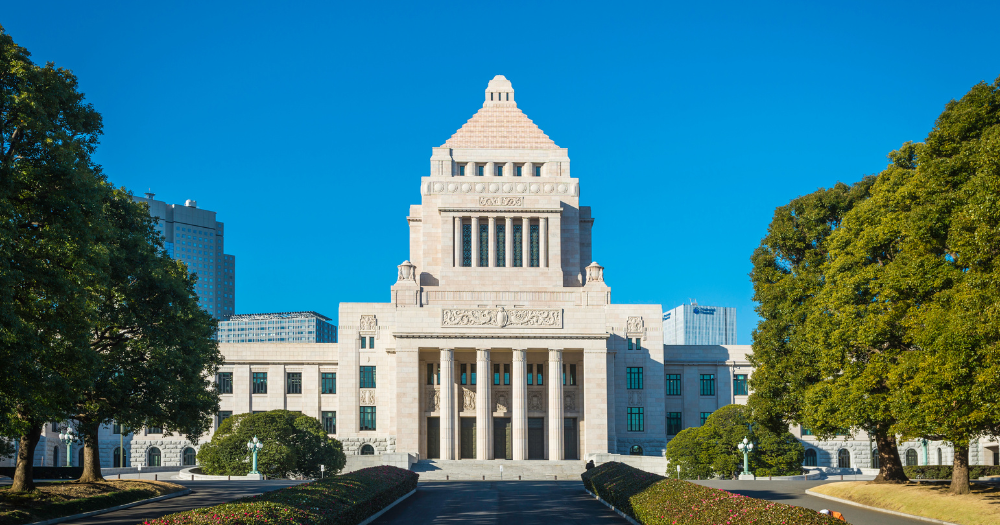


Japan's ruling coalition failed to win the 50 seats required to maintain its majority in the Upper House in the elections on Jul. 20, leaving Prime Minister Shigeru Ishiba without a majority in either chamber of Japan's National Diet.
The Diet refers to Japan's national legislature, comprising the Lower House (the House of Representatives) and the Upper House (the House of Councillors).
According to Nikkei Asia, opposition parties including the centre-right Democratic Party for the People (DPFP) and the right-wing Sanseito, which runs on a "Japanese First" platform, have made big gains in this round of elections.
The ruling coalition lost the majority
Nikkei Asia reported that Japan's ruling Liberal Democratic Party (LDP) and coalition partner Komeito won 47 seats in total, fewer than the 125 seats required to retain a majority in the 248-member chamber, even after including the coalition's 75 seats that went uncontested during this election.
The ruling coalition had also previously lost the majority in the Lower House (the House of Representatives), leaving Ishiba's authority in a precarious state
Dire economic crisis, backlash against foreigners
The public headed to the polls amid a cost of living crisis, high inflation and stagnant wage growth, Nikkei Asia reported.
Wages dropped from May 2024 and was the biggest drop since September 2023.
Core consumer prices had also risen from June 2024.
According to Nikkei Asia, the current economic conditions lead to xenophobic sentiments in certain quarters.
Some Japanese citizens raised concerns about being "displaced in their own country" due to the growing presence of foreigners; foreigners are purchasing real estate in Japan, and overcrowding tourist spots.
Though Japan has been promoting policies to accept more foreign workers and attract more tourists to boost the economy, there have been increasing concerns as to whether the country is able to handle the increase.
"Japanese First" stance
Right-wing populist party Sanseito, which advocates a "Japanese First" stance, was one of the opposition parties that made significant gains in the election.
The party won at least 13 seats, meaning that it has the power to submit bills that are unrelated to the national budget in the upper chamber.
According to Nikkei Asia, one woman who voted for Sanseito stated that "it is really hard for Japanese people to buy houses now, and [their] wages aren't increasing".
Sohei Kamiya, the leader of Sanseito, said that his priorities are tax reductions and fiscal stimulus, as well as addressing issues with foreigners such as "land and corporate acquisitions and foreign workers as a source of inexpensive labour".
This is in contrast to Ishiba's party, who said there would be no major changes in terms of policy direction and promised cash handouts to help Japanese citizens alleviate cost pressures.
"We believe that the consumption tax is an important source of revenue to support social security.
What's more, Japan's government finances are in a dire situation.
We must avoid a policy that would further undermine the fiscal situation or send long-term interest rates rising further."
The other opposition party which made significant gains in the election is the DPFP, which won at least 21 seats.
This means that the party can submit bills related to the national budget without collaborating with other parties.
The DPFP had campaigned on pledges to increase take-home pay.
According to Kyodo News exit polls, as reported in Nikkei Asia, about 20 per cent of voters in their thirties and younger had cast their proportional representation ballots for either Sanseito or the DPFP.
Ishiba intends to stay on as PM
Despite losing the majority, Ishiba stated in an interview with NHK that he intends to stay on as PM, as reported in Nikkei Asia.
As his coalition no longer constitutes the majority, they would have to form partnerships on an issue-by-issue basis as none of the other parties have expressed willingness to join the coalition.
However, Ishiba is confident that this would be possible, stating that the ruling coalition was previously able to pass the draft budget "thanks to the various efforts, support and guidance of other parties" during the Diet sessions in 2024 and 2025.
Top photo via Canva