




News

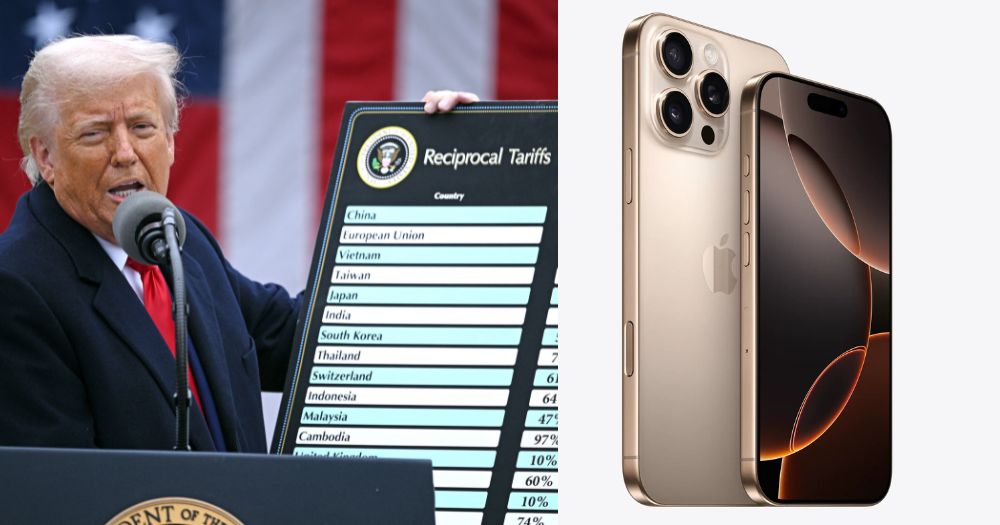
What are Trump's tariffs & will they affect the price of my next iPhone?
Analysts estimate that the price of an iPhone could rise as much as 43 per cent.
April 04, 2025, 09:56 AM


Your colleagues are talking about Trump's tariffs at lunch and you're feeling lost.
Don't worry, we got you.
What is a tariff?
A tariff is a tax placed on foreign-made imports, making them more expensive to bring into a country.
Why would a country make its imports more expensive? Usually, it is done to protect a country's domestic products.
Trump himself said the tariffs are necessary to protect American jobs and manufacturing.
In real life, though, tariffs are often wielded as a political tool.
Trump's administration has placed a baseline 10 per cent tariff on imports from Singapore.
Other economies that received a 10 per cent tariff include Australia, East Timor, the UK, and New Zealand.
Why is Trump doing this?
Trump calls his tariffs "reciprocal" because the U.S. wants to mirror tariffs that other economies place on American-made products.
Basically, a tit-for-tat situation.
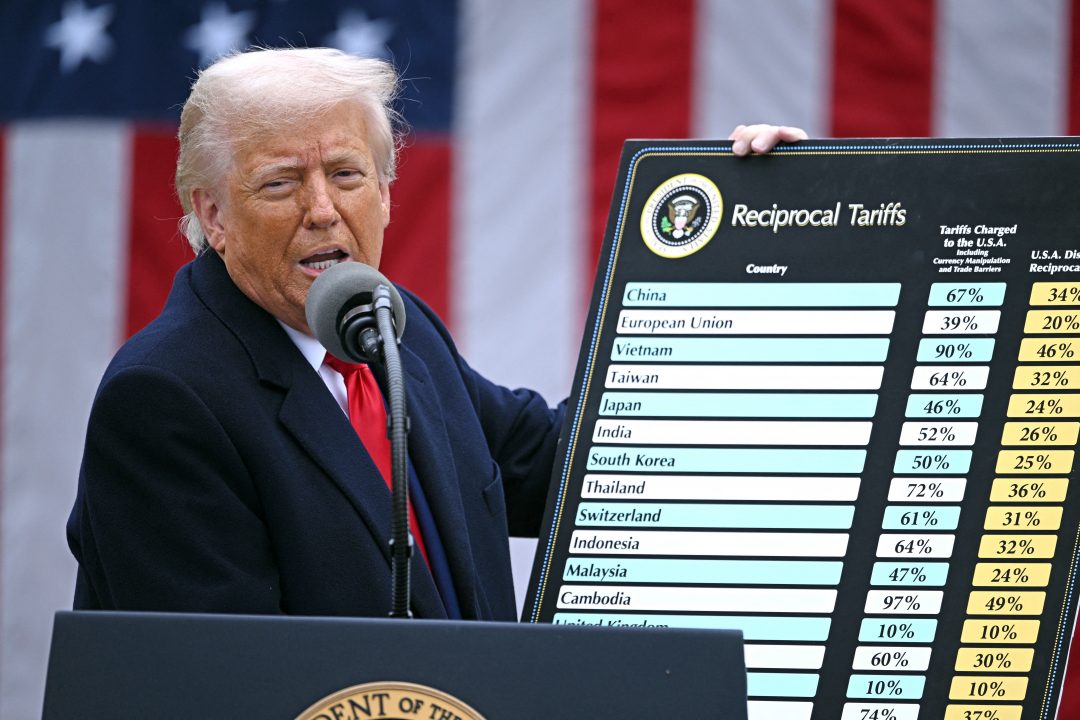 Photo by Brendan SMIALOWSKI / AFP
For instance, the White House contrasted its 2.7 per cent tariff on imported rice against the 80 per cent and 40 per cent tariffs that India and Malaysia impose on American rice.
Trump said he is also retaliating against other anti-free trade practices that produce outcomes similar to tariffs, such as government subsidies, technology transfers, and currency manipulation.
Bloomberg, however, pointed out that, instead of trade barriers, Trump is actually targeting trade gaps between the U.S. and the rest of the world.
Check out its video that explains, very succinctly, why a trade imbalance typically exists between poor and rich countries.
Will my next iPhone become more expensive?
There is a chance that American products will get more expensive.
Many American products today are manufactured outside of the U.S. or use materials that are imported from overseas, so manufacturing them will become more costly thanks to the tariffs.
Take, for example, Apple, which manufactures many of its products, from iPhones to AirPods, outside of the U.S..
Most of Apple's iPhones are made in China, which has been hit with a whopping 54 per cent tariff.
New York Times reported that the tariffs imposed on Apple's products from China will increase costs by US$8.5 billion (S$11.4 billion).
Analysts whom Reuters spoke to, estimate that the price of an iPhone could rise as much as 43 per cent if Apple decides to pass on the costs to customers.
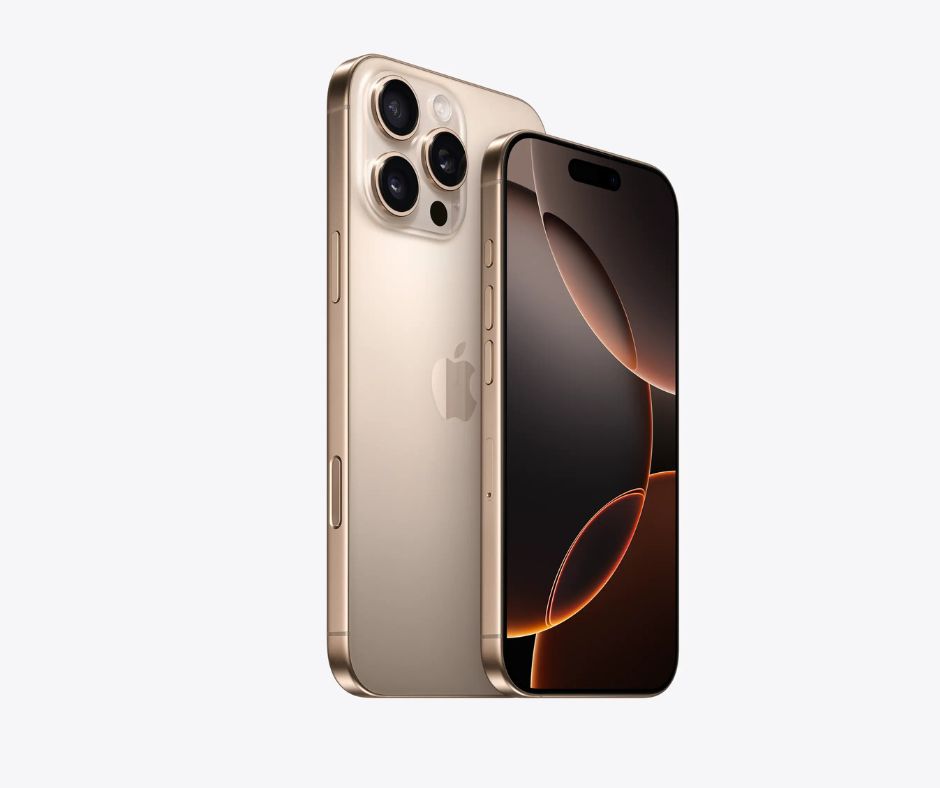
Here's the kicker: The most expensive iPhone 16 model, which is currently priced at US$1,599 in the U.S., could cost nearly US$2,300 (about S$3,000)
 A S$3,000 iPhone anyone?
What is Singapore doing in response to Trump's tariff?
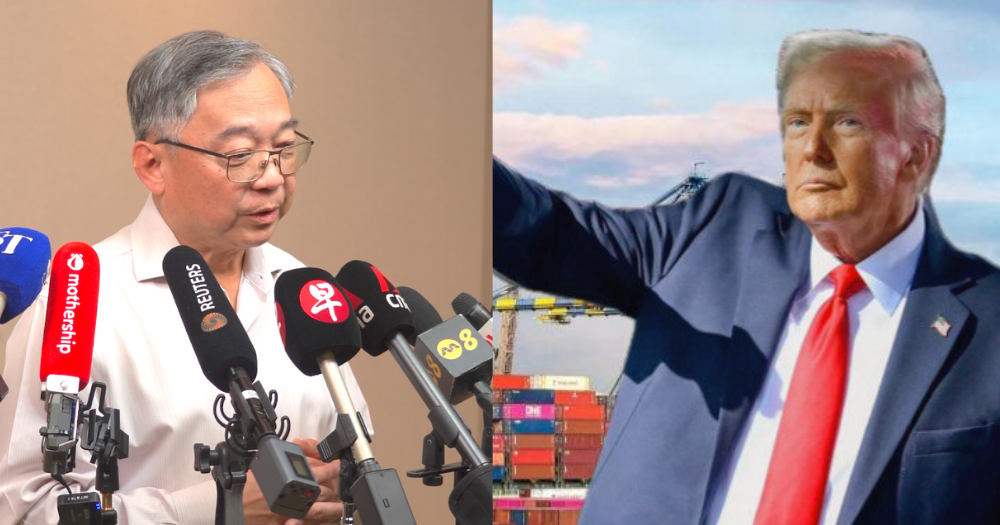
Minister for Trade and Industry Gan Kim Yong expressed Singapore's disappointment on Apr. 2, cautioning that Singaporean households and businesses have to prepare for "rough waters ahead of us".
Here's how he explained the chain reaction that will hit Singapore:
"Once you have duties imposed on other countries' exports to the U.S., these countries will begin to slow down their production, and they begin to slow down their trade.
And once they start to do that, investments into these countries will slow down.
And similarly... trade globally slows down. Export and imports will slow down, and that will lead to a global economic slowdown.
Singapore, being an open economy, which actually depends on the global economy to grow, cannot be spared. I think we will also be affected in our economy over time."
The U.S. currently enjoys a trade surplus with Singapore. Singapore does not impose tariffs on U.S. imports.
The tariffs, all the same, are likely to exacerbate fears of a global trade war and unravel decades of trade liberalisation.
Gan, who is also deputy prime minister, said:
"What we are going to do is to reach out and engage the U.S. counterparts, and to better understand the concerns and to see how we can work together constructively to address some of these concerns, so that we can have a longstanding, long-lasting partnership."
Top image: Brendan Smialowski/AFP