Abroad

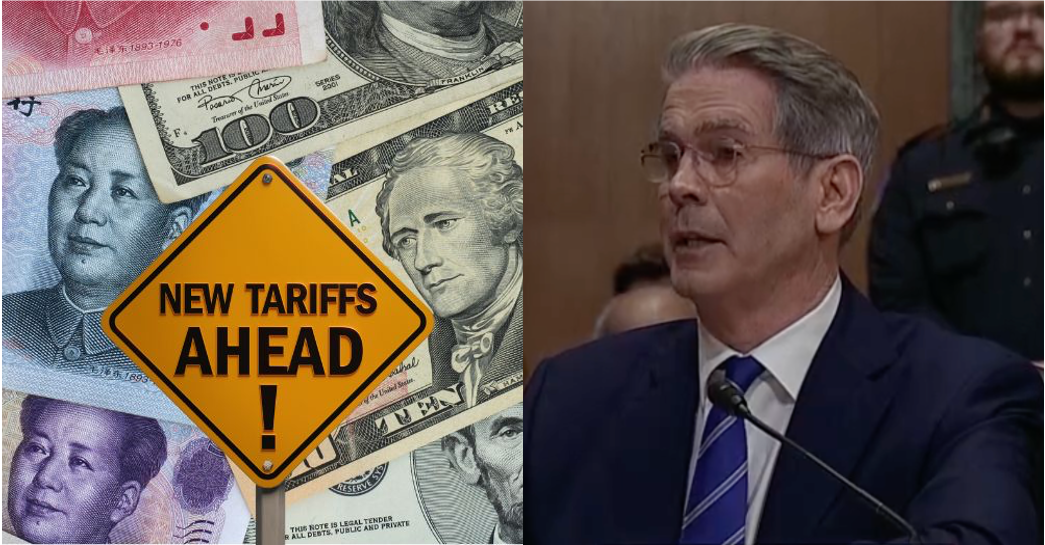
US Treasury Secretary 'not worried about China', says they will 'eat any tariffs'
Scott Bessent had also said that inflation and higher interest rates are unlikely to occur despite the tariffs.
March 05, 2025, 01:25 AM


China will impose a 15 per cent hike on all United States (U.S.) agricultural and food products from Mar. 10, reported Reuters.
The move comes shortly after tariffs set by U.S. President Donald Trump doubled tariffs on Chinese exports to the U.S., doubling from 10 per cent to 20 per cent.
Trump also imposed 25 per cent tariffs on Mexico and Canada exports, taking effect on Mar. 4, 2025.
However, U.S. Treasury Secretary Scott Bessent (equivalent to Singapore's finance minister) said on Mar. 2 in a CNBC interview that China will "eat any tariffs that go on", or essentially absorb them.
China will "absorb" tariffs, inflation unlikely, claims Treasury Secretary
Bessent claimed that inflation and higher interest rates are unlikely to occur in the U.S. despite the tariffs, as China is expected to absorb them instead of passing them to U.S. consumers.
On the tariffs' impact on the average U.S. household, he said that it is "path-dependent" but he was "not worried about China".
"China will pay for the tariffs because their business model is exporting their way out of this inflation," Bessent told CNBC.
He added that China will "eat any tariffs that go on."
On Mar. 3, White House senior counsellor on trade and manufacturing Peter Navarro argued in favour of the tariffs, and said that the issue "starts in communist China with the precursor chemicals."
He claimed that such chemicals initially enter Mexico, where they are manufactured into fentanyl in forms such as pills, reported Fox News.
Navarro also claimed that Canada acts as a "transit hub" and "secondary point" for manufacturing purposes.
"So this is a Canada-Mexico-China thing," he said.
China reacts, imposes tariffs on U.S. agricultural and food products
The extra tariffs that China imposed were on agricultural produce, such as chicken, wheat, corn and cotton.
A 10 per cent levy was imposed on other food products, such as soybeans, sorghum, pork, beef, aquatic products, fruits and vegetables and dairy imports.
"Trying to exert extreme pressure on China is a miscalculation and a mistake," a China foreign ministry spokesperson said in a Beijing press conference.
According to Reuters, the increase will impact about 15 per cent of U.S. exports to China, or US$21 billion (S$28 billion) worth of trade.
Some 15 companies in the U.S. were also added to the country's export control list, which forbids Chinese companies from supplying dual-use technologies to such companies.
10 U.S.companies were also placed on China's Unreliable Entity List for reportedly "selling arms to Taiwan".
Re-imposed tariffs on Canada and Mexico despite earlier deal being reached
Trump had initially introduced his tariffs on China following the country's fentanyl overdose crisis, accusing the country, including Mexico and Canada of "not doing enough" to control the drug's flow into the U.S.
Although the tariffs were suspended following a deal on border security, they were re-imposed.
Canadian prime minister Justin Trudeau referenced Trump's claim that the tariffs were designed to cause a crackdown on fentanyl trafficking, and countered that it was "completely bogus."
He said Trump wants to damage the Canadian economy to make it easier for the U.S. to annex Canada.
Trump has repeatedly said that he wants Canada to become the "51st State" of the U.S.
Top image via Canva