Branded
Harvard dropout & self-funded duo: How 2 S’pore startups found success overseas
No MBA, no problem.
When a Singaporean Master of Business Administration (MBA) student at Harvard University found out that cycling helmets with built-in lights did not exist on the market in 2014, he took a leap of faith and dropped out of his programme.
The budding entrepreneur, Eu-wen Ding, who was then 29, went on to start Lumos, a company selling products such as helmets integrated with LED lights and bike lights to help cyclists become more visible and safer on the road.
Now, Lumos products are available in over 30 countries across the globe, including Singapore, Japan, the United States, and the United Kingdom.
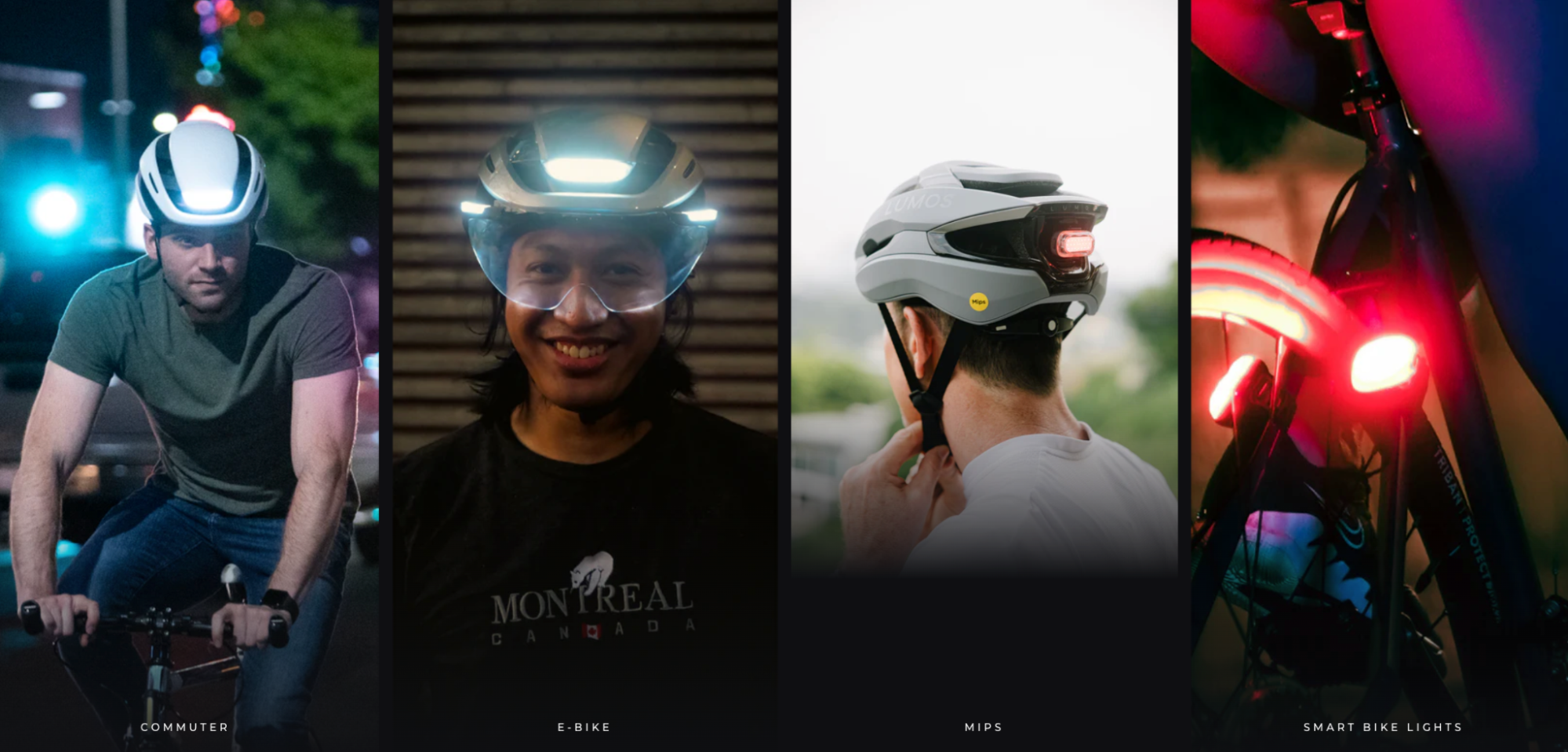 Screenshot via Lumos’ website
Exposure to entrepreneurship
Speaking to Mothership, Ding shared that he has always been on the lookout for challenges and new opportunities since he was young.
This mindset was what motivated him to leave his comfort zone in Singapore and pursue his undergraduate studies in the U.S.
After graduation, he joined Embrace, an India-based social enterprise that develops low-cost baby warmers for developing countries.
According to Ding, his time at Embrace “rewired [his] brain completely” and opened his eyes to how entrepreneurship could “create something that genuinely improves people’s lives”.
Although the process of bringing an idea to life is “messy, uncertain, and requires much resilience”, Ding became determined to take this path so that he could build something of his own while “making a difference in a tangible and personal way”.
To achieve his aspirations, Ding enrolled in the MBA programme at Harvard Business School in Boston in 2013.
 Ding at Harvard. Photo courtesy of Lumos.
Cyclist for cyclists
At Harvard, Ding fell in love with cycling, as it gave him “the freedom to get around Boston quickly and efficiently”, he recounted.
However, he and his cycling friends often felt “invisible” to drivers on the road, even when they turned on their bike lights and wore reflective gear.
For instance, during one late-night ride, Ding was approaching an intersection with his bike lights on when a car suddenly cut him off.
Although Ding managed to brake in time, the experience made him realise that his bike lights were not sufficient — they were located too low to the ground to make cyclists visible to drivers in larger vehicles.
These close calls prompted Ding to think more seriously about how he could help cyclists be seen from every angle on the road.
It was then that the concepts of creating a helmet with integrated lights, and bringing bike lights up higher began to take shape in his mind, shared Ding.
Seeing that these products were not yet available on the market, Ding made the difficult decision to drop out of his MBA programme and start his venture.
Overcome challenges
The innovativeness of Ding’s ideas actually created a hurdle at the start of his entrepreneurial journey.
As the products he was creating did not exist yet, it was tough to convince people to believe in his vision.
Nevertheless, Ding and his team persisted and actively introduced Lumos to the public, including on the Kickstarter crowdfunding platform.
Although the process was described by Ding as “nerve-wracking”, his and his team’s efforts eventually paid off, as the company managed to raise over US$800,000 (S$1.08 million) in just six hours.
As Lumos moved forward, powered by the significant interests and the resources its backers rendered, Ding met yet another obstacle.
Beta testers came back with negative feedback, including saying the prototype helmet’s fit was uncomfortable, sat too high on the head, and felt too wide and wobbled when they cycled.
Ding shared that these responses were “a huge blow” at the time because he and his team had spent months designing and producing the prototype.
However, instead of launching something flawed, Ding and his team decided to go back to the drawing board and redesign the fit, aesthetics, and overall experience of the helmet.
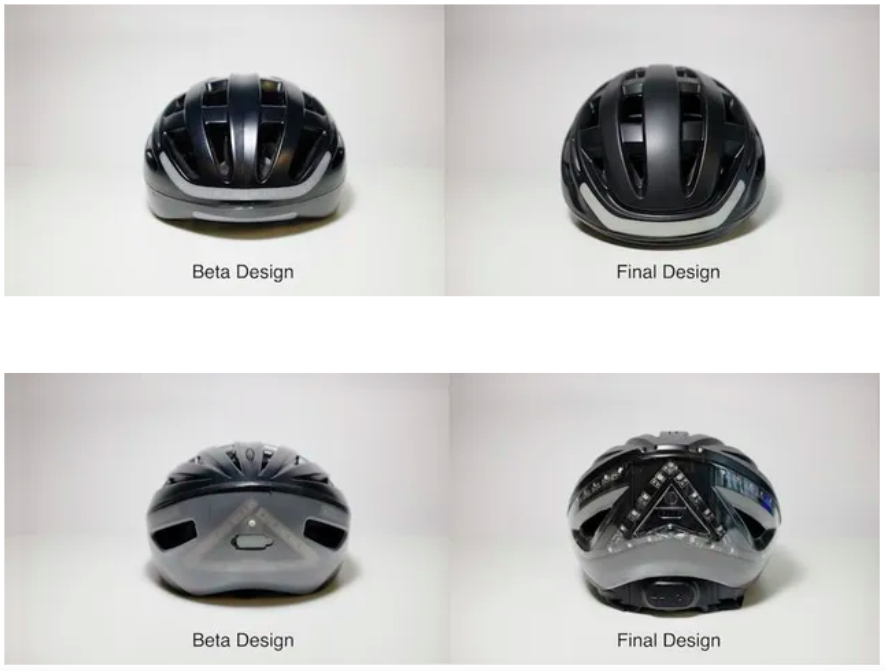 Image via Lumos
“Even though the decision set us back by nearly a year, in hindsight, it was critical to the product’s success later on,” stated Ding.
Going global
Shortly after launching Lumos’ first product, Ding and his team noticed a strong demand for its helmets from U.S. customers, he recounted.
As a result, Ding decided to expand his business, which is based in Singapore, with Amazon Global Selling.
Doing so allows Lumos to sell on Amazon.com, a place where many Americans “naturally shop”.
It also allowed Lumos to venture into other Amazon stores such as in the UK, Germany, and Australia.
According to Ding, one feature that was particularly important for Lumos is Fulfillment by Amazon (FBA):
“As a small team, we didn’t have the capacity to manage logistics on such a large scale, especially across multiple regions. FBA allowed us to focus on growing the business while Amazon handled storage, shipping, and customer service.”
Beyond operations, Ding shared that Amazon Global Selling also allowed Lumos to expand its brand internationally and enabled it to scale its mission — keeping people safe on the road— globally.
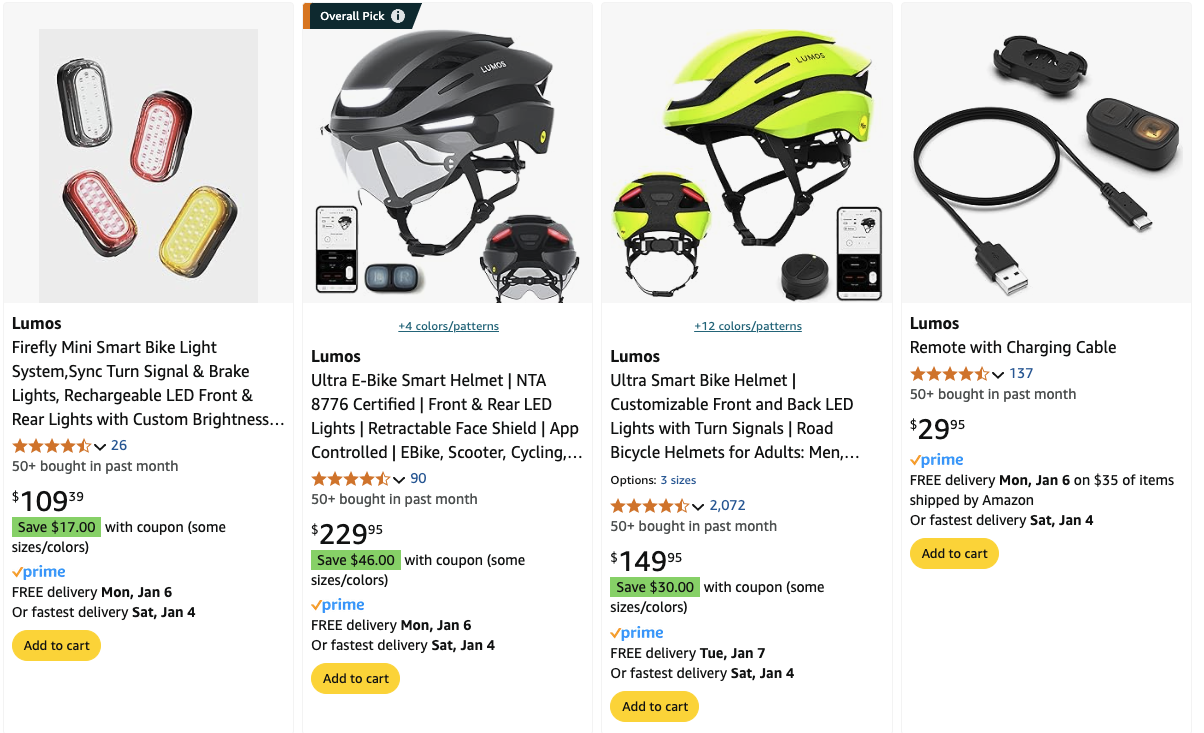 Screenshot via Amazon.com
Selling overseas thoughtfully
Another tool that helped Lumos navigate overseas was Amazon Brand Analytics, which helped Lumos understand customer search behaviour in relation to its brand and products on Amazon.com, shared Ding.
Combined with market research and customer feedback, the tool allowed Lumos to identify customers’ needs in different countries and map its products accordingly.
For instance, in countries like the U.S. and the UK, cycling infrastructure is still under development, and cyclists often share roads with vehicles, so the need for increased visibility is on the rise, said Ding.
In contrast, helmets are widely adopted and even required in some cases in countries like Australia and Japan, making it imperative for Lumos to align its products with existing safety expectations.
“By understanding local challenges and tailoring our approach to each region, we have been able to position Lumos as a trusted solution for cyclists,” stated Ding.
 Image via Lumos/Instagram
Amazon Global Selling helps self-funded start-ups as well
Ding’s appreciation for Amazon Global Selling was echoed by the co-founders of homegrown manscaping brand Bovem, Lydon Ong and Norman Teo, both 28.
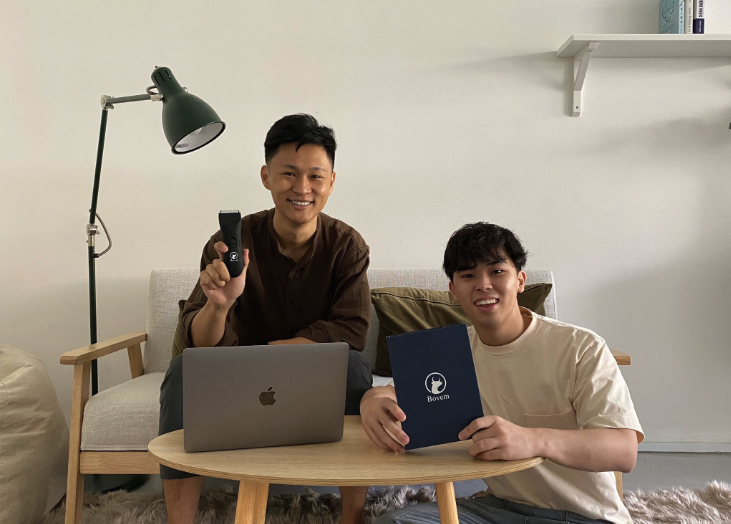 Image via Lydon Ong/LinkedIn
According to Ong and Teo, one programme that significantly contributed to Bovem’s growth was the Cross-border Brand Launchpad developed by Amazon Global Selling, in collaboration with Enterprise Singapore (ESG) and the Singapore Business Federation (SBF).
“Our dedicated account manager would constantly keep us updated on the latest U.S. shopping campaign, review our listings to make sure they are optimised, and even advise on marketing strategies that we could undertake,” shared the pair.
They also recounted an instance where their account manager helped them create “a list of recommended keywords” based on customer search volumes on Amazon.com for Bovem’s products, leveraging Amazon Brand Analytics tools.
Such support was especially important to Bovem’s overseas ventures to the U.S. As a self-funded business and small startup, Ong and Teo could prioritise their time and resources in product development and innovation instead.
Marketing right overseas
Similar to Ding, Ong and Teo also tailored Bovem’s marketing strategy to the country they are selling to.
For example, they created different visuals for Bovem’s products in Singapore and the U.S. after noticing that Singapore customers prefer detailed images packed with product features and price discounts.
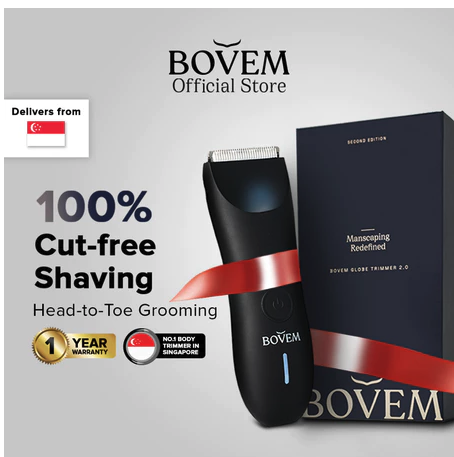 Image via Bovem
In contrast, they found that those in the U.S. respond better to clean, minimalist images with little to no text.
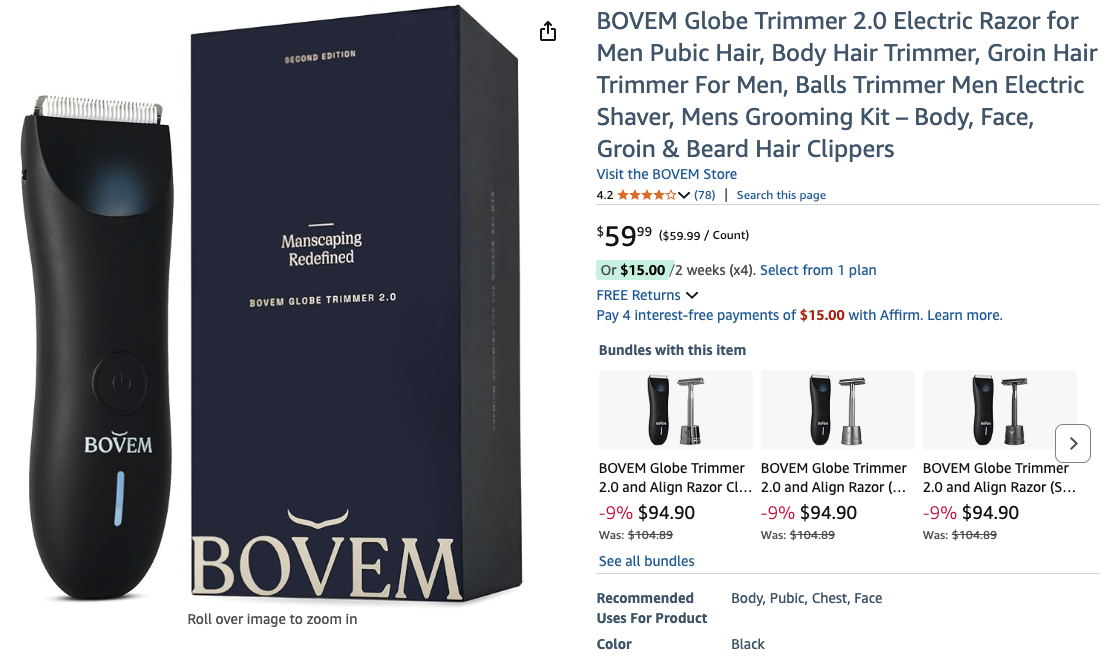 Image via Bovem
They also tested out their strategies by leveraging Amazon Global Selling’s A/B testing tools to decide which main listing images, titles, and descriptions generate the most sales conversions.
Tips for (aspiring) entrepreneurs
Looking back at his journey, Ding hopes aspiring young entrepreneurs “will not be afraid to take the first step” or “wait for the perfect conditions” to start their venture.
“The economy will always have ups and downs, and while it is important to be aware of the challenges, don’t let them paralyse you. My advice is to focus on what you can control: building something valuable, staying adaptable, and learning every step of the way,” said Ding.
Ong and Teo concurred, adding:
“In the beginning, we were always afraid to try things because we kept wondering, ‘What if it doesn’t work out?’ and ended up wasting time over-deliberating unnecessarily. Over time, we realised that it’s okay if things don’t go as planned. The faster you fail, the faster you grow. ”
As for established Singaporean brands that wish to sell their products overseas, especially in the U.S. and Europe, Ong and Teo shared that they could leverage the Cross-border Brand Launchpad programme, which is also supported by Singapore government agencies like ESG and SBF.
The three entrepreneurs interviewed also advised these brands to consider tapping into Amazon Global Selling’s global reach, which provides access to over 300 million customers, helps simplify logistics through tools like FBA, and facilitates insight and data-gathering regarding customer preferences in new countries.
More information about Amazon Global Selling can be found here.
This branded article by Amazon Global Selling gave this writer a glimpse into entrepreneurship.
Top images via Lumos/Instagram & Eu-wen Ding/LinkedIn