News

Uplifting & uniting the Malay-Muslim community in S'pore: 5 years of M³ efforts
Good progress.
March 13, 2025, 03:42 PM


In the past five years, much has been done under M³’s leadership to ensure progress within the Malay-Muslim community.
For the uninitiated, M³ is the collaboration of three key community institutions — Islamic Religious Council of Singapore (Muis), Mendaki and Mesra.
The progress and contribution to society, of course, wouldn't be possible without the trust and cooperation of the Malay-Muslim community and various partners — as noted in the ministerial speeches during the Committee of Supply (COS) debates for Malay-Muslim affairs on Mar. 10.
We take a look at the various initiatives helmed by M3, how they have benefitted relevant beneficiaries, and what lies ahead for the Malay/Muslim community in the near future.
What has been done?
At its heart, M³ aims to build a community of success through various means, such as supporting citizen-centric and last-mile help for social and educational programmes, and bringing together professionals and community leaders to contribute to local neighbourhoods.
Here’s a recap of its key initiatives:
Wakaf Masyarakat Singapura (WMS)
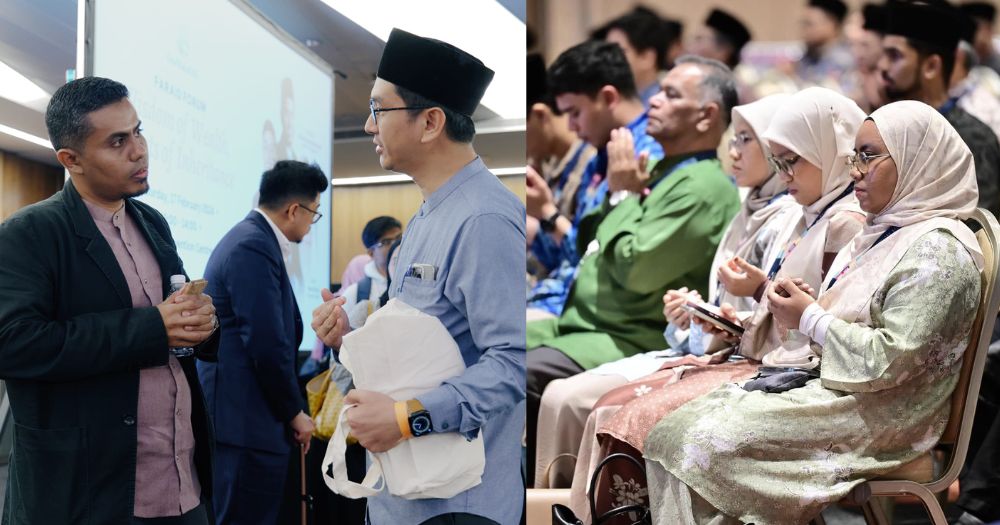
In August 2024, long-term community endowment fund Wakaf Masyarakat Singapura (WMS) was launched by the Islamic Religious Council of Singapore (Muis) as a means to pay for future community needs.
The fund is pooled by gathering charitable contributions from the Muslim community in Singapore to support mosques and madrasah land lease renewals, development of the Asatizah sector, and socio-religious programmes to uplift the community.
Bersamamu
For Muslim couples in Singapore, the Bersamamu programme supports those in their first two years of marriage by connecting them to a kadi (solemniser) and female asatizah providing marriage guidance and other forms of assistance.
Established in July 2019, it started as a ground-up effort under the guidance of former Registry of Muslim Marriages (ROMM) registrar Ustaz Pasuni Maulan.
Mendaki Tuition Programme (MTP)
The Mendaki Tuition Programme (MTP), is an affordable tuition programme to support Muslim students with school and national exams.
The programme was expanded in 2024 to incorporate changes in the education system and trends, including subject-based banding and Artificial Intelligence (AI) tools.
KelasMateMatika (KMM)
To better support preschool children and their families, KMM aims to empower parents to support their children’s education journey, beginning with Mathematics.
In the programme, parents and preschool children aged four to six years old participate in interactive activities to learn basic numeracy skills.
Project Dian@M³
Launched in 2022, the Dian Ambassador programme aims to support families in public rental flats with children aged three to six years old through initiatives such as home-based learning activities.
Six towns, namely Chua Chu Kang, Jurong, Geylang Serai, Jalan Besar, Bedok and Tampines, have benefitted from the programme so far.
How have these helped the community?
M³ has anchored its efforts in five areas:
1) Supporting families through marriage, parenthood and early childhood
Programmes like Bersamamu have supported married Muslim couples throughout their first two years of marriage, benefitting about 30,000 couples as of August 2024.
In supporting households with children, the MTP has expanded to 100 centres with nearly 9,700 students enrolled in 2024, integrating AI tools into the curriculum to prepare students for an AI-driven future.
Additionally, KMM has benefitted over 12,000 parents and children since 2020, with nine in 10 KMM children entering primary school without additional learning support.
2) Supporting vulnerable individuals and families
Initiatives like Project Dian@M³ will utilise 900 volunteers from the community and conduct over 160 ground-up initiatives in 11 M³@Towns, estimated to benefit more than 65,000 residents.
It will be expanded to five more towns — Marsiling-Yew Tee, Nee Soon, Pasir Ris-Punggol, Toa Payoh, and Woodlands — to reach 1,000 more households.
3) Empowering and mentoring our youths
The Tunas Bersama M³ leadership programme has trained emerging leaders, with the second cohort of 23 participants set to graduate in December 2025.
Additionally, Professional Networks (PN) initiatives in finance, engineering, and law have engaged professionals in mentorship and career development activities.
4) Employment and employability
Over 25,000 workers have benefitted from career fairs, job matching, and skills development programmes.
Efforts such as the #amPowered mentoring programme matched nearly 1,400 students to mentors in 2024, fostering career readiness.
5) Creating a healthy community for all
Under this focus, M³ carried out the Jaga Kesihatan, Jaga Ummah (JKJU) network which saw close to 70,000 participants in 2024, reflecting a sharp increase from 40,000 in 2023.
Community-led Saham Kesihatan programmes also grew by 60 per cent, engaging over 800 participants in physical and mental health initiatives.
Through such initiatives, 80 per cent of Malay residents have engaged in sufficient physical activity weekly.
Initiatives that addressed gaps, uplifted the community
Over the past five years, these initiatives have successfully addressed critical gaps within the community.
In education, tuition support and mentorship programmes have boosted academic performance, providing students with a strong foundation for the future.
In employment, thousands have benefited from career guidance and upskilling programs, ensuring better job opportunities and financial security.
Programmes like Bersamamu and Project Dian@M³ have supported Muslim couples with proper marriage guidance and also eased the cost of living for families in need.
What's next?
So what’s next for the Malay-Muslim community?
During his speech at the COS Malay-Muslim affairs debates, Masagos highlighted how Singapore’s Muslim religious sector is also making significant progress.
More than 80 per cent of asatizah in mosques and madrasahs now receive salaries that meet the Common Salary Guidelines (CSG), with average salary increases of five to 12 per cent.
He added that the new Singapore College of Islamic Studies (SCIS) is being developed with a Board of Governors overseeing its governance and an Advisory Panel set to convene in June 2025. The first cohort consisting of 60 students will begin their programmes in 2028.
On participation in community health programmes, Maliki noted in his COS speech that there has been a general increase in 2024.
Programmes like JKJU and Saham Kesihatan saw sharp increases in participation, while HealthierSG enrolment rate among Malays rose from 30 per cent in May 2024 to 45 per cent in February 2025.
Community members have also been gathered to contribute back to society, in programmes such as Project Dian@M3.
Maliki announced that M3@Towns will also come together to raise S$600,000 for humanitarian relief for Gaza, in collaboration with non-profit organisation Rahmatan Lil Alamin Foundation (RLAF) and through ground-up initiatives in conjunction with the fasting month of Ramadan.
There are also new initiatives like the “60 for 60” programme led by PA Mesra under SG60 Bersama.
The initiative aims to bring together 60 professionals aged 60 and above, to provide guidance to 60 Malay-Muslim secondary school student leaders from neighbourhood schools.
Looking ahead, the Malay-Muslim community is well-placed to build on these foundations, with the collective effort of individuals, organisations, and community leaders shaping meaningful initiatives that address evolving challenges and opportunities.
Top photos via Wakaf Masyarakat Singapura & Islamic Religious Council of Singapore (Muis)/Facebook