News

CAAS to inject additional S$1 billion to strengthen support for Changi Airport
This is on top of the S$5 billion top-up announced by Prime Minister Lawrence Wong in his Feb. 18 Budget speech.
March 05, 2025, 04:10 PM
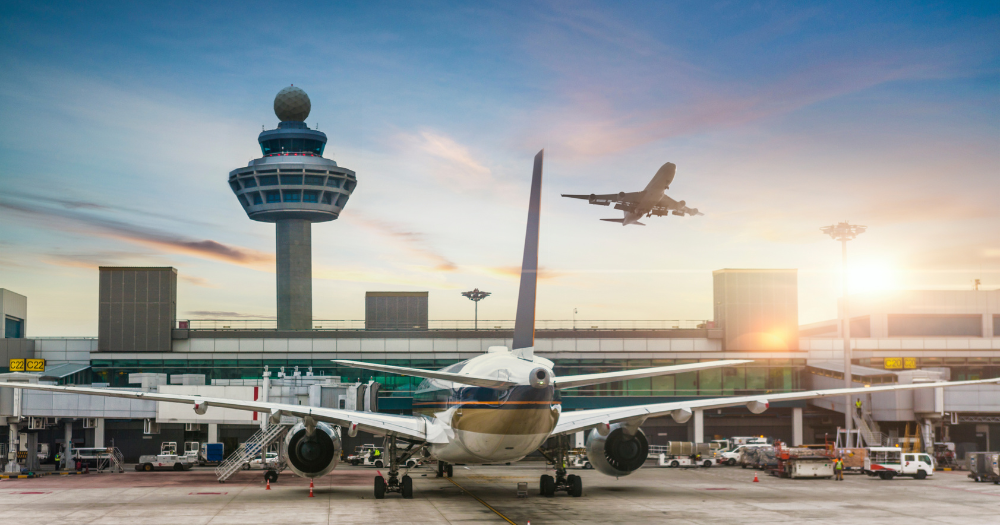


The Civil Aviation Authority of Singapore (CAAS) will be committing an additional S$1 billion over the next five years to strengthen its support for Changi Airport, said Minister for Transport Chee Hong Tat in Parliament on Mar. 5, during the ministry's Committee of Supply debate.
This is on top of the S$5 billion top-up to the Changi Airport Development Fund announced by Prime Minister Lawrence Wong in his Feb. 18 Budget statement.
The additional S$1 billion will be used to develop schemes in four areas of connectivity: infrastructure, innovation and technology, and manpower.
Developing schemes in four areas
In the area of connectivity, the Ministry of Transport aims to build a larger network of over 200 city links by the mid-2030s from the current network of over 160 links, said Chee.
In the area of infrastructure, CAAS plans to accelerate the development of common-use infrastructure that will benefit all airport users.
In the area of innovation and technology, CAAS plans to develop a 10-year technology roadmap to guide technology planning and turn research and development into operational capabilities that can be used across the aviation ecosystem.
In the area of manpower, CAAS plans to grow a quality workforce and invest in the upgrading of workers' skills while simultaneously redesigning jobs to attract and retain local workers.
CAAS will work with companies and union leaders, government agencies, and international partners over the next few months to grow these areas.
T5 will increase Changi's capacity
"The future of aviation is bright," said Chee.
"As an international business centre, and a global air hub, Singapore is well-placed to capture these opportunities."
The upcoming Terminal 5 at Changi Airport is slated to open in the mid-2030s.
T5 will increase Changi's capacity by 50 million passengers per annum on top of the current 90 million passengers per annum, boost our hub status, and create new employment opportunities.
On concerns that T5 would result in more flights and higher aviation emissions, Chee said that Singapore complies with the United Nations Framework Convention of Climate Change.
He added that Singapore is also committed to contributing towards emission goals set by the International Civil Aviation Organization (ICAO) and the International Maritime Organization (IMO).
"Our approach is to enable our aviation sector to grow and improve environmental sustainability concurrently," said Chee.
Last year, the CAAS launched the Sustainable Air Hub Blueprint, which sets out Singapore's medium and long-term targets for international and domestic emissions.
Read more
Top image via Canva