



News


3 areas where S'pore-China AI cooperation could be very fruitful: Josephine Teo
Solve practical problems, strengthen AI governance and promote trade.
November 23, 2026, 11:40 PM
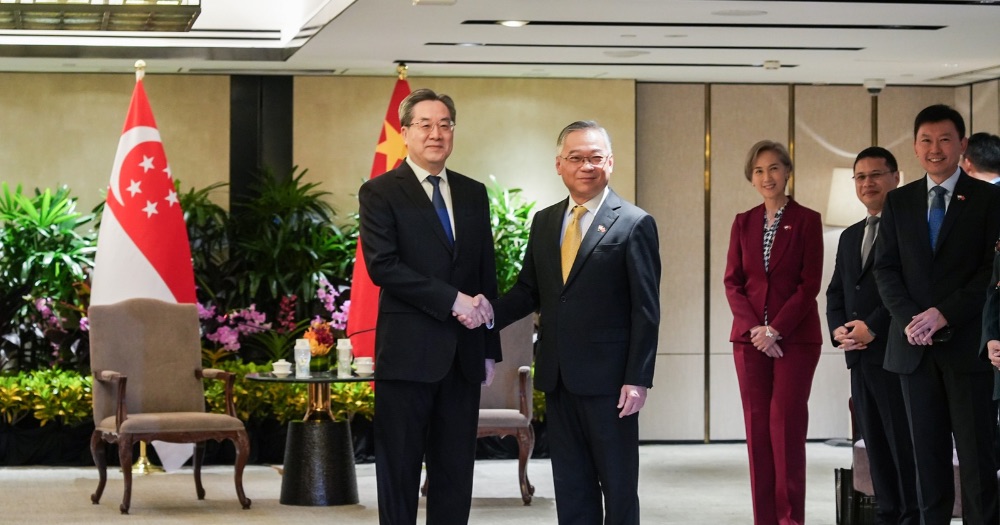
Photo by MDDI.


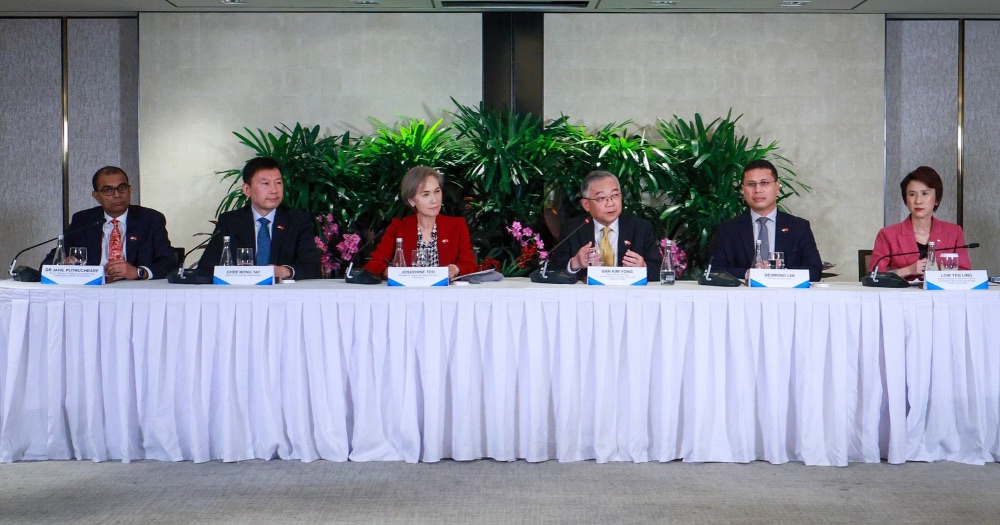
Minister for Digital Development and Information Josephine Teo shared three ways where AI cooperation between Singapore and China could be very fruitful at a Nov. 23 media wrap up interview after the 22nd Joint Council for Bilateral Cooperation (JCBC) meeting.
Teo was answering a media question on how Singaporeans and businesses can benefit from such collaborations.
Solve practical problems
Firstly, AI can solve practical problems.
Minister for Education Desmond Lee is leading Singapore-China bilateral efforts on embodied AI through the Suzhou Industrial Park (SIP).
Embodied AI is an emerging sector and the Singapore government sees opportunities to deepen collaboration.
A new MOU was signed between Singapore's JTC and the SIP Administrative Committee.
"Both sides will help embodied AI companies expand internationally, and also promote two-way investments. The collaboration will also create opportunities for companies to develop and test new technologies in real-world settings, while facilitating exchanges to share expertise as well as to learn from one another," Lee said.
The collaboration on embodied AI between China and Singapore is an example of "considerable potential" in areas which both nations have deep interest in.
AI-enabled robots can also help companies in Singapore to overcome manpower constraints in labour-intensive tasks such as quality inspection and predictive maintenance, she added.
On a broader level, Small and Medium Enterprises (SMEs) can also use AI to "stretch the boundaries of their resource availability", and many of these use cases would already have been experimented upon in China, she said.
The Chinese companies are also looking for willing partners not just in Singapore but also in Southeast Asia.
Strengthen AI governance
Both countries "place a high premium on maintaining public trust" when it comes to AI, Teo said.
"In other words, we want to work on ensuring that the way AI is deployed in our economy, in our society, reach a certain level of safety, and there is a responsible attitude by the developers as well as the deployers, so that we can sustain a high level of trust in the use of this technology."
Singapore and China have been exchanging experiences on AI governance.
Most recently, they have discussed the guardrails that should be applied to the use of agentic AI, incident reporting and content labelling.
Singapore and Chinese officials will also be embarking on joint testing and technical exchanges to improve AI governance.
Make cross-border businesses and trade easier
The final potential in harnessing AI to improve lives is the ability to make businesses and trade easier to operate across borders.
Besides more cross-border data flow, processing time can be reduced with the use of AI.
"Many aspects of trade today that are still very paper-based, still very laborious, and there is a potential for us to think about digital trade, as well as you know methods to try and reduce the processing time."
Reducing the time spent on paperwork can potentially help businesses reduce costs, foster transactions and reach new customers.