



Environment


COP31 climate talks collapse without a deal over fossil fuels, 1st time in 17 years
44 hours of overtime talks still could not bridge the divide over fossil fuels.
November 23, 2026, 07:20 PM
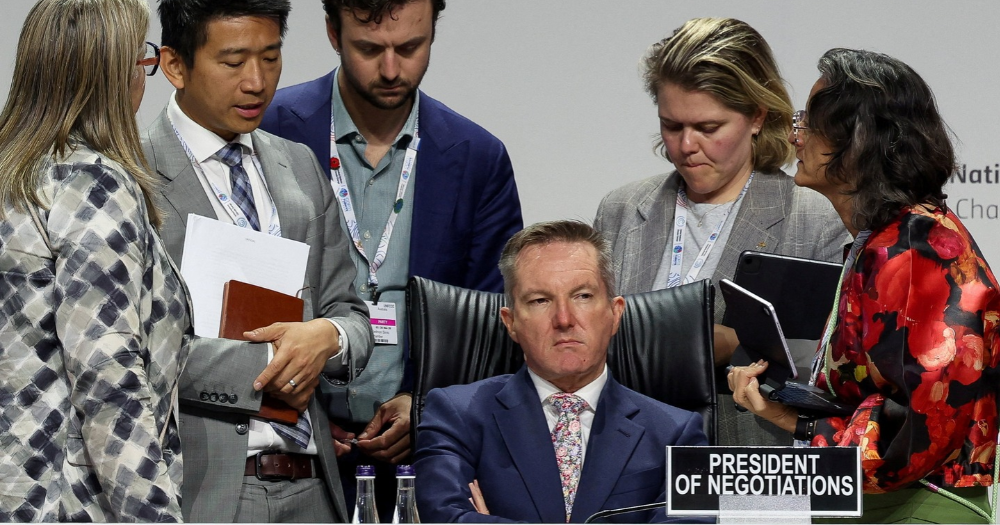
Photo via Reuters.


The annual United Nations (UN) climate summit, COP31, has ended without a deal after nearly 200 countries failed to agree on a final climate pact.
The conference, held in Antalya, Türkiye, was supposed to wrap up on Friday (Nov. 20).
Instead, delegates negotiated for 44 hours into overtime, making it the longest-running UN climate summit in history, before talks finally broke down on Sunday (Nov. 22).
It is the first time a COP summit has collapsed without a deal in about 17 years, the last time being 2009 during the conference in Copenhagen.
What caused the breakdown
The core reason behind the breakdown was fossil fuels.
An early draft of the agreement on Monday (Nov. 16) mentioned “fossil fuels” six times, BBC reported.
However, oil-producing nations pushed back strongly against the wording.
By the time a compromise draft (dubbed the "Antalya Pact") was presented in the early hours of Sunday, all explicit mentions of fossil fuels had been stripped out, CNN reported.
That proved to be a dealbreaker for the European Union (EU) and climate-vulnerable nations, including Panama and the Marshall Islands, which formally objected to the text.
“It is unconscionable that we would have a climate pact that makes no mention of fossil fuels,” Irish Climate Minister Darragh O’Brien, representing the EU, told the closing plenary.
Developing nations also criticised the draft for lacking concrete financial commitments and clear baselines from richer countries to help poorer ones adapt to worsening extreme weather.
“No ambiguity in the science”
In a strongly-worded statement following the collapse, outgoing UN Secretary-General António Guterres said he was “deeply disappointed” by the outcome.
“There may be no consensus in the negotiating room. There is no ambiguity in the science,” Guterres said.
He accused “powerful fossil fuel interests” of distorting science, delaying policy and blocking action while raking in huge profits, BBC wrote.
“We can’t put out the fire while pouring fuel on it,” he added.
On the other side of the divide, major oil-producing nations defended their positions.
Saudi Arabia, speaking for the League of Arab States, argued that all climate solutions, including carbon capture and storage (CCS), must stay on the table, noting that Arab states accounted for a small share of historical emissions.
Russia warned against moving away from fossil fuels too quickly, claiming it would lead to “fuel poverty”.
COP31 negotiations chair Chris Bowen, Australia’s climate minister, admitted there were “unbridgeable red lines” amid “the most complicated and fraught geopolitical environment in living memory”.
Why this matters
COP31 was the first UN climate summit to formally confront the reality that the world is set to overshoot the 2015 Paris Agreement target of limiting global warming to 1.5°C above pre-industrial levels.
According to UN estimates cited by the BBC, current government policies put the planet on track for around 2.8°C of warming by 2100.
While the collapse of the main pact does not cancel previous climate commitments, such as the 2023 COP28 pledge to transition away from fossil fuels, it raises serious doubts about whether the UN’s consensus-based system can deliver in an increasingly divided world.
UN climate chief Simon Stiell acknowledged that the process “fell short” and said he would seek advice on potential reforms ahead of COP32, which will be held in Addis Ababa, Ethiopia, in November 2027.
What Singapore said
Singapore’s Minister for Sustainability and the Environment, Grace Fu, had warned that talks at COP31 would be tougher due to heightened geopolitical tensions, inflation and energy security concerns, CNA reported.
Speaking to the media in Antalya on Nov. 20, 2026, Fu noted that slowed global momentum on climate action directly impacts how far and fast Singapore can decarbonise.
"Singapore expressed the hope that the setback would not pull countries apart, and encouraged all countries to strengthen their resolve to work constructively with each other," Fu said in her Facebook post.