



News


5 new power plants & Saudi oil storage at Jurong Rock Caverns: Tan See Leng outlines plans to enhance S'pore's energy security
Singapore will also be looking at low-carbon energy options such as geothermal and nuclear energy.
October 26, 2026, 12:11 PM
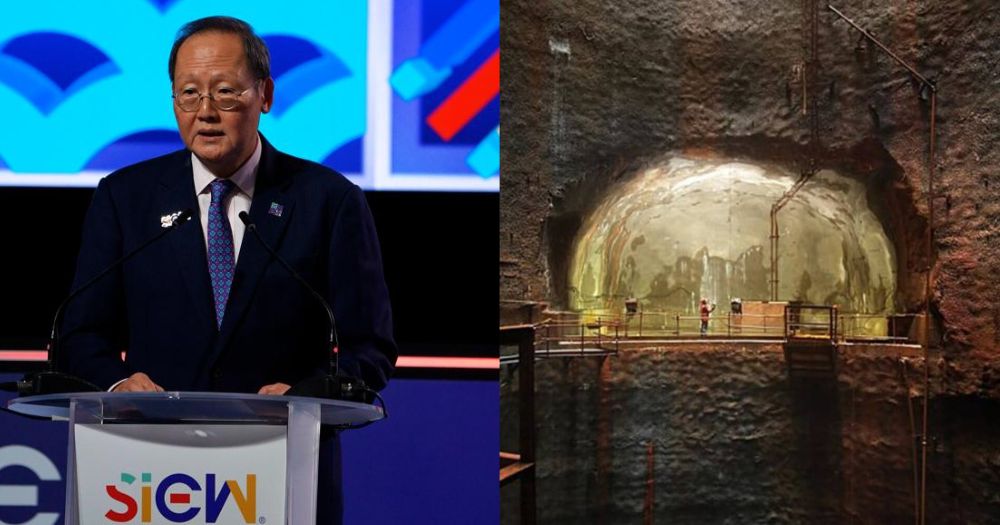
Top photo from Aiman Nazri/Mothership and JTC/Website


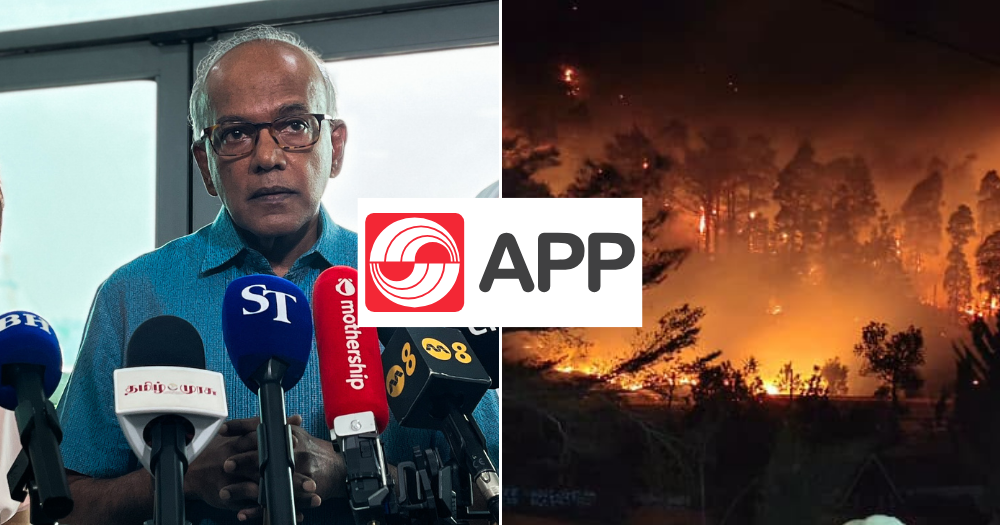
"Singapore will not be able to insulate ourselves from global or regional shocks", said Minister for Energy, Trade and Industry (Energy and Industry), Tan See Leng, in his Singapore Energy Lecture at the start of the Singapore International Energy Week (SIEW) on Oct. 26.
Tan elaborated that in times of a "supply crunch, countries may also prioritise their own domestic needs", adding that the trend of resource nationalism "particularly concerning" especially when it undermines contracts and agreements.
At SIEW, Tan revealed multiple energy-related partnerships and plans to enhance Singapore's energy security, keeping in mind the four "Cs", which are confidence, competitiveness, carbon, and connectivity, as well as cost.
His lecture at Marina Bay Sands comes a day after a doorstop where he answered questions on Singapore's electricity prices after Indonesia cut its gas exports.
He told Singapore to "keep calm and carry on" as "we cannot predict every disruption, but we will always ensure that Singapore is prepared for them."
Newly announced partnerships and plans
Singapore and Saudi Arabia have announced their joint intent to store Saudi crude oil at the Jurong Rock Caverns from the second half of 2027, said Tan.
Saudi Aramco will also sign a Memorandum of Understanding (MOU) with the Energy Market Authority (EMA) and JTC Corporation with the aim of concluding negotiations in the coming months.
Tan added that five new power plants will come online between 2026 and 2031, which will grow Singapore's overall generation capacity by 26 per cent from around 12 gigawatts (GW) today.
More underground power cables are also being placed.
He noted that the power grid is also being actively expanded to support industrial demand in areas like Changi, Pasir Ris and Paya Lebar, with seven new substations to be built by 2031.
EMA will also release its Five-Year Energy Infrastructure Plan on Oct. 26.
Tan said, "This will be the most significant build-up of our energy infrastructure in decades."
Low-carbon energy pathways
Tan stated that Singapore must "pursue every possible low-carbon energy pathway" to lay a foundation for a "future 2050 low-carbon energy mix".
He said that solar energy remains "Singapore's most viable indigenous renewable energy source" and the target of "three gigawatt-peak of solar deployment by 2030" is on track.
Decarbonisation and its technologies are prioritised with an S$800 million Decarbonisation Grand Challenge, added Tan.
In his speech, Tan also announced the launch of the Power Decarbonisation Funding Initiative, with "S$75 million to develop low-carbon technologies for cleaner and more secure power generation."
He also cited other low-carbon energy options such as hydrogen, the possibility of piloting ammonia direct combustion in Jurong Island and the upcoming Combined Cycle Gas Turbines that can take in a blend of natural gas and hydrogen.
Nuclear energy & related development programmes
On the topic of nuclear energy, Tan stated that Singapore will undertake the International Atomic Energy Agency (IAEA) Integrated Nuclear Infrastructure Review (INIR) Mission to assess Singapore's nuclear capabilities.
He announced a new Nuclear Manpower Development Programme for the public sector to facilitate on-the-job exposure for Singaporean public officers at leading global nuclear organisations.
A new Nuclear Manpower Development Programme (Industry) will also support Singapore's broader nuclear ecosystem.
To grow Singapore's nuclear talent pipeline, Tan said the National University of Singapore (NUS) and Nanyang Technological University (NTU) are working towards launching a joint Master’s programme in nuclear engineering in 2027.
Geothermal energy
Tan shared that Singapore launched a non-invasive geophysical survey in 2025, and the consortium of consultants estimated that "the technical potential of geothermal energy for power generation is more than 60 times our annual electricity consumption of around 60 terawatt-hours (TWh)".
He noted that following these findings, the EMA will appoint an expert team to study the feasibility of deploying geothermal power plants in Singapore.
However, Tan cautioned that the process "will not be straightforward".
"As our geothermal resources are located several kilometres underground, the amount of electricity we can eventually generate will depend on the cost and technical feasibility of extracting these resources, as well as the pace of advances in deep drilling technology."
Connected regional grid
Tan also emphasised the need to deepen connectivity with Singapore's partners, citing a connected regional grid.
"EMA will award the conditional approval to Sembcorp Utilities to import up to 1.3GW of renewable electricity from and through Peninsular Malaysia to Singapore."
He elaborated that Sembcorp also intends to source low-carbon electricity via offshore wind from Vietnam and solar power from Malaysia.
Managing the balance between decarbonisation and costs
Concluding his lecture, Tan said Singapore "must therefore strike the right balance".
"Decarbonisation will come with costs, but we will not pursue decarbonisation at all costs. It must never come at the expense of our livelihoods and system security."
He stated that the government will ensure its market frameworks do not place an "undue burden" on households and businesses.
"We will continue to provide targeted support, including U-Save rebates to help households manage utility bills, as well as grants to help businesses improve energy efficiency and reduce costs, such as the Energy Efficiency Grant and Resource Efficiency Grant for Emissions."