



Court


SGH neurosurgery head did not report patient’s death to coroner, says maybe his heart overruled brain
He said he wanted to show compassion to the patient’s family and give them closure.
October 15, 2026, 04:23 PM
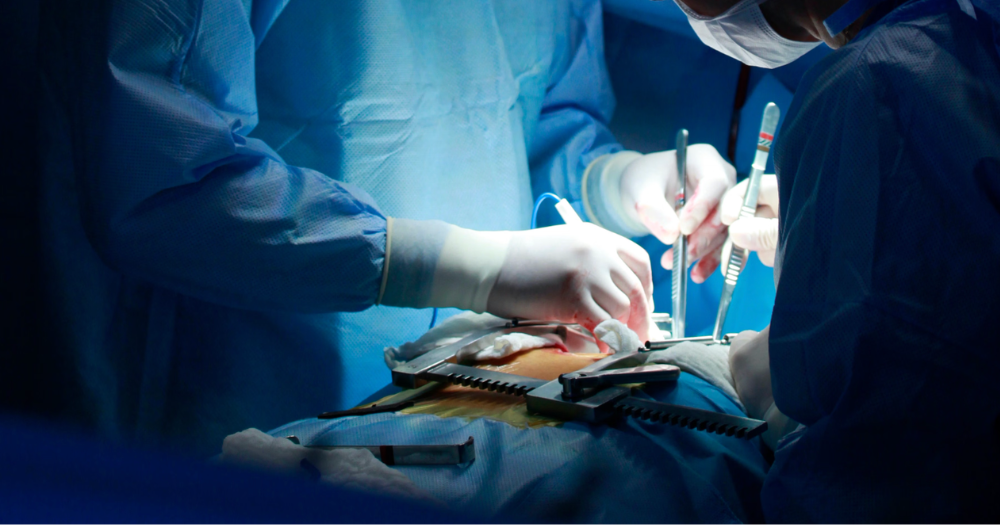
Top image via CARLOSCRUZ ARTEGRAFIA/Pexels


The head of neurosurgery at Singapore General Hospital (SGH) told a coroner’s inquiry that compassion for a patient’s family influenced his decision not to report her death to the coroner.
Jai Prashanth Rao, who heads the National Neuroscience Institute’s (NNI) neurosurgery department at SGH, is being investigated over his failure to report the death as required under the Coroners Act, CNA reported.
A coroner's inquiry on Oct. 14 revealed that 75-year-old Tan Suan Lin had died six days after undergoing surgery by Rao to remove a brain tumour.
An internal NNI review had flagged the case about a year after Tan's death and a police report was lodged. No autopsy was performed because of the delay.
Changed his mind about reporting death
Rao reportedly said he initially told Tan’s family that her death would need to be reported to the coroner.
However, he later changed his mind and issued a death certificate instead, reported CNA.
Explaining his decision, Rao said: “Probably my heart overruled my brain.”
Tan’s husband had initially been reluctant for an autopsy to be carried out, but had tried to accept the reasoning after it was explained to him.
Her daughter repeatedly expressed that she did not want her mother to undergo an autopsy and wanted her to retain “dignity in death”, Rao stated, according to CNA.
Rao said he did not press the family further, explaining that he wanted to show compassion and give them closure.
Tan's death certificate gave the cause of death as "malignant neoplasm – brain, unspecified", which Rao said was meant to show she died from the tumour. Rao said a junior doctor had signed it.
According to CNA, an HSA forensic pathologist indicated a possible cause was bleeding complications during surgery.
Thought only deaths within 24 hours of surgery had to be reported
Rao also reportedly claimed he had mistakenly believed that reporting to the coroner was mandatory only for deaths occurring within 24 hours of an operation.
He could not recall where that understanding had come from.
When State Coroner Adam Nakhoda asked whether he had undergone training on when deaths should be reported, Rao said such training was given when doctors were “very junior”.
According to CNA, the surgeon said he has since refreshed his understanding of the requirements and acknowledged that Tan’s death should have been reported.
Under the Coroners Act, anyone who becomes aware of a death that is, or appears to be, reportable must inform the police as soon as reasonably practicable.
This includes deaths linked directly or indirectly to medical treatment or care, as well as cases where the cause or circumstances of death are unknown.
Those who fail to report such a death without reasonable excuse may face up to one month’s jail, a fine of up to S$1,500, or both.
Surgery complicated by severe bleeding
Rao operated on Tan on Jan. 3, 2024.
The surgery was going as planned until the team reportedly struggled to control the bleeding.
Tan lost around three litres of blood, and her brain began to swell.
Rao ended the surgery and closed the skin before updating Tan’s husband and daughter on what had happened and telling them that her chances of recovery were poor.
Tan was then moved to the intensive care unit, where her condition worsened.
Tan died on Jan. 9, 2024.
Rao testified that he could not explain the cause of the swelling, but based on his medical expertise, it appeared to him to be a seizure, CNA reported.
Expert says case should have been reported
A state-appointed independent expert witness reportedly said Tan’s death should have been reported to the coroner.
The expert said reporting such deaths was something doctors were taught from the time they entered the speciality.
However, as a fellow surgeon, he said he could empathise with Rao’s decision-making, CNA reported.
The expert said the main surgeon carries “the most emotional burden” and that it was “entirely reasonable” for emotions to sometimes affect judgment.
The coroner will deliver his findings at a later date.