



Abroad


'Nonsensical' claims & 'patently untrue', do the accusations of Indonesia's former trade minister hold up?
A former Indonesian minister returns to social media to stridently, but confusingly defend his country.
October 24, 2026, 01:10 PM
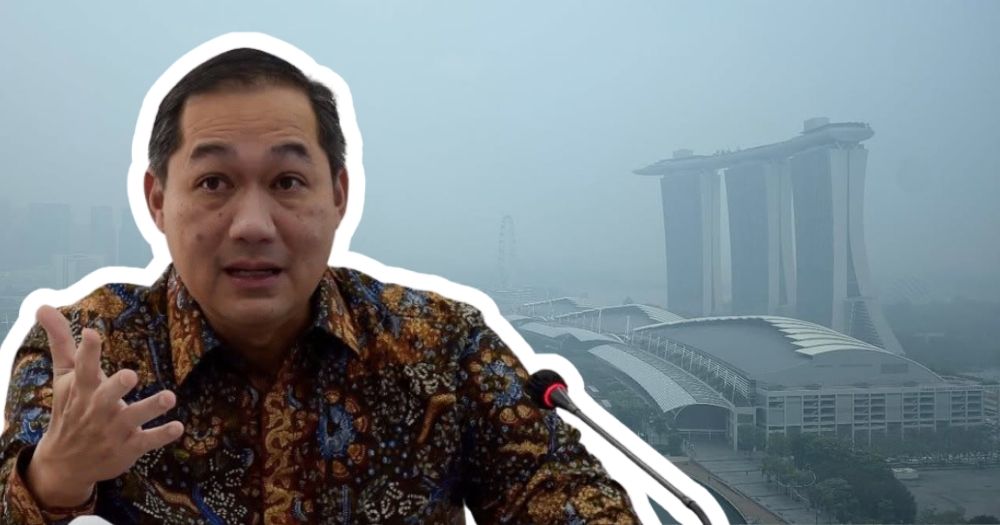
Image via Mothership & Muhammad Lutfi/Facebook


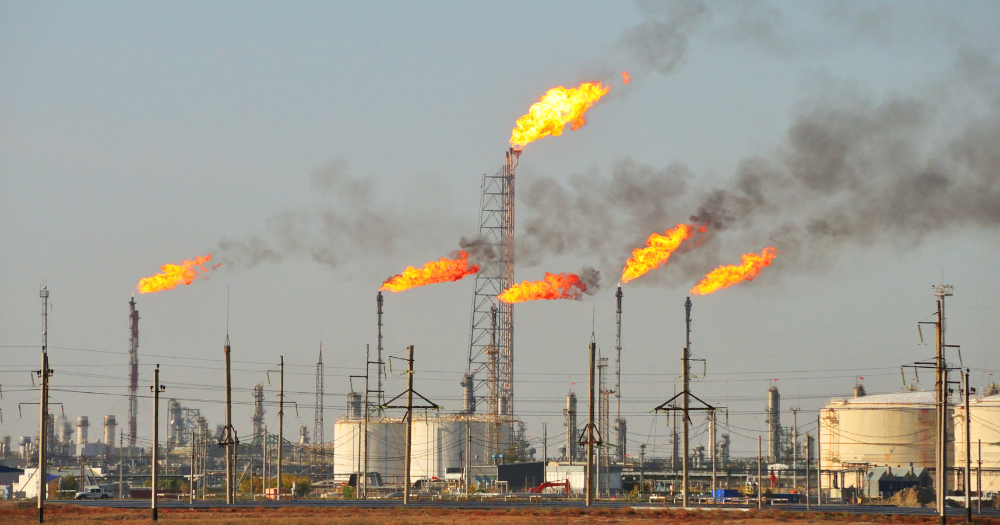
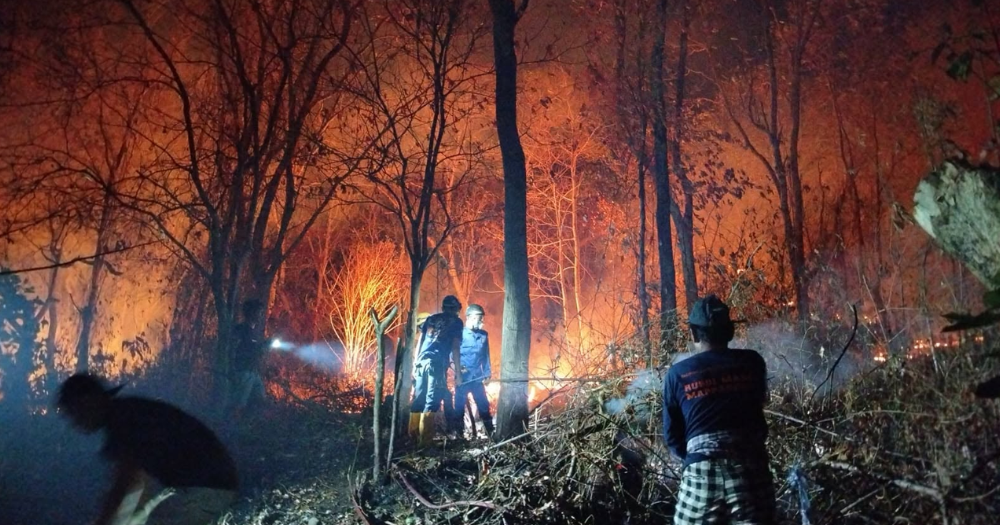
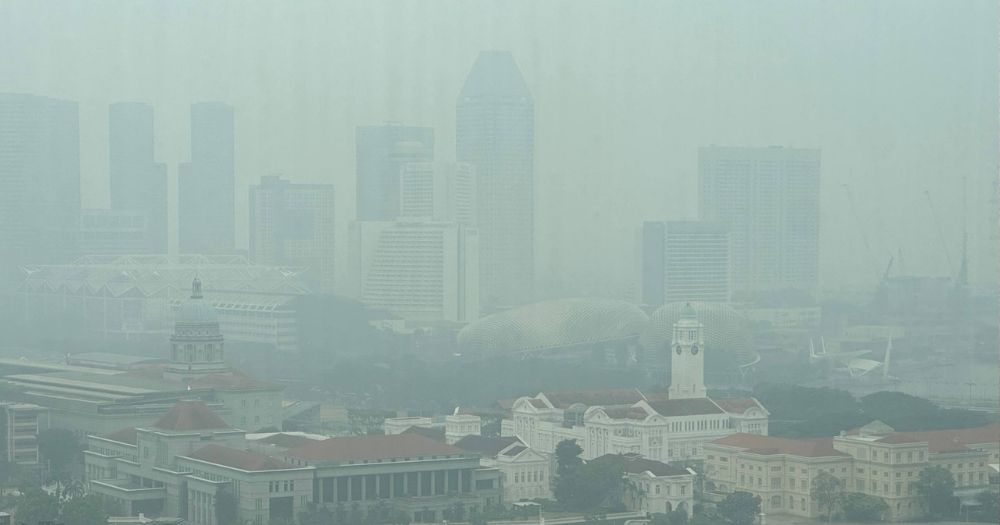
With the haze affecting Singapore for well over a month now, and conditions in Kalimantan and Sumatra, where the haze originates, resulting in dystopian scenes, there has been no shortage of people casting about for parties to blame.
Worse yet, the Kalimantan and Sumatran forest fires aren’t even the only major crises the country is facing this week, with MSCI, a global index provider, threatening to remove Indonesia from its emerging-market classification, a devastating move.
With the twin crises, one man has found a solution: former Indonesian trade minister and ambassador to the United States Muhammad Lutfi suggests blaming Singapore and Malaysia.
But who is Lutfi, what is he accusing Singapore of, and why are his own countrymen calling his claims “nonsensical”?
Two-time Lutfi
Muhammad Lutfi served as Indonesia’s trade minister in two stints, once in 2014, and again between 2020 and 2022.
His first stint came at the end of former Indonesian President Susilo Bambang Yudhoyono's final term, leaving office in October 2014 as incoming president Joko “Jokowi” Widodo appointed his own cabinet.
But it was his second stint that ended in a bit of controversy.
Lutfi’s return to cabinet came as part of Jokowi’s COVID reshuffle.
He was ambassador to the United States at the time, called back after a few months to fill the trade role.
When he was named ambassador to the US months earlier, The Diplomat wrote that Lutfi was described as a “seasoned player in business”, noting that he had interests in “finance, mining, and media.”
Palm oil mafia
But he was himself reshuffled out of the cabinet within two years, during a crisis involving rising domestic palm oil prices as reported by the South China Morning Post in 2022.
Lutfi tried to get palm oil prices back under control, with the administration going as far as to enact an export ban on palm oil, which did not seem to solve the problem and shocked global markets.
Earlier, he had blamed an amorphous “palm oil mafia” and speculators for exploiting high palm oil prices, as reported by Reuters.
He did so during a “heated” six-hour parliamentary hearing, where he was accused of “panic policymaking” after his ministry had changed regulations six times in less than three months.
At the time, the SCMP spoke to a local expert, Dodi Ambardi from Gadjah Mada University in Yogyakarta, who said that the trade ministry under Lutfi’s leadership had been accused of “flip-flopping” on policy and that it “revealed chaotic policymaking.”
Ambardi suggested that this was a relevant consideration in Lutfi’s removal, although he also acknowledged that Lutfi was a technocratic hire and had no political party, meaning that his removal would lack political consequences.
But that was not the end of the saga.
Questioning in corruption case
In 2023, Lutfi was questioned by Indonesia’s Attorney General’s Office as a witness in a corruption case related to export permits for crude palm oil.
The Jakarta Post said that on Aug. 9, 2023, Lutfi was questioned for eight hours, and that the summons was his second, as he had missed an earlier summons ostensibly due to his wife needing to visit the doctor.
The case concerned allegations that export permits for crude palm oil had been improperly issued despite domestic shortages between 2021 and 2022.
Five individuals were eventually convicted, resulting in their being sentenced to imprisonment for between five and eight years, most notably Lutfi’s director-general of foreign trade.
Social media flurry
Lutfi was active on social media, posting short clips of himself giving opinions and campaigning for then-candidate Prabowo Subianto, who would eventually become Indonesia’s president, but appears to have stopped posting around October 2024.
His Instagram account covers his time as minister, while his TikTok account postdates that time.
That changed on Oct. 19, when he returned to the platforms with a flurry of posts, seven videos in four days.
The first was a screed targeting the Singapore government and Minister for Sustainability and the Environment Grace Fu.
He also took aim at the "architect of Singapore's legal enforcement", Senior Minister K Shanmugam, daring him to take action against the "billionaires" and large companies headquartered in Singapore.
This was despite Shanmugam having declared on the same day Singapore's intention to use "every legal and regulatory lever at [its] disposal to exert pressure where it matters".
Malaysian politicians too
In several of the videos, he takes aim at not just Singapore, but also Malaysia, saying that Indonesia was being made a “mockery” by a “neighbouring country that has enjoyed our agricultural produce for decades.”
He’s also taken aim at Malaysian parliamentarian and former youth minister Syed Saddiq, sharing clips of Syed speaking in parliament, accusing him of exploiting the haze for political points.
Syed replied by accusing Lutfi of misrepresenting what he had said, and of cutting his speech “to the point that you cut out the truth.”
"Nonsensical"
Lutfi has also decided to lay the blame for Indonesia’s other crisis, that of its stock market, squarely at Singapore’s feet.
He has accused Singapore’s state investors Temasek and GIC of instigating a recent stock market rout, and pressuring global index provider MSCI to threaten to downgrade Indonesia’s market status, something that both Temasek and GIC denied.
According to Bloomberg, Fock Wai Hoong, Temasek Global Investments’ head of Asia-Pacific excluding China and India, said Lutfi’s accusations “have no basis and are patently untrue.”
But it's not just the two Singaporean state investors that are saying that Lutfi’s accusations make no sense: a former deputy foreign minister, Dino Patti Djalal, called the conspiracy theory “nonsensical", though he did not name Lutfi specifically.
Dino, coincidentally, served as deputy foreign minister around the same time as Lutfi's first ministerial stint in 2014, and was also an ambassador to the United States.
He said Singapore was a country with “goodwill, trust, and a long-tested track record of cooperation with Indonesia,” pointing out previous occasions where Singapore had aided Indonesia, such as during the Covid-19 pandemic or the 2004 Indian Ocean Tsunami.
He also noted the several Singaporean investments in Indonesia, and that Singapore had a vital interest in the economic stability of Indonesia as it was affected by crises in its larger neighbour.
Scrutiny?
But do Lutfi’s accusations stand up to scrutiny?
It really depends, because Lutfi makes a flurry of accusations over several videos.
On the one hand, he says that “Singapore has no jurisdiction in Indonesia, and you know it," which no one is denying.
He then goes on to accuse the companies involved of siphoning money via family offices to Singapore.
He then rhetorically asks rich Indonesian families whether they are “safe” in Singapore, implying that they are at risk of being targeted for causing the haze, right after saying that the Singapore government would never target Indonesian tycoons residing in Singapore.
Similarly in the MSCI issue, he makes wild accusations that imply Singapore has an unimaginably powerful footprint in the world, able to force a global company with thousands of clients to its whim, yet regarding the haze, is unwilling to move against a few foreign billionaires.
Each accusation is individually unlikely, but simultaneously impossible.
"Always believed"
Perhaps the most damning rebuttal has come from none other than the chief of the organisation that Lutfi suggests is most affected by his conspiracy theory, Jeffrey Hendrik, the president director of the Indonesian Stock Exchange.
Responding to press outside the IDX building in Jakarta, The Straits Times and IDN Financials reports quote Hendrik as saying, “We have always believed, and continue to believe, that global index providers are independent.”
So while Indonesia’s president Prabowo voiced concerns that his country was being intimidated, the president director of the stock exchange is clear: any action taken by those index providers is based on a decision made by them alone.
As for Lutfi, it is unclear what has caused his sudden outburst of social media productivity, but he has clearly shown that he intends to use his platform to voice an ever more nationalistic narrative.