Abroad


Xi Jinping is making his first US visit in nearly 3 years. What's on the agenda?
Xi last visited the U.S. in 2023, meeting with Joe Biden on the sidelines of the APEC summit.
September 22, 2026, 05:13 PM
Image via White House Gallery


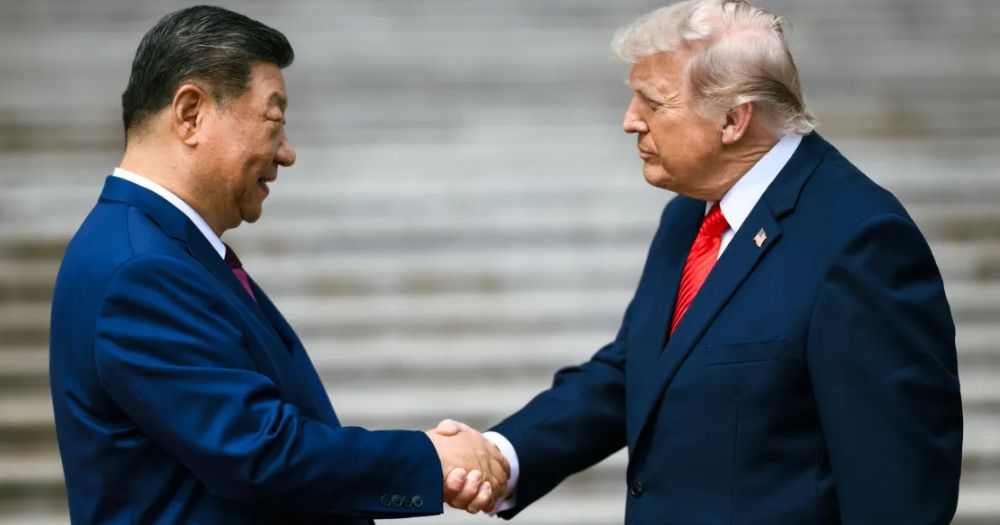
Xi Jinping will be visiting the United States from Sep. 23 to 25, making a reciprocal visit after U.S. President Donald Trump's trip to Beijing earlier in 2026.
What's on the agenda, and what does this say about the state of the U.S.-China relationship?
The itinerary
Xi’s visit to the U.S. is the first since 2023 and is his first state visit since 2015.
This visit appears to be tightly focused on discussions between the two presidents, with the itinerary providing very little time for other events.
During his 2023 visit, Xi and Biden found time to compare cars; during his 2015 state visit, Xi kicked it off by visiting the West Coast of the U.S. first.
But for the upcoming visit, Xi will be flying directly to Washington, D.C., where it is expected that Trump will meet him on the tarmac.
The optics of this decision, should it come to pass, are odd; U.S. presidents rarely meet foreign visitors as they get off the plane.
When Trump visited Beijing in May 2026, he was greeted by China’s vice president Han Zheng, a former member of the Politburo Standing Committee, not to mention a legion of flag-waving children, honour guard, and other dignitaries.
Breaking protocol
The Independent notes that Trump will be present at Andrews Air Force Base on Sep. 23 to meet Xi, a "rare departure from protocol".
Xi will also enjoy a U.S. honour guard.
This also means that Xi will be eschewing other events on his visit, and it was earlier confirmed that he would not be addressing the United Nations General Assembly, despite the timing of his visit seeming to coincide with the gathering.
Xi will also be bringing along a large delegation of Chinese business leaders, including executives from car maker BYD and Xiaomi.
This more closely mirrors Trump's May visit, when he was joined on this trip by high-powered tech executives, including Nvidia's Jensen Huang, Elon Musk, and then Apple CEO Tim Cook.
A state dinner is slated to be held in honour of Xi’s visit, and like in Beijing, the invite list consists of the U.S.’s top executives, such as JPMorgan Chase’s Jamie Dimon and OpenAI’s Sam Altman.
What’s on the agenda?
The visit's agenda will largely be a continuation of previous discussions, with trade and artificial intelligence likely to be the most critical topics.
Trade
A report by the World Economic Forum notes that the temporary, year-long tariff truce negotiated in Busan in 2025 will expire in November, but neither side is eager to return to tariff escalation and trade war.
Over the weekend, China’s vice premier He Lifeng met with U.S. Treasury Secretary Scott Bessent in New York, a critical pre-visit discussion.
Xinhua describes the talks as “candid, in-depth, and constructive”, and that they “engaged in exchanges on important economic and trade issues of common concern”, and the “Implementation of consensus reached in previous talks.”
Xinhua was referring to the Board of Trade mechanism first discussed in May talks, which the BBC said was a plan to “operationalise” a process to identify potential goods for which already existing tariffs could be cut.
The AFP, via Yahoo Finance, reports that in the U.S. the current effective tariff rate on goods coming from China is about 22.8 per cent.
On some items, such as steel and aluminium, the rate is as high as 40.5 per cent, the highest rate currently charged.
Prior to the Busan “truce”, the U.S. was threatening to levy rates as high as 145 per cent, with China threatening to match them with 125 per cent reciprocal rates.
AI
The other major agenda item is Artificial Intelligence.
The Financial Times reports that both countries agreed to set up an AI dialogue, with Bloomberg reporting that Bessent had described it as a “notification mechanism between the two countries” to discuss shared concerns.
Such notifications were for incidents or situations that rise "up to a national security level from AI.”
Despite warnings of the dangers posed by AI in recent weeks, sometimes from current and former leaders within companies like Anthropic and OpenAI, both Trump and China remain optimistic about AI’s future.
Trump has called concerns a “hoax” and rejected calls to slow the pace of development of AI.
A foreign affairs spokesperson for China called the warnings “fearmongering.”
There remains a large amount of common ground between the two countries despite fierce disagreements on the specifics.
Previsit visits
The focus that Xi and his team have given to the visit, with seemingly no other distractions, implies the seriousness of the discussions.
Most of the points of agreement appear to be ways of making sure communication between the two sides is clear.
But Xi has also spent the past two weeks on a pre-state visit global tour, visiting Kyrgyzstan for a Shanghai Cooperation Organisation (SCO) meeting, Egypt, highlighting its growing influence in Central Asia and the Middle East, and attending a BRICS summit in India.
While in New Delhi, his speech at some points seemed like a veiled prod at U.S. trade and foreign policy, saying that “Decoupling and cutting off supply chains will not hold back our development process.”
He attacked the “small yard high fences” view of the world, saying that it would only “box oneself in and divide the world”.
While being less pointed about the situation in the Middle East, Xi called the Iran War “against the common interest of the international community.”
Trump’s own desire to highlight how highly he thinks of Xi, of which meeting him directly after his arrival is one sign, shows that the relationship remains of utmost importance to both countries, even if they wished otherwise.