


News


Ex-DBS CEO Piyush Gupta: Hire for skills, 'fire in the belly', not just academic results
In his experience, the best bankers have never come from the top academic performers, he says.
September 26, 2026, 12:06 PM


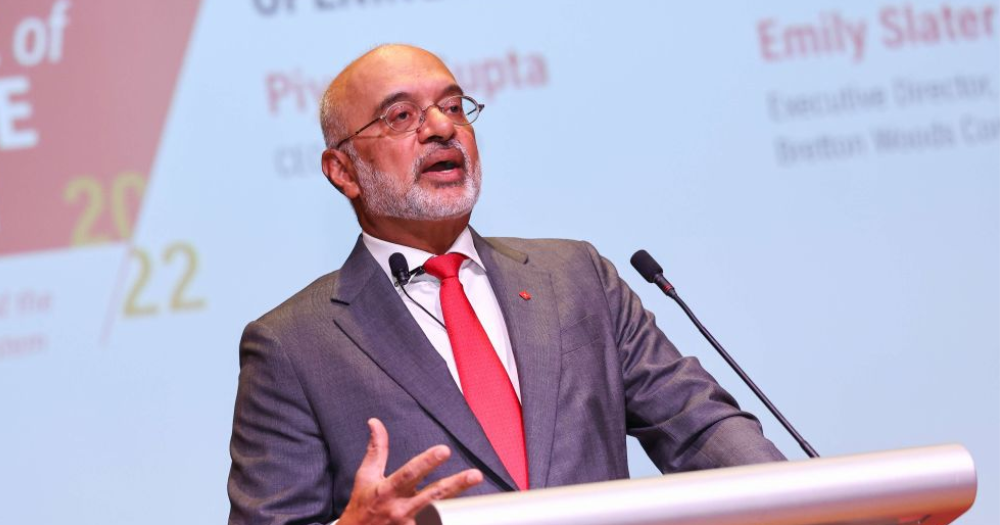
Former DBS CEO Piyush Gupta revealed in an interview that the bank had deliberately moved away from hiring only the top-scoring university graduates, as academic results alone do not make the best employees.
In an interview with content creator Inconvenient Questions, Gupta recounted that DBS used to hire its "first class" candidates from the National University of Singapore (NUS).
Suggested hiring outside of the top 20 per cent
When he asked his team why they only hired from this cohort, he was told that the bank received so many applications that using top grades as a cut-off was a way to narrow down the pool.
Gupta said he pushed back, suggesting the team ignore the top 20 per cent of applicants and instead take the next 20 per cent, since that would also form a valid shortlist.
He added that in his experience, the best bankers have never come from the top academic performers, but from "the next lot."
According to Gupta, candidates still need to be bright, but they also need to be street smart and capable of handling a wide range of tasks.
Hiring for "fire in the belly"
Gupta said that during his tenure at DBS, the bank began hiring differently, prioritising skills and what he called "fire in the belly" over academic credentials alone.
He said this is increasingly the direction he expects employers to move in going forward.
Universities must rethink their role
Gupta's comments echo remarks he made in a separate interview with The Straits Times published on Sep. 22, in which he discussed how artificial intelligence (AI) is reshaping the value of a university education.
Gupta said that as AI makes knowledge instantly accessible, universities must shift their focus from transferring information to fostering curiosity, critical thinking and cross-disciplinary reasoning.
Rather than banning AI outright, he said universities need to adapt, including guarding against "cognitive debt," teaching students to verify AI-generated output, and partnering with companies to give students early exposure to practical, real-world experience.
He also said universities must evolve beyond the traditional four-year degree structure to support lifelong learning.
On how students should approach their studies, Gupta said, "So far, the focus has been on choosing a major. In the future, I would say: Forget one or two majors and focus on 10 minors, so you get enough cross-disciplinary and eclectic learning."
Pay gap between university graduates and non-graduates could narrow
Gupta also raised concerns in his interview with ST about the automation of "grunt work" traditionally assigned to fresh graduates, questioning whether they will still gain the depth of knowledge and practical experience needed to take on more advanced roles later in their careers.
He suggested this could narrow the "graduate premium", referring to the higher salaries university graduates have traditionally commanded over non-graduates.
Employers may become less willing to pay this premium if graduates do not bring anything to the workplace that sets them apart from school-leavers who have access to the same AI tools, Gupta said.
Top image via Piyush Gupta/LinkedIn