Abroad


Nepal massive flash flood likely triggered by glacier collapse
Nearly 160 bodies have been recovered so far and more than 800 are missing.
August 27, 2026, 02:38 PM
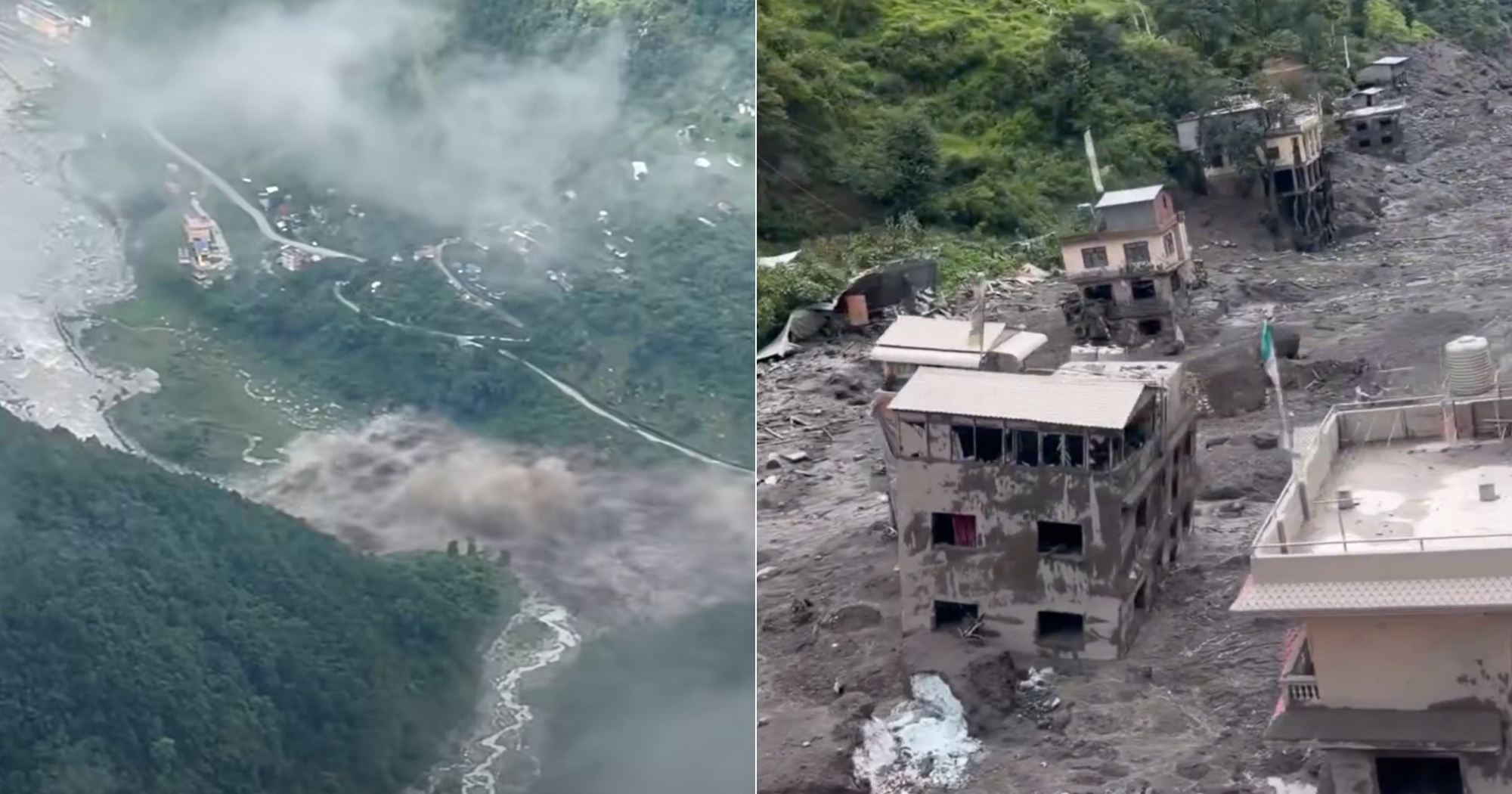
Photos via Rojan Bhushal Facebook & Weather Monitor X


The deadly flash flood near Nepal's border with Tibet on Aug. 26 may have been caused by a glacial collapse, Reuters reported, citing expert opinions.
The lower part of a glacier breaking off and crashing onto the valley floor hundreds of metres below may have triggered the event, satellite imagery from Planet Labs showed, which experts cited.
A warm spell could have melted snow, resulting in the floodwaters.
Nepali officials have pointed to an earthquake in the region minutes earlier as a possible cause behind the glacier collapse, but it remains unclear if it was the cause.
Death toll expected to rise
According to BBC, nearly 160 bodies have been recovered so far and more than 800 are missing, Nepal's government said.
Footage showed many people fleeing the deluge.
Aerial views of the brown debris and sediment in the aftermath of the flood revealed the extent of the destruction.
Before-and-after satellite imagery of the region from Planet Labs, reviewed by Reuters, showed the lush green mountainside buried.
Nepal floods: Aerial footage shows the devastating aftermath.
At least 97 people have been killed, while 403 people from 27 countries remain unaccounted for.
Among those reported missing are 62 Nepali citizens, 133 Indians, 47 Americans, and 33 Britons. pic.twitter.com/UyKMs2IJ1g
— Weather Monitor (@WeatherMonitors) August 26, 2026
Several hydropower projects are located in the worst-affected areas in the mountainous district of Rasuwa, which has a population of about 50,000.
Landslide event
Prakash Pokharel, a geologist at Nepal's National Disaster Risk Reduction and Management Authority, said the "glacier-inclusive flood" occurred in the Lhende River due to a landslide that took place around 20km northeast of a Nepal-China border crossing.
"The flash floods were caused by an ice-rock avalanche on the Nepali side," said Pokharel, who has reviewed the Planet Labs images.
The International Centre for Integrated Mountain Development said the flash flood sent a powerful surge of water, sediment and boulders through the Bhote Koshi and Trishuli river systems.
Water levels on the river at the Galchhi area downstream reportedly rose by as much as 9m within 30 minutes.
Glacier broke off
Vikram Gupta, who specialises in engineering geology and teaches at India's Sikkim University, told Reuters that it is "confirmed" that a "substantial portion of that glacier snout collapsed to initiate the event".
Earth scientist Dan Shugar, an associate professor at the University of Calgary, also told Reuters: "What I can see in this morning's satellite imagery from Planet Labs, the lower part of a glacier broke off at about 5,200 metres and crashed onto the valley floor about 1,200 metres below."
Global warming
Nepal's snow-capped mountains had lost close to one-third of their ice in just over 30 years due to global warming, the United Nations said in 2023.
Glaciers in Nepal, wedged between India and China, melted 65 per cent faster in the last decade than in the previous one, UN said.