News


S'pore must create more value from what we have for next growth phase: Tan See Leng
Singapore needs to strengthen its economic resilience to create good opportunities for Singaporeans, he said.
August 26, 2026, 04:31 PM
Photos by Azrizal Abu Che/Mothership and Canva


Singapore's next phase of growth cannot come from using more land, adding more workers, or emitting more carbon, said Minister for Trade and Industry (Energy and Industry) Tan See Leng.
Instead, it must come from scouring around the world and creating more value from what the country has, he went on.
"That means raising productivity [and] moving into more innovative and higher value-added activities."
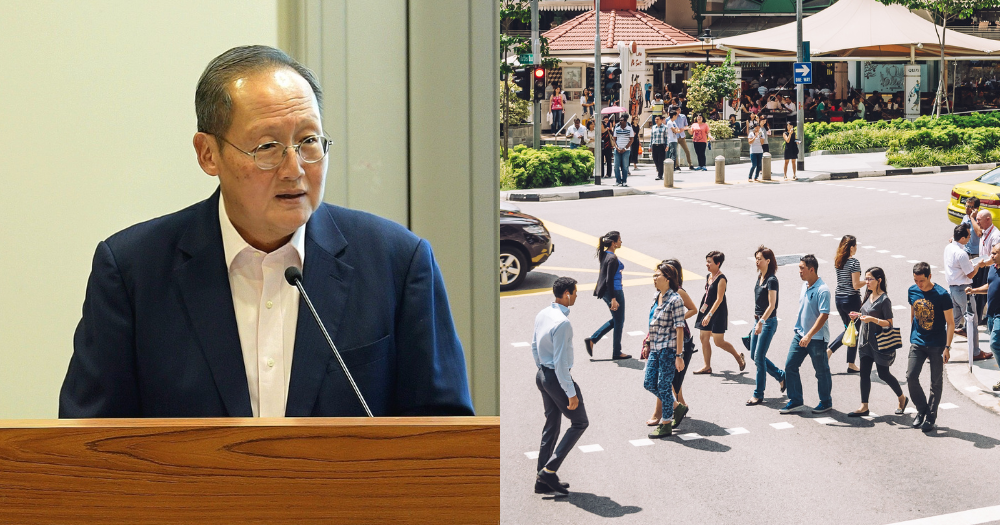
He was speaking at the Ministry of Trade and Industry (MTI) Economic Dialogue 2026 on Aug. 26 about Singapore's economic strategy in today's changing world.
He pointed out that the foundations of Singapore's economy must evolve along with global changes.
The conditions for staying open have become more difficult, and the country also faces domestic constraints in terms of land scarcity, an ageing population, and the shift away from carbon.
"Singapore's next phase of growth will be harder won," Tan said.
"But if all of us...remain clear-eyed about our constraints, remain deliberate and purpose-driven about where we can create value, and...disciplined in how we make choices and adapt, we can continue to build not just a competitive and resilient economy — we will build a thriving economy that will always create good jobs...with hope and opportunities for Singapore and Singaporeans."
Greater value at home
Tan highlighted three main changes proposed by the Economic Strategy Review's report released in June 2026.
The first is to sharpen Singapore's value proposition — being more deliberate about where Singapore can create the most value, and build capabilities that are hard to replicate elsewhere.
In the advanced manufacturing and services sector, this means going beyond attracting investments, Tan pointed out.
He said Singapore also needs to anchor higher-value capabilities such as research and development (R&D), regional leadership, and deep talent pipelines. These will make Singapore integral to how goods and services are developed globally.
"The deeper these activities are rooted here and intermeshed here, the greater their potential to generate wider benefits for all of us and also the economy."
For example, they can provide opportunities for Singaporeans to move into higher value-added roles, and enable local firms to plug into global supply chains and build new capabilities.
At the same time, Singapore must build new sources of growth, Tan continued.
This can be done by investing early in emerging areas where Singapore has a credible right to play, such as quantum, space, and decarbonisation technologies.
"We want Singapore to be valuable not just because goods, people, capital, and energy pass through us," Tan said.
Rather, it should also be valuable because important decisions are made here, and these activities in turn create opportunities and capabilities for Singaporeans and our companies.
Greater agility and adaptability
The second change is to enhance Singapore's agility and adaptability when circumstances change.
It means creating an environment where new companies and ideas can emerge, and promising companies can scale. Workers also need to improve their skills to take on redesigned and new jobs.
"We recognise that AI and automation may allow firms to produce more with fewer workers," Tan said.
"As such, we can no longer assume that growth will automatically create the same number, the same type, or the same range of jobs as before."
But Singapore will seek to keep AI adoption human-centric, by encouraging AI that complements workers, and providing early support for workers.
Greater resilience alongside efficiency
Lastly, Tan emphasised the importance of striking a balance between resilience and efficiency.
"Maximising efficiency alone can leave us with little room to manoeuvre when shocks and externalities happen," he said.
He said that Singapore needs to strengthen resilience by diversifying and building appropriate buffers in areas such as energy and critical supply chains. It should also deepen partnerships to keep vital flows open, especially during periods of disruption.
At the same time, buffering against every conceivable risk would be costly and impractical, Tan cautioned.
Thus, Singapore will need to make difficult choices under uncertainty to reach a good balance.
"As the choices become harder, the trade-offs will become more stark," he said. "We have to refine...polish ourselves and hone ourselves to become better at making them."
Addressing the budding economists in the audience at the MTI Economic Dialogue, he said that although the questions posed to them will become harder, the data and tools they will get to address these questions will, at the same time, get richer and more powerful.
He looked forward to their contributions to help Singapore make better policy decisions.