Abroad

M'sian eatery accused of selling pork over Mee Pok menu items, files police report
MEE POK ≠ PORK
August 10, 2026, 04:33 PM
Top images via China Press, Nan Yang Coffee Shop


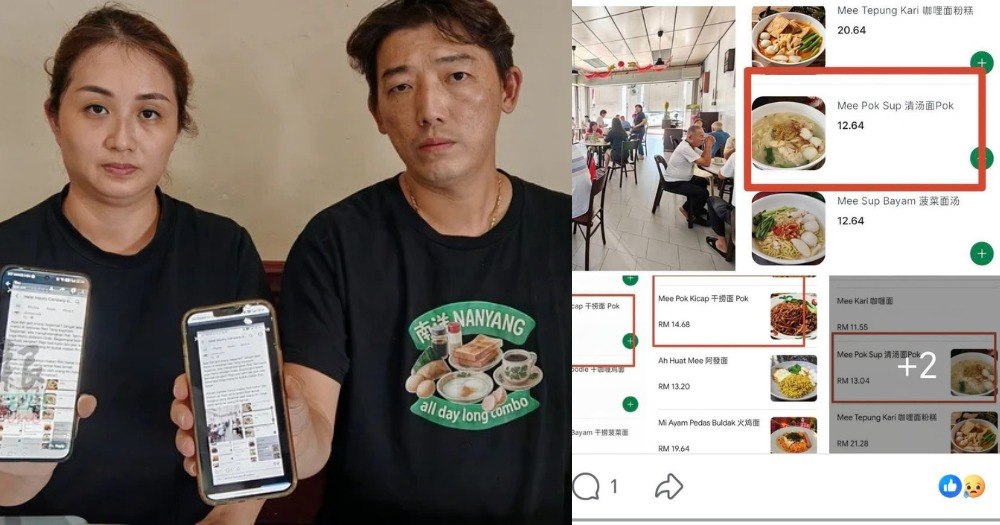
A 95-year-old coffee shop in Segamat, Johor, has filed a police report after a Facebook page with 297,000 followers implied it was serving pork, based on a noodle listed on its menu.
The dish in question was Mee Pok Sup. Mee pok is a flat noodle, with "pok" meaning flat in Teochew.
What the post said
According to The Rakyat Post, the owner of Nan Yang Coffee Shop found the post on Aug. 7. It had been published by a page called Halal inquiry Company direktori. It describes itself as a halal awareness and company directory page and lists itself as based in Johor Bahru.
The post did not directly allege that the shop sold pork.
It noted that "orang M" had been seen eating at the premises, and circled the words "Mee Pok Sup” on a screenshot of the menu.
The shorthand is commonly read as referring to either Malay or Muslim customers.
Police report and MCMC complaint
The shop owner filed a police report at the Segamat police station on Aug. 7, and separately lodged a complaint with the Malaysian Communications and Multimedia Commission saying the post was misleading and had damaged its reputation.
The Facebook page took the post down and later issued an apology, acknowledging errors and misunderstanding in what it had written.
The apology, however, came with a notice that the page had restricted who could comment on it. No such limit had been placed on the original post.
The shop owner asked why the public could freely discuss the original post but were denied the same space for the correction.
The shop's position
Nan Yang Coffee Shop published its own statement, confirming that it uses neither pork nor lard in its dishes.
It added that it does not hold JAKIM halal certification, and has never claimed otherwise.
The statement also confirmed that mee pok is a Teochew term for flat noodles.
According to the shop, traffic from Malay customers had fallen after the post in question.
What people said
Several commenters said the responsibility for checking halal status falls on Muslim consumers, not on non-Muslim businesses that have never claimed to be certified.
Another took a lighter view, joking that some people could not even tell the difference between "pork" and "pok."