Environment


S'pore restaurant involved in Changi coastal foraging controversy apologises
"We take responsibility for this and sincerely apologise," said the restaurant.
August 09, 2026, 06:23 PM
Photos via Douyin & Havelock Palace/Facebook

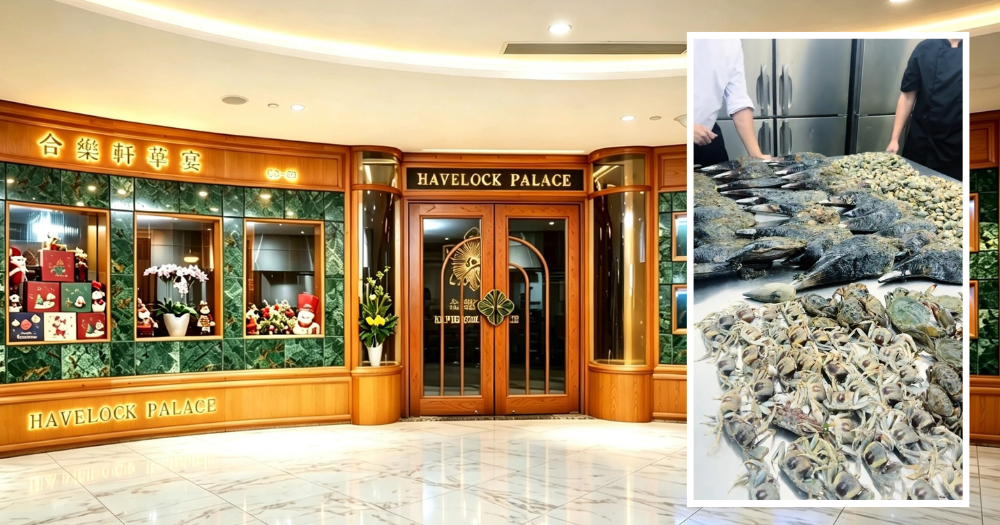
 The restaurant that cooked the wildlife brought to it after it was foraged from an intertidal area in Singapore has apologised for its involvement.
Havelock Palace posted a statement on Facebook on Aug. 8 confirming it had prepared and cooked the marine life that was brought to its restaurant after an internal review.
"We acknowledge that accepting and handling ingredients outside our approved sourcing channels did not meet the standards we expect of ourselves as a food establishment.
We take responsibility for this and sincerely apologise."
The restaurant added that it has since tightened its procedures by:
- tightening its food sourcing and receiving controls
- strengthening supplier documentation and traceability
- prohibiting food from unauthorised or unverified sources from entering the kitchen
- conducting refresher training for its management and kitchen teams on food safety and proper food handling
Havelock Palace also acknowledges that its earlier online responses to the situation did not "clearly explain the situation and may have caused further confusion".
"Havelock Palace is commited to upholding higher standards in food safety, responsible sourcing and the trust of our guests."
Intertidal foraging
In the Facebook group Complaint Singapore, one user shared on Jul. 13 screenshots and a video of a group of individuals gathering and foraging in an intertidal area with pails in hand.
The gathered wildlife was later laid out on a table in a restaurant kitchen.
They include a number of molluscs, including what looks to be fan clams and crabs.
Plates of cooked food were later seen on a dining table.
Pasir Ris-Changi GRC MP Valerie Lee, who is in charge of the Changi division, wrote in a Facebook post that she was "extremely disappointed" after watching the video.
Characterising the behaviour as "deplorable", Lee commented that it was not about the legality of it, but about a lack of respect.
The restaurant, which allegedly prepared and cooked marine life foraged by a group from the shores of Changi, has received numerous one-star reviews on Google Maps after the issue gained attention online.
In a Jul. 26 video, local science content creator Biogirl MJ, who hosts the educational platform Just Keep Thinking, commented on the incident, sharing that she had also left a review on the restaurant's Google Maps listing.
The group that organised the intertidal foraging at Changi beach has since been disbanded due to public pressure.
Following the viral video that drew a lot of backlash online, the group administrator deleted all his intertidal foraging videos from his account on Jul. 24.
In addition, he announced to the group that, to protect marine life, respect local laws and regulations and avoid causing inconvenience to members, he would be suspending all coastal foraging activities.
Foraging can have far-reaching consequences on ecosystem services
Karenne Tun, a Group Director at the NParks National Biodiversity Centre, previously said in response to Mothership's queries that NParks is aware of a social media post on intertidal foraging and "seeks the understanding of the public to protect our intertidal biodiversity".
According to Tun, NParks restricts the collection of animals from intertidal zones under its jurisdiction.
These zones include Sisters' Islands Marine Park, Sungei Buloh Wetland Reserve, Labrador Nature Reserve's rocky shore and Chek Jawa Wetlands.
For intertidal areas outside its jurisdiction, Tun says it focuses on public education on best practices and how visitors can interact responsibly with marine wildlife.
Tun also said, "The removal of wildlife from their habitats, including intertidal zones, harms our biodiversity and disrupts our ecosystems. Each species plays a unique role in its ecosystem, and their removal can have far-reaching consequences on ecosystem services such as pollination, seed dispersal and nutrient cycling."
"This in turn affects the ecological resilience of our natural habitats. Removing wildlife from their habitats also endangers their population, especially for species which are already threatened," she continued.
The public who are unfamiliar with marine wildlife species may also endanger their own safety, as they may not recognise poisonous, stinging, or venomous marine wildlife, Tun cautioned.