Court

Mentally unsound S'porean man, 90, who killed wife gets notional 5-year jail term
He was 88 at the time of the incident and suffered from dementia.
Photos from Google Maps & Rafael See Toh/Mothership


A 90-year-old Singaporean man was sentenced on Aug. 28 to a notional imprisonment period of five years for attacking and killing his 74-year-old wife in their Bukit Panjang flat in 2024.
Ridawi Morsudin faced one charge of culpable homicide not amounting to murder, but the High Court previously found him unfit to plead or stand trial due to his unsound mind and dementia.
His mental state was assessed by medical practitioners from the Institute of Mental Health (IMH), who said that he was in a delirium at the time of the murder for this reason.
Judge's decision
Due to the severity of Ridawi's brain condition, medical reports have deemed him unfit to stand trial or plead guilty.
CNA's coverage of the Aug. 28 court proceedings described how Ridawi looked frail as he appeared over video link from Changi Prison Complex.
The judge noted that Ridawi was medically assessed to have a low risk of reoffending due to the extensive care he needed for daily living.
She also considered the prosecution's argument stating offenders in previous cases who suffered from reality-altering conditions tended to get between six and nine years' jail.
The prosecution had previously called for a notional imprisonment period of five years for Ridawi.
To that, his lawyer argued that he was already frail at the time of the offence, and was unlikely to reoffend given his physical state.
As such, the lawyer sought two to three years' jail.
Man posed a danger: Judge
According to CNA, the judge could not agree with that.
This is because there was still a need for an element of protection.
Ridawi, who was 88 then, had been able to kill his wife in a "forceful and brutal manner", which showed that he posed a danger.
An earlier report mentioned that the case is believed to be the first of its kind.
Under the new regime that came into effect in February 2025, the court must determine if the accused is indeed incapable of making his defence.
If so, the court must report the case to the Minister of Law and specify the notional imprisonment period that the accused would have been required to undergo, if he was convicted of the offence.
An appropriate order would then be taken by the minister.
Accused was only person who could have inflicted injuries
Court documents seen by Mothership stated that Ridawi was the only person who could have inflicted the injuries on his wife.
This is because his wife was last seen alive at about 7pm on Jun. 4, 2024.
She was then found dead slightly after 12:58am on Jun. 5, 2024, which meant she was killed sometime in between this six-hour window.
Court documents further state that Ridawi and his wife were the only people in the flat during the six-hour window.
No one else could have gained entry into the flat for the following reasons.
Firstly, the main door to the flat was locked and this was intact when Ridawi's wife was found dead.
The code to the lock was not known to anyone aside from the accused’s family members and the healthcare assistant.
Secondly, the window pane and window grilles to the bedroom were closed and intact when the police arrived.
Nobody knew that the window pane and window grilles were unlocked, much less entered the flat through the window pane and window grilles.
Background
Prior to the incident on Jun. 4, 2024, Riwadi was diagnosed with mixed dementia, and had started losing the ability to recognise his family members.
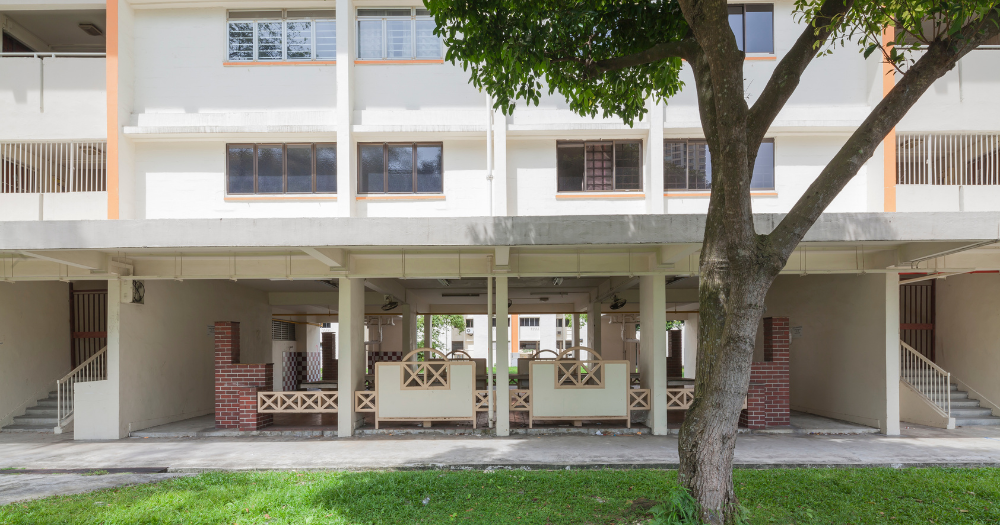
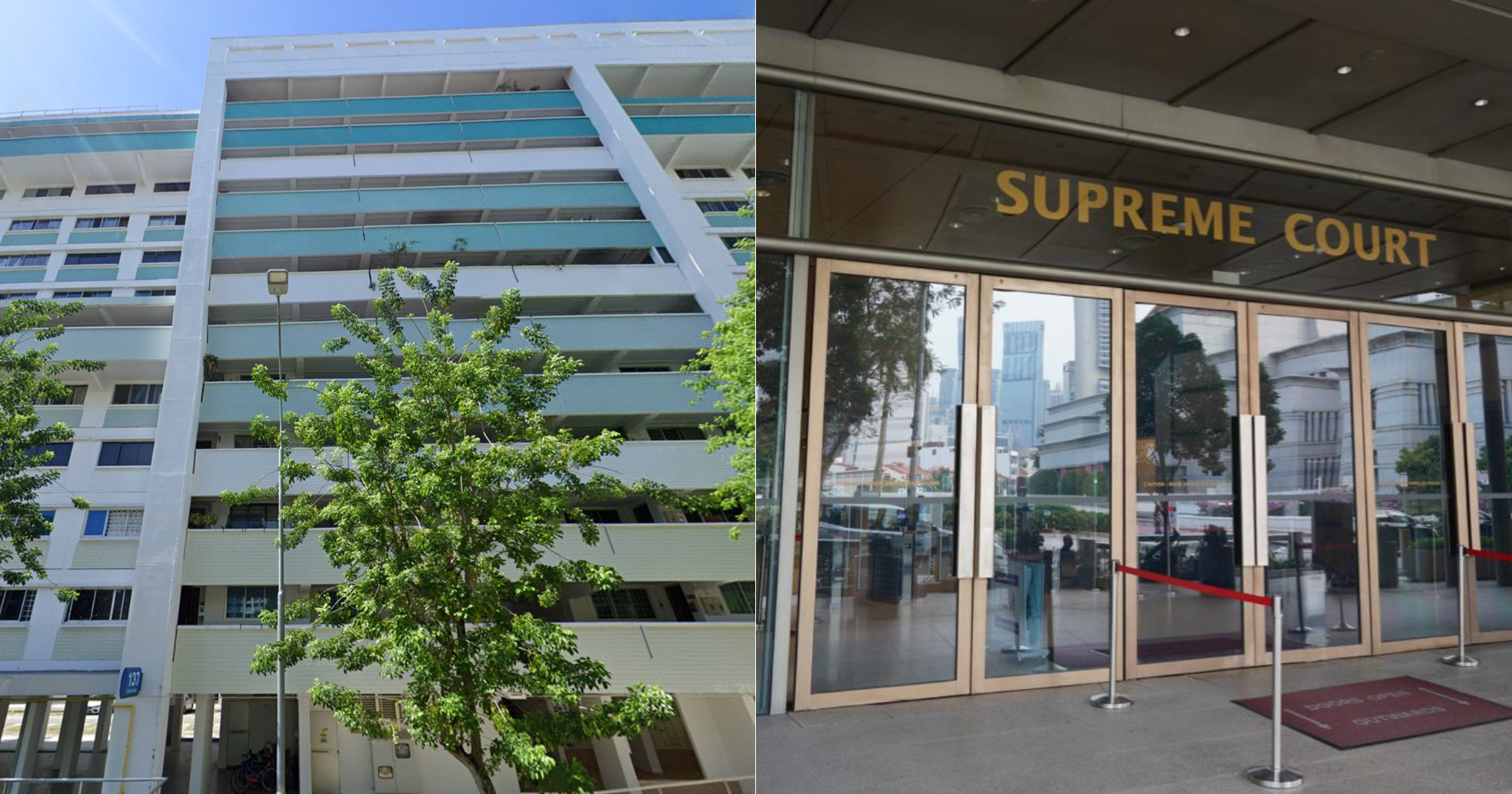
Though he lived with his wife and their 26-year-old grandson in their flat at Block 137 Petir Road, the couple were alone at home when the murder happened.
An autopsy conducted on the wife later found a large injury extending from the left side of her jaw, across the left side of her neck to the left side of her chest exposing her jawbone, collarbone, ribs, and a lung.
There were at least 34 lacerations across the body, including stab injuries and sharp force injuries.
The certified cause of death was sharp force injuries to the head, neck, and chest.
When the police talked to Ridawi at the scene, he was incoherent.
Following a forensic psychiatric evaluation later, he was found to have major neurocognitive disorder due to Alzheimer’s disease and vascular disease, with behavioural disturbance.