News


2,428 caught possessing & using vapes in S'pore from Apr. 1-Jun. 30, 2026
1,971 of those caught were regular vaporiser offenders, and the remaining 457 were etomidate vaporiser offenders.
August 12, 2026, 12:10 PM
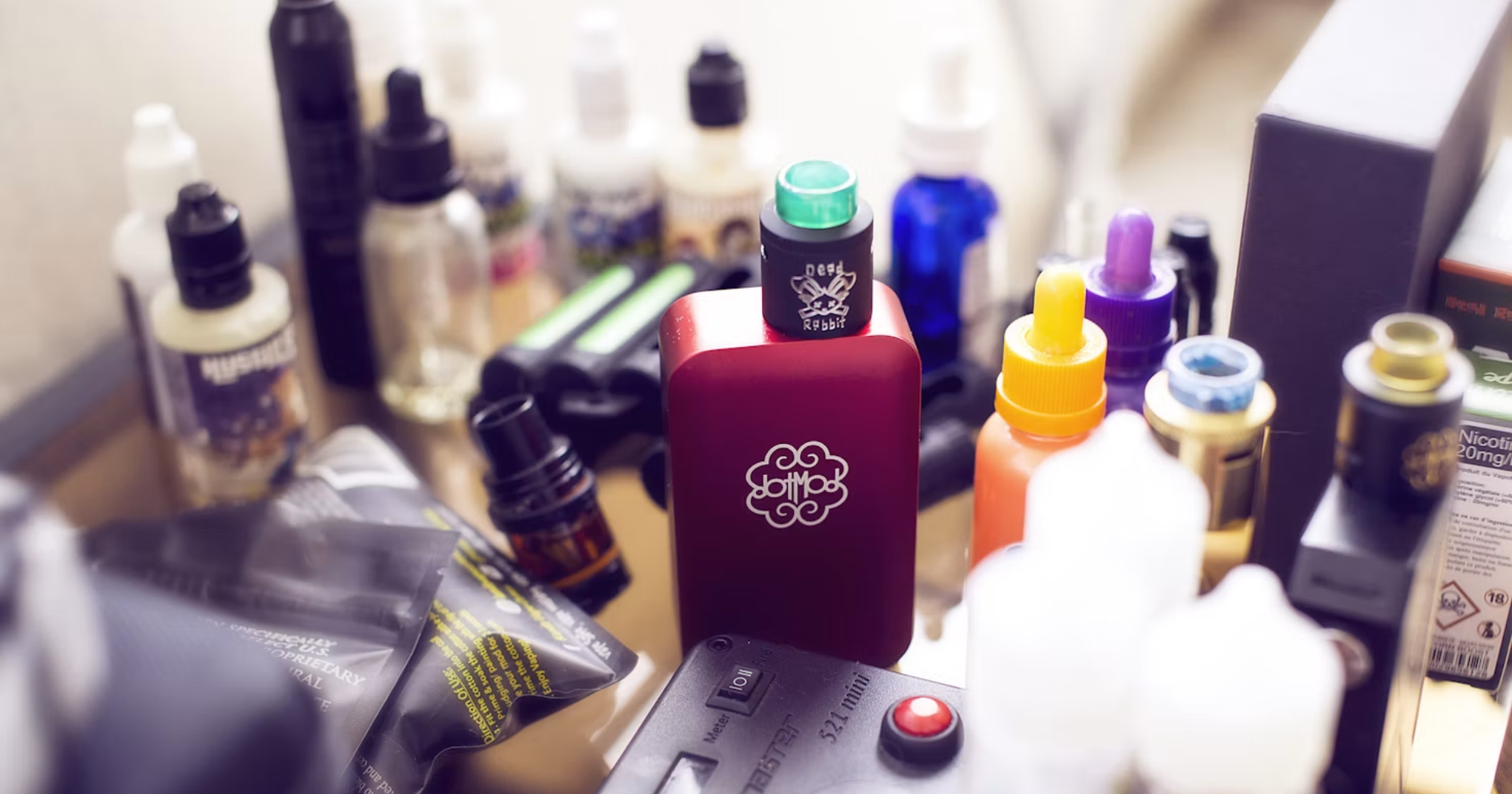
Photo from Unsplash


A total of 2,428 persons were caught for possessing and using vaporisers from Apr. 1 to Jun. 30, 2026.
Of these, 1,971 of those caught were regular vaporiser offenders, and the remaining 457 were etomidate vaporiser offenders.
This was revealed in a joint press release on Aug. 11 by the Ministry of Health (MOH) and Health Sciences Authority (HSA).
In the second quarter of 2026, an average of 809 cases were caught per month, it was added.
This was about 30 per cent lower than the 1,219 cases caught per month between June and August 2025, before stricter measures took effect on Sep. 1, 2025.
Actions
In the same period, HSA charged nine persons for allegedly importing or supplying etomidate vaporiser pods.
Six of them are allegedly part of a transnational syndicate.
More than S$880,000 worth of etomidate vaporiser pods were seized from them.
These cases are pending sentencing.
During the same period, 14 persons were also convicted of selling etomidate vaporiser pods.
Among the convicted was a 37-year-old man, Byron Chua Longming, who was sentenced to eight months’ jail on May 6 for delivering vaporisers from Malaysia to customers in Singapore.
Chua was found in the vicinity of Bugis with vaporisers and related components, of which 194 pods contained etomidate.
A 28-year-old man, Jodan Chin Wei Liang, was sentenced to 16 months and five weeks’ jail on Jun. 30 after he was found with 802 vaporiser pods containing etomidate that were meant for sale.
Chin attempted to drive off when an HSA officer identified himself.
His actions could have injured the officers conducting the operation, the statement added.
Checkpoint enforcement
Additionally, over the same three-month period, enforcement efforts at air, land and sea checkpoints by the Immigration and Checkpoints Authority (ICA), alongside joint operations with HSA, led to the detection of 19 persons caught importing regular vaporisers and the seizure of more than 3,900 vaporisers and related components.
One person was prosecuted and eight are under investigation.
The rest were fined or received warnings.
Among those convicted was a 28-year-old Malaysian lorry driver, Jegathiswaran Nagalingam, who was sentenced to 22 weeks’ jail on Apr. 16 after attempting to import vaporisers and heated tobacco items worth more than S$277,000 into Singapore
A 31-year-old Malaysian private-hire driver, Suntharathasan Kanathasan, was sentenced to 14 weeks’ jail on Apr. 22 after he was caught trying to import 1,100 vaporisers into Singapore.
A 22-year-old Malaysian man, Muhammad Haiqal Zaini, was sentenced to 18
weeks’ jail on Jun. 5 after he tried to import 3,480 vaporisers and related components into Singapore.
Online content
HSA also worked with e-commerce and social media platforms to remove more than 600 online listings of vaporisers and related components over the same period.
No individuals were caught posting vaping-related photos and videos of themselves on social media.
Rehabilitation
During the same period, 264 offenders were placed on rehabilitation programmes.
A total of 787 have been placed on rehabilitation programmes since the step-up of enforcement action on Sep. 1, 2025, with 245 offenders having successfully completed their rehabilitation.
Recent cases of persons who have successfully quit vaping after completing the rehabilitation programme include a 15-year-old boy who was caught for the second time in February 2026.
He successfully completed the three-month rehabilitation programme conducted by the Health Promotion Board (HPB) in May 2026.
His father has observed positive improvements in his son’s behaviour.
The boy has stopped vaping, has been returning home on time, and has resumed his hobby of cycling.
A 33-year-old man who was caught vaping for the second time in February 2026 successfully completed the three-month rehabilitation programme conducted by HPB in May 2026.
He has stopped vaping and expressed no interest in returning to the habit.
Reflecting on the rehabilitation programme, he highlighted the opportunity to speak with a counsellor as the most valuable aspect of his experience and that the access to professional support was particularly meaningful.
He also found the practical tips and recommendations offered throughout the programme to be beneficial in sustaining his progress.
A 39-year-old woman, who was caught vaping etomidate for the first time in September 2025, successfully completed the four-month rehabilitation programme in April 2026 conducted by the Institute of Mental Health (IMH) and the Singapore Anti-Narcotics Association.
She is now vape-free and better able to manage stress.
She found the counsellor’s advice helpful and is focusing on rebuilding family relationships.
She also distanced herself from peers who vape.
From Sep. 1, 2025, to Jun. 30, 288 persons defaulted on the rehabilitation programme.
Of the defaulters, 41 were charged and are serving their sentence.
Another 152 are undergoing court proceedings, and investigations are ongoing for the remaining 95.
In addition, 18 were admitted into the Drug Rehabilitation Centre (DRC) for repeat etomidate offences from Apr. 1 to Jun. 30.
In total, 26 have been admitted into DRC since the step-up of enforcement action.
Among those admitted, 15 offenders have been released from DRC and are currently monitored on supervision orders.
Government agencies have also been working closely together under a coordinated whole-of-government approach to tackle the vaping issue, including through enforcement, education and raising public awareness.
Public awareness
Ministry of Education (MOE) schools and institutes of higher learning continue to adopt an approach that combines preventative education, firm disciplinary measures, and cessation support.
Students are educated on the harms and illegality of vaping through curriculum subjects, outreach talks, peer-led initiatives, and HPB publicity materials.
Before the roll-out of the Tobacco and Vaporisers Control Act (TVCA) on May 1, schools and institutes of higher learning were briefed on the enhanced penalties under the TVCA.
Schools and institutes of higher learning continue to implement stricter disciplinary measures against vaping.
In schools, this includes detention, caning, and conduct grade adjustments.
In institutes of higher learning, measures include eviction from hostels, withdrawal of privileges, and community service orders or fines.
Recalcitrant offenders may face suspension or expulsion.
Beyond enforcement, schools and institutes of higher learning remain committed to guiding students to understand and take ownership of their behaviour, supporting them in their journey to quit vaping.
From Apr. 1 to Jun. 30, 245 students were referred to HSA by schools and IHLs for vaping.
HPB continues to provide cessation support for students who are caught for regular vaping through tele-counselling and on-site counselling by student health advisers at selected schools.
During the same period, more than 480 youths received smoking and vaping cessation counselling.
There is also an ongoing virtual cessation counselling pilot between HPB and MOE for secondary school students.
Public transport operators and their frontline staff continue to enforce against vaping as part of routine operations, carrying out patrols and checks in trains and public transport nodes.
Individuals found vaping or in possession of vaporisers will be referred to the relevant authorities, and enforcement actions will be taken.
From Apr. 1 to Jun. 30, 49 persons were referred to HSA for vaping-related offences on public transport.
Cessation of QuitVape
The QuitVape programme will be ceased with effect from Sep. 1, 2026.
QuitVape, which was introduced in September 2025, were for individuals who wished to voluntarily seek help to quit etomidate abuse.
This was in conjunction with whole-of-government efforts to tackle vaping and etomidate abuse.
This was intended to be a time-limited measure to give abusers an opportunity to voluntarily give up etomidate vaporisers, supporting them to quit without any penalties or an offence record.
Enforcement and public education on the harms of etomidate abuse to
raise awareness of its harms were stepped up.
Since the launch of QuitVape, awareness of the harms of etomidate abuse has increased and the take-up rate for QuitVape has moderated since the launch of the programme.
From Sep. 1, 2025, to Jun. 30, 188 individuals with ages ranging from 15 to 44 years have voluntarily enrolled in the QuitVape programme.
Individuals already on the QuitVape programme before Sep. 1 will be supported to complete their programme.
Individuals who wish to seek help for etomidate abuse from Sep. 1 may approach IMH, where relevant services will be provided on a chargeable basis.
Singapore citizens and permanent residents who are referred from eligible referral sources are eligible for subsidies.
For vaping that does not involve etomidate, HPB continues to offer the I Quit programme to support individuals to quit.
Individuals may call HPB's QuitLine at 1800 438 2000 for more information.
Those who voluntarily seek help will not face any penalties or have an offence record for coming forward.
Offenders caught abusing etomidate and regular vaporisers will still be subject to penalties accordingly.
Members of the public who have information on the illegal advertisement, import, distribution, sale or possession of vaporisers can contact HSA to support our enforcement efforts by submitting information through its online reporting form at www.go.gov.sg/reportvape or calling HSA at 6684 2036 or 6684 2037 from 7am to 12am.
Their hotlines are operational daily, including weekends and public holidays.