News


S'pore's qiaopi network helped Chinese migrants send home money & letters for 150 years
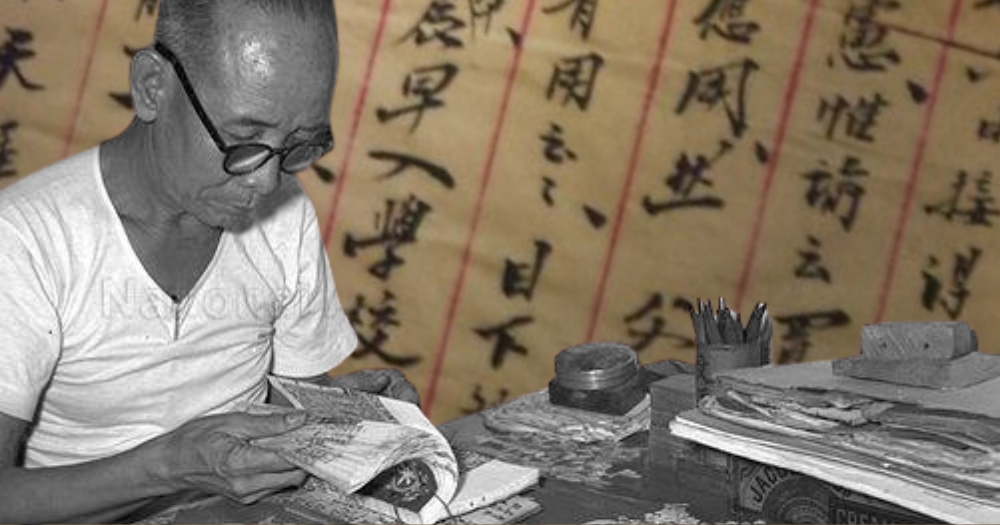
Qiaopi were letters that Chinese migrants sent back home.
July 03, 2026, 10:00 AM
Image credit: National Archives of Singapore, Zhang Huimei via Culturepaedia


Many Singaporeans, especially the seniors, are flocking to the theatres to catch Chinese movie "Dear You" because of its extensive Teochew dialogue.
But Singaporeans have another connection to the hit movie — one that is central to its plot: The lost system of letter-writing and qiaopi (侨批).
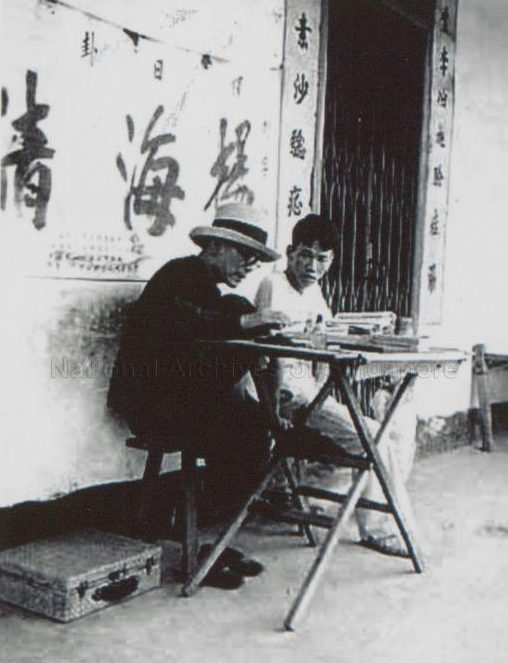 A letter writer in 1934. Image via National Archives of Singapore.
Qiaopi were letters that Chinese migrants sent back home. Most of the time, these letters were accompanied by remittance money.
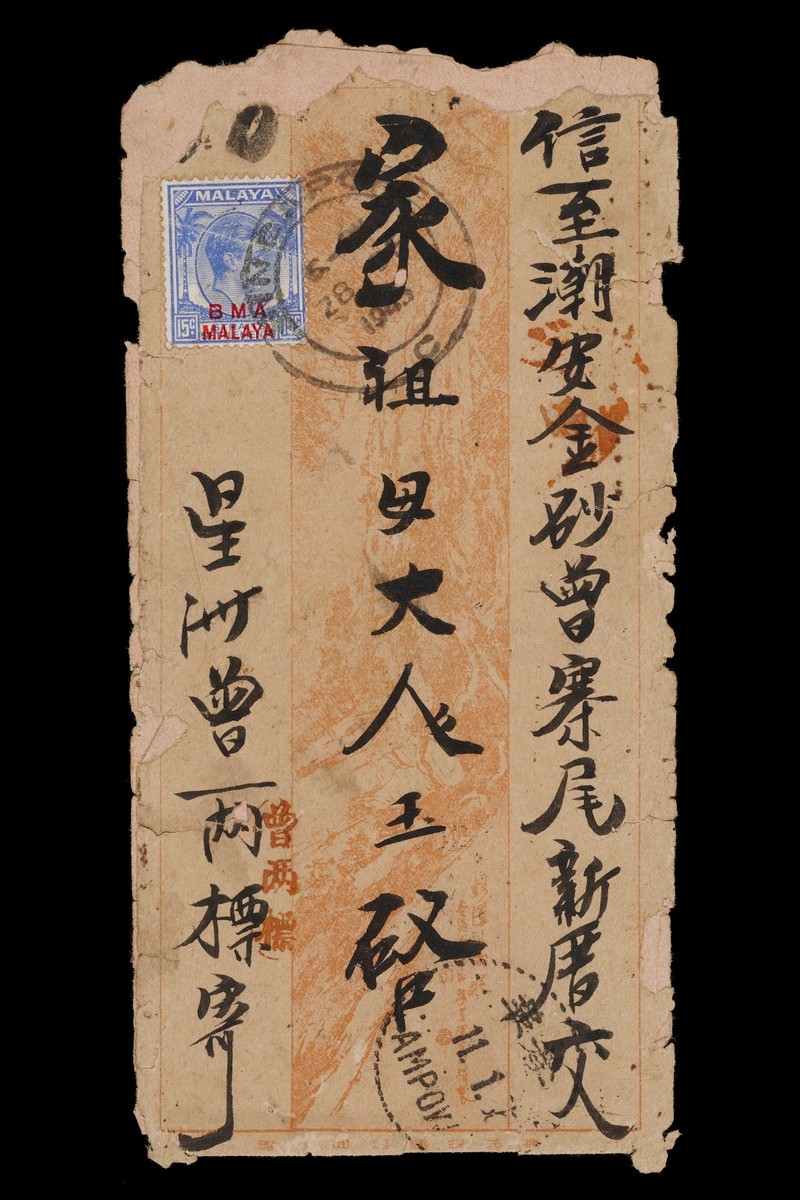 An empty Chinese remittance envelope dated to 1945, when the British military occupied Singapore, post-Japanese Occupation. Look closely and you can spot the mark made by the chop of the British Military Administration (BMA). Image via Roots.
Since most migrants who came to Singapore were men who were also heads of their households, these qiaopi were not only an important source of financial support, but also directions for the household back in China.
For instance, a Chinese migrant in Singapore might convey important instructions on his children's marriage or education via these letters.
In Singapore, qiaopi was around as early as the 1800s and lasted all the way to the 1980s. That's more than a century long.
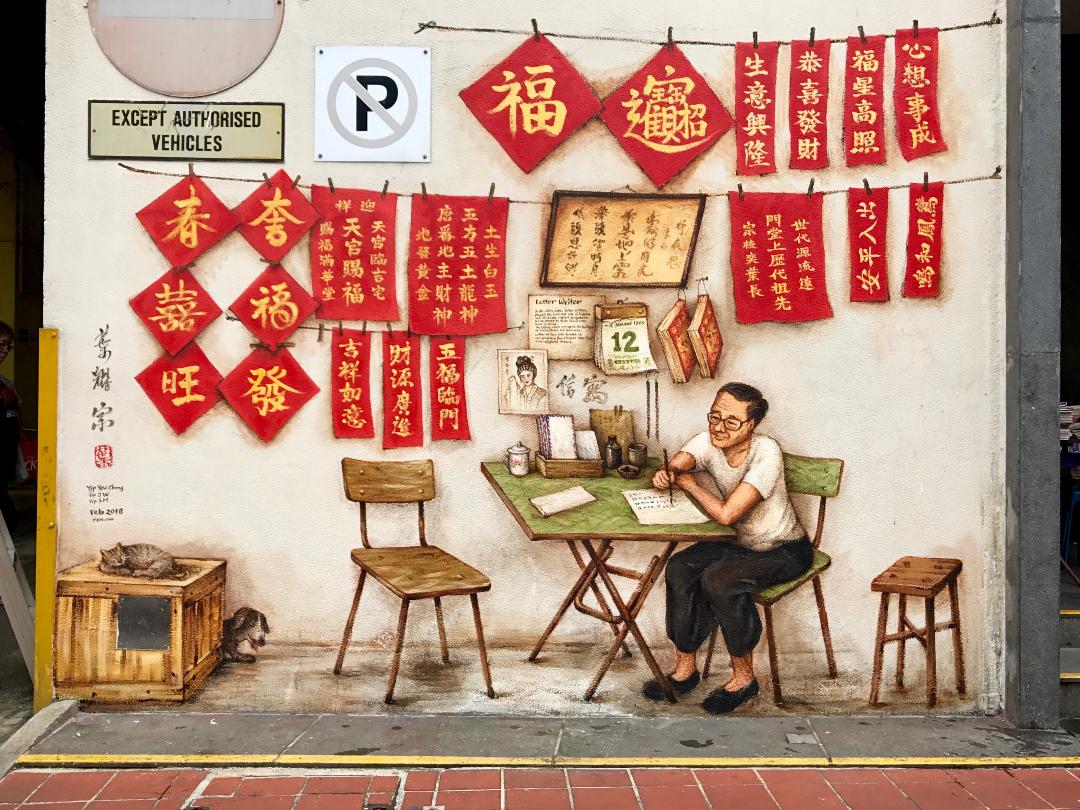 A mural of a letter writer painted by Yip Yew Chong. This mural is located in Chinatown, where many letter writers offered their services in the past. Photo via the artist's website.
How did it work?
When the practice of sending qiaopi started, migrants would entrust the responsibility of carrying their letters and money to Chinese individuals who travelled frequently between Singapore and China.
Known as shuike (水客), these individuals were either traders who came and went on sailing ships or agents who assisted these migrants with the logistics of travelling here and finding employment.
They would carry back the remittance in two ways.
The first was to deliver the original remittance directly to the recipient in China.
The second way was to use the remittance money to purchase goods that he would then bring back to China and sell.
The trader would then use the proceeds to deliver the remittance amount to the recipient, and typically have leftover profits for himself.
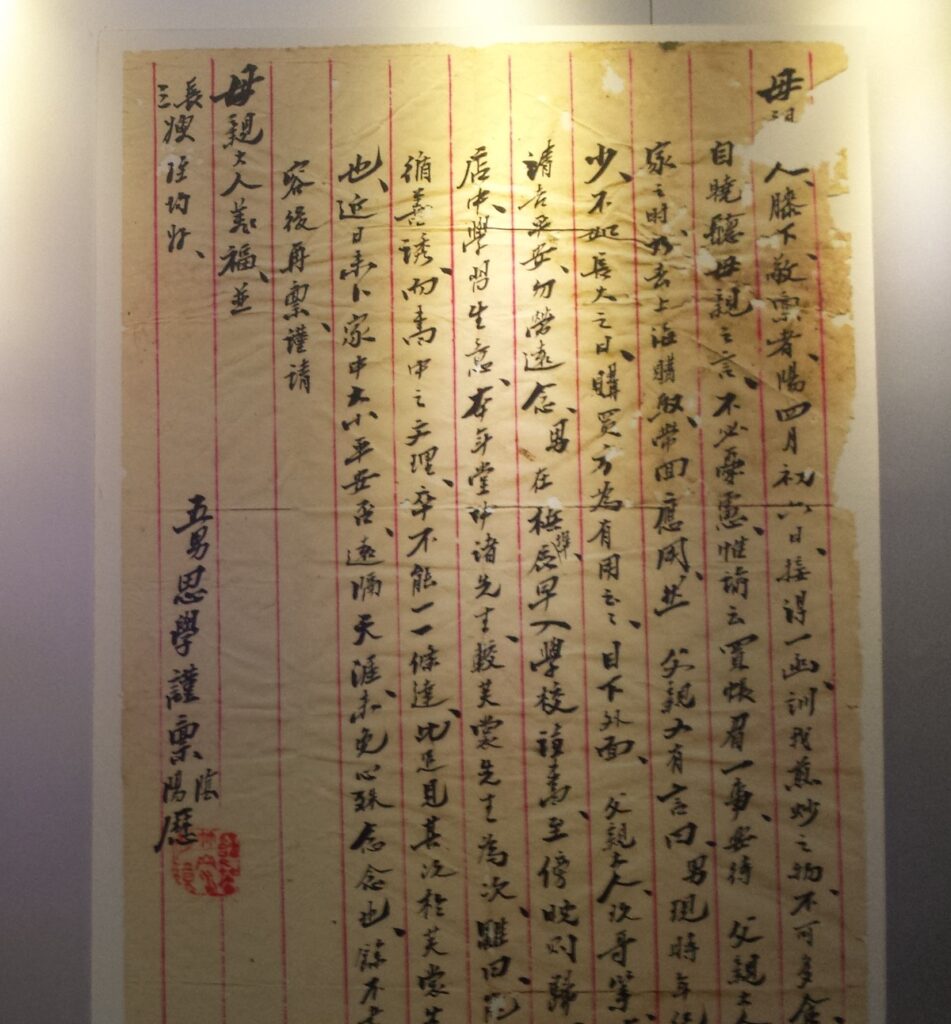 A letter, taken at the Shantou Qiaopi Cultural Relics Museum. Image credit: Zhang Huimei via Culturepaedia.
Over time, private remittance firms (also known as qiaopiju or 侨批局) started popping up.
These firms established their own networks with branches in Singapore, Hong Kong, and their own hometowns.
Their networks even covered the region, using Singapore as the transit hub through which money and letters flowed between China and Southeast Asia.
Many of these firms were set up by enterprising businessmen — people who operated anything from bakeries to tea houses — who saw the value that a qiaopi network could bring to their businesses.
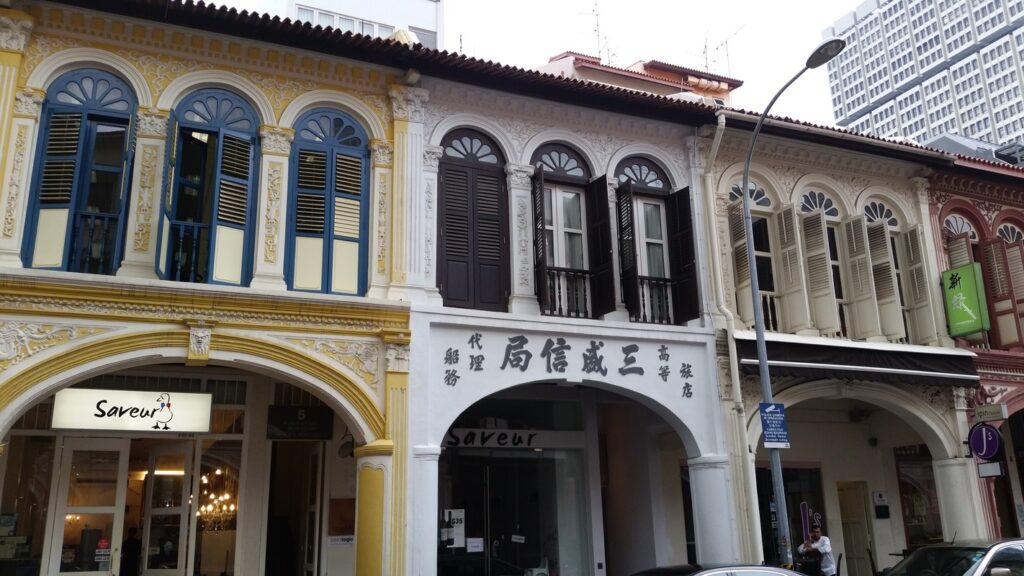 The former site of a Hainanese remittance firm on Purvis Street. Image credit: Zhang Huimei via Culturepaedia.
Remittance firms flourished in Singapore because they provided more security and reliability.
For one, because of their physical presence here, they were less likely to abscond with remittance money, which was an issue with itinerant traders.
Different dialect groups had their own remittance firms and members of one dialect group tended to trust their own clansmen to handle their letters and money.
These firms often went beyond mere remittance service.
They would help their own clansmen, especially the illiterate ones, pen letters; others provided advance remittance for the sender and let them pay back later.
According to Culturepaedia:
42 qiaopiju of different scales were operated by various factions of the Hokkien community in Singapore by 1937. More than 50 had been established by the Teochew community in the 1920s and 30s, and more than 40 were run by Hainanese immigrants during World War I.
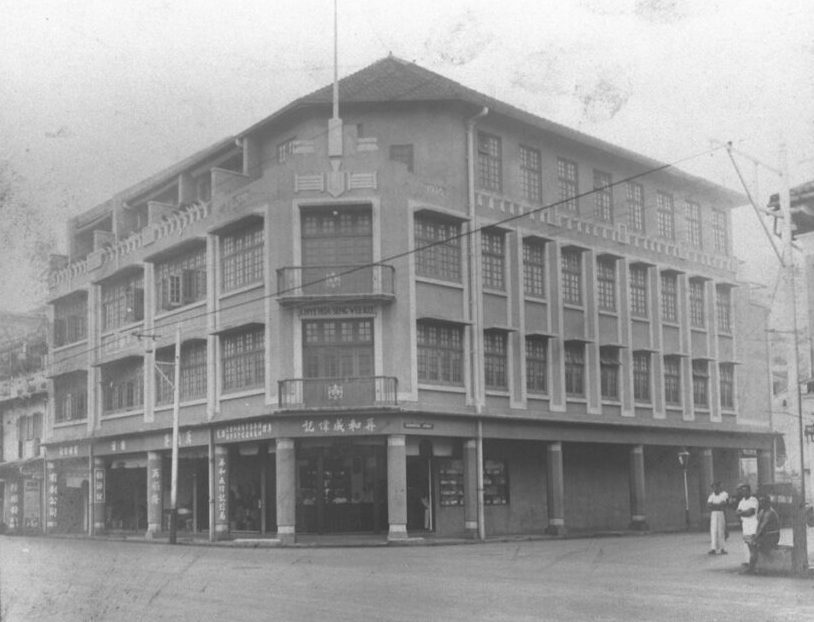 Chye Hua Seng Wee Kee, a remittance firm on Carpenter Street. This photo is dated somewhere between 1930 and 1960. Image credit: National Archives of Singapore
1876 post office riot
The private remittance firms had a stranglehold on the remittance industry, which eventually led to the Chinese Post Office Riots.
The year was 1876.
Responding to the recurrent problem of Chinese migrants being left high and dry when unscrupulous traders disappeared with their remittance money, the colonial government decided to set up a dedicated post office for all China-bound letters and remittances.
Obviously this did not sit well with the towkays of the remittance firms who saw this as an incursion into their turf.
On Dec. 15, 1876, the day of the opening of the Chinese Sub-Post Office, fighting broke out between the police and rioters.
Subsequent clashes between the public and the police resulted in three deaths and several wounded.
The towkays refused to back down and instigated a passive protest by ordering the shops in town not to open for business.
In response, the authorities detained 12 Chinese bosses, marched them through town, and exiled them onto a vessel three miles off the island's coast.
By Dec. 18, the situation had de-escalated sufficiently for businesses to resume normal operations and for the Chinese Sub-Post Office to re-open.
The exiled Chinese bosses were allowed to return to Singapore on Dec. 21, except for one — the headman of a secret society who had the greatest hand in the violence.
He was deported to Hong Kong.
Over time, remittance firms faded into obscurity, thanks to the emergence of institutions like banks and the postal service.
Furthermore, with each new generation that settled and grew up here, the emotional connection with places back in China weakened, and reduced the need for letters and money to be sent back home.
From a peak of 200 in the 1940s, the number of qiaopiju dropped to about 60 in 1970.
Today, you would be hard-pressed to find one in modern Singapore; its memories only exist in murals and conserved shophouses.