Abroad


Did Trump lose the war in Iran?
Final decisions aren't made yet, but its hard to call it a victory.
July 02, 2026, 06:30 PM
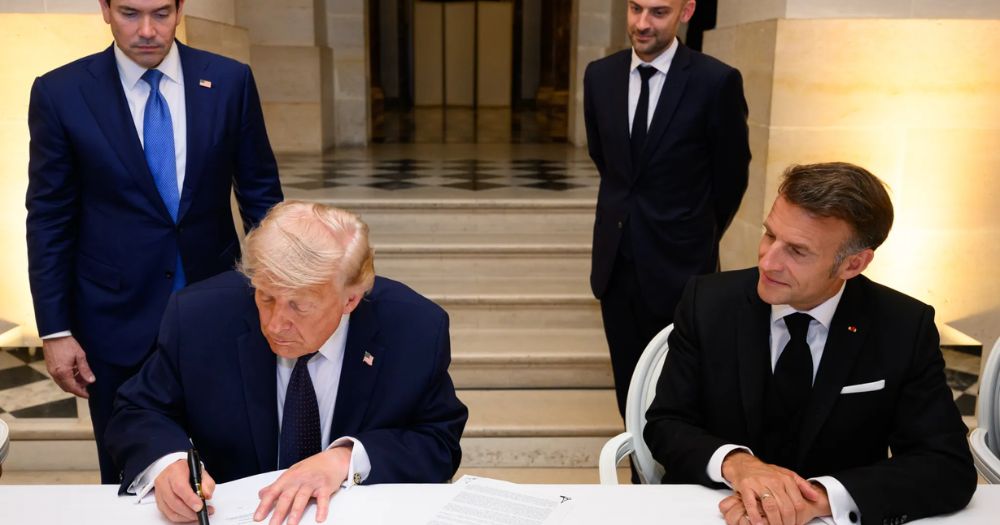
Image via White House Gallery


Just over two weeks ago, on Jun. 17, U.S. President Donald Trump signed into effect a 60-day ceasefire with Iran along with its corresponding 14-point list detailing the framework guiding further negotiations.
From the moment the Memorandum of Understanding/Ceasefire was signed, there have been troubles.
Less than five days after the signing, Iran had re-closed the Strait of Hormuz, and Israel was attacking targets in Lebanon.
Ever since then, Iran has been accused of attacking shipping that was not following its unilateral directions in the Strait, including a Singapore-flagged vessel, and the U.S. has retaliated by striking targets in Iran.
But talks about a final peace settlement continue, although as recently as Jun. 30, Iran refused to speak to the U.S.'s main negotiators, as reported by The Hill, although meetings with lower level officials continued.
So, moderate expectations I guess
The question of whether Trump has lost or won is ultimately a political one.
It’s worth starting with the question: "did Iran win?"
Because since Feb. 28, it has lost a swath of its senior leadership, including Ali Khamenei, the Ayatollah of Iran.
Al Jazeera reported in April that it has endured US$270 billion in war losses, both military and to its key energy exporting infrastructure.
Under most circumstances, one might classify this experience as a loss; Donald Trump certainly thinks so.
In fact, as shown by The Guardian, he has declared victory “dozens of times”, as early as 10 days after the start, when he said that the war was “very complete”.
So why doesn’t this feel like a victory for the U.S.?
The U.S. has lost at least 13 military lives, lost hundreds of millions in destroyed equipment, and spent billions on munitions, and may have irreparably damaged its relationships with several Middle Eastern allies.
All in order to return with a deal that is strikingly close to one that Trump rejected in 2017, the Joint Comprehensive Plan of Action (JCPOA).
Inspections and sanctions
The JCPOA was a wide-ranging deal restricted Iran’s nuclear weapons development by using the United Nations’ IAEA inspectors to monitor Iran’s nuclear sites, including critical military sites, verified by not just the U.S., but European states, Russia, and China.
In return the U.S. would release to Iran US$180 billion of Iran’s money that the U.S. had been holding up.
It would also release Iran from the sanctions targeting its energy sector, something that the new MoU seems to be gearing towards.
The current MoU also calls for inspections, but with no clear outline of an inspection regime, and only 60 days to negotiate, compared to the several years the JCPOA had.
Furthermore, Trump has committed to develop, along with regional partners, a definitive, mutually agreed plan with at least US$300 billion for the “reconstruction and economic development” of Iran.
Trump posted on Truth Social that the U.S. will contribute “not ten cents” to that reconstruction fund and that it is an opportunity for regional partners to invest in Iran.
But it remains to be seen whether those regional partners will take him up on that and whether the U.S. will be compelled to make up any shortfall.
Strait talk
Finally, there is the Strait of Hormuz, which Trump says will return to its pre-war state.
But as his fiercest critics will point out, Trump was the one who altered the status quo, having decided to go to war when he could not ensure the Strait would remain open, even not having deployed vital equipment like minesweeping ships to the region.
Worryingly, Iran appears to be suggesting that ships might be charged a fee, not a toll, leaving avenues for future conflict.
Trump's own comments on the deal hint at capitulation, even if he does not acknowledge, or realise, it.
After signing the MoU in the Palace of Versailles on the sidelines of the G7 summit, an ironic stage if ever there was one, he said that his motivation was to avoid "economic catastrophe, as reported by Reuters.
Trump said that failure to reach a deal might spark a new "Great Depression", and would make him this generation's "Herbert Hoover", suggesting that economic concerns had trumped others in his mind, at least for now.
Criticism
The plan was not popular in the U.S. or in its co-belligerent Israel.
At home
It goes without saying that Trump’s Democratic opponent criticised the plan in detail, not least of all former U.S. President Barack Obama, who said that after 15 weeks of war, “the U.S. was worse off” and “back where we started”, as reported by The Guardian.
He criticised Trump’s 2017 decision to pull out of the agreement, saying that Trump’s decision had caused Iran to develop more nuclear capacity.
Perhaps more stark is criticism from Trump supporters within the Republican party, such as Texan senator Ted Cruz.
Cruz, who was not a fan of the JCPOA, also rebuked Trump on his own deal, saying that “giving billions of dollars to theocratic lunatics who want to murder us is an exceptionally bad idea,” and rejected sending any money to Iran.
Senator Bill Cassidy of Louisiana said Iran’s nuclear ambitions were not curbed, and called the war and the MoU the “worst foreign policy blunder in decades”.
One of the clearest signs of Republican dissent to Trump is that on Jun. 24 the Republican-controlled House of Representatives and Senate voted with Democrats to approve a measure demanding that Trump halt the war in Iran or seek congressional approval before continuing military action, as reported by the BBC.
And abroad
Perhaps the most telling is Israel’s own reaction.
An Axios report describes Netanyahu as fuming, no doubt because he had previously promised the Israeli public total victory in Iran and will soon be facing an election in a situation where his popularity is already very low.
It also suggests a rift has emerged between the U.S. and Israel, with other partners such as the United Arab Emirates signalling support for the MoU.
Trump has repeatedly criticised Israel for its conduct of war in Lebanon, especially continuing to fight after he had said it should stop.
A final deal will force Israel to abandon its conflict with the openly hostile Hezbollah, leading Israeli opposition leader Yair Lapid to say that the MoU represents an absolute failure, as reported by the Times of Israel.
Iran, for its part, has declared that the MoU is a significant victory on its part, but it was always likely to spin any final result in that way.
Scale of disappointment
The reason why Trump’s agreement is being viewed as a failure is more than just direct comparisons between a completely negotiated JCPOA and an as-yet incomplete negotiation for the end of this current war.
It is a reflection of Trump’s own allies’ reaction to the agreement.
Traditionally, Trump’s allies have chosen flattery to remain on his good side. To see them do anything but might highlight the scale of their disappointment.