Parliament


S’pore govt prepared to allow more screenings of Chinese dialect films while upholding importance of Mandarin
"We appreciate the feedback from members and will carefully consider what further steps are appropriate."
July 07, 2026, 03:21 PM
From "Dear You"


The Singapore government said it is prepared to relook the language guidelines under the Infocomm Media Development Authority (IMDA), possibly expanding the space for dialects, while continuing to uphold the importance of Mandarin.
Speak Mandarin Campaign
The interest and issues surrounding the Teochew dialect film "Dear You" were addressed in parliament on Jul. 7.
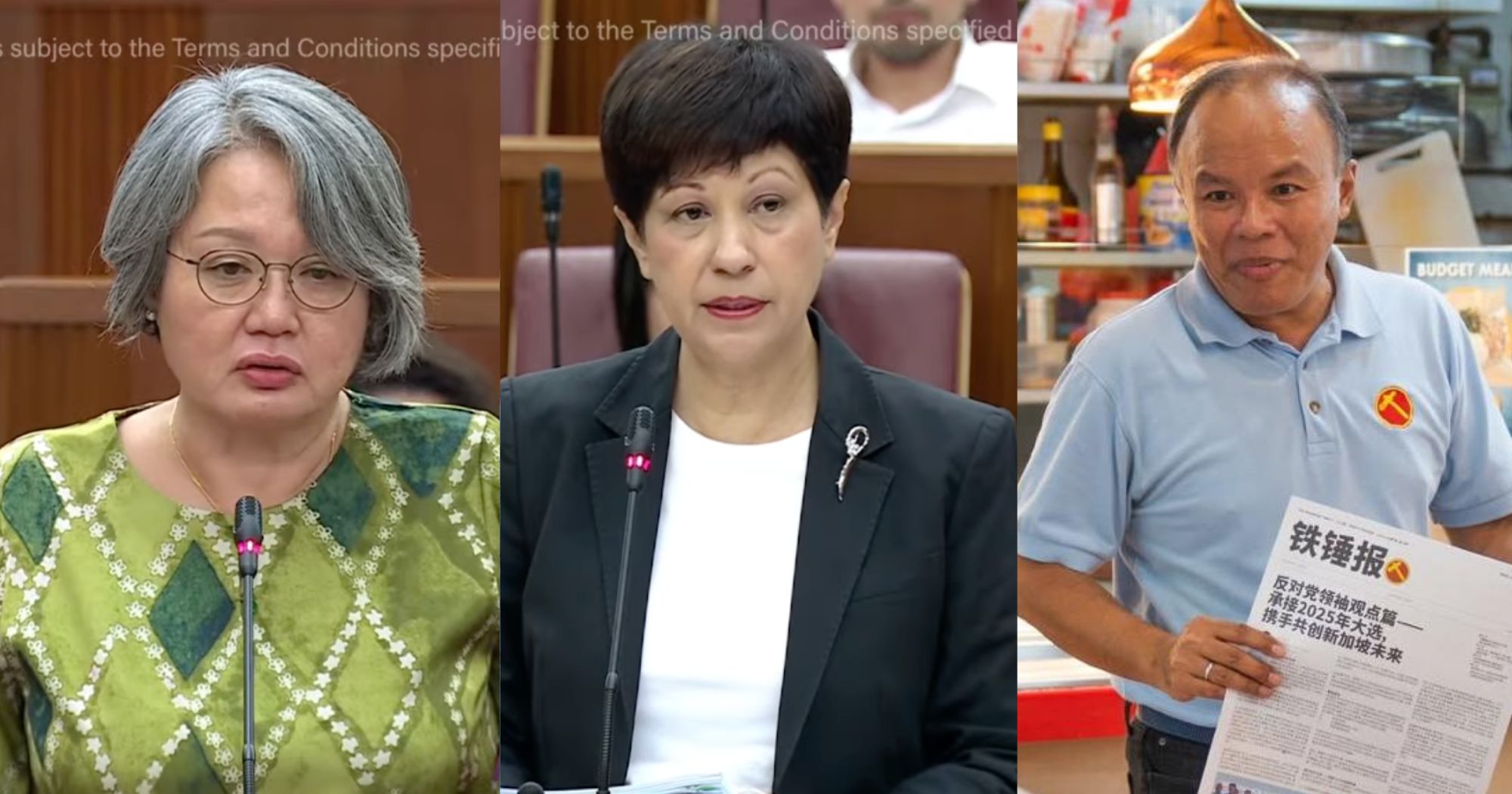
In response to questions raised by Member of Parliament (MP) Cai Yinzhou and Non-Constituency Member of Parliament (NCMP) Eileen Chong Pei Shan, Acting Minister for Ministry of Culture, Community and Youth David Neo said the campaign was introduced to promote a common language among Singapore's Chinese community.
The Bishan-Toa Payoh GRC MP and NCMP had raised questions regarding the relevance and effectiveness of the Speak Mandarin Campaign.
Neo said the long-standing campaign has enabled Chinese Singaporeans from different dialect backgrounds to communicate more easily, while preserving access to Chinese culture through a shared language rather than separate dialects.
It also gives the country's bilingual policy the best chance to succeed, he added.
Neo said the Promote Mandarin Council regularly reviews the campaign to ensure its messaging and objectives remain relevant in Singapore's multicultural society.
However, he noted that as more families in Singapore are using English at home, there may be fewer opportunities for younger generations to develop their proficiency in Mandarin.
"Hence, the campaign has evolved from promoting Mandarin as a common language, to strengthening the appreciation for our Singapore Chinese cultural identity and making the learning of Mandarin fun and enjoyable," he said.
Neo further added that the government increasingly views dialect artistic materials not as competing with Mandarin, but as part of Singapore's cultural heritage.
"We will continue to take in feedback and will work with the community to consider carefully what further steps are appropriate to support and to promote our distinctive Singapore Chinese culture within our multicultural society," he said.
More screenings of "Dear You" approved
Separately, Senior Minister of State for Digital Development and Information Tan Kiat How addressed questions on IMDA's decision to require a Mandarin-dubbed version of "Dear You" for most commercial cinema screenings.
IMDA's language guidelines support the government's longstanding policy of promoting Mandarin as one of Singapore's four official languages, Tan said, adding that they have "generally served us well".
However, he acknowledged that Singapore's language environment has evolved, and said IMDA has adopted a more flexible approach in implementing the guidelines by allowing more dialect content in films.
About 30 to 40 dialect-language films are screened at local film festivals each year, he said, adding that IMDA has also permitted unrestricted screenings of films with substantial dialect dialogue, such as "881", "Long Long Time Ago" and "Wonderland".
Tan said IMDA has not only approved a total of 272 screenings of the original Teochew version of "Dear You", but is also prepared to authorise additional screenings if distributors request them in response to audience demand.
He noted that several MPs had called for the guidelines themselves to be reviewed.
"We recognise that the circumstances have changed since the guidelines were first introduced," he said. "There is therefore scope to consider how we can expand the space for dialects, while continuing to uphold the importance of Mandarin."
He added that any review would also consider differences across media platforms.
There are no dialect restrictions for arts performances or content on the internet and online streaming services, he said.
The government believes that Mandarin should continue to be the mainstay on free-to-air television and radio, he added.
At the same time, he said IMDA is prepared to allow more screenings of dialect-language films to give audiences greater access to such content.
"We appreciate the feedback from members and will carefully consider what further steps are appropriate," Tan said.