News


S'pore nurses, 36 & 34, seek S$2.4 million treatment for baby with rare genetic disorder
"Every day that he doesn't have the gene therapy is a day of neurons lost."
July 28, 2026, 12:50 PM
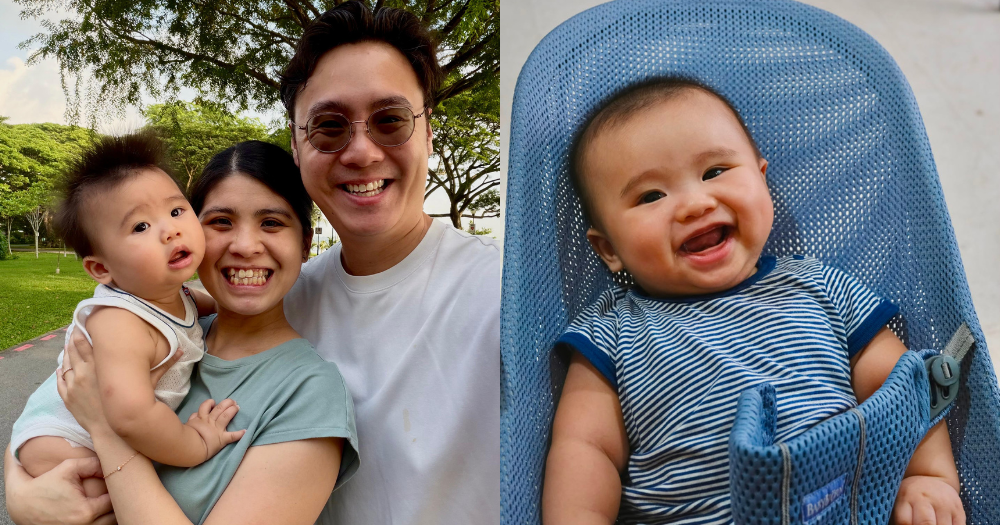
Photos from Matthias' parents


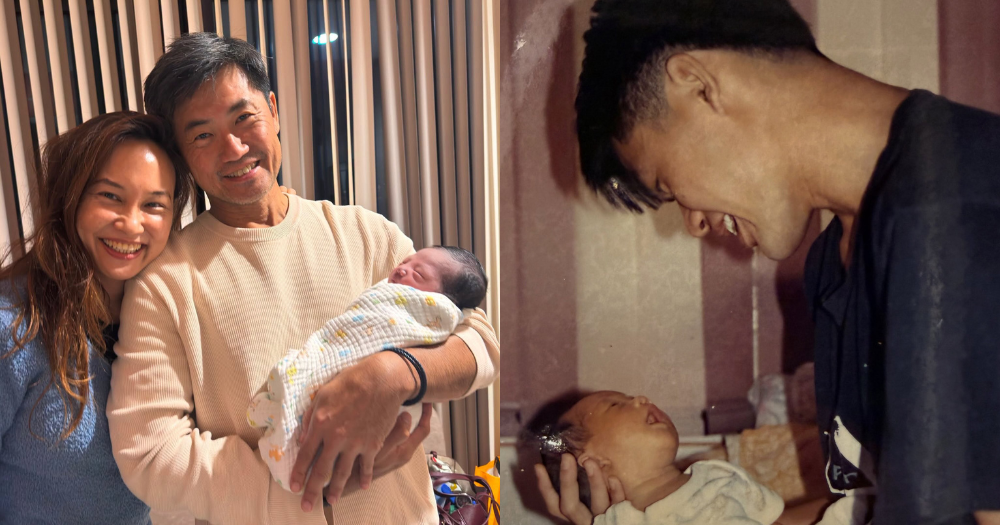
It never dawned on Yun Hann and Benjamin that their baby could have a genetic disorder.
Baby Matthias is nine months old. He's the couple's third child; their two other children, aged four and six, are completely healthy.
But at seven months, Matthias' legs started to get increasingly "floppy" when they carried him in a standing position. At first, they dismissed it as an effect of his size and personality.
"I thought that maybe he's just a bit too chunky," Benjamin, 36, said. "You know, the gravitational pull is too strong."
Yun Hann, 34, added: "We always felt that maybe every child just develops differently. Maybe he's just a bit more chill...he wanted to be the baby in the family."
But the next month, he began to regress even further.
That was when they realised that something was not right.
The biggest red flag
At seven months, the couple noticed that their baby struggled to prop himself up on his elbows while lying on his stomach — a move he could do easily just a month before.
By the eighth month, he could not do it at all.
"That was the biggest red flag," Yun Hann said.
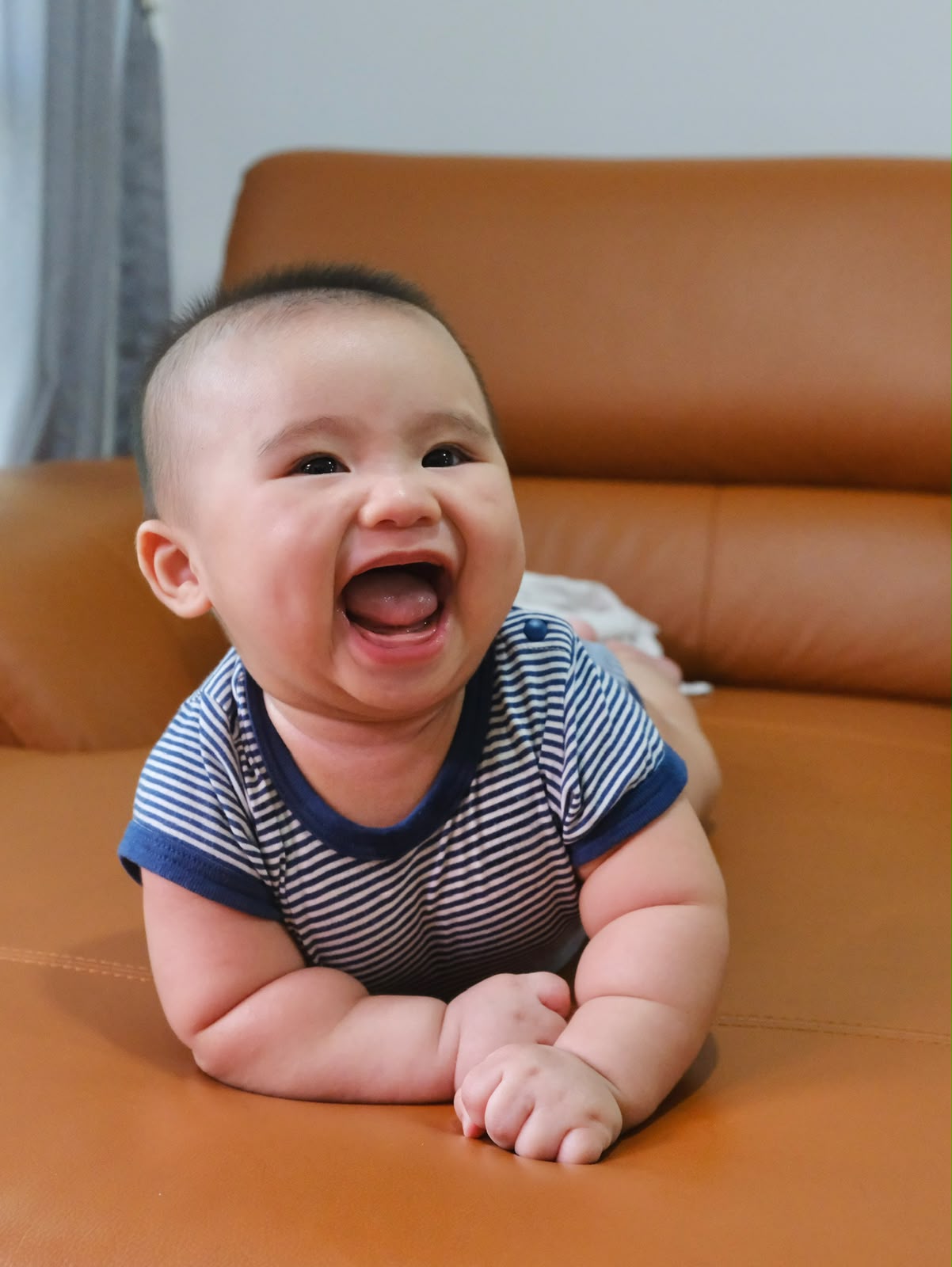 When Matthias was still able to prop himself up. He can no longer do this. Photo from Matthias' parents
Then, the idea that her son could have Spinal Muscular Atrophy (SMA) popped up in the back of Yun Hann's mind.
A rare genetic disease, SMA destroys motor neurons and weakens muscles.
The couple had read Mothership's previous reports on babies Ginny and Faziq, both of whom were diagnosed with SMA. These two babies' symptoms matched what they were seeing in Matthias, they thought.
When they brought Matthias to get tested at a hospital on Jul. 13, their worst fears were confirmed. He was diagnosed with Type 2 SMA.
As soon as possible
As in the cases of Ginny and Faziq, the doctors told the couple that their son urgently needed Zolgensma.
It's a one-time gene therapy that replaces the faulty gene with a new, working copy, and has been shown to stop the disease progression with just one dose.
But it's priced at S$2.4 million, and it is unsubsidised by the government.
The doctors recommended that Matthias receive the treatment before he turns 12 months old.
The longer the delay, the greater the damage to their son's neurons — an effect that is likely irreversible.
"Every day that he doesn't have the gene therapy is a day of neurons lost," Yun Hann said.
 Photo from Matthias' parents
Currently, Baby Matthias is on a regimen of physiotherapy and Risdiplam, a government-subsidised oral medication that helps slow the progression of the disease.
But it will not stop it entirely.
The hope, his parents said, is for their son to get Zolgensma as soon as possible so he can grow well and have a good future.
Hanging on
Both Yun Hann and Benjamin are long-time nurses — she in the National Centre for Infectious Disease, he in Tan Tock Seng Hospital.
But neither of them had ever had a patient with SMA before, and nothing prepared them for what it is like to care for their own baby with SMA.
Both were shaken to see their baby struggle with simple mobility skills that they had "taken for granted".
The tests at the hospital, and wearing a knee gaiter at physiotherapy, also caused him some discomfort and stress, his parents said.
But thankfully, Matthias has largely maintained his sunny personality throughout treatment so far.
He still finds joy in simple things like splashing water in the bathtub, where he has more mobility.
"He's still the most calm, the most placid, the most gentle and smiley baby," Yun Hann said.
"He's very sociable. He's charming people everywhere we go, whether it's the physiotherapists or the doctors and nurses that are taking care of him."
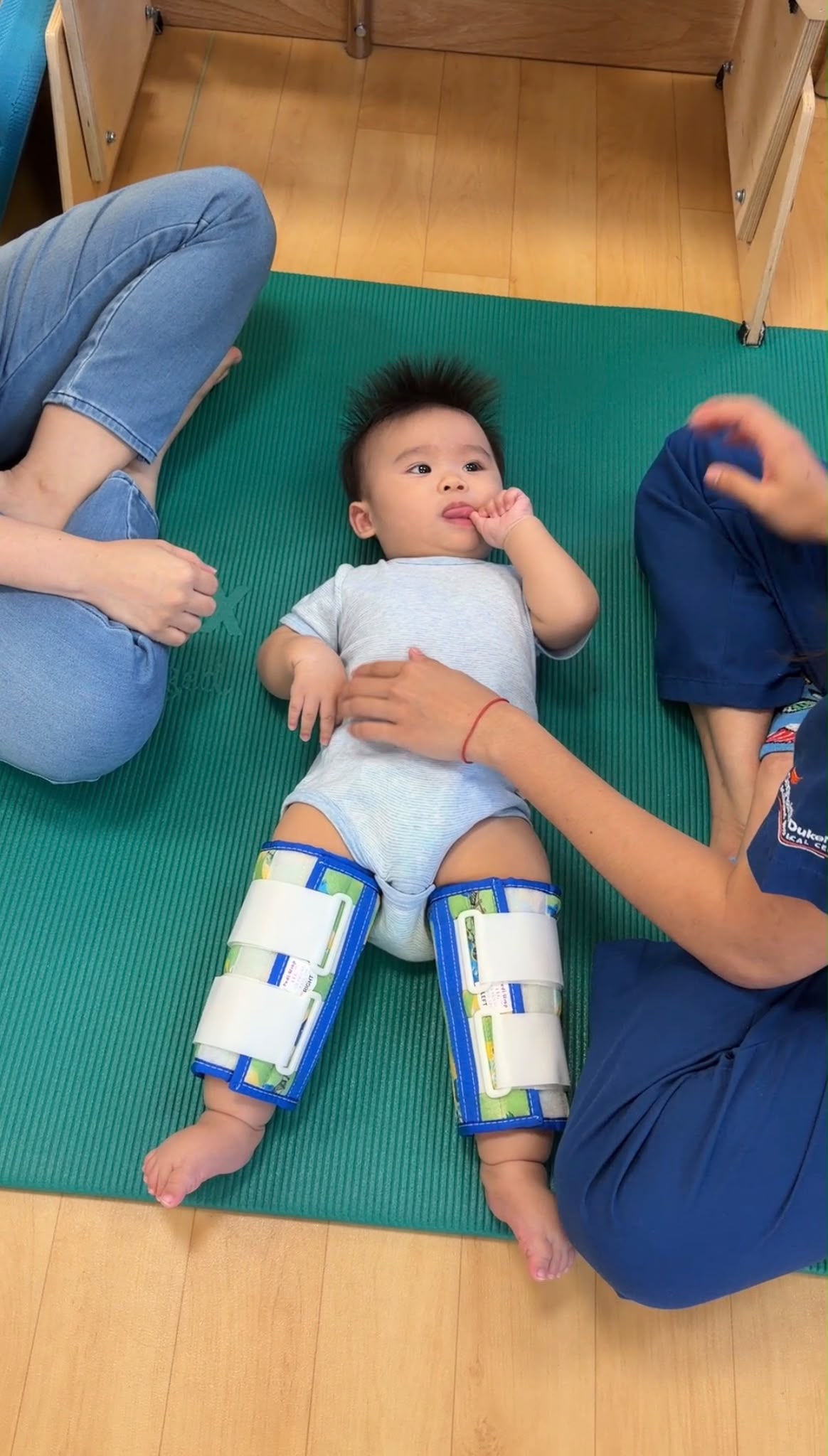 Photo from Matthias' parents
It takes a village
As for the toll on themselves, Benjamin confessed that it has been tiring and stressful.
But he quickly went on to highlight the support he and Yun Hann have been "very blessed" to receive.
Both of them have continued to work full-time, taking leave only on days they need to bring Matthias to the hospital for therapy.
Their parents help out with Matthias's physiotherapy in the daytime, and also help ferry them to medical appointments.
Yun Hann choked up as she talked about the compassion their bosses, friends, and family members have shown.
"Like the saying goes, it takes a village to raise a child," Benjamin added.
The road ahead
"I think the road ahead is going to be really long," Yun Hann said.
The gene therapy is the first step; afterwards, there will still be longer-term physiotherapy and care to help Baby Matthias grow as well as he can.
They also have their other young children to think of.
"We both definitely will still need to work in order to support all the kids," she said.
While the hospital bills are still being finalised, the other costs are already piling up — his physiotherapy brace, his daily Risdiplam medication, and so on.
But most eye-watering figure, of course, is the S$2.4 million Zolgensma he needs.
Having donated to Ginny and Faziq's fundraisers previously, they knew the amount would be "astronomical".
"For average salary workers like us, I think it's almost impossible," Benjamin said. "Even if I sell our house, I don't eat, I don't pay any bills, I don't think I will be able to save S$2.4 million within the next five to eight years."
That's why they have started an online fundraiser, hoping to get donations from the public.
The fear of fatigue
Given the media attention on Ginny and Faziq's stories, the doctors warned them that there might be some fatigue about SMA babies, making it possibly tough to raise funds.
"Our doctors [tried to] manage our expectations because this will be the third baby with SMA this year," Yun Hann said.
"But we are extremely heartened by the outpouring of love and prayers and support and messages... We try to read every single one."
As of the time of writing, they have raised over S$904,000, reaching 37 per cent of their goal.
 Photo from Matthias' parents
Fellow parents of SMA babies have also reached out to share their stories, giving them comfort to know how similar their journeys are.
"The community has really rallied [around] and supported us," she said. "It's a club that nobody wants to join, but unfortunately, we are in in this club."
If you'd like to donate and help Matthias, you can do so here.