News


S'pore's Constitution shouldn't be changed on a whim, but must be updated to meet evolving needs: SM Lee
Legal reform in Singapore is a "continuous undertaking" to respond to new challenges, social change, and crises, he said.
July 28, 2026, 02:39 PM
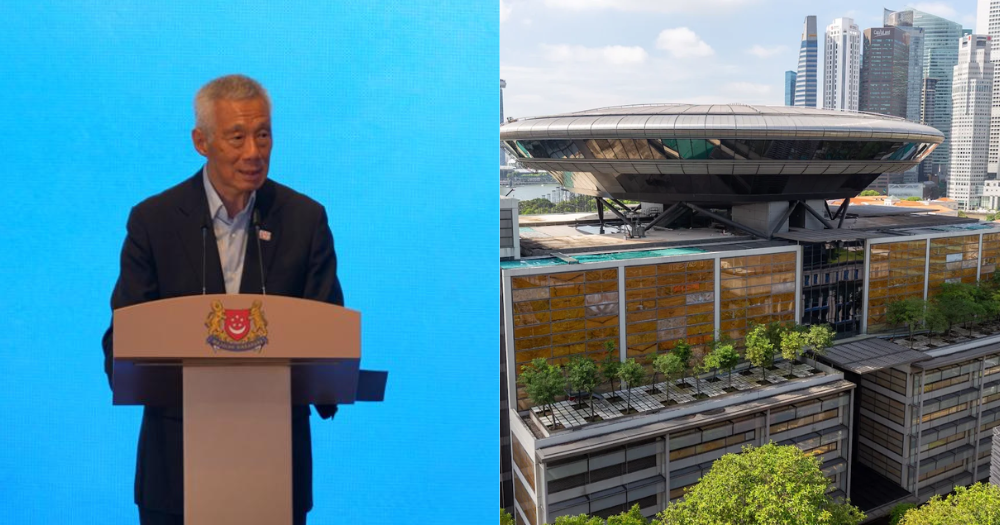
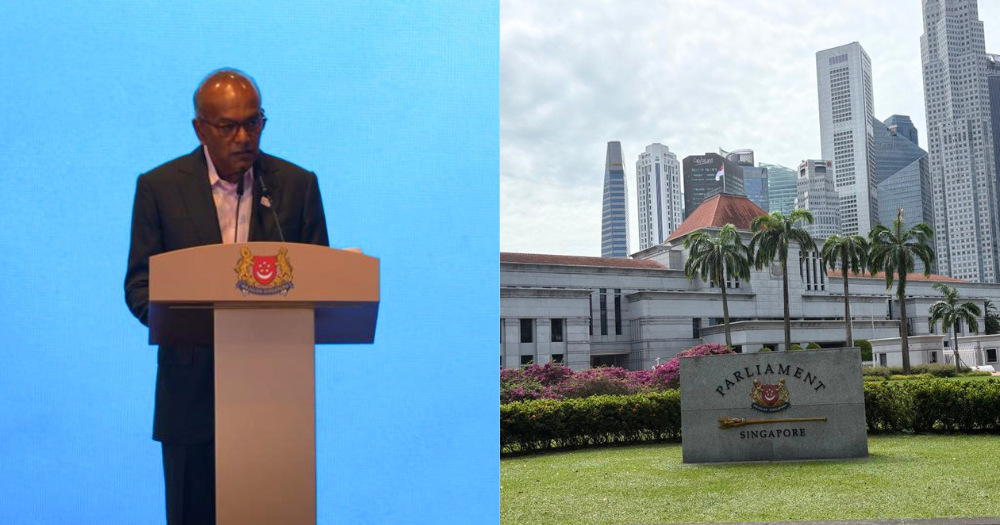
Photos by Mothership and kota m./Google Maps


While Singapore must not change its Constitution on a whim, neither should it treat it as an immutable document forever cast in stone, said Senior Minister Lee Hsien Loong.
"Just like other laws, the Constitution needs to be updated from time to time as society develops and the world changes," he added.
He highlighted several major Constitutional changes Singapore has enacted to "remedy significant vulnerabilities in our legal framework".
They include creating group representation constituencies (GRCs) to ensure multiracial representation in Parliament, and schemes to guarantee opposition voices and non-political civil society representation in Parliament.
SM Lee was speaking at the launch of the book series "25 Years of Legal Reform in Singapore: Innovations in Policy and Law (2000–2025)" by the Ministry of Law on Jul. 28.
The four-volume series chronicles Singapore's legal reform journey over the last 25 years.
Through perspectives from government policymakers, judges, legal practitioners, and more, the series sheds light on the policy thinking and societal considerations behind key legislative and legal reforms during this period.
A continuous undertaking
SM Lee pointed out that the challenges Singapore faces today are very different from those the pioneers faced when the country's modern legal system was introduced 200 years ago.
These changes include technological advances, evolving social norms, and different expectations over governance and rights.
Singapore's approach to governance is to ensure its legal system responds to changes.
"We have never treated law reform as an occasional, one-off exercise. It is a continuous undertaking," SM Lee said.
"Each generation must review the system it has inherited, decide what remains fit for purpose, update or repeal those parts which are outdated, and design and pass new laws to deal with new circumstances."
He went on to discuss how laws should serve society's needs: they must address national imperatives, respond to new challenges, respond quickly in times of crisis, and respond to social change.
Addressing national imperatives
Singapore has used the law to address enduring national imperatives, particularly social cohesion.
SM Lee detailed how the country implemented policies to foster social mixing, build common spaces, and forge a national identity in response to the communal riots of the 1950s and 1960s.
In 2025, Parliament passed the Maintenance of Racial Harmony Act to counter new and emerging threats to social cohesion on the internet.
SM Lee highlighted that since the Maintenance of Religious Harmony Act came into force in 1992, no restraining order has had to be issued.
"This is not because the law was not needed, but because its presence encouraged restraint, dialogue, and responsible conduct among religious groups," he said.
He noted that laws cannot compel people to trust one another or make friends across different groups — such work must be done by Singaporeans themselves, supported by initiatives.
"But laws can set boundaries, deter harmful conduct, and create the conditions for harmony," he said.
Responding to new challenges
Singapore has also had to develop new legal tools to respond to new challenges in the digital age.
SM Lee brought up the Protection from Online Falsehoods and Manipulation Act (POFMA), Foreign Interference (Countermeasures) Act (FICA), and the Online Safety (Relief and Accountability) Act as recent measures enacted to tackle misinformation, foreign interference, scams, online harassment, and other forms of digital harm.
As today’s threats have changed greatly, "our laws must be updated, in order to remain fit for purpose", he said.
Responding quickly in times of crisis
While legislation usually requires extensive and deliberate study, consultation and debate, "crises do not wait for this normal stately pace of legislation", SM Lee stressed.
"In such moments, governments must respond swiftly while remaining anchored in the rule of law," he said.
For example, during the Covid pandemic, the Singapore government worked quickly to put together and pass the COVID-19 (Temporary Measures) Act 2020 to address urgent issues of the pandemic, and amended the Act eight times as new challenges emerged.
"What is noteworthy is not merely the speed of the response, but that all this was done through established constitutional and parliamentary processes," SM Lee highlighted.
Responding to social change
Apart from technological change and crises, SM Lee believes Singapore's laws must also react to changing societal values, identity, and norms.
Such reforms are often among the most challenging to implement, he noted, as they may involve deep personal convictions that may differ between groups.
"In these circumstances, the task of government is not simply to decide whether to change any laws," he said. "It must also manage changes in a way that respects different viewpoints, maintains social cohesion, and preserves trust."
He used the 2022 repeal of Section 377A of the Penal Code as an example of how the Singapore government responded to the growing acceptance among Singaporeans that "private consensual conduct between adults should not be criminalised".
It engaged different groups of society to understand concerns, identify common ground, and seek a path forward that Singaporeans could broadly accept.
Then, in addition to repealing Section 377A, the Constitution was also amended "to affirm Parliament’s authority to define, regulate, and support the institution of marriage".
SM Lee said that the response in this case exemplifies how the Singapore government did not treat dissent as something to be quelled, but "managed it constructively" and accommodated opposing concerns.
Adapting the law to new realities
SM Lee expressed confidence in Singapore's ability to meet new challenges of the future.
This confidence comes not because the government possesses all the solutions, but because Singapore has shown its ability to "adapt thoughtfully and pragmatically to changing circumstances", he said.
He believes the next chapter of Singapore’s legal story is not about preserving what the country has inherited, but about building upon the foundations to keep its laws relevant.
"Each generation must strengthen the legal system it inherits, and adapt it to new realities, and pass it on, updated and improved, to the next generation."