Features


Comment: Being a mother is never not going to be a sacrifice. As an aspiring parent, I'm OK with that
Imagining a future.
June 10, 2026, 10:40 AM
Photo from Canva
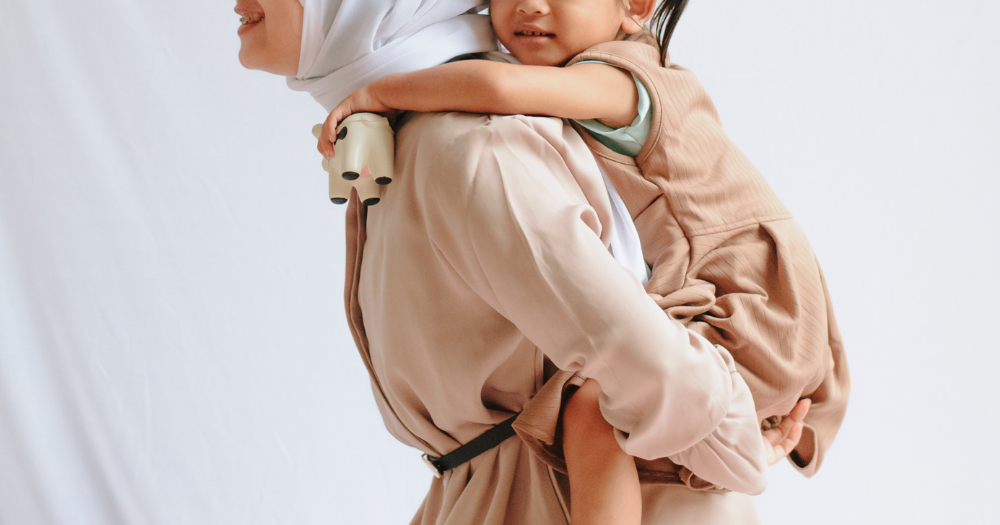
Here is a picture of what I imagine my future looks like.
I'm at home with the baby. I cook and clean, feed and soothe. Maybe squeeze in a grocery run.
While the baby naps, I scribble out a few half-hearted lines for an article I probably won't have time to finish. I water the plants. I fantasise about getting a full eight hours' sleep.
Then the baby wakes, and I do it all over again.
Privilege
Please do not misunderstand. This future that I imagine shows not suffering, but privilege.
My husband and I want a child. So it is a privilege if I get to do so. It is a privilege if I can afford to take time off work; if I can stay home and look after my child, instead of delegating them to a helper or infant care.
This is something that I will choose with both eyes open. That, if offered to me, I will take without second thought.
But the existence of privilege does not mean the absence of sacrifice.
On May 4, Minister Indranee Rajah appeared in a CNA podcast, speaking about women who take career breaks to have children.
Women "may have to take some time out along the way", but the government will do its best to get them back on their career trajectory, she said.
Indranee, who chairs the Marriage & Parenthood Reset Workgroup, added, in an address to aspiring parents:
"In an ideal world, what we would hope is that that time out is not seen as a loss, or a sacrifice.
It is seen as a detour... a detour in which you gain something, something priceless and invaluable, which is your family.
And it still allows you to get back onto the path that you wanted."
As an aspiring parent myself, I'd like to say: Thank you for the thought, but this isn't something a policy can address fully.
Today I am 29 years old, and my life is all my own. I am competent, I am passionate, I am promising.
But where my male colleagues see an infinite horizon, I only see flatness. This is not a perception problem.
To use the minister's analogy of a path: my career is an alpine trail. There is an ascent and a descent, both steep.
And I am so very near the peak.
The difference
The picture changes, a few years later.
Now, I make time for paragraphs instead of lines. I spend my days overseeing my child's education, from kindergarten to swim classes to music practice.
Some days I even get to sleep through the night.
At home, my husband does far more housework than my father or my grandfather ever did. He helps feed the baby, reads to them, plays with them.
But his work life looks remarkably unchanged from what it is now. His natural ability has sharpened with experience, his intellect honed to wisdom with parenthood and age.
Maybe he does more difficult work, maybe he earns a little more. Maybe he's a leader in his workplace.
Some days when he ends work early, he manages a quick run before coming home. On weekends, we go to the park, the museum, and the zoo.
Every year or two, we pile into a rental car in Japan and drive around the countryside.
He takes the wheel, and I rock our child to sleep in the backseat.
And at night, I finally get to finish the article I've been working on. I clean it up, buff out the typos, and hit submit.
Success
This is not a story about how a woman gives up her promising career for good and becomes a full-time stay-at-home mum. It is not that diametric.
We're in Singapore, okay? This is what happens when I take — as many of my friends have — just a year or so off. Then switch to part-time work once the baby can walk, then gently transition back to the office once I run out of money and goodwill.
It is not the end. But it may be the start of the end.
Perhaps I have lost what momentum I might have had, with my middling skills bolstered by youth and fire. I can no longer spend all my free time on my career as I used to.
I have responsibilities now, and work will never be a priority again.
It will show when I take days off to nurse my sick child or skip team-bonding events for piano recitals. It will show when I wake up at 6am to make my child breakfast, and make mistakes due to my exhaustion.
It will show, because to imagine that it will not is privileged at best, and delusional at most realistic.
If my talent and time allows, perhaps I will recover some drive and make up for lost ground. Succeed at a project, get a promotion.
But whenever there's something really major, something really long-term, will my bosses pause to consider what happens if I choose to have a second child? If this all happens all over again?
Will they, then, choose to hand the responsibility to my male colleague instead?
Aspirations
It's easy to blame policy, cost-of-living, employers, double-income culture.
But I think that motherhood is inherently sacrificial. We know this through statistics, through anecdotes, when we look at our own mothers. The way their bodies and lives are moulded by their children.
I know I do, when I look at mine.
It's something that neither time nor geography can fully mitigate. Even societies that are purported paragons of equality have a tough time squaring the circle.
Studies in Scandinavian countries show women experience a "child penalty" in earnings compared to men — one that persists up to 20 years after a child's birth.
Neither it is a matter of hunger or drive. A CNBC survey in 2024 showed that women in the U.S. face significant setbacks in pay and promotions.
48 per cent of respondents maintained that they were "very ambitious", while 40 per cent described themselves as "somewhat ambitious". The penalty applied either way.
The line
Minister Indranee, I do not imagine that any of this is unknown to you.
You are a woman in a position of great power, one that you have surely worked your ass off to achieve. It would be foolish to deny your skill, your intellect, your labour.
But this is not an argument about phrasing or policy.
I am not missing the point on purpose. I understand what the government is trying to do: normalising these breaks, reducing the friction. I appreciate every bit of it, and even being a woman in the workforce today, I am a beneficiary of these efforts.
I have nothing against viewing motherhood as a "career detour". It is inherently a better scenario than seeing it as career suicide.
But there is always going to be a line: demarcating separate paths for men and women, when it comes to work and family.
Motherhood has been a sacrifice since the dawn of time. As the centuries pass, these sacrifices have changed (and I daresay lessened). Women are more independent, we have more options, we die a lot less in childbirth.
It is tempting to view this as a never-ending joyride of progress. But to do so, I think, would be a disservice to the Singaporean pragmatism we all know and love.
Becoming a mother means reshaping your life's expectations and aspirations. As a woman who plans on having a child, I know that my success has obsolescence built into its very bones.
But I also know that it will be all worth it, in the end.