Features


'The call is now yours, doctor': S'pore doctor on Turkish Airlines flight responds to sick cabin crew, makes 'heavy' call to divert flight alone
Adventure at the end of an adventure.
May 08, 2026, 02:26 PM
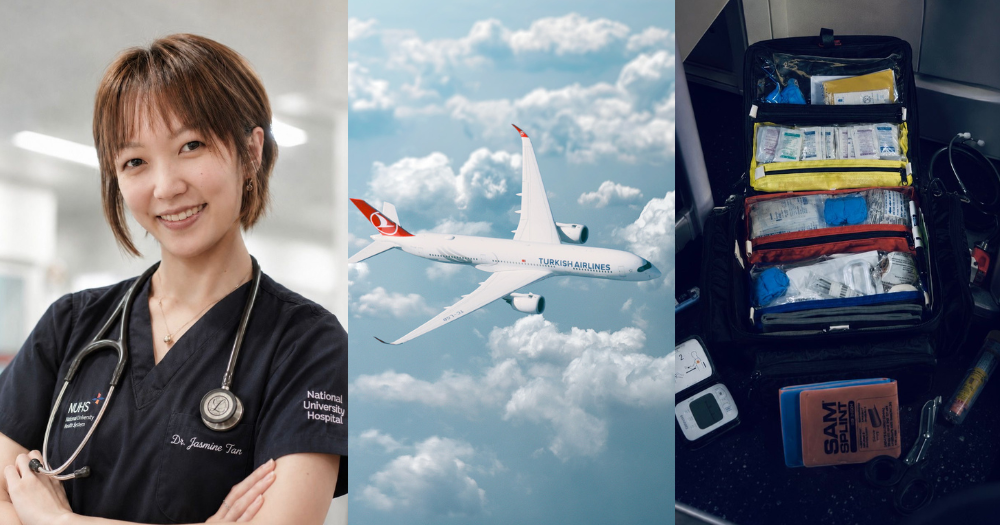
Photo from Tan and Turkish Airlines/Facebook


Several hours into a Turkish Airlines flight to Taipei, Jasmine Tan heard an announcement over the intercom system:
"Ladies and gentlemen, if there's a medical doctor on board, please report yourself to the flight attendant."
Tan, 27, was travelling alone. It was 3am, she'd just finished a mountain trip in Georgia, and she'd taken some melatonin so she could sleep on the flight.
Hoping another doctor would respond, she waited for a few minutes.
But no-one did.
"I saw the cabin crew members running around, and they said it was one of their own staff. So I decided to go forward to see what was happening," she said.
The patient was a young cabin crew member who'd just left the washroom. She'd vomited multiple times and kept repeating, "I can't breathe".
Tan, an Intensive Care Unit (ICU) doctor at Ng Teng Fong General Hospital (NTFGH), had previously responded to other medical calls on flights. Usually, they were relatively minor — anxiety, chronic back pain.
So despite being alone, Tan decided to assess the patient by herself.
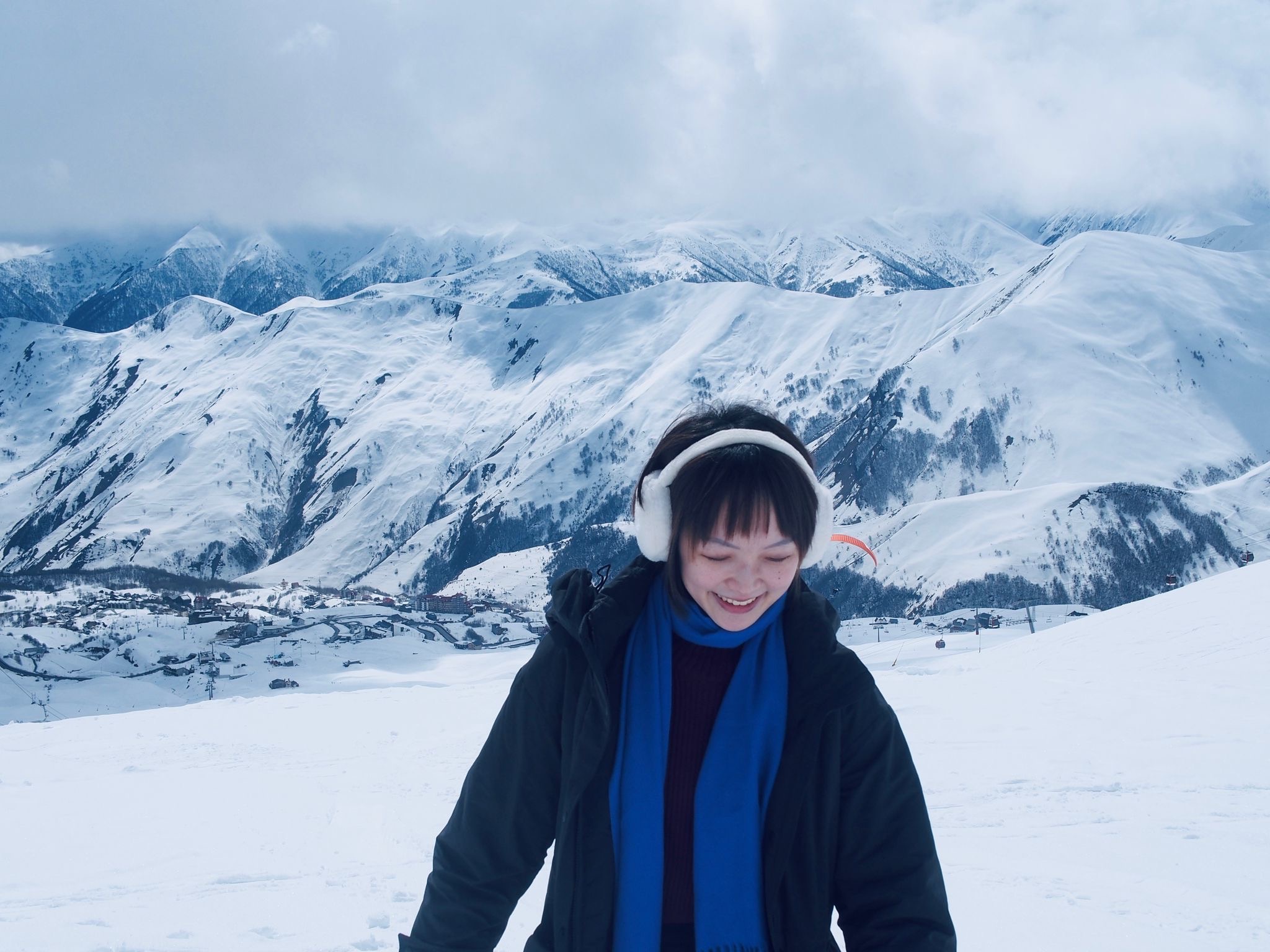 Solo trip in Georgia. Photo from Tan
Working alone
But it became immediately clear that it wouldn't be a straightforward situation.
For one, the environment was less than ideal, Tan said.
She tried to diagnose the patient. But the only equipment onboard was a traditional blood pressure monitor, and a stethoscope that was "so poor quality that I could only hear the aircraft sound".
"I told the crew members that this set is not helping, can you get me another set? So they were very helpful, they tried... but the [machine] told me the blood pressure was 60 over 10.
Which usually means you'd be dying, but you know, the crew member was still able to talk to me."
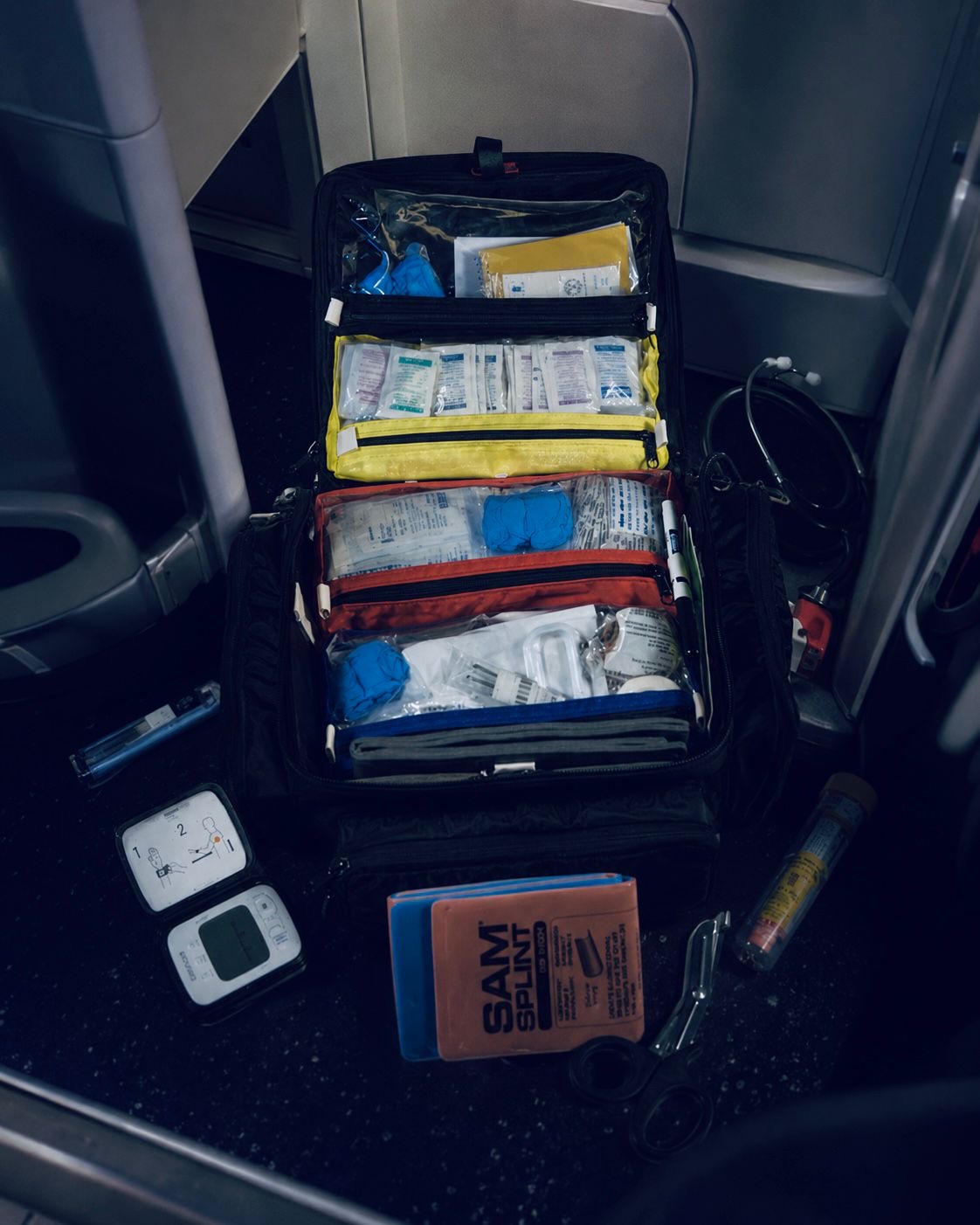 The equipment onboard. Photo from Tan
Without proper equipment, Tan was left to examine her based on the basics: her pulse, breathing, overall appearance.
It was a "very limited and traditional setting" — the furthest thing from a hospital environment, she said.
As the only doctor who had responded to the call, Tan also had to administer the medication, including setting up the IV cannula, by herself.
"This was the moment that I missed my colleagues and my nurses so much," she quipped.
A turn for the worse
But the painkillers didn't help.
"Her limbs turned cold... her chest pain was very worrisome. Because it radiated to her back, to her shoulder.
I couldn't exclude a heart attack, or emergency situations like a blood clot in the lungs. And we didn't have diagnostic tools onboard."
She asked the cabin crew to issue another plea over the intercom for any healthcare staff on board to come and assist.
But still nobody came forward, she said.
Finally, when one to two hours passed and the situation didn't improve, Tan told the cabin crew to notify the captain that it was an emergency.
She'd tried the strongest medications they had, but still she could not exclude the possibility of an emergency, she told the captain.
"He said, 'the call is now yours, doctor'," Tan recalled.
"This was the moment that I really had to evaluate whether it's still safe to continue flying... or whether to divert the flight."
Making the call
Tan had previously responded to calls on Singapore Airlines (SQ) flights.
In those cases, there would be a medical team on the ground that she could connect with. They would video call and discuss, together, what to do, whether or not to divert the flight.
But on the Turkish Airlines flight, they didn't have the option to video call, and there wasn't a medical team on the ground.
"The destination was still two hours away... But usually if there's a heart attack, you have to reach the hospital within two to three hours to get treatment," she said.
"This was the heaviest moment."
The woman continued to get more and more breathless. Finally, Tan gave her a sedative, and pushed in oxygen to allow her to breathe.
"That's when I told the captain, 'let's divert to the nearest airport'."
While preparing for landing, Tan sat down next to the patient. A vial of adrenaline in one hand, the patient's cold hand in the other.
"I just made sure she was still breathing and awake, and hoped she would remain stable until we landed."
The aftermath
When they landed in Hong Kong, the patient was hurriedly conveyed to the nearest hospital.
Meanwhile, Tan was swept through immigration so the police could take her statement.
They took her photo, interviewed her, checked what medications she'd administered, and collected her contact details.
"It felt a bit surreal... like a crime scene," she said.
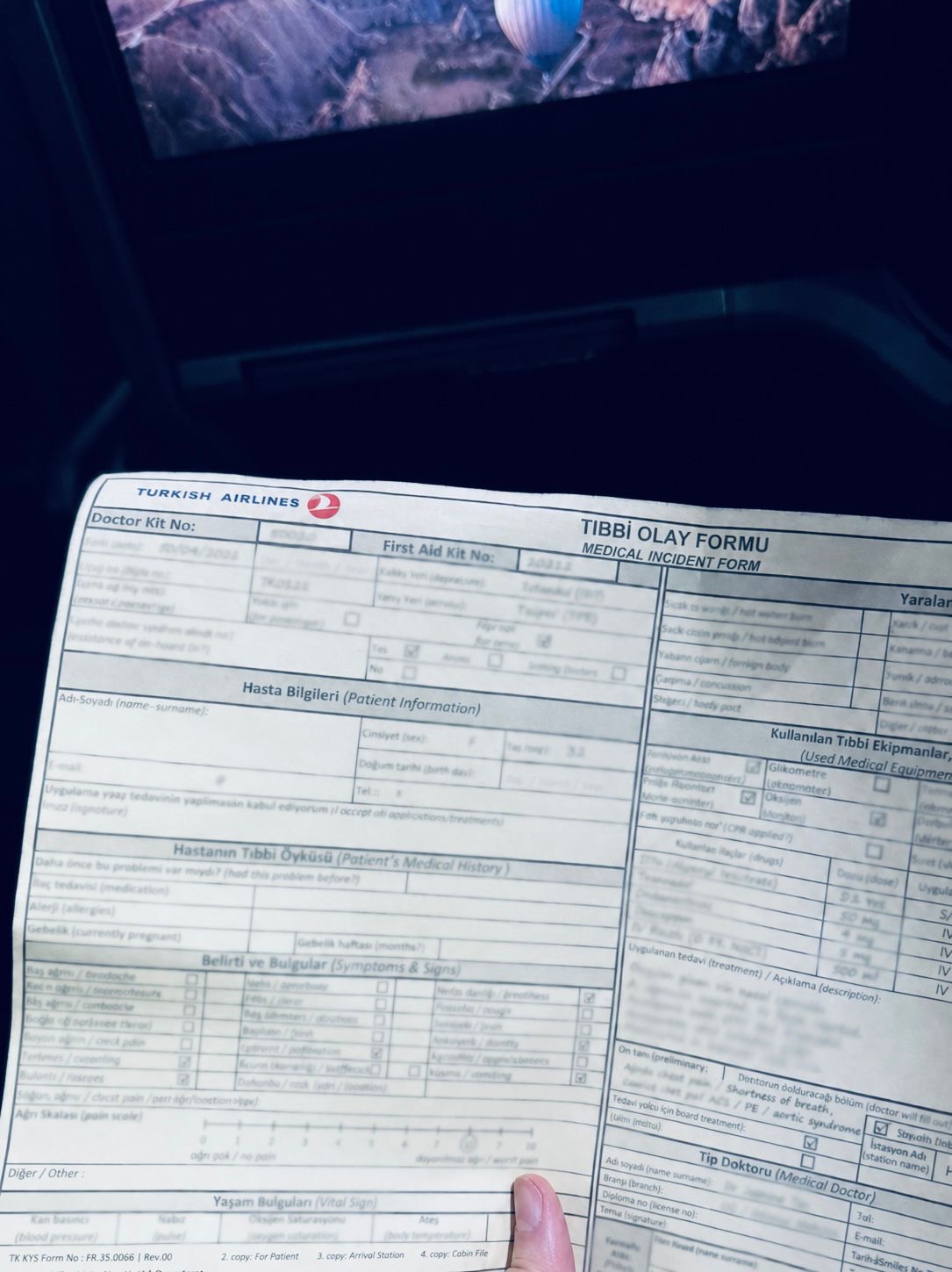 Photo from Tan
After she landed in Taipei, she wrote a "long email" to Turkish Airlines, suggesting that they renew their equipment and improve their emergency management.
They replied with a thank-you letter and 1,000 miles. But Tan remained unsettled, unsure about the fate of her patient.
It was only three weeks later when she finally received a personal email from the cabin crew member, saying that she was well and had recovered.
"It really relieved me a lot," she said.
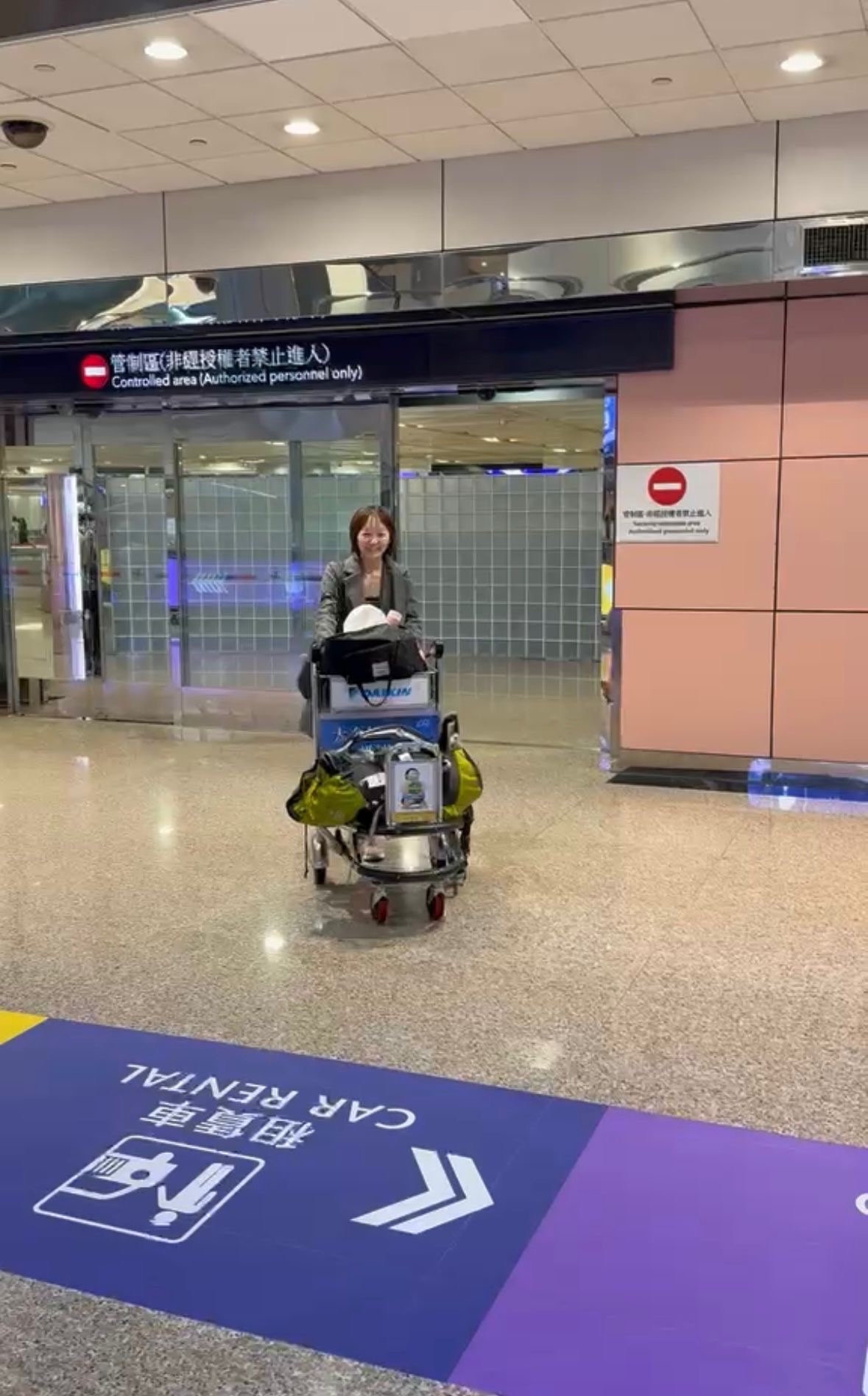 Landing in Taipei. Photo from Tan
Preparing for the worst
Even after that, Tan continued to reflect about the case.
She thought about whether there was anything she could've done better, whether it was the right decision to divert the flight and delay the journeys of so many people.
Finally, she decided to post about her experience on Facebook.
This sparked a conversation with different healthcare workers. Some said that they wouldn't have responded to the call; that the legal responsibility would have been too heavy, or that they weren't confident to treat the patient alone.
But there were also other comments. One paramedic said that they always travel with a portable ultrasound, so they can diagnose patients if needed.
"So I went to get one too," she said. It's about the size of a plate, and she plans to bring it along for future trips.
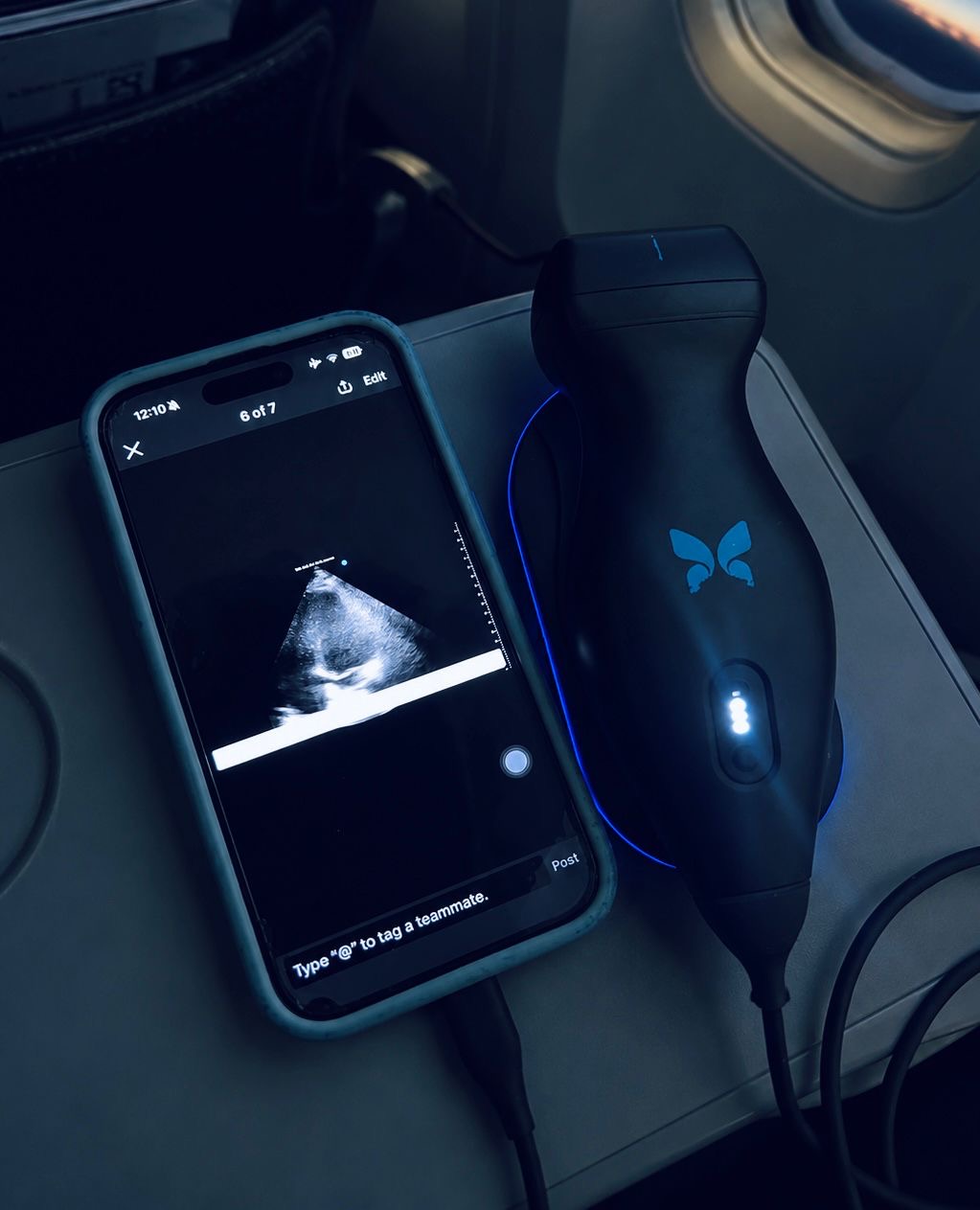 Her new portable ultrasound. Photo from Tan
Ever since returning to NTFGH, she's gained a new appreciation for the equipment and her colleagues as well.
But looking back, she said she'd still respond to the call, even knowing the challenges.
"I think I have to bring my own stethoscope," she quipped.
"But I would still help. Because if it was my family member, I would also hope that somebody would help her."